The second week of July brought together important updates across GI oncology, with expert posts covering colorectal, anal, gastric, biliary tract, hepatocellular and pancreatic cancers.
This week’s selection includes updates on the gut microbiome and postoperative colorectal cancer recurrence, POLE-mutant colorectal cancer detection, survivorship after anal cancer chemoradiotherapy, and the PERISCOPE II trial in gastric cancer with limited peritoneal metastases.
Other posts highlight ivonescimab plus gemcitabine/cisplatin in advanced biliary tract cancer, immunotherapy resistance to atezolizumab plus bevacizumab in hepatocellular carcinoma, the CARES-005 and CARES-310 studies in HCC, CAR-T approaches in pancreatic cancer, mesopancreas excision consensus, and long-term TOPAZ-1 data with durvalumab plus chemotherapy in biliary tract cancer.
Together, these posts reflect the continued evolution of GI oncology across microbiome science, molecular diagnostics, survivorship, surgical decision-making, immunotherapy, cellular therapy, and multidisciplinary treatment strategies.
Bidisha Barat, PhD — Molecular Microbiologist; Staff Scientist at University of Chicago | United States
“Our new paper is out in Nature Communications.
Up to 1 in 3 patients who have surgery for colorectal cancer will develop a recurrence even when every visible trace of tumor is removed. So why does the cancer sometimes come back?
Our study points to an unexpected culprit: the gut microbiome.
We found that patients who go on to develop a postoperative recurrence carry a distinct, more virulent bacterial signature in their gut on the very day of surgery — a community of collagenase-producing bacteria that:
• resists the standard perioperative bowel prep
• shows enhanced antimicrobial resistance
• can actively promote cancer cell migration and invasion
These findings support a model in which perioperative microbiota composition, not just residual tumor burden, contributes to oncologic outcomes after surgery, and suggest that this bacterial signature may serve as a prognostic biomarker for postoperative recurrence risk.
Incredibly proud to have contributed to this work with an amazing team at the University of Chicago, led by Dr. Benjamin Shogan and our full group of collaborators.”
Nic Reitsam — Clinician Scientist at University Hospital Augsburg | Germany
“How to identify POLE-mutant colorectal cancers in routine diagnostics:
A small subset of MSS colorectal cancers carries pathogenic POLE mutations. Despite being pMMR/MSS, these patients can respond exceptionally well to immunotherapy, even in the metastatic setting.
Yet they are often not tested for it.
Marco previously led a very nice study in Jakob’s lab showing that an AI model, trained only on MSI, could also flag POLE-mutant tumors from H&E morphology alone. Not yet available everywhere though.
In our new paper, we now show that routine small-panel NGS data, often generated for colorectal cancer cases, can hint at POLE status too: an unusually high mutation count is not unexpected here, but worth being aware of.
Combined with typical morphology, such as mucinous or medullary features, right-sided tumors, and younger male patients, this gives a practical trigger for confirmatory testing, with AI as one potential complementary signal within such a multimodal workflow.”
Nina Niu Sanford, MD — GI Radiation Oncologist | United States
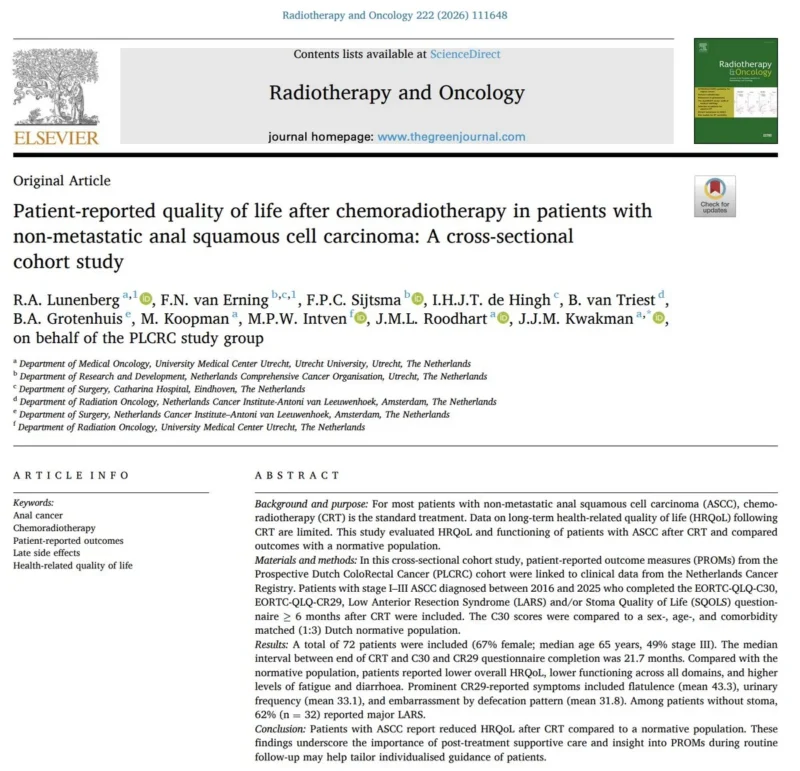
“Important survivorship data for anal squamous cell carcinoma.
Definitive chemoradiotherapy achieves cure in most patients, but with substantial functional cost.
In this patient-reported outcomes study, 62% of patients without a stoma had major low anterior resection syndrome.
De-escalation randomized trials, including DECREASE, which is fully accrued, and PLATO-ACT4, with early results, are critical for improving quality of life.”
Judith Quik — MD, PhD Candidate in Upper GI Surgery | Netherlands
“Publication alert.
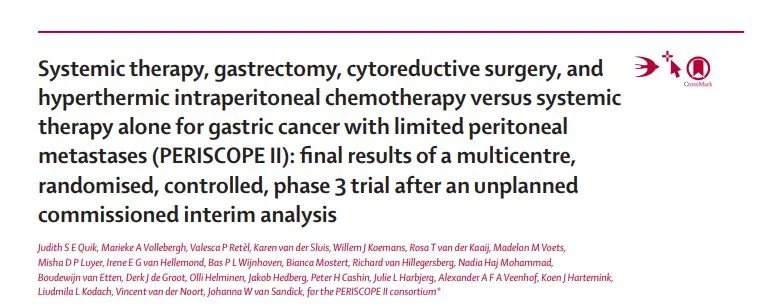
It is with great pleasure that we share the wonderful news that the results of the PERISCOPE II study have just been published in The Lancet Oncology.
Does adding gastrectomy with cytoreductive surgery and HIPEC to systemic therapy improve survival in gastric cancer patients with limited peritoneal metastases?
The final results of the PERISCOPE II trial, a European multicentre, randomised, phase 3 trial, are in.
Key findings:
• No overall survival benefit for gastrectomy + CRS/HIPEC versus systemic therapy alone:
Standard group: 16.6 months median overall survival
Experimental group: 15.7 months median overall survival
HR 1.10; 95% CI, 0.69–1.74; p=0.70
• Substantially higher morbidity and mortality in the experimental group:
44% serious adverse events in the experimental group versus 6% in the standard group
3 treatment-related deaths at 100 days after randomisation, all in the experimental group
These findings show that gastrectomy with CRS/HIPEC should not be offered to European patients outside the context of clinical trials.
A collaboration within the PERISCOPE II consortium, across 8 hospitals in the Netherlands, Finland, Sweden, and Denmark. Made possible with the support of the Dutch Cancer Society, the Dutch National Health Care Institute, the Netherlands Organisation for Health Research and Development, and the Dutch patient organisation SPKS.”
Hong Jae Chon — Director of the Cancer Center, Professor of Medical Oncology at CHA Bundang Medical Center, CHA University School of Medicine | Republic of Korea
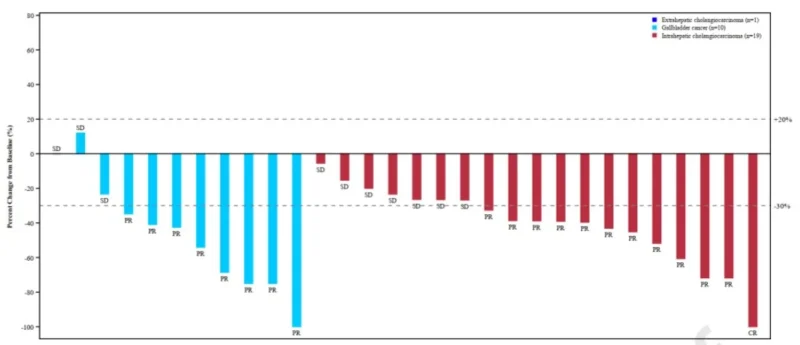
“Ivonescimab plus gemcitabine/cisplatin shows strong first-line efficacy in advanced biliary tract cancer.
Published in Journal of Hepatology.
• ORR: 66.7%
• DCR: 100%
• Median OS: 16.8 months
• Median PFS: 8.5 months
• High MAP2K7 linked to resistance”
Pasquale Lombardi — ESMO Translational Research Fellow at Imperial College London | Italy
“Thrilled to share that our study on primary refractoriness to atezolizumab plus bevacizumab in hepatocellular carcinoma has just been published in the Journal of Hepatology, co-first authored with Erik Ramón Gil.
None of this would have been possible without a collaborative effort spanning Imperial College London, Newcastle University, and many more centres worldwide, and the truly inspiring leadership of David James Pinato and Jack Leslie.
Thank you to every co-author who contributed tissue, data, and ideas, and to the ESMO – European Society for Medical Oncology Translational Research Fellowship for its support.
Would love to hear from others working on immunotherapy resistance in HCC or other solid tumours.
Lombardi, Ramón-Gil et al. “A myeloid immunosuppressive phenotype defines primary refractoriness to atezolizumab plus bevacizumab in hepatocellular carcinoma.” Journal of Hepatology, 2026.”
Erman Akkus — Medical Oncology Fellow at Ankara University | Turkey
“My letter on CARES-005 has been published in JCO.
CARES-005
Camrelizumab + rivoceranib + TACE versus TACE in unresectable HCC• BCLC B and C: 44% and 42%
• Extrahepatic disease: 0%
• PFS benefit
• Median OS: 24.0 months
CARES-310
Camrelizumab + rivoceranib in advanced HCC• BCLC B and C: 14% and 86%
• Extrahepatic disease: 64%
• Median OS: 23.8 months
Patient selection is key, and not all patients with intermediate HCC may need systemic treatment added to TACE. Future research is needed.
Thanks to JCO, the editors, and the answering authors for giving this opportunity for discussion.”
Brendan Zangari — Immune-Oncology and Gene-Therapy Scientist | United States
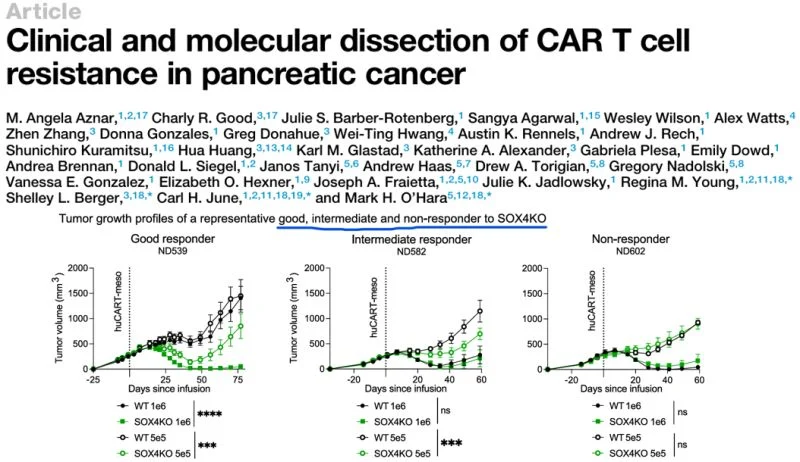
“Today’s article is about CAR-Ts for pancreatic cancer. It was produced by brilliant scientists at the University of Pennsylvania’s Center for Cellular Immunotherapies.
They dissected clinical responses to lentivirus-engineered CAR-Ts. They also executed mouse studies to evaluate transcription factor knockouts for the ability to enhance the therapy.
A few things to highlight:
• They tested different delivery strategies: IV, IP, and intrahepatic. IV and IP led to greater CAR-T frequencies in the blood. IP and intrahepatic delivery were interesting in that they had a suggestively better safety profile, with lower IL-6 levels in serum.
• They compared the impact of the knockout strategy on different donors’ CAR-Ts, comparing donors’ cells that were enhanced by knockout versus those that were not. It is interesting to consider that knockouts may improve some individuals’ CAR-Ts but not others.
The main takeaway is that efficacy was limited by persistence, and that combination therapies and transcription factor modulation may represent the solution.
It will be interesting to see what comes next. I wonder what T cell subsets were in each of these donors’ PBMCs prior to making CAR-Ts, and whether this could predict whether knockout could augment the therapy.”
Giovanni Marchegiani — MD, PhD; Academic Pancreas Surgeon at the Hepatopancreatobiliary and Liver Transplant Surgery Unit, Padova University Hospital | Italy
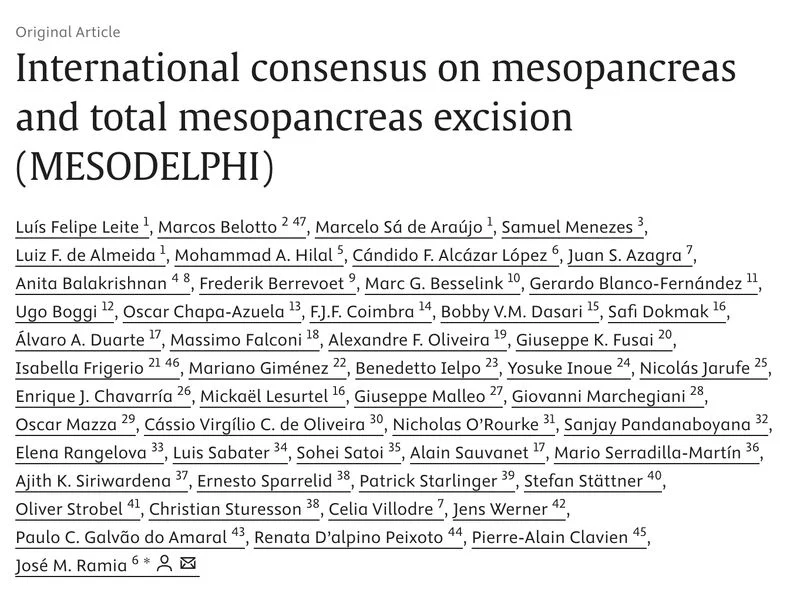
“Mesopancreas excision: international consensus out now in HPB, the journal of the International Hepato-Pancreato-Biliary Association.
Defined as the retropancreatic compartment of lymphatic, neurovascular, and adipose tissue.
Both artery-first and mesenteric-first approaches are acceptable for dissection.
Whether total excision may be more curative remains to be investigated further using this definition.”
Arndt Vogel — Head of the Center for Personalized Medicine, MHH at Medical University of Hanover | Germany
“Durvalumab plus chemotherapy for advanced biliary tract cancer: a post hoc analysis of the TOPAZ-1 randomized clinical trial, published in JAMA Oncology.
Median OS: 13.0 vs 11.4 months
48-month OS rate: 11.8% vs 4.3%
Great to report 4-year overall survival data in biliary tract cancer.”
Read more about 20 Posts Not To Miss From ESMO GI 2026, Part 1 on OncoDaily.