Day 2 of the ESMO GI Cancers Congress 2026 highlighted several important updates in pancreatic cancer and hepatocellular carcinoma. The discussions focused on RAS-targeted treatment, CLDN18.2-directed therapy, and the evolving role of immunotherapy-based combinations with TACE.
Zoldonrasib and the Continuing RAS Story
Pancreatic cancer remained one of the key areas of discussion, with new data on targeted treatment approaches in metastatic pancreatic adenocarcinoma. Two presentations reported safety and efficacy outcomes with zoldonrasib, an oral RAS(ON) G12D-selective inhibitor, in metastatic pancreatic adenocarcinoma.
Zoldonrasib Plus Chemotherapy as 1L in RAS G12D mPDAC
In abstract 340O, Brian M. Wolpin reported safety and efficacy data for zoldonrasib plus chemotherapy in patients with first-line RAS G12D-mutant metastatic pancreatic adenocarcinoma.
Zoldonrasib is an oral RAS(ON) G12D-selective covalent inhibitor. RAS G12D mutations are found in approximately 40% of pancreatic ductal adenocarcinomas, making this one of the most relevant molecular targets in this disease.
In this study, zoldonrasib was combined with either modified FOLFIRINOX or gemcitabine plus nab-paclitaxel. Preliminary efficacy data showed encouraging disease control, with a disease control rate of 96% for zoldonrasib plus modified FOLFIRINOX and 90% for zoldonrasib plus gemcitabine/nab-paclitaxel.
No new safety signals beyond the expected chemotherapy profiles were highlighted.
This update supports the continued movement of RAS G12D inhibition into earlier lines of treatment, including chemotherapy-based first-line combinations.
Read more about Zoldonrasib Plus Chemotherapy at ESMO GI 2026 on OncoDaily.
Zoldonrasib Plus Daraxonrasib in 2L+ RAS/KRAS G12D mPDA
In abstract 341O, Nilofer S. Azad reported data for zoldonrasib plus daraxonrasib in patients with second-line and later KRAS G12D-mutant metastatic pancreatic adenocarcinoma.
This approach combines a selective RAS G12D inhibitor with a multi-selective RAS inhibitor. The rationale is to improve activity and potentially address mechanisms of resistance to RAS inhibition.
The combination showed activity in both second-line and third-line and later treatment. ORR was 50% in the second-line setting and 47% in the third-line and later setting. Disease control rate was 97% and 90%, respectively.
Together with the first-line data, these results suggest that RAS targeting is becoming a new treatment paradigm in pancreatic cancer. Further studies will define how these agents should be used with chemotherapy or with other RAS-targeted combinations across treatment lines.
CLDN18.2 Targeting Beyond Gastric and GEJ Cancers
In abstract 342O, Wungki Park presented results from the phase 2 GLEAM study of zolbetuximab plus gemcitabine and nab-paclitaxel in patients with CLDN18.2-positive metastatic pancreatic adenocarcinoma.
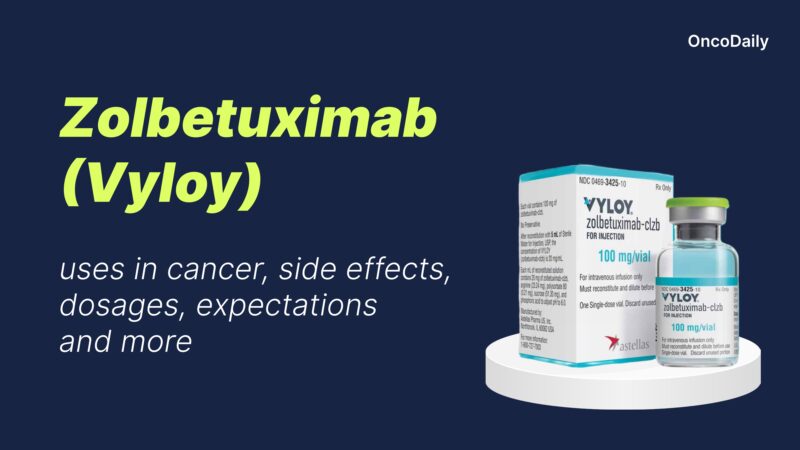
CLDN18.2 is expressed in a subset of pancreatic adenocarcinomas. Zolbetuximab, the first monoclonal antibody targeting CLDN18.2, has already improved PFS and OS in patients with HER2-negative, CLDN18.2-positive advanced gastric and gastroesophageal adenocarcinoma in the GLOW and SPOTLIGHT studies.
In GLEAM, patients had moderate to strong membranous CLDN18.2 staining in at least 75% of tumor cells by immunohistochemistry. Zolbetuximab plus gemcitabine/nab-paclitaxel was compared with gemcitabine/nab-paclitaxel alone. Treatment was given on days 1, 8, and 15 of each 28-day cycle and continued until disease progression or other discontinuation criteria.
Median OS was 13.7 months with zolbetuximab plus gemcitabine/nab-paclitaxel and 13.6 months with gemcitabine/nab-paclitaxel alone. Other efficacy endpoints were also comparable, while adverse events were more frequent in the zolbetuximab arm.
The GLEAM results did not show a survival advantage for adding zolbetuximab to gemcitabine/nab-paclitaxel in this setting. However, CLDN18.2 remains an active target of interest in pancreatic cancer.
During the invited discussion, Prof. Teresa Macarulla Mercade raised important questions about CLDN18.2 targeting in the era of RAS-targeted agents.
She concluded:
“The story of targeting CLDN18.2 in pancreatic cancer has not come to an end, we are still having ADCs, CAR T-cell agents and more new drugs to be tested.”
You can read more about Zolbetuximab on OncoDaily.
Immunotherapy, Anti-Angiogenic Therapy, and TACE in eeHCC
In hepatocellular carcinoma, Day 2 focused on whether adding immune checkpoint inhibition and anti-angiogenic therapy to TACE can improve outcomes in embolization-eligible disease. Two phase 3 updates, EMERALD-3 and EMERALD-1, were discussed during the Proffered Paper session.
EMERALD-3: STRIDE-Based Treatment Plus TACE
In LBA2, Joseph P. Erinjeri presented tumor response analyses from the phase 3 EMERALD-3 study of tremelimumab plus durvalumab, with or without lenvatinib, plus TACE in embolization-eligible hepatocellular carcinoma.
The analysis reported PFS and tumor response by RECIST v1.1 using blinded independent central review and by mRECIST using investigator assessment. Earlier EMERALD-3 data released during ASCO 2026 used mRECIST criteria for response evaluation.
STRIDE plus lenvatinib plus TACE significantly improved PFS versus TACE alone by RECIST v1.1, with an HR of 0.70; 95% CI, 0.57–0.86; p=0.0007. STRIDE plus TACE also showed improved PFS versus TACE alone, with an HR of 0.71; 95% CI, 0.56–0.91.
These findings further support STRIDE-based treatment with TACE as a potential approach for patients with embolization-eligible HCC.
Read more about EMERALD-3 at ESMO GI 2026 on OncoDaily.
EMERALD-1: OS Data With Durvalumab-Based TACE Combinations
In abstract 183O, Bruno Sangro presented overall survival data from EMERALD-1, a phase 3 study of durvalumab with or without bevacizumab plus TACE in unresectable, embolization-eligible hepatocellular carcinoma.
Although EMERALD-1 previously showed a significant PFS improvement, this did not translate into an OS benefit.
Median OS was 29.9 months with durvalumab plus bevacizumab plus TACE versus 33.3 months with TACE alone, with an HR of 1.10; 95% CI, 0.87–1.39; p=0.470. Median OS was 33.6 months with durvalumab plus TACE versus 33.3 months with TACE alone, with an HR of 0.93; 95% CI, 0.74–1.19; p=0.666.
During the invited discussion, Prof. Jens Ricke emphasized the consistency of outcomes across trials evaluating immunotherapy-based combinations with TACE, including TALENTACE and LEAP-012. These studies have shown PFS improvement, but no clear OS benefit so far.
Prof. Ricke also discussed the “dark side” of adding immunotherapy to TACE, particularly grade 3–4 adverse events and their possible impact on quality of life and treatment choices after progression.
Overall Takeaway
Across these Day 2 highlights, RAS targeting continued to stand out in RAS/KRAS G12D-mutant metastatic pancreatic adenocarcinoma, with zoldonrasib-based combinations showing encouraging activity across treatment lines. GLEAM did not support adding zolbetuximab to chemotherapy in CLDN18.2-positive metastatic pancreatic adenocarcinoma, although CLDN18.2 remains a target for future approaches. In embolization-eligible HCC, immunotherapy-based TACE combinations continue to show PFS benefit, but OS benefit remains uncertain.
More details are available in the official ESMO Gastrointestinal Cancers Congress 2026 programme.
Written by Noha Fouad Rashad, MD, Lecturer of medical oncology, Suez University, Egypt