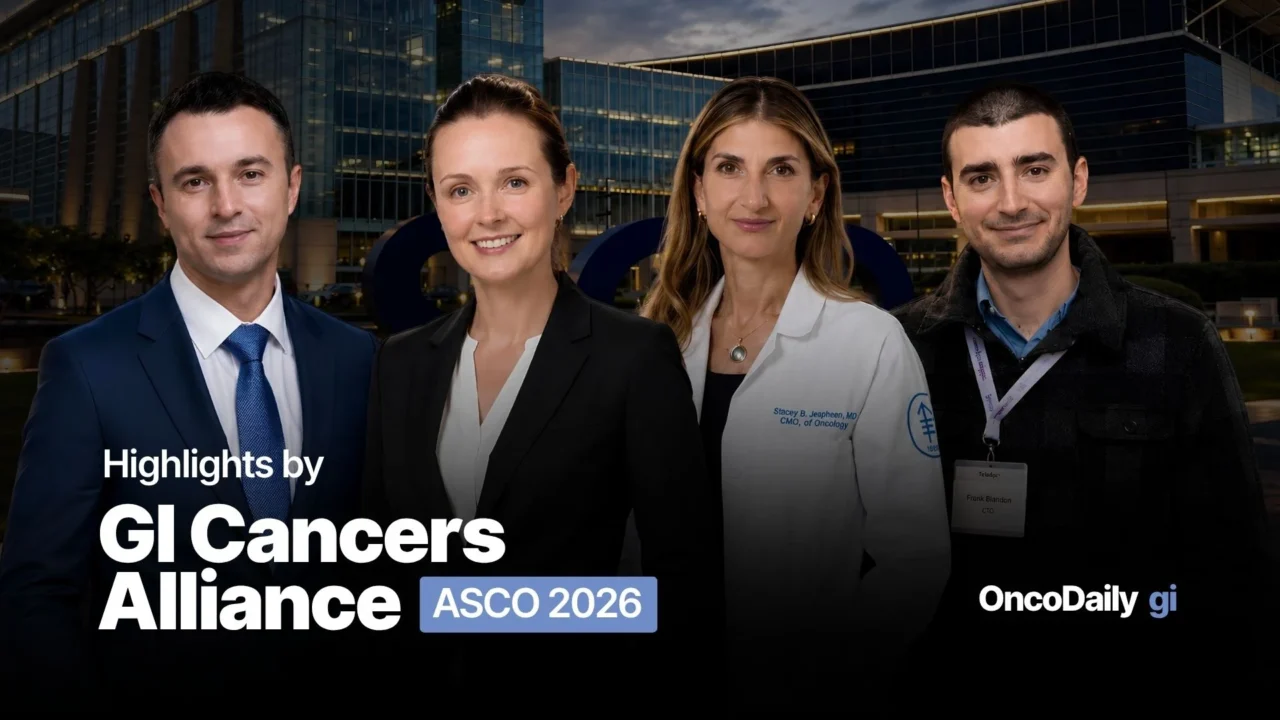
A collaborative on-demand webinar, originally aired on June 9, 2026, brought together leading gastric cancer specialists and a patient advocate to discuss key findings from the ASCO Annual Meeting 2026.
The one-hour session focused on new clinical developments in gastric and gastroesophageal junction (GEJ) cancers, including HER2-targeted therapies, immunotherapy combinations, biomarker-driven treatment, circulating tumor DNA testing, treatment duration, and supportive care.
Hosted in collaboration with major patient advocacy organizations, the webinar aimed to make complex clinical developments clearer and more accessible for patients, caregivers, and healthcare professionals.
A Panel Bringing Research Into Practice
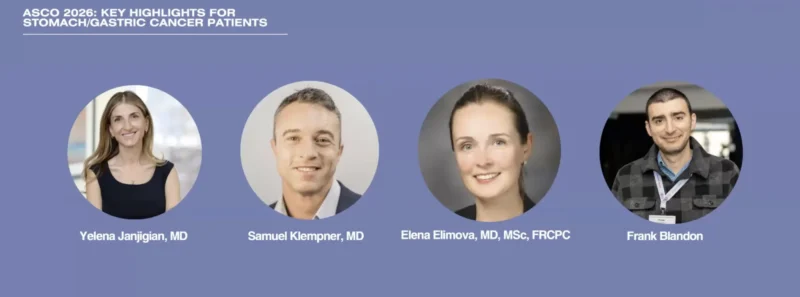
The discussion featured Dr. Yelena Janjigian of Memorial Sloan Kettering Cancer Center, Dr. Samuel Klempner of Harvard Medical School, Dr. Elena Elimova of Princess Margaret Cancer Centre, and patient advocate Frank Blandon.
Dr. Janjigian provided a recorded overview of important ASCO 2026 updates, while Dr. Klempner and Dr. Elimova explored the clinical implications of the data in greater detail. Frank Blandon added the perspective of a person living with stage IV stomach cancer, addressing the realities of long-term treatment, side-effect management, and decisions around maintenance therapy.
Together, the panel highlighted a central message: treatment for gastric and GEJ cancers is becoming increasingly individualized, but access to testing, clinical trials, and supportive care remains essential.
HER2-Targeted Treatment Continues to Move Forward
HER2 remains one of the most important treatment-defining biomarkers in gastric and GEJ cancers.
For many years, trastuzumab combined with chemotherapy has been a key treatment option for patients with HER2-positive disease. More recently, adding pembrolizumab to trastuzumab and chemotherapy has expanded first-line treatment options for selected patients.
At ASCO 2026, updated findings with zanidatamab drew particular attention. Zanidatamab is a HER2-targeted bispecific antibody being studied in combination with chemotherapy and PD-1-directed treatment.
The panel discussed data from the HORIZON study in gastroesophageal adenocarcinoma, where the zanidatamab-based approach showed an overall survival improvement of more than seven months compared with chemotherapy and trastuzumab in the comparator arm.
An important point from the updated analysis was that patients appeared to benefit regardless of PD-L1 status. This differs from some earlier treatment approaches in which the added value of immunotherapy was more clearly established in PD-L1-positive disease.
The panel also addressed treatment-related diarrhea, one of the principal concerns with zanidatamab-based therapy. According to the discussion, this side effect is often most prominent early in treatment and can frequently be managed through preventive antidiarrheal medication, chemotherapy dose adjustments, and careful follow-up.
Long-Term Response Raises New Questions
As treatment outcomes improve, clinicians and patients are increasingly faced with a difficult question: how long should therapy continue when the cancer is controlled?
Frank Blandon shared his own experience after starting treatment with FOLFOX and immunotherapy. Oxaliplatin was discontinued after several months because of neuropathy, while maintenance treatment continued with capecitabine and immunotherapy. He later reached no evidence of disease and remained concerned about changing a regimen that had been effective.
His experience reflected a broader issue in gastric cancer care. Many clinical trials have treated patients for up to two years, but evidence on treatment continuation beyond that period remains limited.
The panel emphasized that there is no single answer. Decisions about continuing or stopping treatment should be shared between the patient and care team, taking into account treatment response, side effects, personal priorities, and access to therapy.
For some patients, remaining on treatment provides reassurance. For others, treatment breaks or discontinuation may become important because of cumulative toxicity, cost, logistics, or quality-of-life concerns.
Perioperative Treatment: Progress With Unanswered Questions
For patients with resectable gastric and GEJ cancers, perioperative therapy remains a cornerstone of curative-intent treatment.
The FLOT chemotherapy regimen continues to be widely used for fit patients. The discussion also reviewed the MATTERHORN study, which evaluated durvalumab in combination with perioperative FLOT.
The study showed a survival benefit with the durvalumab-containing strategy, with the panel citing an approximately 6% absolute survival benefit at three years. Benefit was observed across groups, although patients with PD-L1-positive disease appeared to have greater benefit.
In MATTERHORN, treatment included chemotherapy and durvalumab before surgery, postoperative chemotherapy, and continued durvalumab to complete approximately one year of therapy.
However, experts noted that the optimal duration of postoperative immunotherapy remains uncertain. While current practice generally follows the treatment plan used in phase III trials, future studies may help identify patients who can safely receive less intensive treatment.
ASCO 2026 also included discussion of ASTRUM-006, which examined a PD-1 inhibitor combined with doublet chemotherapy in the perioperative setting. The data may be particularly relevant for patients who are not suitable candidates for intensive triplet chemotherapy.
Biomarkers Are Becoming Central to Care
The panel repeatedly emphasized the growing importance of biomarker testing.
HER2, PD-L1, mismatch repair deficiency, Claudin 18.2 expression, and MET amplification are among the factors that can increasingly influence treatment decisions. Rather than approaching every gastric cancer in the same way, clinicians are moving toward strategies based on each tumor’s molecular features.
This may improve the ability to select effective treatment while avoiding unnecessary toxicity.
For patients with mismatch repair-deficient tumors, immunotherapy may play a particularly important role. For those with HER2-positive disease, new HER2-directed combinations are expanding. Claudin 18.2-targeted therapies are also becoming an important area of study and clinical interest.
The discussion also addressed next-generation sequencing. Although broad tumor testing may identify potentially actionable findings or clinical trial options, access remains unequal. In some healthcare systems, patients may need to pay out of pocket for testing outside research programs.
MET Amplification Offers Another Target
MET amplification occurs in a relatively small proportion of gastric and GEJ cancers, but ASCO 2026 brought encouraging data for this group.
The panel discussed findings with savolitinib, a MET-targeted treatment that produced responses in approximately one in three patients with MET-amplified tumors.
Although this represents a small subgroup of patients, the data are meaningful because treatment options for MET-amplified gastric cancer have historically been limited.
The speakers also noted interest in future MET-directed antibody-drug conjugates, which could potentially expand treatment opportunities in tumors with different levels of MET expression or amplification.
Claudin 18.2, CAR T-Cell Therapy, and Peritoneal Disease
Claudin 18.2 remains one of the most closely watched targets in gastric cancer research.
For patients whose tumors express Claudin 18.2, the panel encouraged consideration of clinical trial participation when possible. Claudin-directed antibody-drug conjugates and other treatment approaches may offer additional options, especially for patients whose disease has progressed after initial therapy.
CAR T-cell therapy was also discussed as an emerging approach in solid tumors. While early research has shown promising signals, the panel stressed that this treatment remains complex and is not yet broadly established for gastric cancer.
CAR T-cell treatment requires collection and engineering of a patient’s immune cells, followed by reinfusion after manufacturing. This process takes time and can cause serious treatment-related effects. The experts agreed that more research is needed to determine where CAR T-cell therapy may fit in gastric cancer care.
Peritoneal metastases remain another major challenge. Intraperitoneal chemotherapy and HIPEC-based strategies continue to be investigated, but the panel emphasized that these approaches should ideally be pursued through clinical trials or highly specialized centers.
ctDNA Is Promising, but Questions Remain
Circulating tumor DNA testing, often called ctDNA, is increasingly discussed in cancer care. It may help identify minimal residual disease, monitor treatment response, or detect recurrence risk before changes appear on imaging.
However, the panel was clear that ctDNA is not yet validated as a standard tool for guiding treatment changes in gastric and GEJ cancers.
A positive ctDNA result in the absence of visible disease on scans can create uncertainty and anxiety for patients. In clinical practice, physicians may repeat testing and monitor trends, but there is currently no established treatment strategy proven to improve outcomes solely because ctDNA becomes positive.
Future clinical trials may clarify whether treatment can be tailored safely according to ctDNA results.
The Importance of Shared Decision-Making
Beyond the clinical data, the webinar highlighted the importance of patient-centered care.
Side effects such as neuropathy, diarrhea, fatigue, and hand-foot syndrome can influence treatment decisions just as strongly as scan results or laboratory values. Frank Blandon’s experience showed how long-term treatment may require dose adjustments, supportive care, and ongoing conversations between patients and clinicians.
The panel emphasized that patients should feel comfortable asking about their biomarker status, treatment goals, clinical trial eligibility, and the expected benefits and risks of continuing therapy.
As more treatment options become available, clear communication and shared decision-making will remain essential.
Where the Field Is Heading
ASCO 2026 reinforced the pace of progress in gastric and GEJ cancer care.
New HER2-targeted strategies, advances in perioperative treatment, emerging biomarker-directed therapies, and research in Claudin 18.2, MET amplification, and ctDNA are creating new opportunities for patients.
At the same time, important questions remain around treatment duration, access to testing, management of peritoneal disease, and how best to integrate new treatments into routine care.
For patients, caregivers, and clinicians, the webinar offered a practical message: knowing the biology of the tumor, discussing all available treatment options, and considering clinical trials can make a meaningful difference in navigating gastric and GEJ cancer care.
The webinar was presented in collaboration with Debbie’s Dream Foundation, Gastric Cancer Foundation, Hope for Stomach Cancer, My Gut Feeling, No Stomach for Cancer, and Stomach Cancer UK.
Find more exclusive oncology content on OncoDaily
Written by Nare Hovhannisyan, MD