Key takeaways
- Chemotherapy-related fatigue is different from ordinary tiredness and may not fully improve with rest or sleep.
- Fatigue can result from several factors working together, including inflammation, anemia, changes in energy production, and disrupted sleep.
- Some patients are more likely to experience significant fatigue because of anemia, inflammation, poor sleep, pain, emotional distress, or greater treatment burden.
- Exercise, CBT, mindfulness, good sleep habits, adequate nutrition, hydration, and treating reversible causes can help reduce fatigue.
- Worsening fatigue, shortness of breath, dizziness, fever, chest pain, fainting, or confusion should be reported to the cancer care team promptly.
Fatigue is one of the most common symptoms experienced during cancer treatment. It can affect much more than physical energy, making it harder to concentrate, stay active, work, or manage everyday routines.
During chemotherapy, fatigue can look different from one person to another. Some patients notice a mild drop in energy, while others feel exhausted enough that normal activities become difficult. It may also change throughout a chemotherapy cycle and become more noticeable at certain points during treatment.
Recognizing fatigue is important because patients should not feel that they simply have to push through it. Changes in energy levels are worth discussing with the cancer care team, especially when fatigue begins to interfere with everyday life.
What Is Chemotherapy-Induced Fatigue?
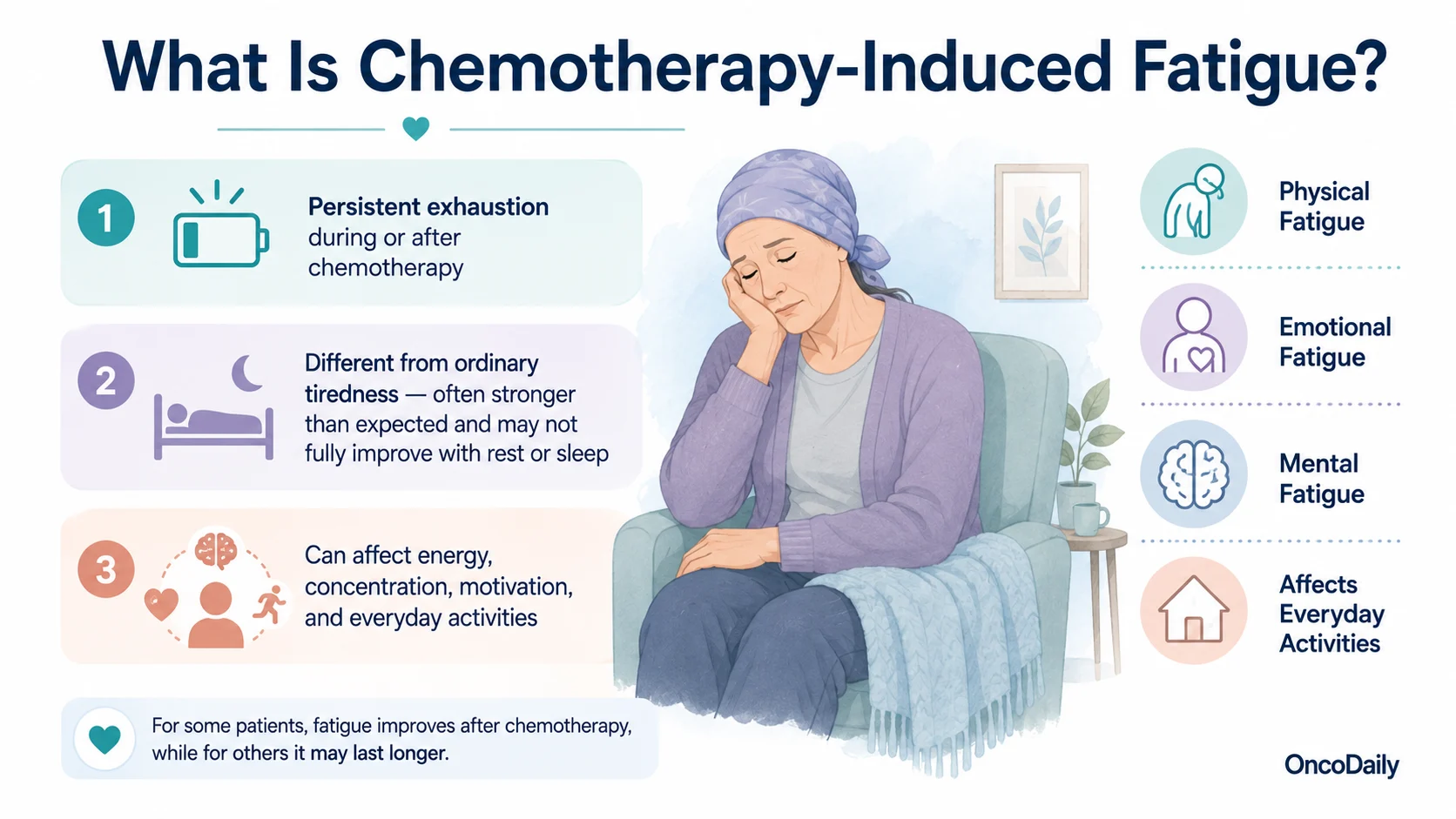
Chemotherapy-induced fatigue is a persistent feeling of physical, emotional, or mental exhaustion that can occur during or after chemotherapy. Unlike ordinary tiredness, it may feel much stronger than expected for the amount of activity a person has done and often does not fully improve with rest or a good night’s sleep (Thong et al., 2020).
Patients may describe feeling weak, drained, heavy, or simply unable to do as much as usual. Fatigue can also make it harder to concentrate, stay motivated, or complete everyday tasks such as walking, preparing meals, working, or taking care of oneself.
Fatigue may improve after chemotherapy ends, but this does not always happen immediately. For some patients, energy gradually returns over the following weeks, while others may continue to experience fatigue for longer (Thong et al., 2020).
How Can Chemotherapy Cause Fatigue?
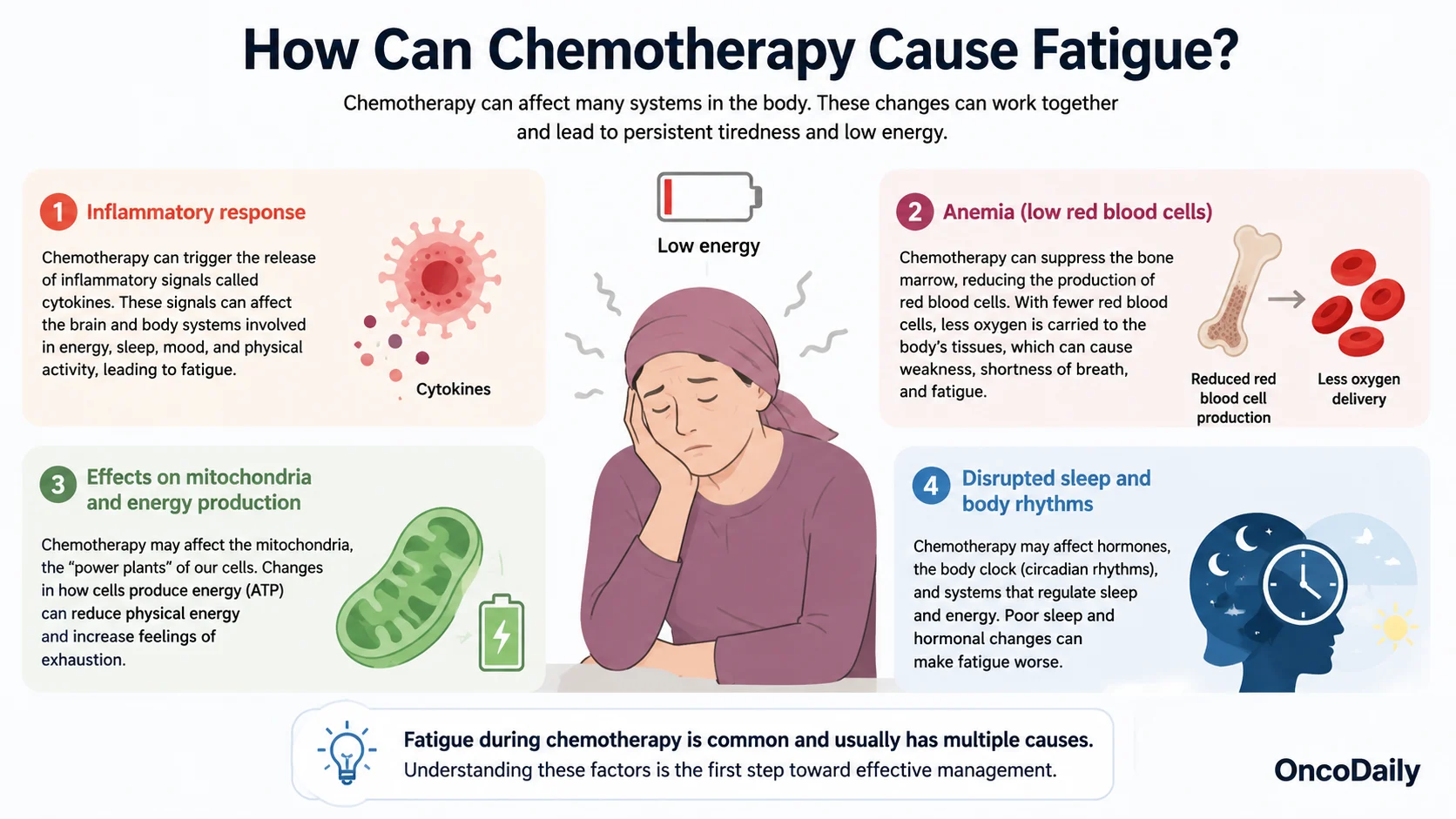
There is no single explanation for chemotherapy-related fatigue. Several changes can occur in the body during treatment, and these may work together to reduce energy and increase the feeling of exhaustion.
Chemotherapy can trigger inflammatory responses as it affects cancer cells and normal tissues. Inflammatory signals, including cytokines, may influence the brain and other systems involved in energy, sleep, mood, and physical activity. This inflammatory response is considered one of the possible mechanisms behind cancer-related fatigue (Song et al., 2024).
Chemotherapy can also temporarily suppress the bone marrow, reducing the production of red blood cells. This can lead to anemia. Because red blood cells carry oxygen around the body, lower hemoglobin levels may contribute to weakness, shortness of breath, and fatigue (Song et al., 2024).
Researchers are also studying how chemotherapy affects the mitochondria, the structures within cells that help produce energy. Changes in mitochondrial function and cellular energy metabolism may contribute to the loss of physical energy experienced by some patients during treatment (Phan et al., 2024).
Sleep and the body’s normal daily rhythms may be affected as well. Changes in circadian rhythms, hormonal signaling, and other systems that regulate sleep and energy have all been investigated as possible contributors to cancer-related fatigue (Song et al., 2024; Phan et al., 2024).
Which Chemotherapy Drugs Are More Likely to Cause Fatigue?
Fatigue can occur with many chemotherapy drugs. The likelihood and intensity depend on the drugs being used, the dose and treatment schedule, whether several drugs are given together, and how an individual patient responds to treatment (Cancer Research UK, 2026).
Platinum-based chemotherapy, including cisplatin, carboplatin, and oxaliplatin, has been associated with fatigue. Research has also explored whether platinum that remains in the body after treatment may contribute to inflammation and fatigue, although this is unlikely to be the only explanation (Zhang et al., 2021).
Fatigue is also commonly reported with taxanes, such as paclitaxel and docetaxel; anthracyclines, such as doxorubicin and epirubicin; and antimetabolites, including fluorouracil, capecitabine, and gemcitabine.
For some patients, tiredness becomes more noticeable as chemotherapy continues. However, there is no reliable way to predict exactly how much fatigue a particular drug or regimen will cause in an individual patient (Cancer Research UK, 2026).
You can also write The Main Types of Chemotherapy Drugs and How They Work on OncoDaily.
Who Is at Higher Risk of Fatigue During Chemotherapy?
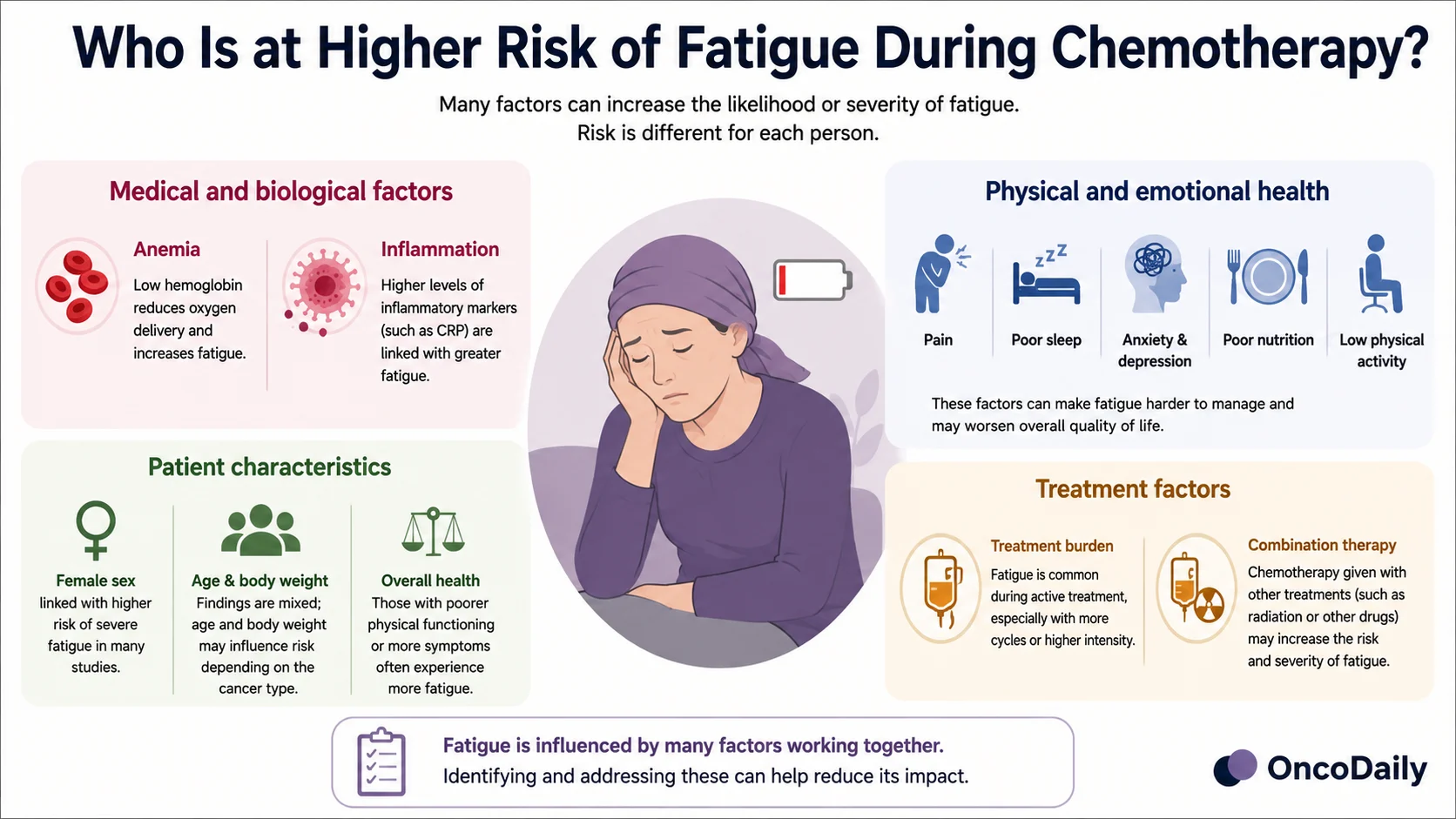
Some patients are more likely than others to experience significant fatigue during chemotherapy. Anemia and inflammation are among the factors that have been studied most closely. In a prospective study of 608 patients receiving outpatient chemotherapy, lower hemoglobin levels and higher C-reactive protein (CRP) levels were associated with greater fatigue (Fujihara et al., 2023).
A person’s overall physical and emotional health can also influence fatigue. Pain, poor sleep, anxiety, depression, poor nutrition, and reduced physical activity may all make fatigue more difficult to manage. Patients with poorer general physical functioning or a greater overall symptom burden may also experience more fatigue.
Some studies have found differences according to patient characteristics. For example, a large systematic review and meta-analysis found that severe cancer-related fatigue was more common among women than men. Findings for factors such as age and body weight have been less consistent and may vary according to the cancer type and patient population (Kang et al., 2023).
Treatment burden may play a role as well. Fatigue is particularly common during active cancer treatment and may become more noticeable with prolonged treatment or when chemotherapy is given alongside other cancer therapies (Kang et al., 2023).
Watch more on OncoDaily TV.
How Can Chemotherapy-Induced Fatigue Be Managed?
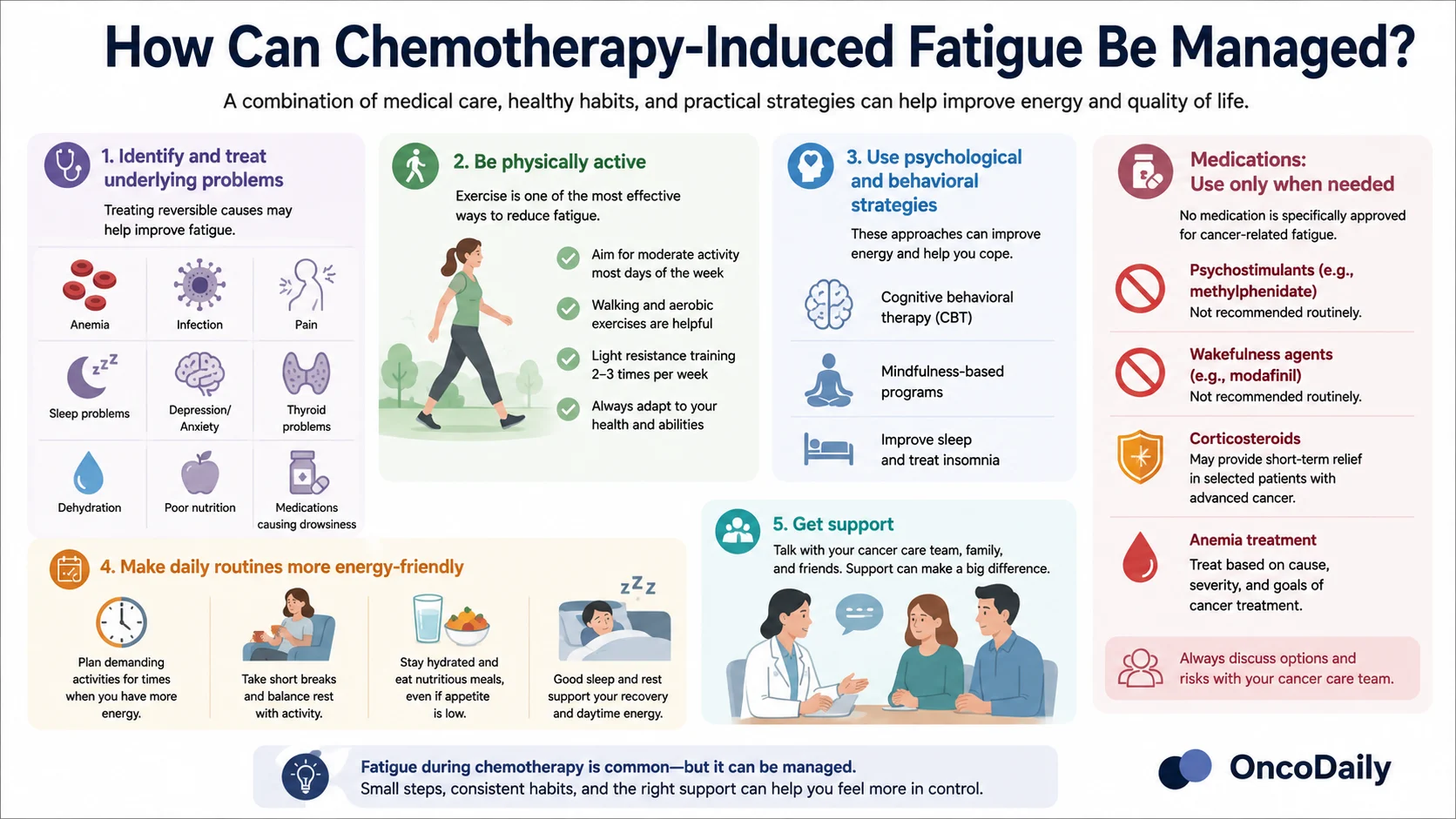
Managing chemotherapy-induced fatigue usually starts by looking for problems that may be making it worse. These can include anemia, infection, pain, sleep problems, depression or anxiety, thyroid problems, dehydration, poor nutrition, or medications that cause drowsiness. Treating an underlying problem may help improve energy levels (National Cancer Institute, 2024).
Physical activity is one of the best-supported ways to reduce cancer-related fatigue. Exercise should be adapted to each patient’s health and abilities and does not need to be intense. Walking, aerobic activity, and resistance exercises can all be helpful when they are safe and appropriate. The ASCO–SIO guideline recommends exercise during cancer treatment to help reduce fatigue (Bower et al., 2024).
Psychological and behavioral approaches can also help. Cognitive behavioral therapy (CBT) and mindfulness-based programs have shown benefits for cancer-related fatigue. Addressing sleep problems is important as well, particularly when poor sleep or insomnia is contributing to daytime exhaustion (Bower et al., 2024).
Small changes to daily routines may make fatigue easier to manage. Patients can plan more demanding activities for times of the day when they usually have more energy, take breaks when needed, and balance rest with activity. Maintaining adequate food and fluid intake is also important, especially when nausea, vomiting, or poor appetite makes eating and drinking difficult (National Cancer Institute, 2024).
Medicines are not routinely recommended specifically for cancer-related fatigue. Current guidance does not recommend routinely using psychostimulants such as methylphenidate or wakefulness medicines such as modafinil for this purpose. In selected patients with advanced cancer, corticosteroids may sometimes provide short-term benefit. When anemia is contributing to fatigue, treatment depends on its cause, severity, and the goals of cancer treatment (Bower et al., 2024; Bohlius et al., 2019).
When Should You Contact Your Cancer Care Team?
Tell your cancer care team if fatigue is getting worse, interfering with normal activities, or not improving with rest and the measures recommended by your healthcare team. Sometimes worsening fatigue can be a sign of another problem, such as anemia, infection, dehydration, or another treatment-related complication (National Cancer Institute, 2024).
Contact your cancer care team if you:
- Feel too tired to get out of bed or carry out your usual activities
- Have difficulty waking up or staying awake
- Notice that your fatigue is becoming progressively worse
- Develop shortness of breath with activity
- Feel dizzy, lightheaded, or unusually weak
- Develop a fever or chills
- Have difficulty eating or drinking enough fluids
The American Cancer Society recommends contacting the cancer care team if fatigue becomes worse, causes difficulty getting out of bed for 24 hours, causes problems waking up, or occurs with shortness of breath during activity (American Cancer Society, 2024).
Seek urgent medical attention if fatigue occurs with severe difficulty breathing, chest pain, fainting, new confusion, or another sudden or rapidly worsening symptom.
Written by Marine Marachlian, MD
FAQ
What is chemotherapy-induced fatigue?
It is a persistent feeling of physical, emotional, or mental exhaustion that can occur during or after chemotherapy and may not fully improve with rest.
How is chemotherapy-related fatigue different from normal tiredness?
Normal tiredness usually improves after sleep or rest. Chemotherapy-related fatigue can feel much stronger and may continue even after a good night’s sleep.
Why does chemotherapy cause fatigue?
Fatigue can develop for several reasons, including inflammation, anemia, changes in cellular energy production, sleep disruption, and the overall effects of treatment on the body.
Which chemotherapy drugs can cause fatigue?
Fatigue can occur with many chemotherapy drugs, including platinum agents, taxanes, anthracyclines, and antimetabolites. The severity varies between patients and treatment regimens.
Does fatigue get worse with each chemotherapy cycle?
It can. Some patients notice that fatigue becomes more noticeable as treatment continues, although this does not happen to everyone.
Can anemia make chemotherapy-related fatigue worse?
Yes. Chemotherapy can lower red blood cell levels, and anemia may contribute to weakness, shortness of breath, and increased fatigue.
Should I exercise if I feel tired during chemotherapy?
When it is safe and appropriate, light-to-moderate physical activity such as walking can help reduce cancer-related fatigue. Exercise should be adapted to your health and abilities.
Can sleep help with chemotherapy-related fatigue?
Good sleep habits can help, especially when poor sleep or insomnia is contributing to fatigue. However, chemotherapy-related fatigue may not disappear completely with sleep alone.
How long does fatigue last after chemotherapy?
For many patients, fatigue gradually improves after treatment ends. In some people, however, it may continue for weeks or months.
When should I contact my cancer care team about fatigue?
Contact your cancer care team if fatigue is getting worse, interferes with normal activities, or occurs with symptoms such as shortness of breath, dizziness, fever, chest pain, fainting, or confusion.