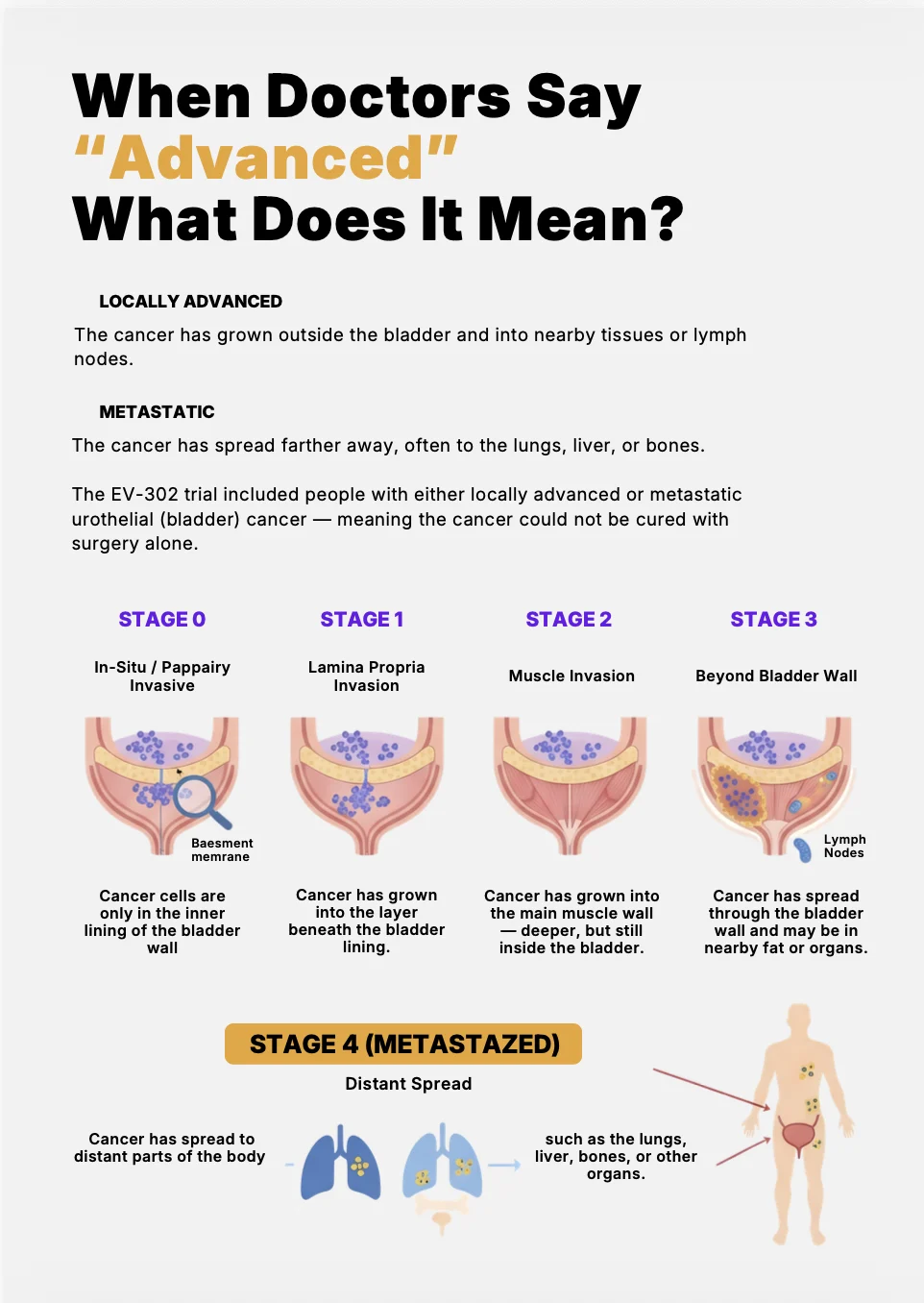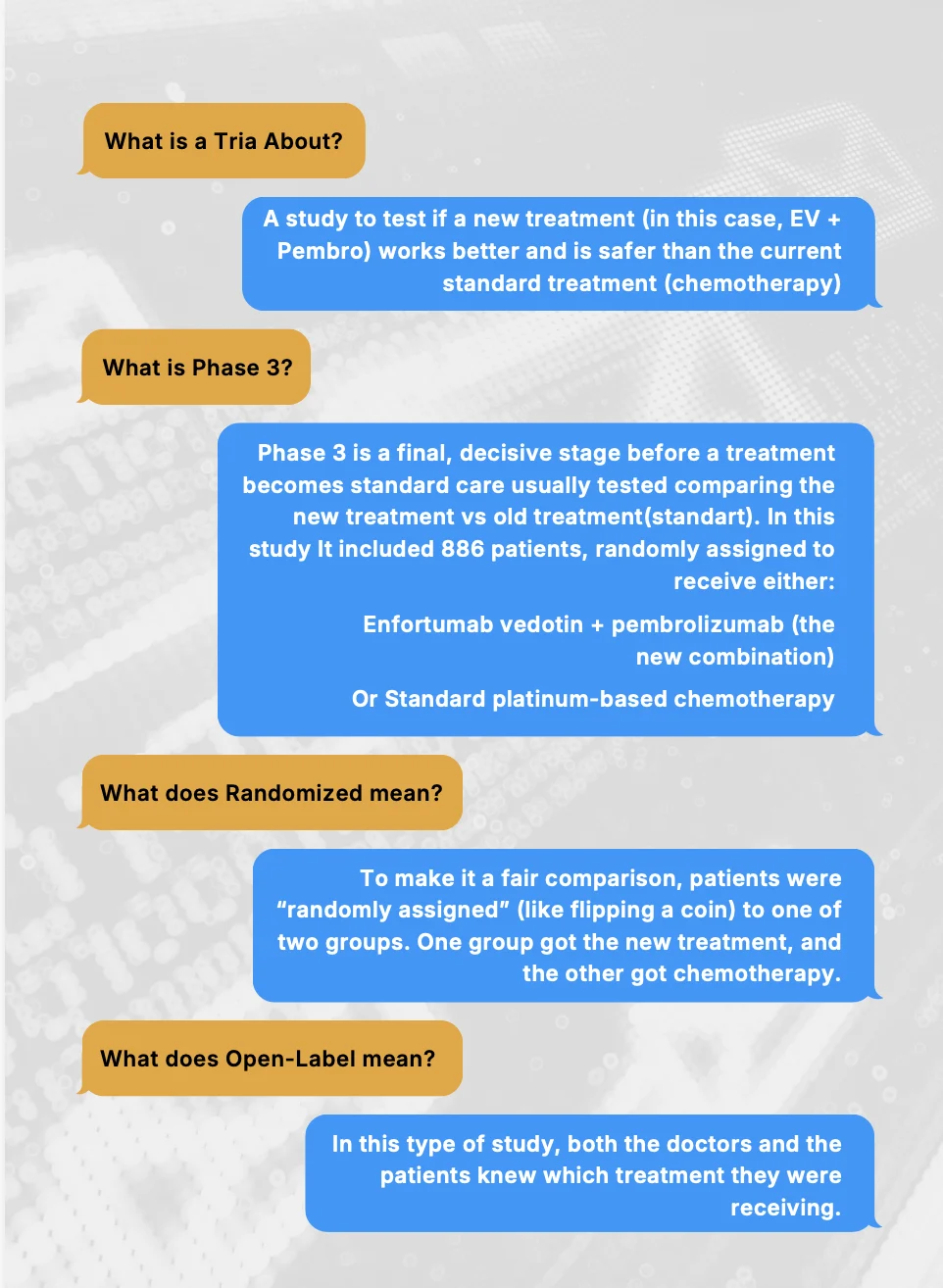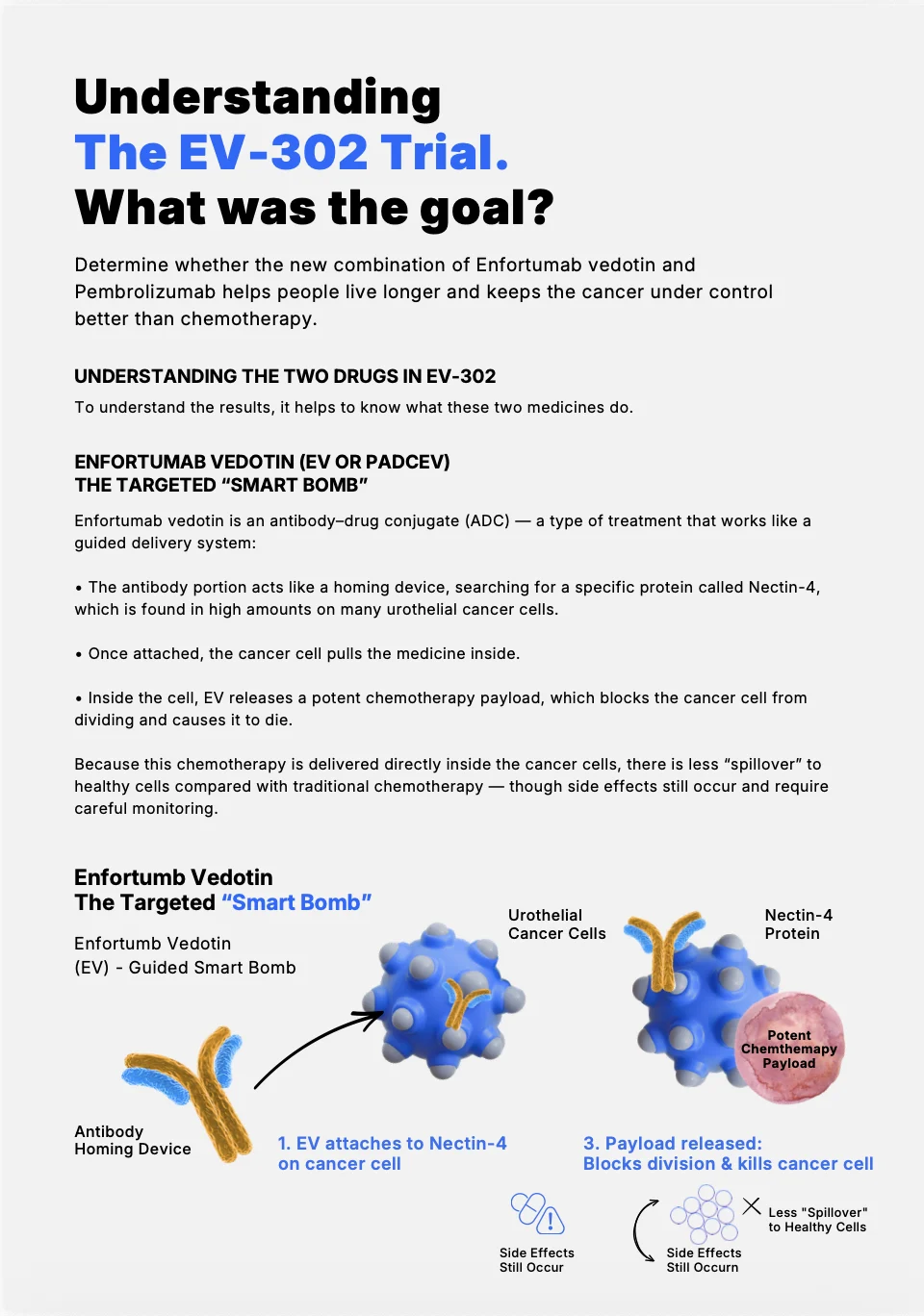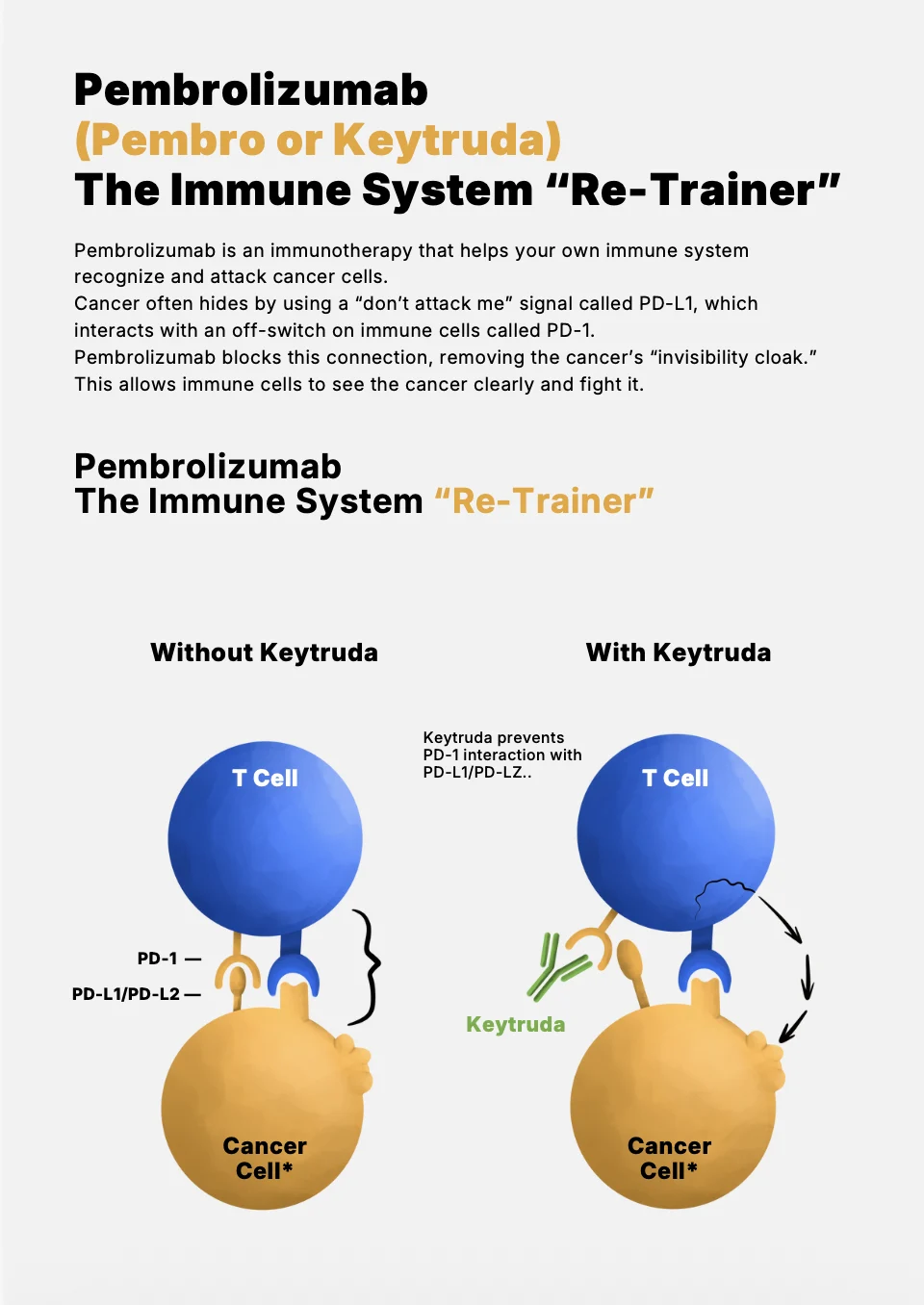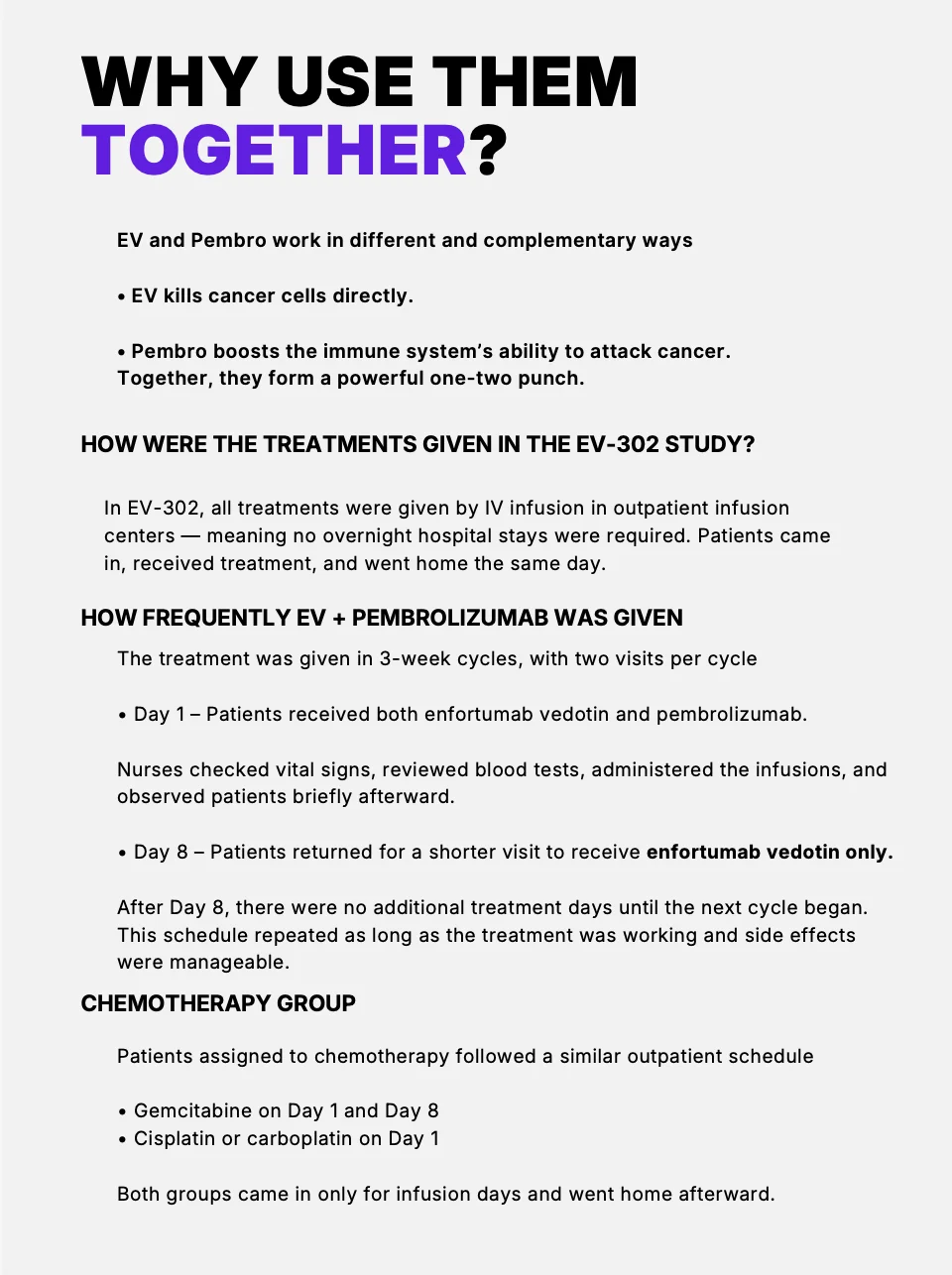
The EV-302/ KEYNOTE-A39 trial looked at people with locally advanced or metastatic urothelial carcinoma, the most common type of bladder cancer, who had not yet received treatment for advanced disease. Researchers compared two first-line treatment options:
- Enfortumab vedotin + pembrolizumab
- Standard platinum-based chemotherapy
The new analysis includes about 2.5 years of follow-up, allowing doctors to see not only whether the treatment works initially, but how durable the benefit is over time.
Enfortumab Vedotin (Padcev): What Patients Need To Know?
The main question
The study asked a straightforward but very important question:
Does the combination of enfortumab vedotin and pembrolizumab help patients live longer and control their cancer better than chemotherapy?
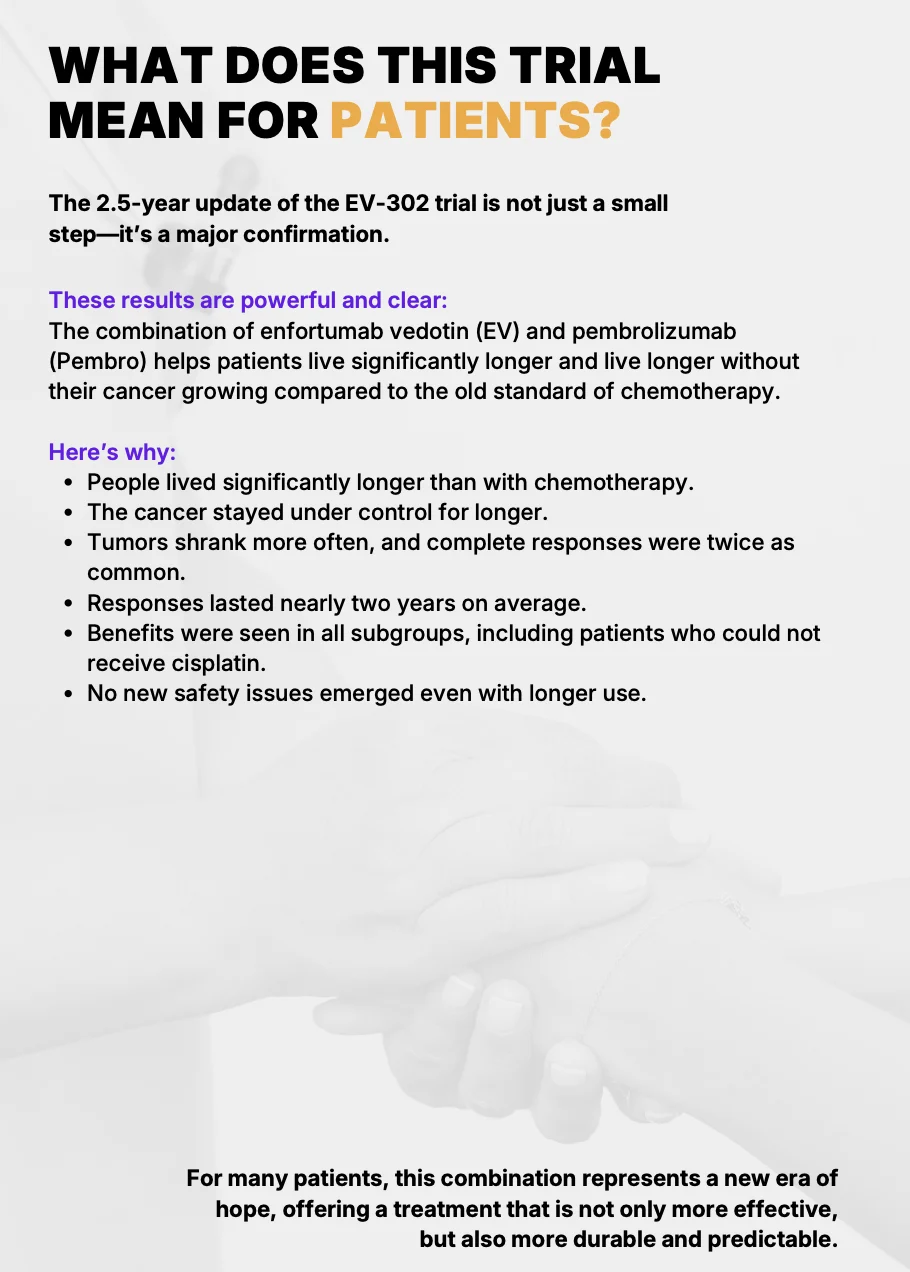
The updated results show that it clearly does.
Cancer control lasted longer
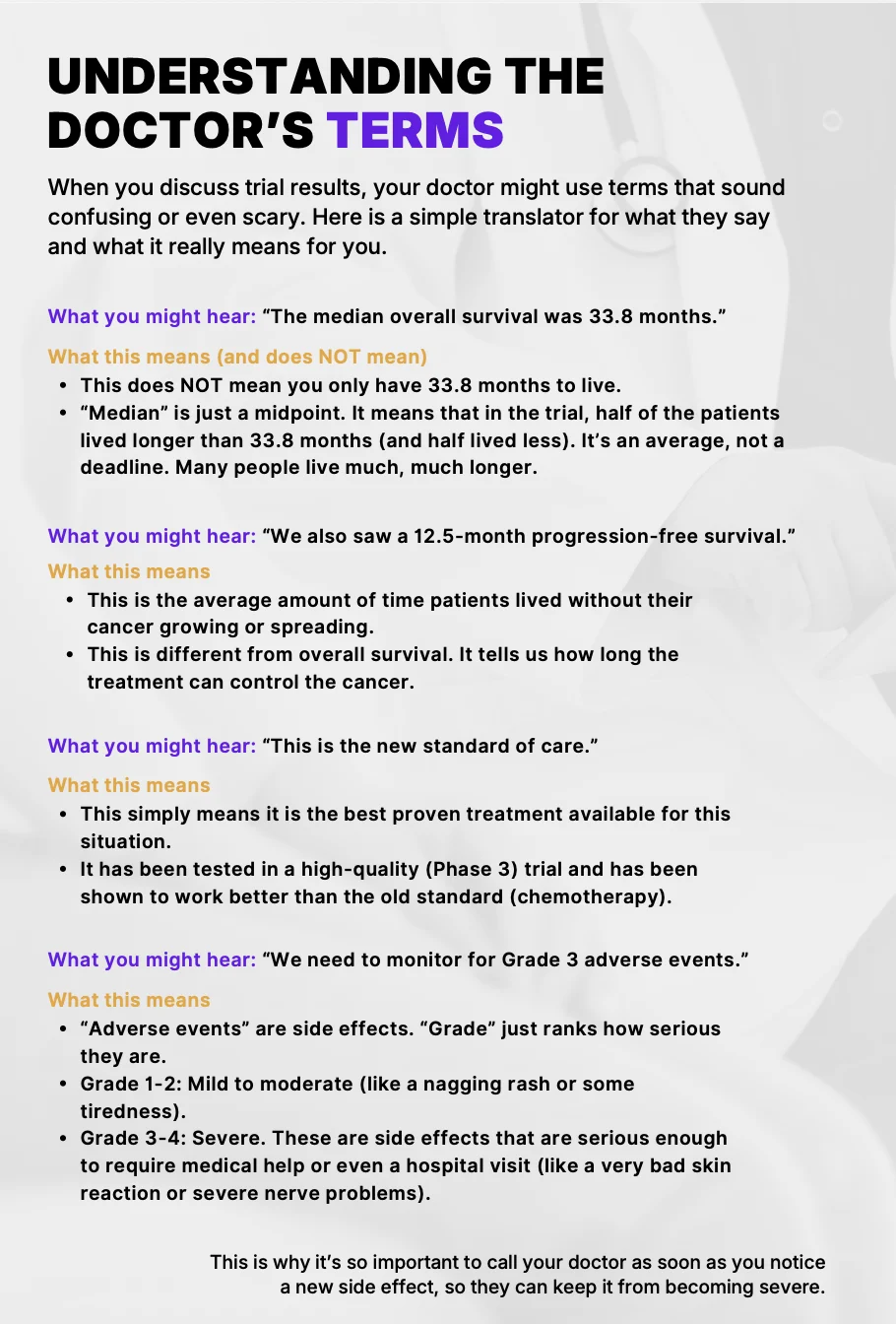
Researchers measured how long it took before the cancer started growing again. This is called progression-free survival (PFS).
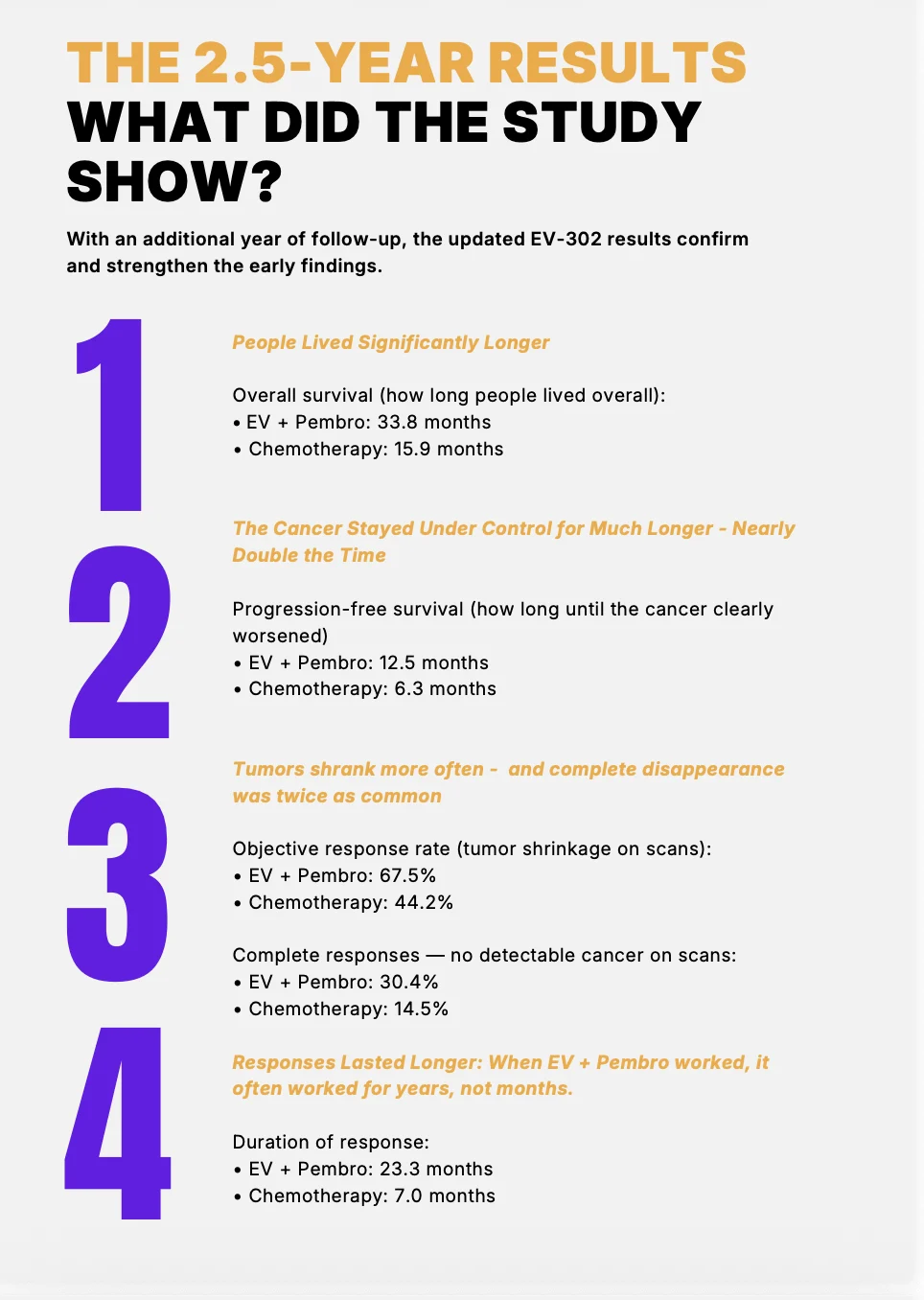
- With enfortumab vedotin + pembrolizumab, cancer remained controlled for about 12.5 months
- With chemotherapy, it was about 6.3 months
In other words, the combination treatment roughly doubled the time before the cancer progressed.
Patients lived much longer
The most important result in cancer studies is overall survival, meaning how long patients live after starting treatment.
- Patients receiving enfortumab vedotin + pembrolizumab lived about 33.8 months on average
- Patients receiving chemotherapy lived about 15.9 months
So patients treated with the combination therapy lived more than twice as long on average compared with chemotherapy.
More patients responded to treatment
A response means the tumor shrinks on scans.
- 67.5% of patients responded to enfortumab vedotin + pembrolizumab
- 44.2% responded to chemotherapy
This means the combination treatment was much more likely to shrink the cancer.
Durability of Response
Another key question is how long the treatment responses lasted once patients responded.
- With enfortumab vedotin + pembrolizumab, the median duration of response was about 23 months
- With chemotherapy, responses lasted about 7 months
In practical terms, when patients responded to the combination therapy, the benefit was much more durable, keeping the cancer under control for a substantially longer period.
Complete Responses
Some patients achieved a complete response, meaning that no detectable cancer was visible on imaging.
- 30% of patients treated with EV + pembrolizumab reached a complete response
- 15% of patients receiving chemotherapy did
Importantly, these complete responses were often long-lasting. Among patients who achieved a complete response with the combination therapy, about 74% remained in remission two years later, highlighting the potential for deep and durable disease control in a meaningful proportion of patients.
Did the treatment work for different patient groups?
The treatment benefit was consistent across multiple patient subgroups. Improvements in progression-free and overall survival were observed regardless of cisplatin eligibility, indicating that patients who could not tolerate cisplatin chemotherapy derived similar benefit to those who were eligible for it. Clinical outcomes were also consistent across patients with both high and low PD-L1 expression, suggesting that the efficacy of enfort.
What about side effects?
Side effects did occur with both treatments.
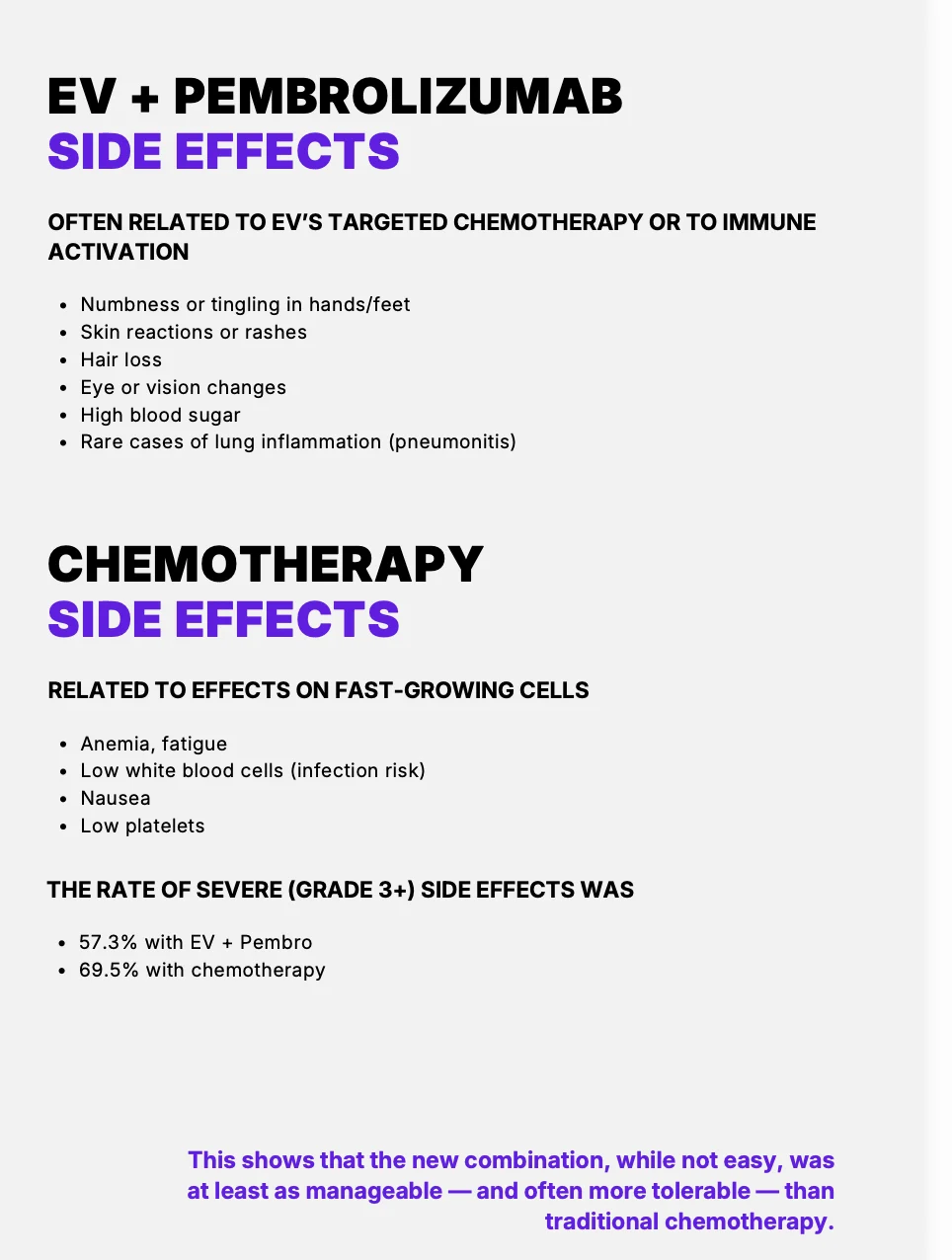
With enfortumab vedotin + pembrolizumab, the most common side effects included:
nerve problems (tingling or numbness)
- itching
- skin rash
- fatigue
- diarrhea
- loss of appetite
However, some severe blood-related side effects such as anemia and neutropenia were actually more common with chemotherapy.
Serious treatment-related side effects occurred in:
- 57% of patients receiving EV + pembrolizumab
- 69% of patients receiving chemotherapy
Importantly, no new safety problems were found with longer follow-up.
Why these results matter
When the EV-302 trial was first reported, it already suggested that this combination could change the way advanced bladder cancer is treated.
This longer follow-up confirms that the benefits are durable and consistent over time.
You Can Watch More on OncoDaily Youtube TV