Key takeaways
- Current scientific evidence has not established a link between Botox and cancer.
- Botox primarily affects nerve-to-muscle communication rather than DNA or cell division.
- Research on lifetime cancer risk following repeated Botox injections remains limited.
- Long-term side effects may include muscle thinning, weakness, and reduced treatment effectiveness.
- Cancer patients and survivors should consult their oncologist before receiving Botox.
- Choosing authentic, approved products and qualified healthcare professionals helps minimize treatment-related risks.
Botox has become one of the most popular cosmetic treatments worldwide. Although best known for softening facial wrinkles, botulinum toxin is also used to treat chronic migraines, excessive sweating, muscle spasms, and several neurological disorders.
As more people begin receiving Botox at a younger age and continue treatment for years, questions about its long-term safety are becoming increasingly common. Could repeated exposure to botulinum toxin increase the risk of cancer? Does the toxin accumulate in the body? And is Botox safe for people who have already been diagnosed with cancer?
Understanding the difference between the known side effects of botulinum toxin and its potential long-term health risks can help patients make informed decisions about treatment.
Does Botox Cause Cancer?
Current scientific evidence has not established that Botox injections cause cancer or increase the risk of developing malignant tumors in humans.
Although Botox is derived from a naturally occurring bacterial toxin, the word toxin does not necessarily mean that a substance is carcinogenic. Botulinum toxin is a neurotoxin, meaning that it interferes with communication between nerves and muscles. A carcinogen, by contrast, is a substance or agent capable of causing or promoting cancer.
Botulinum toxin has been used in clinical medicine for several decades. During this time, its recognized adverse effects have primarily involved muscle weakness, injection-site reactions, and, in rare cases, complications affecting swallowing and breathing. Cancer has not been identified as an established adverse effect of treatment (Witmanowski et al., 2019).
However, most clinical studies have focused on treatment effectiveness and neurological safety rather than cancer incidence over several decades. The available evidence is reassuring, but the absence of a demonstrated association should not be interpreted as definitive proof of zero lifetime cancer risk.
What Does Scientific Research Show About Botox and Cancer?
One of the most important sources for understanding the potential cancer risks of Botox is its official prescribing information, which includes findings from genetic toxicology studies. These studies examine whether a substance has the potential to damage genetic material or cause mutations that could contribute to cancer development.
Botox Cosmetic produced negative results in several tests designed to detect genetic mutations and chromosomal abnormalities. However, the prescribing information also states that long-term animal studies specifically evaluating its carcinogenic potential have not been performed (FDA, 2024).
A medical review titled The Whole Truth About Botulinum Toxin examined the pharmacological properties, clinical applications, and safety of botulinum toxin. The complications described were predominantly neurological, muscular, and injection-related rather than malignant.
The main limitation of existing research is that clinical trials generally follow patients for months or several years. Since some cancers develop over decades, these studies cannot fully characterize the consequences of lifelong exposure.
Larger population-based studies comparing cancer incidence among long-term Botox users and people who have never received the treatment would help address this remaining uncertainty.
How Does Botox Work in the Body?
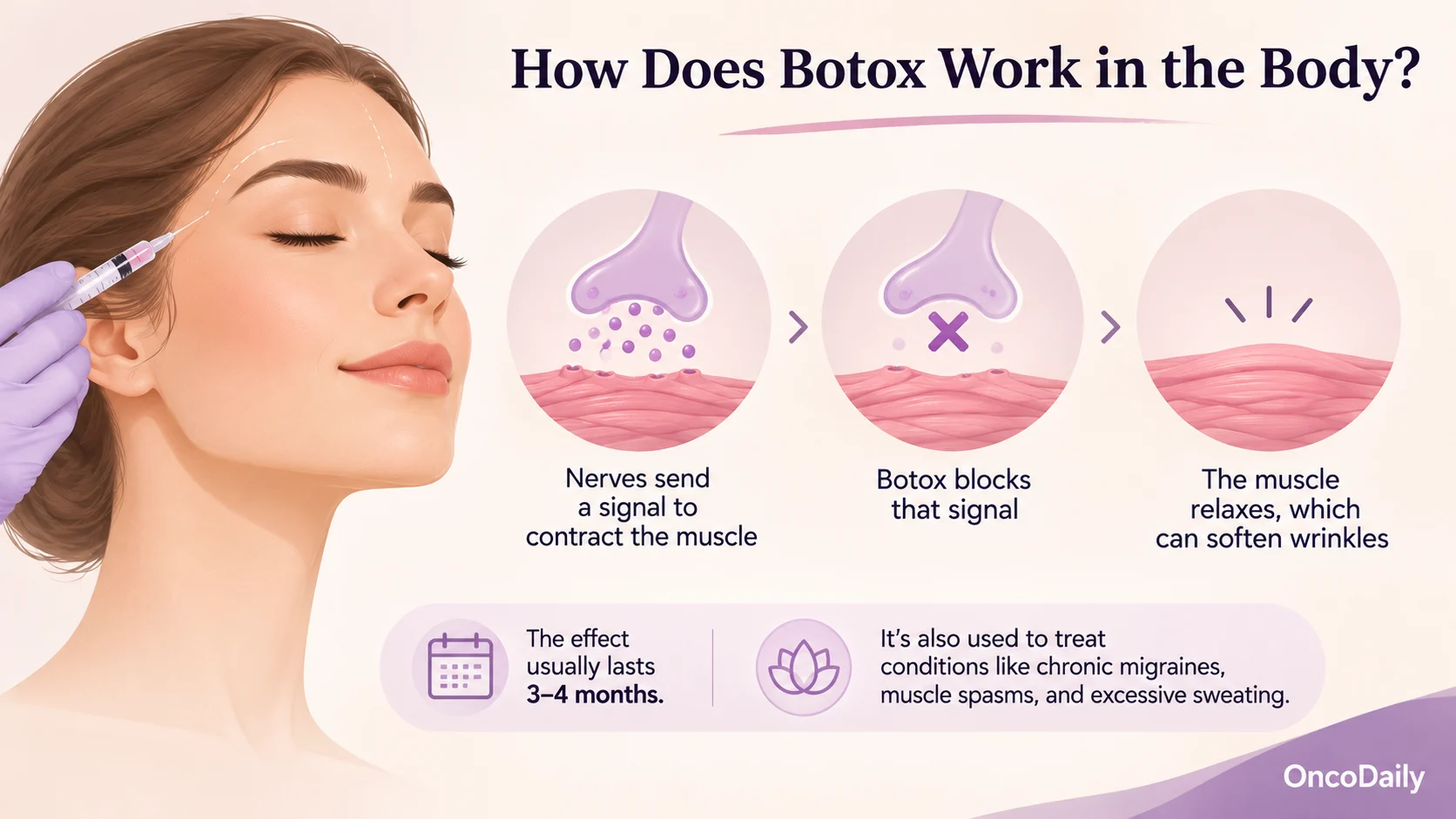
Botox temporarily reduces muscle activity by interrupting the chemical signals that allow nerves to communicate with muscles.
Botox is the brand name for onabotulinumtoxinA, a purified preparation of botulinum toxin type A produced by the bacterium Clostridium botulinum.
Normally, nerve endings release a chemical messenger called acetylcholine, which stimulates muscles to contract. Botulinum toxin interferes with this process by breaking down a protein called SNAP-25, which is necessary for acetylcholine release.
When this signal is interrupted, the targeted muscle becomes temporarily less active. In cosmetic medicine, this helps soften wrinkles caused by repeated facial movements. In other medical specialties, the same mechanism can help control involuntary muscle contractions and excessive sweating.
The effects of cosmetic Botox generally last three to four months, although the duration varies between individuals.
Unlike treatments that directly interfere with DNA replication or cell division, Botox primarily acts on nerve endings. Its established pharmacological mechanism does not demonstrate a direct cancer-causing effect (Witmanowski et al., 2019).
What Does the FDA Say About Botox Safety?
Botulinum toxin type A received its initial FDA approval in 1989 for selected medical indications. Its use has since expanded to include several cosmetic, neurological, and other therapeutic applications.
Although cancer is not identified as an established adverse reaction in the prescribing information, Botox carries a boxed warning concerning the possible spread of toxin effects beyond the injection site.
In serious cases, this can cause generalized muscle weakness and problems with swallowing, speaking, or breathing. Symptoms may appear within hours or several weeks after treatment.
FDA approval means that a medication has been evaluated for safety and effectiveness under specific conditions of use. It does not mean that every potential complication associated with lifelong exposure has been excluded (FDA, 2024).
Can Botox Cause Specific Types of Cancer?
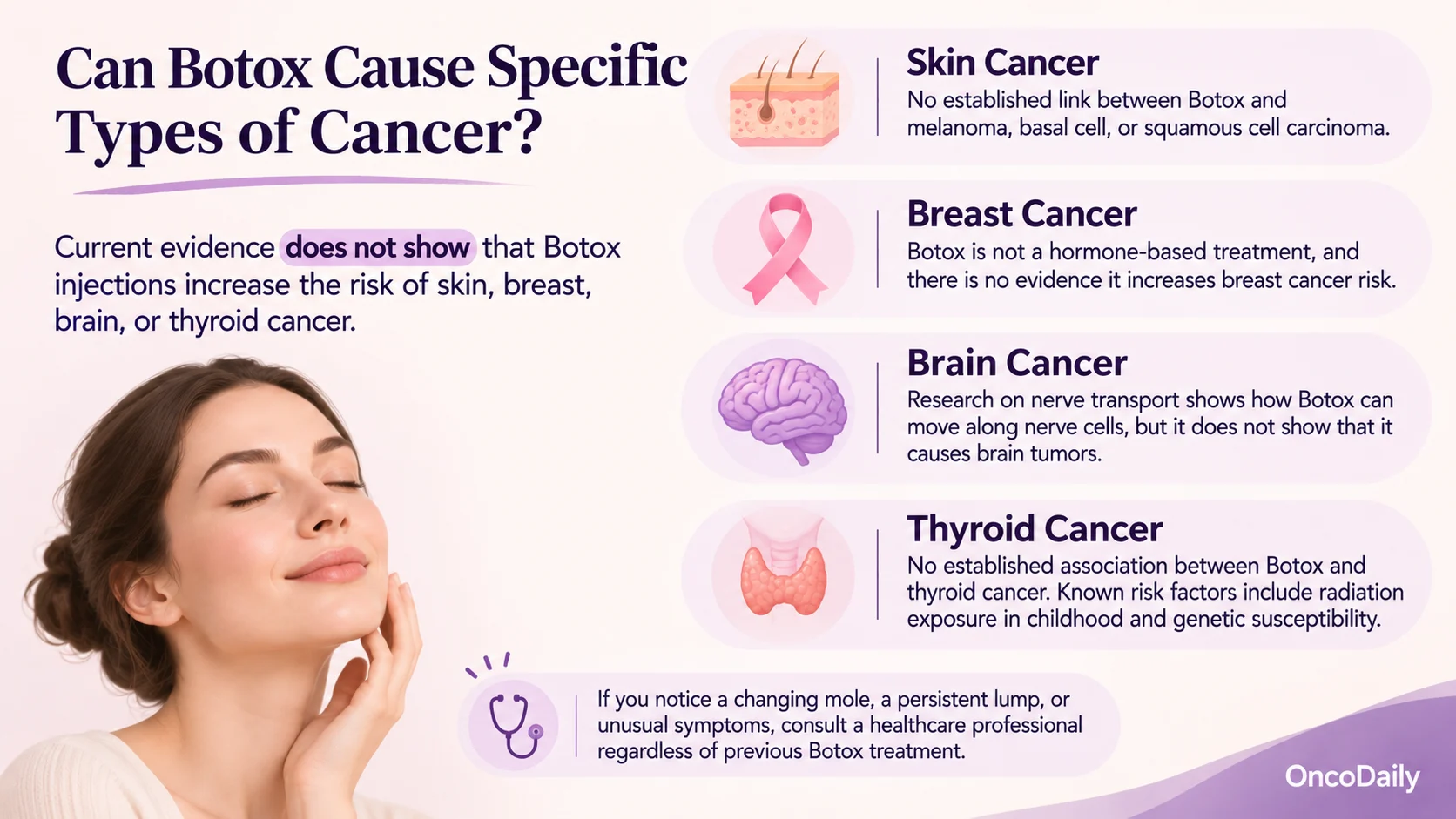
Concerns about Botox often extend to particular cancers, especially those affecting areas close to common injection sites. However, anatomical proximity to an organ does not necessarily mean that a treatment increases the risk of cancer in that organ.
Skin cancer
There is no established link between cosmetic Botox injections and melanoma, basal cell carcinoma, or squamous cell carcinoma.
Unlike ultraviolet radiation from sunlight or tanning beds, Botox does not act through a recognized mechanism of skin carcinogenesis. Temporary bruising, redness, and swelling after injections are usually related to the procedure itself.
Anyone who notices a changing mole, a persistent skin lesion, or a sore that does not heal should consult a dermatologist rather than assume that the changes are related to Botox.
Breast cancer
Botox is not a hormone-based treatment and does not contain estrogen or progesterone. Its effects differ from those of medications that influence hormonal activity in breast tissue.
Established breast cancer risk factors include increasing age, inherited genetic mutations, alcohol consumption, certain hormonal exposures, and reproductive history.
Although research specifically examining breast cancer incidence among long-term Botox users is limited, botulinum toxin has not been established as a breast cancer risk factor.
Brain cancer
Concerns about Botox and brain health partly originate from laboratory research investigating whether botulinum toxin can travel along nerve cells.
A 2016 study published in Cell Reports demonstrated that biologically active botulinum neurotoxins could move between neurons under experimental conditions. The researchers were investigating how these toxins interact with the nervous system, not whether they cause cancer (Bomba-Warczak et al., 2016).
The ability of a substance to travel along nerve cells does not establish that it can cause malignant transformation. These laboratory findings do not demonstrate an association between cosmetic Botox and brain tumors.
Thyroid cancer
Botox is sometimes injected into neck muscles for cosmetic purposes or to treat cervical dystonia, a condition involving involuntary muscle contractions.
Despite the proximity of these muscles to the thyroid gland, there is no established causal relationship between Botox treatment and thyroid cancer.
Established thyroid cancer risk factors include exposure to ionizing radiation during childhood and certain inherited genetic conditions. A persistent neck lump or unexplained hoarseness should be evaluated independently of previous cosmetic treatments.
Can Underarm Botox Cause Breast Cancer?
Reducing underarm sweating with Botox has not been shown to increase breast cancer risk or cause harmful substances to accumulate in nearby lymph nodes.
Botulinum toxin is an established treatment for severe primary axillary hyperhidrosis, a condition characterized by excessive underarm sweating that can interfere with daily activities.
A randomized clinical trial published in the British Medical Journal demonstrated the effectiveness of botulinum toxin type A in reducing excessive underarm sweating. A subsequent prospective study evaluated repeated treatment over 16 months and provided additional evidence of its tolerability (Naumann et al., 2001; Naumann et al., 2003).
One common misconception is that blocking sweat production prevents the body from eliminating harmful substances. However, sweating primarily helps regulate body temperature. The liver and kidneys perform most of the body’s metabolic waste processing and elimination.
Temporarily reducing sweating in a small area does not stop these organs from functioning normally. Existing hyperhidrosis studies, however, were designed to assess treatment effectiveness and general safety rather than long-term cancer incidence.
What Are the Long-Term Side Effects of Botox?
The most important concerns associated with repeated Botox treatment involve changes in muscle structure, muscle function, and responsiveness to future injections.
Although the visible effects of Botox usually diminish after several months, some changes within the treated muscles may persist longer.
Muscle thinning and changes in facial movement
Muscles that remain less active for extended periods may gradually become smaller, a process known as muscle atrophy.
In some situations, this is an intended effect. For example, Botox may be used to reduce the size of enlarged jaw muscles. In other cases, unwanted muscle thinning may affect facial appearance, symmetry, or movement.
A 2022 review published in Annals of Plastic Surgery examined the long-term effects of repeated cosmetic botulinum toxin injections. Some of the included studies reported persistent changes several years after treatment, although the available evidence was limited and varied considerably between studies.
These findings suggest that the disappearance of visible cosmetic effects does not necessarily mean that all changes within the treated muscle have resolved (Long-term Effects of Repeated Botulinum Toxin Injection in Cosmetic Therapeutics, 2022).
Development of resistance to Botox
Some patients notice that Botox becomes less effective after repeated treatments. One possible explanation is the development of neutralizing antibodies, which interfere with the medication’s biological activity.
A 2023 meta-analysis of 33 clinical trials evaluated antibody formation among 5,876 patients treated with onabotulinumtoxinA for cosmetic and medical indications.
Only 27 patients (0.5%) developed neutralizing antibodies, and 16 patients (0.3%) remained antibody-positive at the end of their respective studies. These findings suggest that antibody formation is uncommon, although reduced treatment effectiveness can also occur for reasons unrelated to antibodies (Jankovic et al., 2023).
This immune response does not indicate that Botox weakens the immune system or promotes cancer development.

Can Botox Spread Beyond the Injection Site?
Botulinum toxin is intended to act primarily within the treated area. However, its effects can sometimes extend to nearby muscles or, in more serious cases, to other parts of the body.
For example, injections around the forehead may temporarily affect muscles responsible for lifting the eyelids. Injections into the neck may interfere with muscles involved in swallowing.
More concerning symptoms include double vision, widespread muscle weakness, difficulty speaking, and respiratory problems. These complications are associated with the toxin’s effects on nerve-to-muscle communication.
People with underlying neuromuscular conditions or existing respiratory and swallowing difficulties may be particularly vulnerable.
Difficulty breathing, swallowing, or speaking after Botox treatment requires immediate medical attention, even if the injections were administered several days or weeks earlier (FDA, 2024).
What Are the Most Common Botox Side Effects?
Most people tolerate Botox without serious complications. When side effects occur, they are usually temporary and resolve as the body recovers from the injections or the medication’s effects gradually diminish.
Common side effects include pain or tenderness at the injection site, bruising, swelling, headaches, temporary eyelid drooping, and unwanted changes in facial movement.
Less commonly, patients may experience infections, allergic reactions, or excessive muscle weakness.
The likelihood of complications depends on several factors, including the dose administered, the treatment area, underlying medical conditions, and the experience of the healthcare professional performing the procedure.
Medical applications sometimes require higher doses than cosmetic treatments, which may also influence the likelihood and severity of adverse effects (Witmanowski and Błochowiak, 2019).
Do Botox and Dermal Fillers Have the Same Health Risks?
Botox and dermal fillers are fundamentally different treatments, with different mechanisms and safety profiles.
While Botox reduces muscle activity, dermal fillers restore volume or alter facial contours by introducing substances such as hyaluronic acid, calcium hydroxylapatite, or poly-L-lactic acid into tissues.
Standard approved facial fillers have not been established as a cause of cancer. However, they can occasionally trigger inflammatory reactions, leading to persistent lumps known as nodules or granulomas.
One of the most serious complications of dermal fillers occurs when the material is accidentally injected into a blood vessel. This can interrupt blood circulation and lead to tissue damage, vision loss, or, in rare circumstances, stroke (FDA, 2024).
Because Botox and fillers are often administered during the same appointment, patients may confuse their potential complications. Safety findings for one treatment should not automatically be applied to the other.
Is Botox Safe for Cancer Patients and Cancer Survivors?
A current or previous cancer diagnosis does not automatically prevent someone from receiving Botox. However, the timing and safety of treatment should be assessed individually.
For people undergoing chemotherapy, the main concerns include infection and bleeding. Some cancer treatments reduce the number of white blood cells, making it more difficult for the body to fight infections. Low platelet counts can also increase the likelihood of bruising and bleeding following injections.
Patients receiving radiation therapy may have sensitive or damaged skin in the treated area, while those recovering from surgery may need additional time for tissues to heal.
Special consideration is also necessary for patients receiving immunotherapy who develop immune-related neurological or muscular complications, such as myasthenia gravis or myositis. Botulinum toxin may aggravate existing muscle weakness in these circumstances.
For cancer survivors who have completed treatment and recovered from its complications, cosmetic Botox may be an option following an appropriate medical assessment.
Before undergoing treatment, patients should inform their healthcare provider about their cancer diagnosis, current medications, recent procedures, and any ongoing treatment-related symptoms.
Can Botox Help With Cancer-Related Symptoms?
Beyond its cosmetic applications, botulinum toxin has attracted interest as a supportive treatment for complications arising from cancer surgery and radiation therapy.
Some patients experience persistent pain, muscle spasms, stiffness, or abnormal nerve activity long after their cancer treatment has ended. These symptoms can interfere with sleep, movement, eating, and everyday activities.
A 2023 systematic review examined the use of botulinum toxin in several cancer-related conditions, including persistent pain, complications following esophageal cancer surgery, and salivary gland problems associated with surgery or radiation therapy (Safarpour et al., 2023).
A subsequent systematic review of randomized controlled trials explored its potential role in managing pain among cancer patients. The findings suggested possible benefits in selected clinical circumstances, although differences between studies and limited patient populations prevent broad conclusions (Lippi et al., 2024).
These applications aim to improve patients’ quality of life rather than treat the cancer itself. Some remain experimental or involve off-label use and should be considered under specialist supervision.
Can Botox Be Used to Treat Cancer?
Researchers have also investigated whether botulinum neurotoxins could influence cancer cell behavior.
Laboratory studies have explored their potential effects on tumor growth, cellular signaling, and programmed cell death. Some experimental findings have been encouraging, but results obtained in cell cultures or animal models cannot establish that a treatment will be effective in humans.
Botox is not an approved anticancer treatment. There is currently insufficient clinical evidence to conclude that conventional botulinum toxin injections can prevent cancer, shrink tumors, reduce recurrence, or improve survival.
Patients should not use Botox as an alternative to established cancer treatments, including surgery, chemotherapy, radiation therapy, immunotherapy, or targeted therapy.
Who Should Avoid Botox?
People with a known allergy to botulinum toxin or any component of the medication should not receive Botox. Injections should also be avoided in areas with an active infection.
Additional precautions are necessary for people with neurological conditions that affect communication between nerves and muscles, including myasthenia gravis, Lambert-Eaton syndrome, and amyotrophic lateral sclerosis (ALS).
Certain medications, particularly aminoglycoside antibiotics and muscle relaxants, may increase the effects of botulinum toxin.
Elective cosmetic Botox is generally postponed during pregnancy because adequate human safety data are unavailable. People who are breastfeeding should discuss the potential risks and benefits with their healthcare provider.
A personal or family history of cancer alone is not considered a universal contraindication to Botox treatment (FDA, 2024).
How Often Can You Get Botox Safely?
For many cosmetic applications, Botox treatments are repeated approximately every three to four months. Some people experience longer-lasting results and may require fewer injections.
The appropriate treatment interval depends on the product used, the treated muscles, the dose, and how an individual responds to previous injections.
Receiving injections more frequently than necessary may increase the likelihood of unwanted muscle weakness or other complications. Treatment frequency and cumulative exposure may also influence the development of neutralizing antibodies.
There is no established number of Botox injections or cumulative dose at which cancer risk has been demonstrated to increase. Treatment schedules should follow product-specific recommendations and be adjusted according to individual medical needs.
How Can You Reduce the Risks of Botox?
The safety of Botox depends not only on the medication itself but also on its quality, storage, dosage, and administration.
In 2024, the Centers for Disease Control and Prevention (CDC) investigated harmful reactions associated with counterfeit or improperly handled botulinum toxin products. Several patients experienced symptoms consistent with botulism, a potentially serious condition affecting muscle and nerve function.
In 2025, the FDA issued further warnings against companies illegally selling unauthorized botulinum toxin products online (CDC, 2024; FDA, 2025).
To reduce treatment-related risks, patients should:
- Choose a licensed healthcare professional experienced in administering botulinum toxin.
- Ensure that the product is authentic and obtained from an authorized supplier.
- Disclose underlying medical conditions, medications, and previous Botox treatments.
- Follow recommended treatment intervals and avoid unnecessary injections.
- Avoid purchasing injectable botulinum toxin products online or attempting self-injection.
- Seek medical attention if unusual or concerning symptoms develop.
Should You Be Worried About Botox and Cancer?
For people considering Botox, cancer is not currently an established treatment-related risk. The available scientific evidence is reassuring, although more extensive research is needed to understand the consequences of repeated exposure over an entire lifetime.
The decision to receive Botox should primarily consider its known neurological and muscular effects, the medical necessity of treatment, and the qualifications of the person administering it.
For cancer prevention, avoiding tobacco, limiting alcohol consumption, protecting the skin from ultraviolet radiation, maintaining a healthy weight, and participating in recommended cancer screening programs remain far more relevant strategies.
FAQ
Does Botox increase your risk of cancer?
Current scientific evidence has not established a link between Botox injections and an increased risk of cancer. However, studies specifically examining cancer incidence after decades of repeated treatment remain limited.
Can Botox cause cancer after years of repeated injections?
Long-term Botox use has not been established as a cause of cancer. The recognized risks of repeated injections primarily involve muscle thinning, changes in muscle function, and reduced treatment effectiveness.
Does Botox accumulate in the body over time?
There is no convincing evidence that botulinum toxin progressively accumulates in the body over years of treatment. However, repeated injections may produce lasting changes in muscle size and activity, even after the cosmetic effects have worn off.
Can Botox increase the risk of cancer recurrence?
No established clinical evidence suggests that Botox increases the risk of cancer recurrence. However, cancer survivors and patients undergoing active treatment should consult their oncologist before receiving injections.
Does Botox damage DNA or cause genetic mutations?
Botox Cosmetic produced negative results in several genetic toxicity tests designed to detect mutations and chromosomal abnormalities. While these findings are reassuring, long-term animal studies specifically evaluating its carcinogenic potential have not been performed.