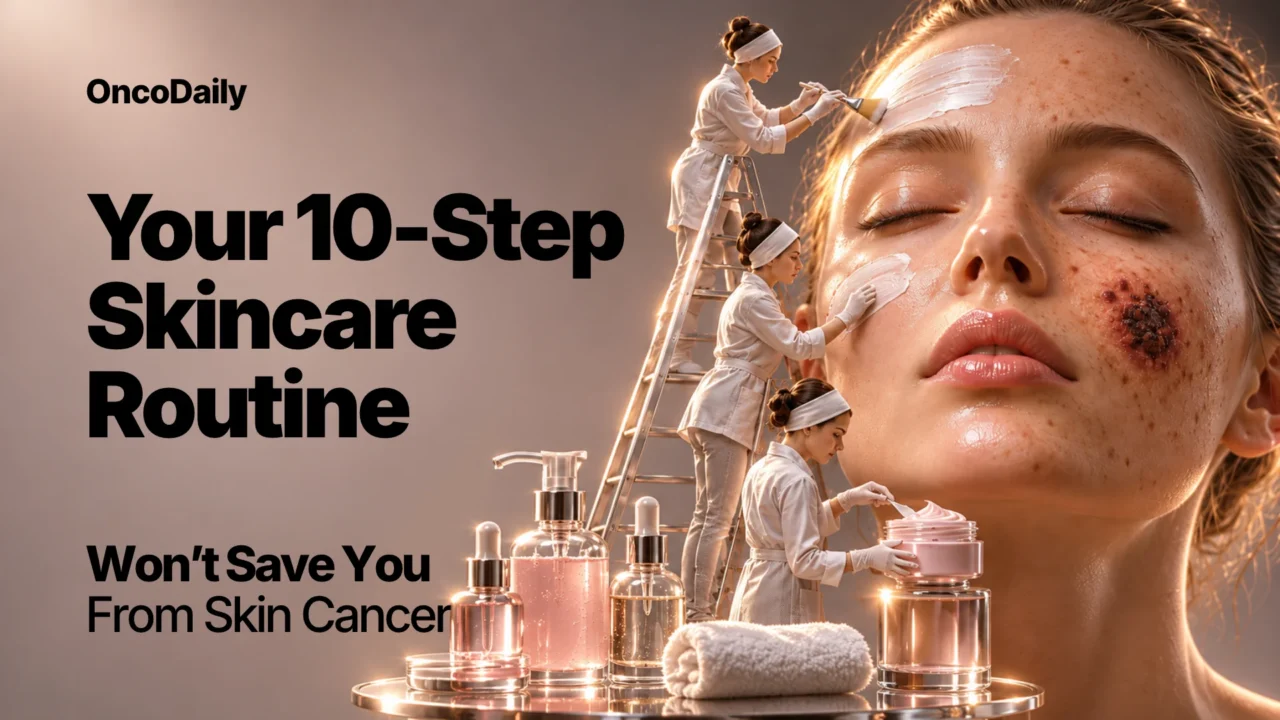
From glass skin to viral serums, Gen Z is investing in skincare like never before. But while social media focuses on preventing wrinkles, dermatologists are concerned about something far more serious: skin cancer.
TikTok has turned skincare into a lifestyle. Retinol, vitamin C, peptide serums, Korean skincare routines, and the endless pursuit of “glass skin” have become part of everyday beauty culture.
But there is one product that deserves more attention than any expensive anti-aging serum: sunscreen.
While millions are trying to prevent the first signs of aging, ultraviolet (UV) radiation continues to damage skin cells, accelerate wrinkles, and increase the risk of skin cancer.
And the science suggests that preventing this damage is far more effective than trying to reverse it.
The 80% Problem: What Skincare Trends Don’t Tell You
Research suggests that up to 80% of visible facial aging may be associated with sun exposure.
Unlike natural aging, which is influenced by genetics and biological processes, photoaging results from repeated exposure to ultraviolet radiation.
UVA radiation penetrates the skin and contributes to oxidative stress and collagen degradation, while UVB is a major cause of sunburn and direct DNA damage. Both contribute to skin cancer development.
The result? Wrinkles, pigmentation, loss of elasticity, and potentially cancer-causing mutations.
In other words, the same sunlight responsible for premature wrinkles can also contribute to the development of basal cell carcinoma, squamous cell carcinoma, and melanoma.
Research published in Advanced Pharmaceutical Bulletin describes photoprotection as a primary strategy for preventing premature skin aging.
Glass Skin Is Trending. But Is Skin Health?
The skincare industry has made anti-aging increasingly attractive to younger generations. Social media feeds are filled with elaborate routines, product recommendations, and promises of youthful skin.
Yet an expensive routine does not necessarily mean an effective one.
A study published in JAMA Dermatology found that approximately 40% of highly rated sunscreens on Amazon did not meet American Academy of Dermatology recommendations, often because they lacked adequate water resistance.
Another concern is how sunscreen is actually used. Applying a small amount beneath makeup, forgetting the neck and ears, or relying entirely on SPF-containing foundation can leave skin inadequately protected.
And while ingredients such as retinoids and exfoliating acids may improve skin appearance, they cannot replace protection against UV radiation.
The irony is that people may spend hundreds of dollars treating damage they could have helped prevent with a much simpler daily habit.
What Does the Science Actually Say?
One of the strongest pieces of evidence comes from Australia’s Nambour Skin Cancer Prevention Trial.
In a randomized study published in Annals of Internal Medicine in 2013, researchers found that participants assigned to daily sunscreen use showed no detectable increase in measured skin aging over 4.5 years, unlike those who used sunscreen at their discretion.
Long-term follow-up of the Nambour trial also demonstrated a reduction in squamous cell carcinoma with regular sunscreen use, with additional evidence suggesting protection against melanoma.
These findings provide an important distinction: sunscreen is not simply a beauty product. It is part of cancer prevention.
The U.S. Food and Drug Administration recommends regular use of broad-spectrum sunscreen, alongside shade and protective clothing. Dermatologists commonly recommend SPF 30 or higher, generous application to exposed skin, and reapplication approximately every two hours while outdoors.
The Real Anti-Aging Routine Starts With Prevention
There is nothing wrong with wanting glowing skin, experimenting with skincare, or enjoying beauty trends.
But healthy skin should not be measured only by how young it looks.
A skincare routine can contain the latest ingredients, the most expensive products, and every viral beauty innovation. Without adequate sun protection, however, it overlooks one of the most important preventable causes of skin damage.
The scientific conclusion is simple: UV protection reduces photoaging and helps lower skin cancer risk. No cosmetic serum can substitute for it.
Perhaps the next skincare trend should be less about achieving perfect skin and more about protecting the skin we already have.
Discover more articles like this on OncoDaily