
Limited systemic treatment options remain one of the greatest challenges in the management of advanced chordoma. Despite the slow-growing nature of these tumors, recurrent and unresectable disease is frequently associated with progressive local destruction, neurologic compromise, pain, and substantial morbidity. Conventional cytotoxic chemotherapy has historically demonstrated minimal activity in chordoma, while currently available targeted therapies have generally produced low response rates and relatively short disease control durations. Although immune checkpoint inhibitors have transformed the treatment landscape across many solid tumors, their role in chordoma has remained poorly defined, with only small retrospective series and limited prospective data available.
This prospective phase II study evaluated the combination of camrelizumab, a PD-1 inhibitor, with apatinib, a VEGFR2-targeted antiangiogenic agent, in patients with refractory chordoma. The biologic rationale for this approach is particularly compelling in chordoma, where angiogenesis and immune evasion appear to contribute substantially to tumor persistence and progression. Antiangiogenic therapy may normalize abnormal tumor vasculature, reduce hypoxia-driven immunosuppression, improve immune-cell trafficking, and potentially enhance sensitivity to immune checkpoint blockade.
Study Design and Treatment Strategy
This investigator-initiated, single-center phase II trial enrolled patients with histologically confirmed refractory chordoma that was either unresectable or not amenable to radical surgery. Eligible patients had measurable disease according to RECIST 1.1 criteria, documented progression before enrollment, ECOG performance status of 0–2, and adequate organ function.
Patients received intravenous camrelizumab at 200 mg every 2 weeks together with oral apatinib administered in alternating doses of 250 mg and 500 mg daily during 4-week cycles. Treatment continued until unacceptable toxicity, progression, neurologic deterioration, withdrawal of consent, or loss of clinical benefit. The study used Simon’s optimal two-stage phase II design to determine whether the regimen demonstrated sufficient activity to justify further development.
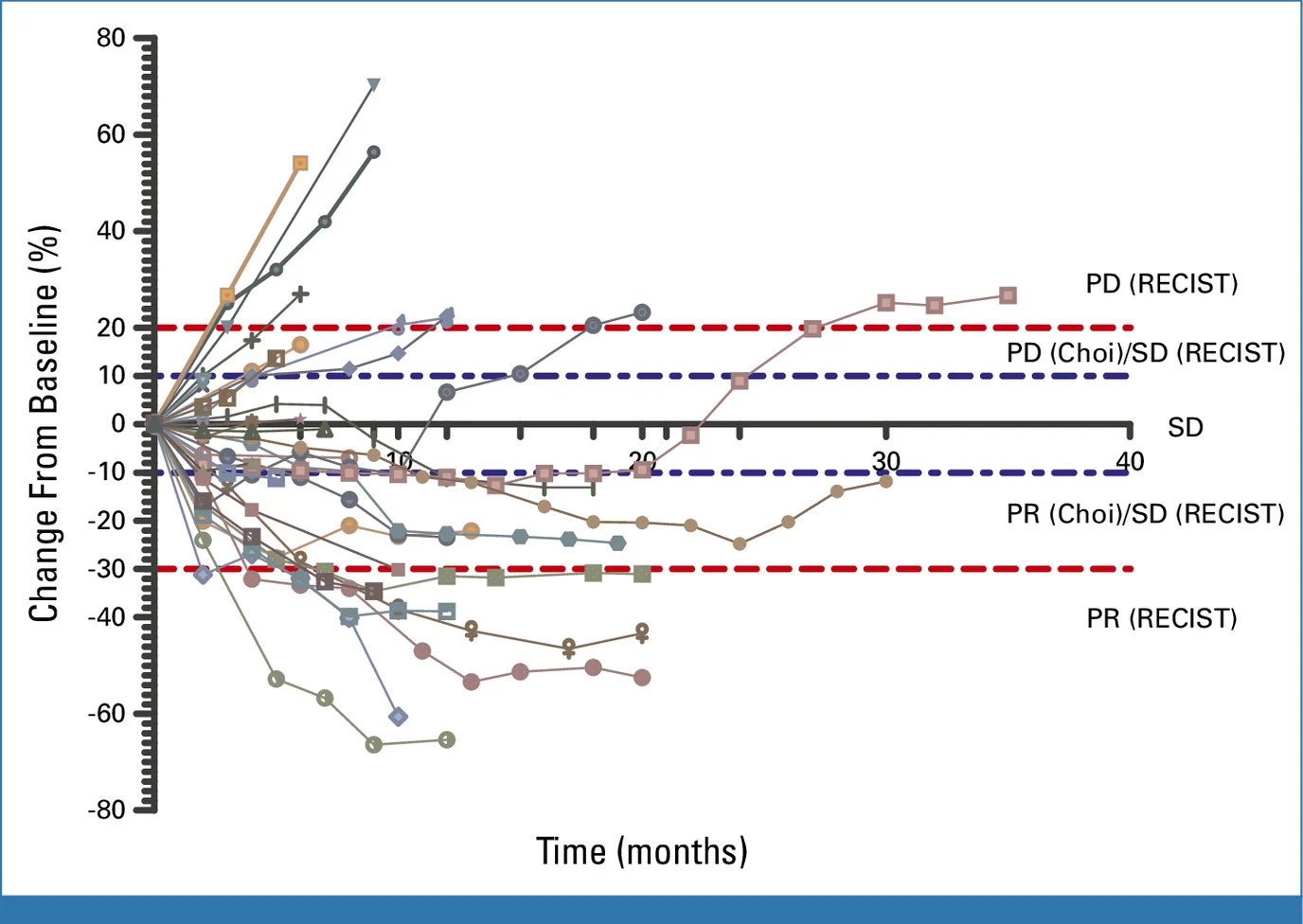
Importantly, the investigators assessed efficacy using both RECIST 1.1 and Choi criteria. This distinction is particularly relevant in chordoma because antiangiogenic agents may induce biologic and vascular changes before substantial reductions in tumor size become apparent. Choi criteria therefore provided a complementary and potentially more sensitive assessment of treatment activity.
Patient Population
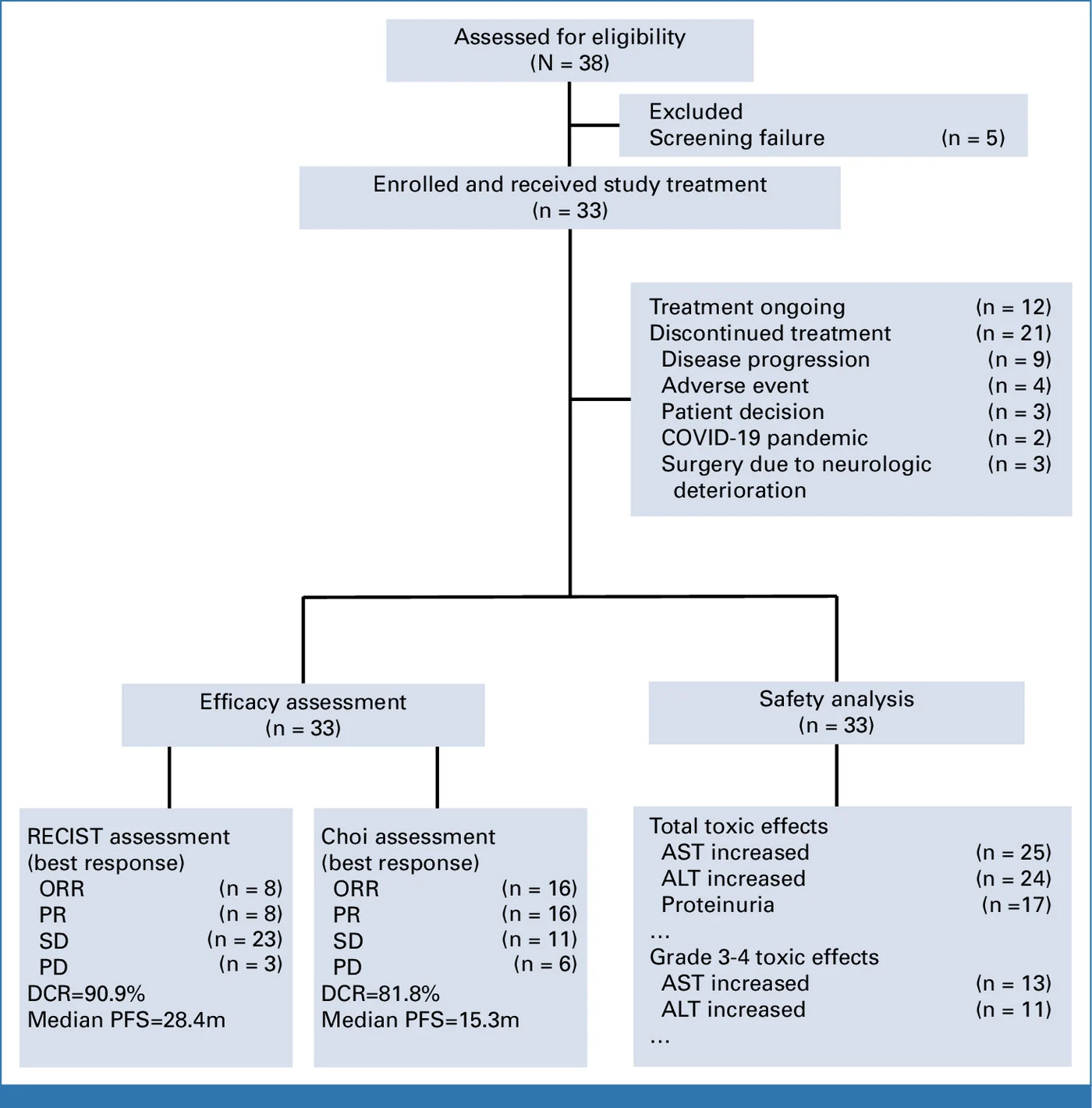
Thirty-three patients were ultimately enrolled between September 2021 and October 2024. The cohort included both locally advanced and metastatic disease, reflecting a heavily challenging clinical population. Most patients had previously undergone surgery, and approximately one-third had prior radiotherapy exposure.
The median follow-up duration was 20.8 months, while the median treatment duration was 9 months. At the time of analysis, more than one-third of patients remained on active therapy, suggesting prolonged disease control in a subset of patients.
Clinical Efficacy
The combination demonstrated encouraging antitumor activity, particularly considering the historically limited efficacy of systemic therapies in chordoma.
Key Results
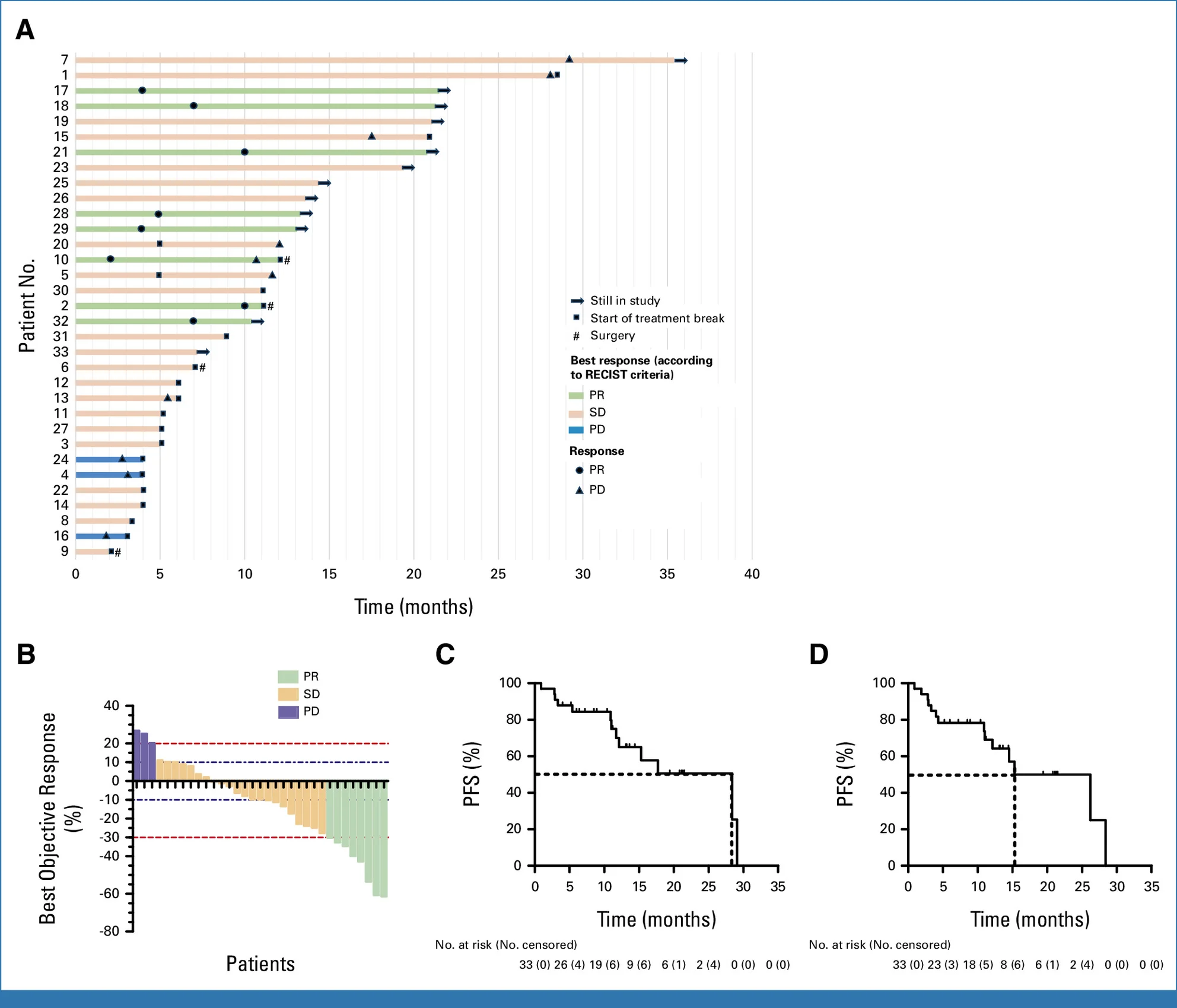
- The objective response rate was 24.2% by RECIST 1.1 and 48.5% by Choi criteria.
- Disease control was achieved in 90.9% of patients according to RECIST 1.1.
- Median progression-free survival reached 28.4 months by RECIST 1.1 analysis.
- Tumor shrinkage was observed in 69.7% of patients.
- Median duration of response was not reached by RECIST 1.1.
These outcomes compare favorably with historical data from prior studies evaluating either antiangiogenic therapy or immune checkpoint blockade alone in chordoma. Previous targeted therapy trials generally reported response rates below 5%, while earlier PD-1 inhibitor studies demonstrated response rates around 12% with substantially shorter progression-free survival durations.
The durability of disease control observed in this trial is particularly notable. In a disease characterized by chronic local progression and repeated recurrences, prolonged progression-free survival may translate into meaningful preservation of neurologic function, symptom control, and quality of life.
Pain Control and Symptomatic Improvement
Beyond radiographic efficacy, the study also demonstrated clinically meaningful symptomatic benefit. Significant reductions in pain scores were observed as early as 2 months after treatment initiation, with continued improvement over time.
Patients achieving partial responses experienced the most pronounced pain reduction, highlighting the potential relationship between tumor control and symptomatic improvement. Considering the substantial pain burden frequently associated with sacral and spinal chordomas, this represents an important patient-centered outcome.
CDKN2A as a Potential Biomarker
One of the most scientifically important findings of the study was the identification of CDKN2A alterations as a potential negative prognostic biomarker.
Next-generation sequencing and fluorescence in situ hybridization analyses demonstrated that patients harboring CDKN2A copy-number deletion or homozygous deletion experienced significantly poorer outcomes, including lower response rates and shorter progression-free survival.
Biomarker Findings
- CDKN2A copy-number deletion was identified in 30% of sequenced tumors.
- Patients with CDKN2A alterations demonstrated significantly higher progressive disease rates.
- Median progression-free survival was markedly shorter in CDKN2A-altered tumors.
- Most patients without CDKN2A alterations achieved partial responses or prolonged stable disease.
- All analyzed tumors were PD-L1–negative, microsatellite stable, and tumor mutational burden–low.
These findings are particularly interesting because they suggest that conventional immunotherapy biomarkers such as PD-L1 expression and tumor mutational burden may have limited relevance in chordoma. Instead, genomic alterations affecting immune regulation and tumor suppressor pathways may play a more important role in determining responsiveness to combined immunotherapy and antiangiogenic therapy.
Mechanistically, CDKN2A loss has been associated with immune evasion, impaired interferon signaling, and suppression of antitumor immune activity. The current study therefore raises the possibility that CDKN2A status may help stratify patients for future immunotherapy-based approaches in chordoma.
Safety and Tolerability
The toxicity profile was generally consistent with the known adverse effects of PD-1 inhibition and VEGFR-targeted therapy. Although treatment-related adverse events were common, most were manageable with dose interruptions, reductions, and supportive care.
Most Common Grade 3–4 Toxicities
- Increased AST occurred in 39.4% of patients.
- Increased ALT occurred in 33.3% of patients.
- Proteinuria represented one of the most frequent VEGFR-related toxicities.
- Reactive cutaneous capillary endothelial proliferation occurred less frequently than expected with camrelizumab monotherapy.
- No treatment-related deaths were observed.
Hepatotoxicity emerged as the dominant safety concern, with several patients requiring treatment discontinuation because of recurrent liver dysfunction. These findings emphasize the importance of close hepatic monitoring during combined immunotherapy and antiangiogenic treatment strategies.
Interestingly, the incidence of reactive cutaneous capillary endothelial proliferation was substantially lower than historically reported with camrelizumab alone, suggesting that VEGFR inhibition may modulate this characteristic toxicity.
Clinical Significance and Future Directions
This study represents the first prospective clinical trial demonstrating meaningful efficacy for combined PD-1 blockade and antiangiogenic therapy in refractory chordoma. The observed response rates, prolonged progression-free survival, and symptom improvement collectively suggest that immune-based combination therapy may represent a new therapeutic direction for this rare malignancy.
Importantly, the trial also highlights the growing importance of biomarker-driven treatment strategies in chordoma. The identification of CDKN2A alterations as a potential negative prognostic factor may help refine patient selection and guide future therapeutic development.
Although the study was limited by its single-arm, single-center design and relatively small sample size, the magnitude and durability of clinical benefit strongly support further investigation in larger multicenter trials. Future studies will likely explore whether CDKN2A status can prospectively identify patients most likely to benefit from immunotherapy-based combinations and whether additional immune-modulating strategies can overcome resistance in CDKN2A-altered disease.
Read Full Article Here