Key takeaways
- Blood tests can reveal signs of certain cancers, particularly leukemia and other blood cancers, but most solid tumors cannot be diagnosed through routine blood work alone.
- A complete blood count (CBC) may show abnormalities such as anemia, high white blood cell counts, or elevated platelets, although these changes are more commonly caused by noncancerous conditions.
- Tumor markers, including PSA, CEA, CA-125, and CA 19-9, can support cancer evaluation and monitoring but are generally not reliable stand-alone screening tests.
- Liquid biopsies detect cancer-associated molecular changes in the bloodstream and are increasingly used to guide treatment and monitor recurrence.
- Multi-cancer early detection tests may identify signals from several cancer types, but they have not been shown to replace established cancer screening methods.
- Normal blood test results do not rule out cancer, and abnormal results do not automatically indicate malignancy.
Blood tests are among the most commonly used investigations in medical care, and abnormal results can sometimes raise concerns about cancer. While certain blood tests can detect changes associated with malignancy, their ability to identify cancer depends on the type of test, the cancer involved, and the stage of disease.
Routine blood tests, such as a complete blood count (CBC), may reveal abnormal blood cell levels associated with leukemia or other hematologic malignancies. They may also identify indirect signs of solid tumors, such as iron-deficiency anemia caused by gastrointestinal bleeding. However, many cancers develop without causing noticeable changes in routine blood results, particularly during their early stages.
More specialized tests measure tumor-associated proteins or molecular abnormalities circulating in the bloodstream. These include tumor markers such as PSA and CA-125, as well as newer technologies that analyze circulating tumor DNA (ctDNA). Multi-cancer early detection tests are also being developed to identify cancer-associated signals from several organs using a single blood sample.
Understanding what these tests can and cannot detect is important because blood testing is used for different purposes, including cancer screening, diagnosis, treatment selection, and monitoring. A test that is useful in patients with an established cancer diagnosis may not be appropriate for screening otherwise healthy individuals (National Cancer Institute; Stanford Medicine, 2026).
Can a Blood Test Detect Cancer?
Blood tests can help identify certain cancers, particularly those affecting the blood and bone marrow, but they cannot reliably detect every type of cancer. Most solid tumors, including breast, lung, colorectal, and pancreatic cancers, require additional investigations such as imaging, endoscopy, or biopsy.
The ability of a blood test to detect cancer depends largely on how the disease affects the body. Leukemia, for example, develops in blood-forming tissues and may cause substantial changes in circulating white blood cells, red blood cells, or platelets. These abnormalities can often be identified through a CBC and peripheral blood smear.
Solid tumors behave differently. Some release proteins or fragments of tumor DNA into the bloodstream, while others cause changes in organ function or blood cell production. However, these changes are not always present, and they may also occur in people without cancer.
Blood tests are therefore interpreted alongside symptoms, medical history, physical examination, and other investigations. A suspicious result may indicate that further testing is necessary, but it does not establish a cancer diagnosis on its own.
What Types of Cancer Can Blood Tests Detect?
Blood tests are particularly useful in detecting abnormalities associated with leukemia, multiple myeloma, and certain other blood cancers. They can also provide information about solid tumors, although their role is usually limited to supporting diagnosis, evaluating risk, or monitoring previously diagnosed disease.
Different cancers are associated with different laboratory findings. Some produce abnormal blood cells, others release measurable tumor markers, and some can be investigated using molecular tests that detect cancer-associated DNA alterations.
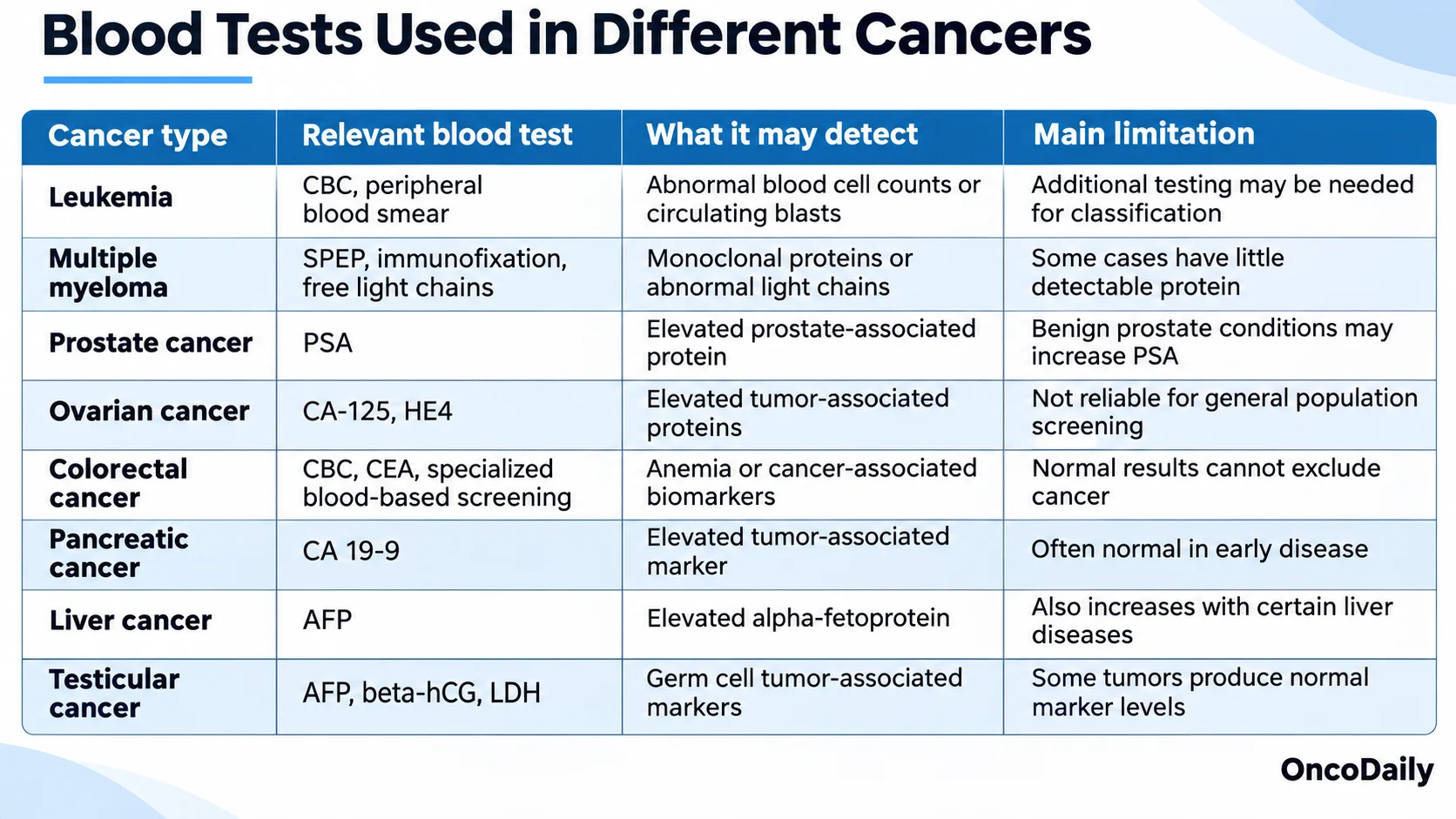
The difference between these tests is clinically important. Abnormal circulating blood cells may provide strong evidence of leukemia, while an elevated tumor marker usually requires further investigation before cancer can be considered likely.
According to the National Cancer Institute, tumor markers are most useful when interpreted in the context of a suspected or confirmed cancer diagnosis rather than as isolated laboratory findings.
Can a Routine Blood Test Detect Cancer?
Routine blood tests may reveal abnormalities associated with cancer, but they are not designed to screen for most malignancies. Tests commonly performed during annual health examinations can identify changes in blood counts, liver function, kidney function, or protein levels without determining whether cancer is responsible.
A complete blood count measures white blood cells, red blood cells, hemoglobin, and platelets. Abnormalities in these measurements may occur when cancer affects the bone marrow or causes chronic blood loss.
A comprehensive metabolic panel evaluates substances such as calcium, liver enzymes, kidney function markers, and blood proteins. Certain cancers can alter these measurements. For example, multiple myeloma may cause elevated calcium levels, while cancers involving the liver may affect liver enzymes or bilirubin.
However, these findings are not specific to cancer. Elevated calcium is commonly associated with hyperparathyroidism, while abnormal liver enzymes are more frequently caused by fatty liver disease, viral hepatitis, alcohol use, or medications.
Most early-stage solid tumors do not cause significant changes in routine blood tests. Therefore, normal annual blood work cannot replace recommended cancer screening methods, including mammography, colorectal cancer screening, and cervical screening (National Cancer Institute).
CBC Blood Test and Cancer Detection
A complete blood count is one of the most useful initial blood tests when a blood disorder is suspected. It measures circulating blood cells and can identify abnormalities associated with leukemia, bone marrow disorders, and certain cancers that cause bleeding or inflammation.
White blood cells are responsible for immune defense. In some forms of leukemia, their levels become substantially elevated because abnormal blood cells accumulate in the bloodstream. Other forms of leukemia may cause low white blood cell counts, and some patients initially have counts within the reference range.
Hemoglobin and red blood cell measurements can reveal anemia, which occurs when the blood has a reduced capacity to transport oxygen. Cancer-associated anemia may develop because of bone marrow involvement, chronic inflammation, nutritional deficiencies, or blood loss.
Colorectal cancer, for example, can cause slow gastrointestinal bleeding that eventually leads to iron-deficiency anemia. However, anemia is common and has numerous noncancerous causes.
Platelet abnormalities may also provide useful information. Elevated platelet counts, known as thrombocytosis, have been associated with several solid tumors, including lung and colorectal cancers. Nevertheless, inflammation, infection, and iron deficiency are much more frequent explanations.
A CBC becomes particularly concerning when several blood cell measurements are abnormal or when immature cells, known as blasts, appear in the peripheral blood.
The results must therefore be interpreted according to the degree of abnormality, previous measurements, clinical symptoms, and additional laboratory findings.
Which Blood Test Results May Indicate Cancer?
Several abnormal blood test findings may raise suspicion for cancer, particularly when they are persistent, unexplained, or accompanied by concerning symptoms. However, no routine laboratory value can independently confirm malignancy.
The significance of an abnormal result depends on the pattern of changes rather than a single isolated measurement.
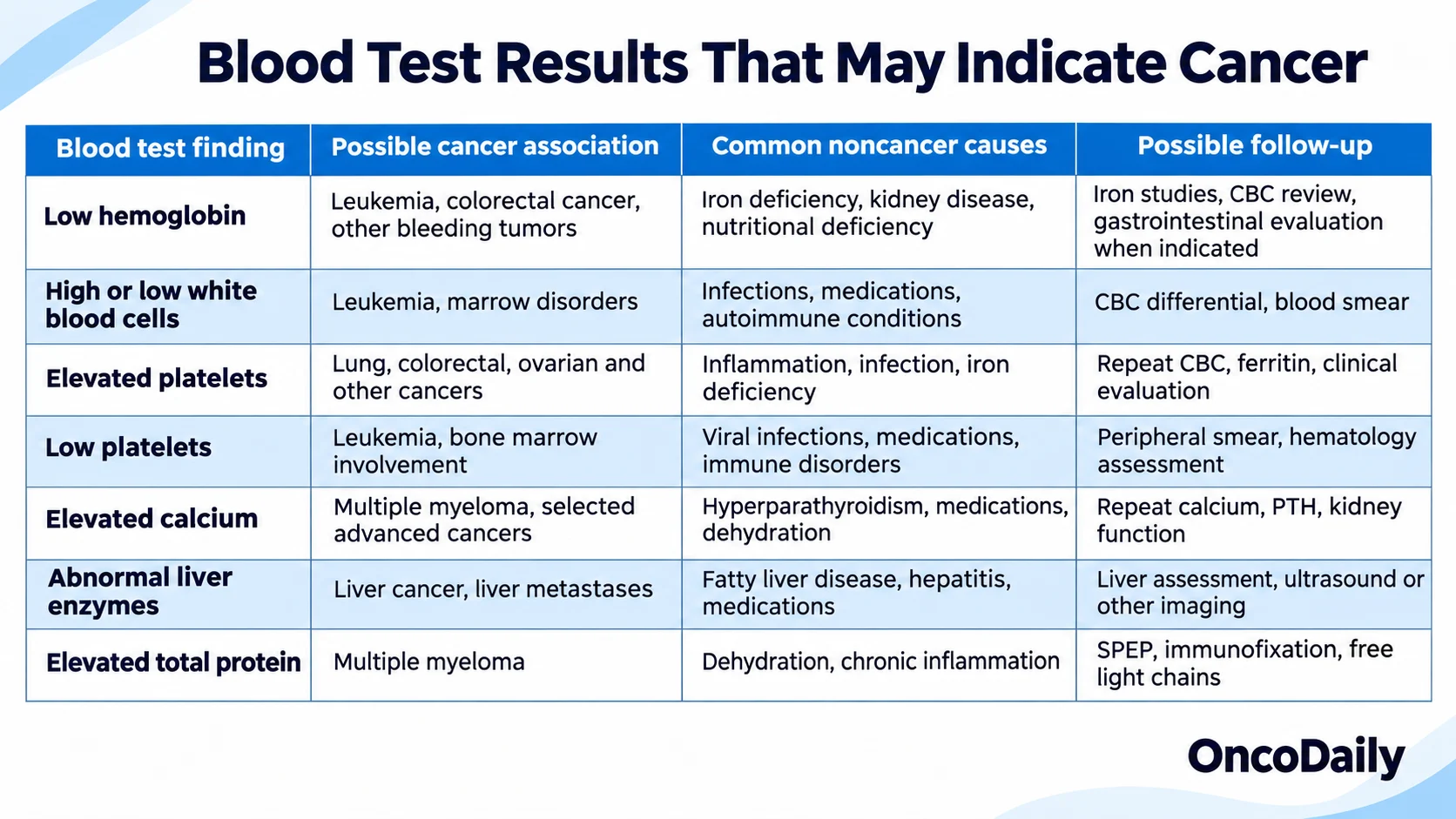
Some abnormalities become more significant when they occur together. For example, anemia accompanied by abnormal white blood cell and platelet counts may suggest a bone marrow disorder. Elevated calcium combined with anemia, kidney dysfunction, and abnormal serum proteins may prompt investigation for multiple myeloma.
Persistent or worsening abnormalities generally require further evaluation, although many have noncancerous explanations.
Blood Tests for Leukemia and Other Blood Cancers
Blood tests are essential in evaluating leukemia and multiple myeloma because these cancers affect blood-forming tissues or produce abnormal circulating proteins.
In leukemia, a CBC may reveal high or low white blood cell counts, anemia, or thrombocytopenia. A peripheral blood smear can identify abnormal cells, including circulating blasts, which may suggest acute leukemia and require prompt evaluation.
Flow cytometry and molecular testing help classify leukemia and guide treatment. In multiple myeloma, serum protein electrophoresis (SPEP), immunofixation, and free light chain testing can detect abnormal proteins produced by malignant plasma cells.
Lymphoma may also affect blood counts, particularly when the bone marrow is involved. However, normal results do not exclude the disease.
Bone marrow examination or tissue biopsy may be required to confirm the diagnosis and determine the cancer subtype.
Tumor Marker Blood Tests
Tumor markers are substances produced by cancer cells or other tissues in response to malignancy. Blood-based markers are primarily used to support diagnosis, monitor treatment, and detect possible recurrence.
Common examples include PSA for prostate cancer, CEA for colorectal cancer, CA-125 for ovarian cancer, and CA 19-9 for pancreatic cancer. AFP is used in selected patients with liver cancer or germ cell tumors.
However, tumor markers can increase in benign conditions. CA-125 may rise with endometriosis, while PSA can increase because of prostate enlargement or inflammation. Some patients with confirmed cancer also have normal marker levels.
Most tumor markers are not recommended for general cancer screening because they lack sufficient sensitivity and specificity. Results should be interpreted alongside clinical findings and imaging (National Cancer Institute).
Can a Blood Test Detect Colon Cancer?
Blood tests may reveal signs of colorectal cancer, particularly iron-deficiency anemia caused by chronic gastrointestinal bleeding. However, normal hemoglobin and ferritin levels do not exclude the disease.
CEA is mainly used to monitor previously diagnosed colorectal cancer rather than screen for it.
In July 2024, the FDA approved Shield, a blood-based colorectal cancer screening test for average-risk adults aged 45 and older.
In the ECLIPSE study, Shield demonstrated 83% sensitivity for colorectal cancer and approximately 90% specificity, but only 13% sensitivity for advanced precancerous lesions (Imperiale et al., 2024).
This limitation is important because colorectal screening aims to detect both cancer and precancerous lesions.
A positive blood-based screening result requires colonoscopy, which also allows biopsy and removal of suspicious polyps. Persistent symptoms warrant investigation even after a negative blood test.
Blood Tests for Breast and Lung Cancer
Routine blood tests cannot reliably detect early breast or lung cancer because these tumors often develop without affecting blood counts or chemistry measurements.
In breast cancer, CA 15-3, CA 27.29, and CEA may help monitor selected patients with advanced disease, but they are not recommended for screening. Mammography remains an established screening method.
BRCA1 and BRCA2 genetic testing, which can be performed through a blood sample, identifies inherited variants associated with increased breast cancer risk. However, BRCA testing assesses genetic susceptibility rather than detecting an existing cancer.
In advanced non-small cell lung cancer, liquid biopsies can identify actionable genetic alterations, including EGFR mutations, to help guide targeted therapy.
However, some tumors release insufficient DNA into circulation, meaning a negative liquid biopsy may require further tissue testing.
Low-dose CT remains the established lung cancer screening method for eligible high-risk individuals (Stanford Medicine, 2026).

Photo: Depositphotos
Blood Tests for Pancreatic, Ovarian and Liver Cancer
Tumor markers can support the evaluation and monitoring of pancreatic, ovarian, and liver cancers, but they are not sufficiently accurate for routine early detection.
In pancreatic cancer, CA 19-9 may help monitor treatment response, although it can also increase with pancreatitis or bile duct obstruction. Some individuals produce little or no CA 19-9.
For ovarian cancer, CA-125 and HE4 may help evaluate suspicious ovarian masses. However, CA-125 can rise with menstruation, endometriosis, or inflammation, while early-stage ovarian cancer may occur with normal levels.
In hepatocellular carcinoma, AFP may support surveillance in selected high-risk patients, usually alongside liver ultrasound. AFP can also increase in chronic liver disease.
Suspected malignancies generally require further evaluation using ultrasound, CT, MRI, or biopsy when indicated.
Can Blood Tests Detect Prostate or Testicular Cancer?
PSA testing can contribute to prostate cancer screening and risk assessment, but elevated levels do not confirm malignancy. Benign prostate enlargement and prostatitis can also increase PSA.
Depending on the clinical findings, prostate MRI and biopsy may be recommended.
For testicular cancer, AFP, beta-hCG, and LDH are important markers used during evaluation, staging, and treatment monitoring.
AFP elevation is associated with nonseminomatous germ cell tumors, while beta-hCG may increase in some seminomas and nonseminomatous tumors.
However, some testicular cancers have normal marker levels. Testicular ultrasound and clinical examination remain essential.
Blood Tests for Stomach, Cervical and Uterine Cancer
Routine blood tests cannot reliably detect stomach, cervical, or uterine cancer, although they may reveal anemia associated with chronic bleeding.
Stomach cancer can cause iron-deficiency anemia, but diagnosis generally requires upper gastrointestinal endoscopy and biopsy. CEA and CA 19-9 are not recommended for routine gastric cancer screening.
Cervical cancer screening relies on HPV testing and cervical cytology rather than blood tests.
In endometrial cancer, abnormal uterine bleeding may cause anemia, but normal blood results cannot exclude malignancy.
Postmenopausal bleeding or persistent unexplained uterine bleeding requires gynecologic evaluation, potentially including ultrasound and endometrial biopsy.
Can Blood Tests Detect Other Cancers?
Most thyroid, kidney, bladder, brain, bone, skin, oral, throat, esophageal, and gallbladder cancers lack established routine blood-based screening tests.
Calcitonin and CEA may help evaluate medullary thyroid cancer, but standard thyroid function tests do not reliably detect thyroid malignancy.
Kidney function tests may become abnormal in renal cancer, although many patients have normal results. Blood detected through urinalysis may prompt investigation for kidney or bladder cancer.
Elevated alkaline phosphatase, CRP, and ferritin can occur in certain malignancies but are nonspecific and frequently associated with benign conditions.
Most of these cancers require imaging, endoscopy, clinical examination, or biopsy for diagnosis.
How Do Liquid Biopsies Detect Cancer?
Liquid biopsies analyze tumor-associated materials circulating in the bloodstream, particularly circulating tumor DNA (ctDNA).
Unlike traditional tissue biopsies, they can identify molecular changes through a blood sample. These include genetic mutations, DNA methylation patterns, and other cancer-associated alterations.
Liquid biopsies are increasingly used in precision oncology. For example, they can identify actionable mutations in advanced lung cancer or provide information about treatment resistance in colorectal cancer.
However, tumors may release insufficient DNA, particularly in early-stage disease. Clonal hematopoiesis can also complicate interpretation by introducing mutations originating from blood cells.
Therefore, a negative liquid biopsy does not exclude cancer, and tissue biopsy remains essential in many diagnostic settings (Stanford Medicine, 2026).

Can ctDNA Detect Cancer Early?
ctDNA testing may identify cancer-associated molecular changes before abnormalities become visible on imaging, but sensitivity remains limited in early-stage disease.
One important application is molecular residual disease (MRD) testing, which detects tumor-associated DNA after cancer treatment.
Tumor-informed assays, such as Signatera, may help assess recurrence risk in selected patients. Detectable ctDNA after surgery is associated with an increased likelihood of recurrence in several cancers.
However, detecting residual disease after a confirmed cancer diagnosis differs from screening healthy individuals.
Early tumors often release very little DNA, increasing the possibility of false-negative results. A negative ctDNA test cannot reliably exclude stage 1 cancer.
Whether ctDNA-guided treatment decisions improve outcomes depends on the cancer type and clinical setting.
Can One Blood Test Detect Multiple Cancers?
Multi-cancer early detection (MCED) tests aim to identify signals from several cancer types using one blood sample.
Some technologies, including GRAIL’s Galleri test, analyze DNA methylation patterns to detect cancer-associated signals and predict their likely tissue of origin.
However, identifying a cancer signal does not necessarily demonstrate improved survival.
The NHS-Galleri randomized trial included approximately 143,000 participants. Results reported in 2026 showed that adding Galleri testing did not significantly reduce the combined incidence of stage III and IV cancers, the trial’s primary endpoint.
Secondary analyses suggested fewer stage IV diagnoses, but an overall mortality benefit was not established (NHS-Galleri Trial Investigators, 2026).
As of November 2026, Galleri had not received FDA approval or clearance.
MCED tests should not replace established screening methods, and further research is needed to determine their effects on cancer mortality and unnecessary investigations.
How Accurate Are Cancer Blood Tests?
Accuracy varies according to the test, cancer type, disease stage, and population being screened.
Sensitivity measures how often a test correctly identifies cancer, while specificity measures how often it correctly identifies people without cancer.
Positive predictive value describes the likelihood that a positive result represents cancer, while negative predictive value describes the likelihood that a negative result indicates its absence.
Even highly specific tests can produce substantial numbers of false positives when cancer prevalence is low.
Early-stage cancers are also more difficult to detect because they frequently release fewer biomarkers into circulation.
A test advertised as detecting more than 50 cancer types does not necessarily detect each cancer with equal accuracy.
Importantly, detecting cancer-associated signals is not the same as demonstrating reduced cancer mortality (National Cancer Institute; American Cancer Society).
Can You Have Cancer With Normal Blood Tests?
Yes. Cancer can be present even when all routine blood tests are normal.
Many early-stage solid tumors do not affect blood counts, liver enzymes, kidney function, or tumor markers.
Breast and lung cancers may develop without measurable blood abnormalities. Colorectal cancer does not always cause anemia, while ovarian and pancreatic cancers may occur without elevated CA-125 or CA 19-9.
Even certain blood cancers can initially produce subtle laboratory changes.
Similarly, a negative ctDNA result may occur when a tumor releases insufficient DNA.
Normal blood results should therefore not delay investigation of persistent symptoms, suspicious imaging findings, or significant risk factors.
What Happens After an Abnormal Blood Test?
An abnormal blood test generally requires clinical assessment rather than an immediate assumption of cancer.
Doctors review symptoms, medical history, medications, and previous laboratory results. Repeat testing may determine whether abnormalities are temporary or persistent.
Unexplained anemia may require iron studies and gastrointestinal evaluation, while abnormal white blood cell counts may prompt a peripheral smear or hematology referral.
Elevated serum proteins may require SPEP, immunofixation, or free light chain testing.
Depending on the suspected cause, further investigations may include ultrasound, CT, MRI, endoscopy, or tissue biopsy.
The aim is to identify the underlying condition while avoiding unnecessary investigations.
When Should You Get a Blood Test for Cancer?
Blood testing may be appropriate when investigating unexplained symptoms, evaluating specific risk factors, or monitoring a previously diagnosed cancer.
Symptoms that may justify medical evaluation include persistent fatigue, unintended weight loss, unusual bleeding, recurrent infections, swollen lymph nodes, or ongoing abdominal discomfort.
Family history and hereditary cancer predisposition may also influence screening recommendations.
However, inherited genetic testing identifies cancer susceptibility rather than an existing malignancy.
Broad tumor marker panels are generally not recommended for healthy individuals without specific indications because false-positive results can lead to unnecessary investigations.
Cancer prevention should prioritize evidence-based screening according to age, personal risk, family history, and clinical recommendations.
FAQ
Can a blood test detect cancer in its early stages?
Some specialized blood tests can detect certain cancers at an early stage, but their accuracy varies depending on the cancer type. Routine blood tests, such as CBC, are not reliable for detecting most early-stage solid tumors. Newer ctDNA and multi-cancer detection tests show promise, but a negative result cannot rule out cancer.
Can you have cancer with completely normal blood tests?
Yes. Many cancers, particularly early-stage breast, lung, colorectal, and ovarian cancers, may develop without affecting routine blood results. Normal blood counts, liver enzymes, and tumor markers do not exclude malignancy.
Which blood test is most accurate for detecting cancer?
There is no single blood test that accurately detects all cancers. CBC testing is useful for identifying abnormalities associated with leukemia, while tumor markers and liquid biopsies have specific clinical applications. Accuracy depends on the cancer type, stage, and purpose of testing.
Can BRCA blood testing detect breast cancer?
No. BRCA1 and BRCA2 genetic testing identifies inherited variants associated with increased breast and ovarian cancer risk, but it cannot determine whether cancer is currently present. Breast cancer detection relies on recommended imaging, such as mammography and, in selected high-risk individuals, breast MRI.
Can one blood test detect multiple types of cancer?
Multi-cancer early detection (MCED) tests, such as Galleri, are designed to identify cancer-associated signals from several cancer types through a single blood sample. However, their sensitivity varies, particularly in early-stage disease, and they have not been established as replacements for recommended cancer screening methods.