
Sacituzumab govitecan has become an important treatment option for patients with pretreated hormone receptor-positive/HER2-negative metastatic breast cancer. However, resistance to antibody–drug conjugates remains common, creating an urgent need for strategies that can extend benefit.
The randomized phase II SACI-IO HR+ trial examined whether pembrolizumab could enhance the activity of sacituzumab govitecan in this setting. The results showed no statistically significant progression-free survival benefit in the overall study population. Still, a numerical signal in PD-L1-positive disease suggests that further biomarker-selected research may be warranted.
What Was Evaluated in SACI-IO HR+?
SACI-IO HR+ was an open-label, multicenter, randomized phase II trial in patients with unresectable locally advanced or metastatic HR-positive/HER2-negative breast cancer.
Participants had previously received endocrine therapy and could have received zero or one chemotherapy regimen for metastatic disease. Prior topoisomerase I inhibitor antibody–drug conjugates, irinotecan, and PD-(L)1 inhibitors were not permitted.
A total of 104 patients initiated treatment and were randomly assigned to:
- Sacituzumab govitecan plus pembrolizumab
- Sacituzumab govitecan alone
- Sacituzumab govitecan was administered at 10 mg/kg on
- days 1 and 8 of each 21-day cycle. Pembrolizumab was administered at 200 mg on day 1 of each cycle.
The primary endpoint was progression-free survival. Secondary endpoints included overall survival, objective response rate, duration of response, safety, and exploratory biomarker analyses.
No Statistically Significant PFS Benefit in the Overall Population
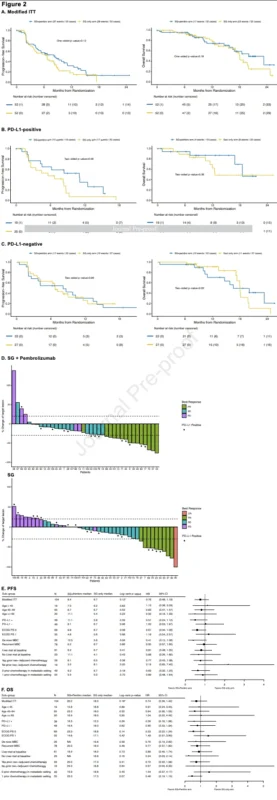
At a median follow-up of 15.5 months, adding pembrolizumab did not significantly improve progression-free survival.
Median PFS was:
- 8.4 months with sacituzumab govitecan plus pembrolizumab
- 6.7 months with sacituzumab govitecan alone
The hazard ratio was 0.76 with a 95% confidence interval of 0.48–1.19. The primary PFS analysis did not meet statistical significance.
Overall survival was also not significantly different between groups:
- 20.0 months with the combination
- 18.0 months with sacituzumab govitecan alone
The objective response rate was numerically higher with pembrolizumab, at 28.8% versus 19.2%, but this difference was not statistically significant.
A Possible Signal in PD-L1-Positive Disease
PD-L1 status was available for 88 participants. Of these, 39 patients (44.3%) had PD-L1-positive tumors, defined as a combined positive score of at least 1.
Within this subgroup, outcomes numerically favored the combination:
- Median PFS: 11.1 months with sacituzumab govitecan plus pembrolizumab versus 5.6 months with sacituzumab govitecan alone
- Median OS: 18.5 months versus 12.5 months, respectively
However, neither difference reached statistical significance. The trial was not powered to compare outcomes in this subgroup, and only eight patients had tumors with a PD-L1 combined positive score of 10 or greater.
These findings should therefore be viewed as hypothesis-generating rather than practice-changing.
Safety Was Consistent With Known Profiles
The combination did not reveal new safety signals. Grade 3 or higher treatment-emergent adverse events occurred in:
- 76.9% of patients receiving sacituzumab govitecan plus pembrolizumab
- 69.2% of patients receiving sacituzumab govitecan alone
The most frequent adverse events included neutropenia, alopecia, fatigue, anemia, nausea, leukopenia, and diarrhea.
Grade 3 or 4 treatment-related adverse events occurred in 71.2% of patients receiving the combination and 67.3% receiving sacituzumab govitecan alone. Immune-related toxicities attributed to pembrolizumab were generally consistent with its established safety profile.
TROP2 Expression Did Not Predict Benefit
The investigators explored multiple potential biomarkers, including TROP2 expression by immunohistochemistry and quantitative immunofluorescence, tumor-infiltrating lymphocytes, tissue genomic alterations, and plasma epigenomic features.
TROP2 expression was not significantly associated with progression-free survival or overall survival in the overall cohort, by treatment arm, or according to PD-L1 status.
This result is consistent with previous evidence suggesting that TROP2 expression alone may not reliably identify which patients are most likely to benefit from sacituzumab govitecan.
PIK3CA Mutations and ctDNA May Carry Prognostic Information
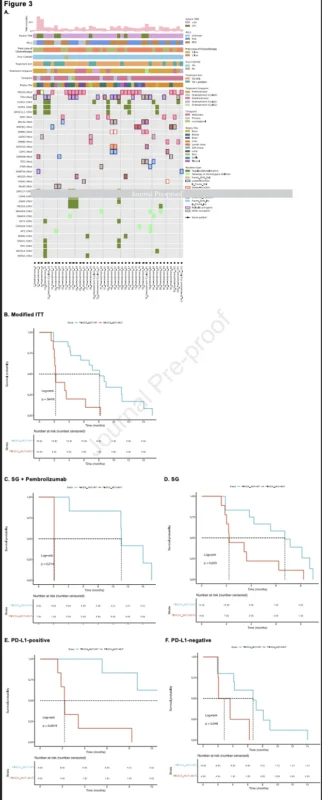
Exploratory genomic analyses identified PIK3CA mutations as a marker associated with shorter progression-free survival.
Among patients with pretreatment genomic data, median PFS was:
- 2.2 months in PIK3CA-mutant tumors
- 8.1 months in PIK3CA wild-type tumors
Higher baseline circulating tumor DNA fraction was also associated with worse progression-free survival. In plasma epigenomic analyses, increased cell-cycle, metabolic, and DNA-damage repair pathway activity was linked with better PFS on sacituzumab govitecan, while epithelial–mesenchymal transition and hypoxia-related activity were associated with worse outcomes.
These findings remain exploratory and require validation in larger cohorts.
What Does This Mean for Clinical Practice?
SACI-IO HR+ did not show a statistically significant benefit from adding pembrolizumab to sacituzumab govitecan in an unselected population with HR-positive/HER2-negative metastatic breast cancer.
However, the numerical PFS and OS differences seen in PD-L1-positive tumors raise an important question: could immune checkpoint inhibition add value for a biomarker-defined subgroup of patients receiving a TROP2-directed antibody–drug conjugate?
For now, sacituzumab govitecan plus pembrolizumab should not be considered a new standard of care in HR-positive/HER2-negative metastatic breast cancer. Larger randomized studies will be needed to clarify whether PD-L1 positivity, PIK3CA status, ctDNA features, or other biological factors can identify patients most likely to benefit from this approach.