
A large real-world analysis suggests that genomic-guided chemotherapy decisions may identify patients with early-stage hormone receptor-positive, HER2-negative (HR+/HER2−) breast cancer who have more favorable long-term outcomes compared with chemotherapy decisions based only on conventional clinicopathologic factors.
The study, published in The Breast, evaluated whether chemotherapy selection supported by the Oncotype DX recurrence score was associated with differences in overall survival compared with physician-directed chemotherapy decisions without genomic testing.
The findings highlight the growing role of genomic information in refining treatment decisions for early breast cancer, where patients with similar tumor characteristics may have substantially different biological risks.
Moving Beyond Traditional Risk Assessment in HR+/HER2− Breast Cancer
HR-positive/HER2-negative breast cancer represents the most common breast cancer subtype. Historically, decisions regarding adjuvant chemotherapy have relied mainly on clinicopathologic factors, including tumor size, histologic grade, patient age, and lymph node involvement.
However, these features do not completely capture tumor biology. Patients with similar clinical characteristics may have different risks of recurrence and different likelihoods of benefiting from chemotherapy.
The 21-gene recurrence score assay (Oncotype DX) was developed to provide additional biological information by evaluating gene expression patterns associated with recurrence risk and chemotherapy benefit. Previous prospective studies, including TAILORx, established the clinical value of recurrence score testing in guiding treatment decisions for early HR+/HER2− breast cancer.
The current study explored a different question: among patients who ultimately received chemotherapy, are outcomes different when treatment decisions are supported by genomic risk information compared with decisions based primarily on traditional clinical features?
Study Compared Two Chemotherapy Decision Pathways
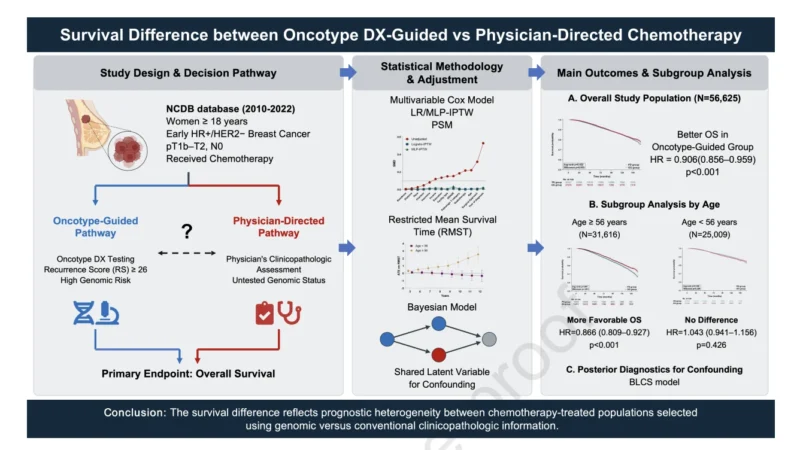
Researchers performed a retrospective cohort analysis using the 2022 National Cancer Database Breast Participant User File, including women diagnosed between 2010 and 2022 with early-stage HR+/HER2− invasive breast cancer.
Eligible patients had:
- Pathologic T1b–T2, node-negative disease
- Received adjuvant chemotherapy and endocrine therapy
- Did not receive neoadjuvant chemotherapy
Patients were divided into two groups:
- Oncotype DX-guided group: Patients who underwent Oncotype DX testing and had a recurrence score of 26 or higher, representing genomic high-risk disease.
- Physician-directed group: Patients who received chemotherapy without documented genomic testing, with decisions presumed to be based mainly on conventional clinicopathologic assessment.
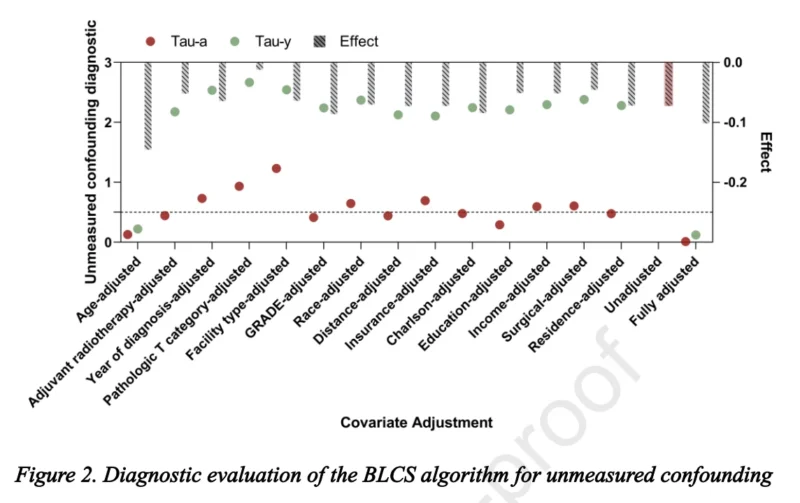
The primary endpoint was overall survival. Multiple statistical approaches were used, including multivariable Cox models, inverse probability treatment weighting analyses, and a Bayesian latent confounding survival model to evaluate potential bias.
More Favorable Survival Observed With Genomic-Guided Decision Making
The analysis included 56,625 women:
- 27,278 patients in the Oncotype DX-guided group
- 29,347 patients in the physician-directed group
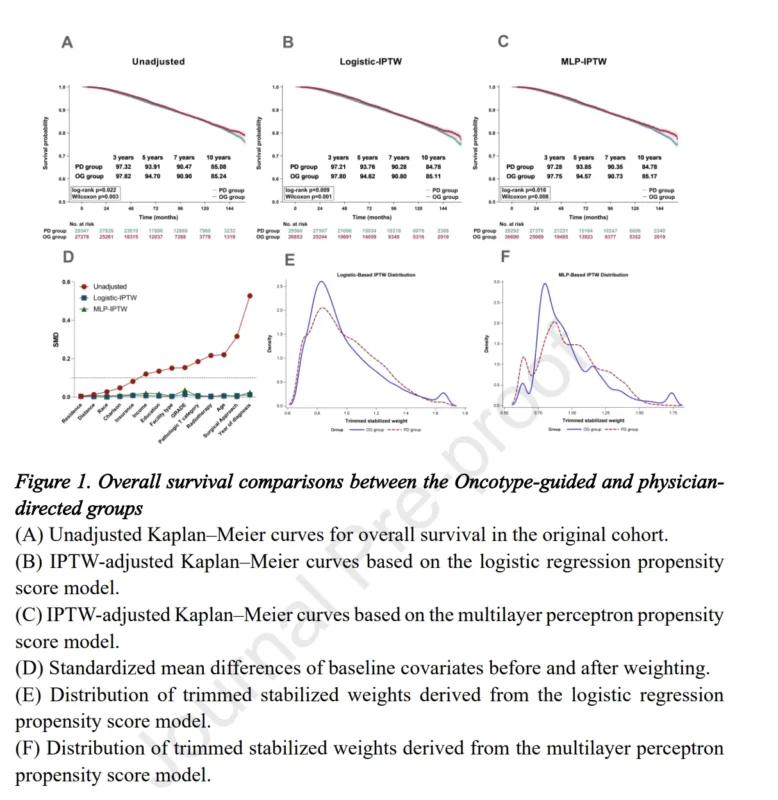
Across multiple statistical models, the Oncotype DX-guided group demonstrated more favorable overall survival.
In the primary multivariable analysis:
The Oncotype DX-guided pathway was associated with improved overall survival
- Hazard ratio (HR): 0.906
- 95% confidence interval: 0.856–0.959
- P < 0.001
Similar results were observed after adjustment using additional weighting methods, supporting the consistency of the association.
The study authors emphasized that these findings suggest chemotherapy-treated populations selected using genomic information may represent a biologically distinct group compared with patients selected using conventional clinical features alone.
Survival Difference Was Most Evident Among Older Patients
A key observation from the study was the interaction between age and treatment decision pathway.
Among patients younger than the median age of 56 years, no significant survival difference was observed between the two groups.
However, among patients aged 56 years or older, the Oncotype DX-guided group showed a stronger association with improved survival:
- Multivariable HR: 0.866
- 95% CI: 0.809–0.927
- P < 0.001
The authors noted that treatment decisions in older patients are often more complex, influenced by factors such as comorbidities, functional status, treatment tolerance, and competing health risks.
Therefore, genomic information may provide additional risk stratification in situations where clinical decision-making is particularly challenging.
Understanding What the Findings Mean
The study does not demonstrate that Oncotype DX testing itself directly causes improved survival. Because this was a retrospective database analysis, differences between patient groups may reflect factors that were not fully captured.
The authors acknowledged several limitations, including:
- Lack of breast cancer-specific survival data
- Absence of recurrence information
- Limited details regarding chemotherapy regimens and treatment completion
- Potential residual confounding related to access, physician preference, and patient characteristics
Instead, the findings suggest that the information available at the time of chemotherapy decision-making may identify different biological patient populations.
Patients selected for chemotherapy using genomic high-risk information may differ from those treated based only on conventional clinical assessment.
Expanding Precision Oncology in Early Breast Cancer
The results add to the expanding evidence supporting genomic tools in early breast cancer management.
For HR+/HER2− breast cancer, treatment decisions increasingly incorporate biological information alongside traditional clinical factors. The goal is not only to identify patients who may benefit from chemotherapy but also to better understand differences among those who receive systemic treatment.
As genomic testing becomes more integrated into routine oncology practice, future research will continue to define how molecular risk assessment can optimize treatment selection and improve long-term outcomes.