
HER2-positive breast cancer is often treated as a biologically uniform disease. In practice, however, many tumors contain subpopulations of cells with markedly different HER2 expression and ERBB2 amplification status.
This intratumoral HER2 heterogeneity has emerged as an important challenge for HER2-targeted treatment. It may help explain why some tumors respond incompletely to therapy, develop resistance, or recur despite initially effective treatment.
A new preclinical study published in Cancer Discovery provides further insight into this problem. Using HER2-heterogeneous breast cancer models composed of matched HER2-high and HER2-low cell populations from the same tumor, researchers found that HER2-low cells can drive resistance to HER2-targeted antibody–drug conjugates, including trastuzumab deruxtecan (T-DXd).
The study also identified two potential therapeutic vulnerabilities, ABCC1 and USP9X, that may increase the activity of T-DXd in HER2-heterogeneous tumors.
Why HER2 Heterogeneity Matters
HER2-positive breast cancer is defined by ERBB2 amplification or HER2 protein overexpression. HER2-targeted therapies, including trastuzumab, pertuzumab, tyrosine kinase inhibitors, trastuzumab emtansine, and trastuzumab deruxtecan, have substantially improved outcomes for many patients.
However, HER2 expression is not always consistent across all tumor cells.
HER2-heterogeneous tumors contain a mixture of ERBB2-amplified HER2-high cells and ERBB2-nonamplified HER2-low cells. According to the authors, HER2 heterogeneity may occur in up to 40% of HER2-positive breast cancers.
Previous clinical research has linked HER2 heterogeneity with inferior outcomes and lower pathologic complete response rates after HER2-directed neoadjuvant therapy.
Yet, treatment decisions are not routinely adapted according to HER2 heterogeneity, partly because the biological mechanisms underlying resistance remain unclear.
Building Models That Reflect HER2-Heterogeneous Tumors
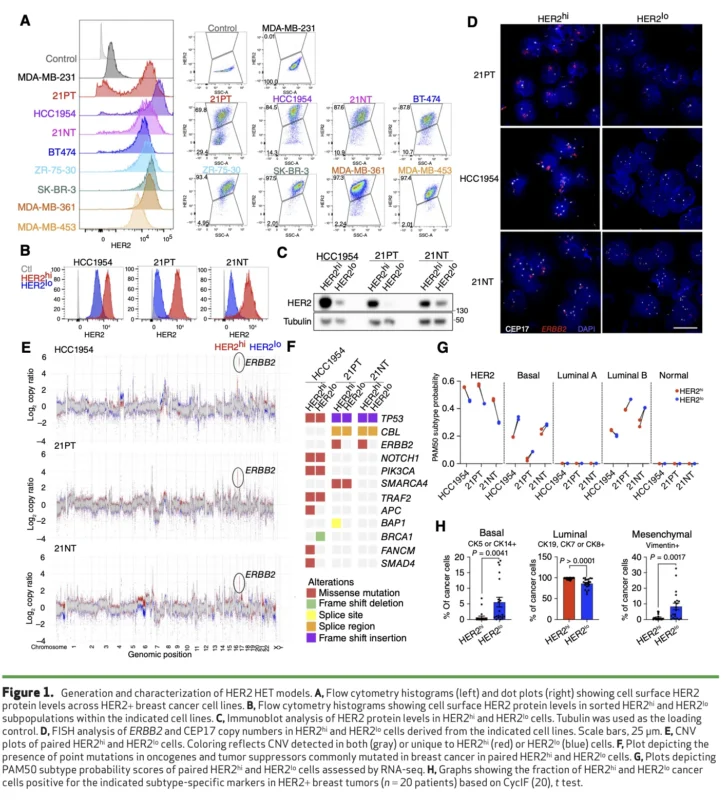
The investigators developed models from human HER2-positive breast cancer cell lines containing both HER2-high and HER2-low subpopulations.
The HER2-high populations had ERBB2 amplification, whereas the HER2-low populations did not. Despite their differences in HER2 expression, the paired populations shared multiple genomic features, supporting a common clonal origin.
The HER2-low cells also showed a more basal-like phenotype.
Compared with HER2-high cells, HER2-low cells had higher expression of basal and mesenchymal markers and lower expression of luminal markers. This pattern was observed not only in the experimental models but also in patient tumor samples.
These findings suggest that HER2 heterogeneity is not merely a variation in receptor intensity. It may reflect biologically distinct subclonal states within the same tumor.
HER2-Low Cells Were Less Sensitive to ADCs
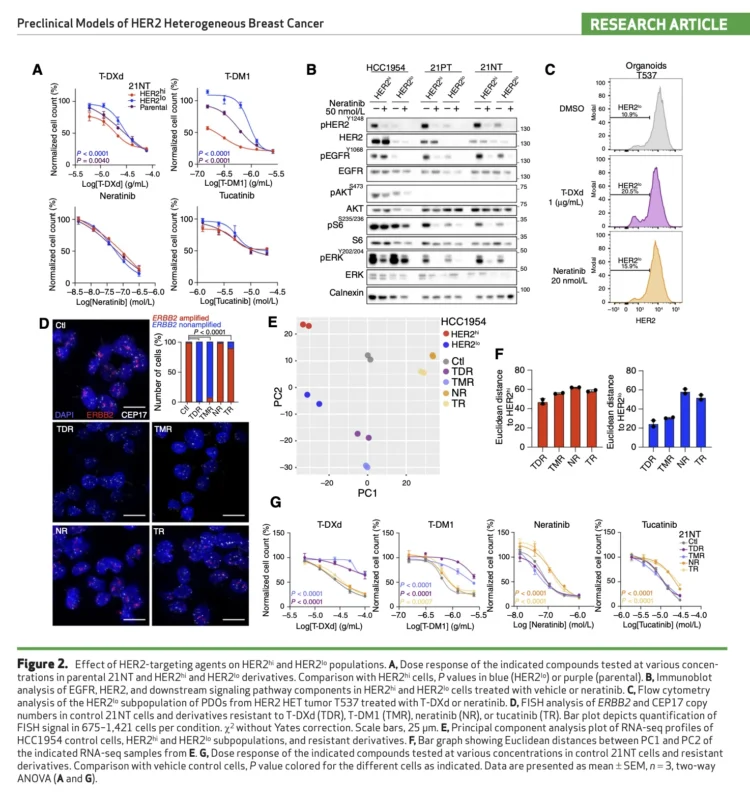
The study tested HER2-targeted antibody–drug conjugates and HER2 tyrosine kinase inhibitors in HER2-high and HER2-low cell populations.
HER2-low cells showed reduced sensitivity to the antibody–drug conjugates T-DXd and trastuzumab emtansine compared with matched HER2-high cells.
In contrast, HER2-low cells remained sensitive to HER2 kinase inhibitors, including neratinib and tucatinib.
This distinction is important.
T-DXd relies on HER2 binding, internalization, lysosomal processing, and intracellular release of its cytotoxic payload. Lower HER2 expression may therefore reduce effective drug delivery.
The authors also found that reduced T-DXd sensitivity was not explained by general chemotherapy resistance or by reduced sensitivity to the DXd payload itself.
Instead, the findings indicate that HER2-low cells may specifically evade HER2-targeted ADC activity.
T-DXd Selected for HER2-Low Resistant Subclones
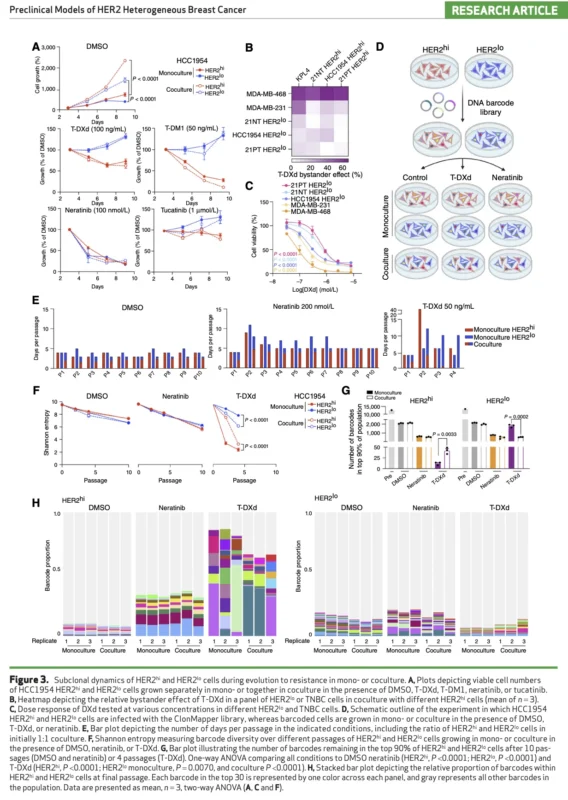
When HER2-high and HER2-low cells were grown together and treated with HER2-targeted agents, T-DXd and T-DM1 promoted the outgrowth of HER2-low populations.
After repeated ADC exposure, HER2-low cells became dominant in several models.
This effect was not observed with HER2 tyrosine kinase inhibitors.
The results suggest that ADC treatment can selectively suppress HER2-high cells while leaving HER2-low subclones behind. These resistant cells may then contribute to residual disease and eventual recurrence.
The authors also showed that ADC-resistant cells retained sensitivity to HER2 kinase inhibitors. Conversely, tyrosine kinase inhibitor-resistant cells remained sensitive to T-DXd and T-DM1.
This reciprocal pattern supports the concept that ADCs and HER2 kinase inhibitors may target different vulnerabilities within HER2-heterogeneous tumors.
The T-DXd Bystander Effect May Not Fully Overcome Heterogeneity
T-DXd is often considered especially promising in heterogeneous tumors because its membrane-permeable payload may affect neighboring cells through a bystander effect.
However, the study found that this effect varied substantially.
In the HER2-heterogeneous models, HER2-low cells generally did not become sufficiently sensitive to T-DXd when cocultured with HER2-high cells.
The investigators concluded that the bystander effect depends strongly on the intrinsic sensitivity of neighboring cells to the DXd payload.
This is a clinically relevant observation. Although T-DXd can have bystander activity, the presence of HER2-low cells may still limit durable tumor control when those cells are not adequately sensitive to payload exposure.
HER2-Low Cells Cooperate With HER2-High Cells
The study also explored how HER2-high and HER2-low cells interact during tumor growth.
Both populations grew faster when cultured together than when grown separately. Coculture was associated with biological features linked to cellular plasticity, including epithelial-to-mesenchymal transition-related gene expression changes.
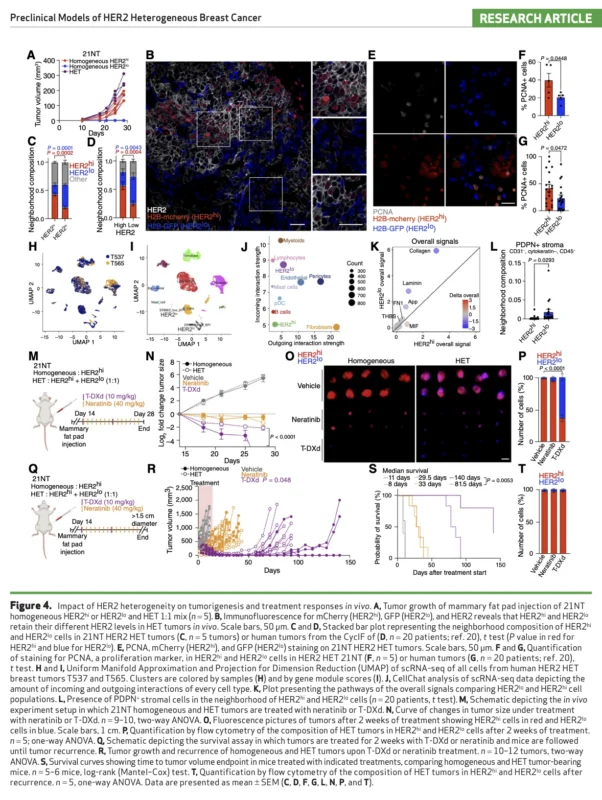
HER2-low cells were unable to form tumors efficiently on their own in mouse models. However, they persisted within mixed HER2-heterogeneous tumors alongside HER2-high cells.
The authors found that HER2-low cells had greater interaction with stromal components, including extracellular matrix signals such as collagen and laminin.
This suggests that HER2-low cells may not simply be passive drug-resistant remnants. They may actively contribute to tumor adaptation, microenvironmental interactions, and recurrence.
HER2 Heterogeneity Reduced the Durability of T-DXd Response
In mouse models, both T-DXd and neratinib reduced tumor size.
However, T-DXd was more effective in HER2-high homogeneous tumors than in HER2-heterogeneous tumors.
After short-term T-DXd treatment, residual HER2-heterogeneous tumors were predominantly composed of HER2-low cells.
Following treatment discontinuation, HER2-heterogeneous tumors recurred earlier than HER2-high homogeneous tumors. All HER2-heterogeneous tumors recurred within 92 days, while a subset of homogeneous tumors did not recur during more than 140 days of follow-up.
Interestingly, recurrent HER2-heterogeneous tumors were again mainly composed of HER2-high cells.
This finding suggests a complex evolutionary pattern: HER2-low cells may survive T-DXd exposure and help sustain tumor fitness, while residual HER2-high cells later regain dominance during recurrence.
CRISPR Screens Identify ABCC1 and USP9X as Potential Targets
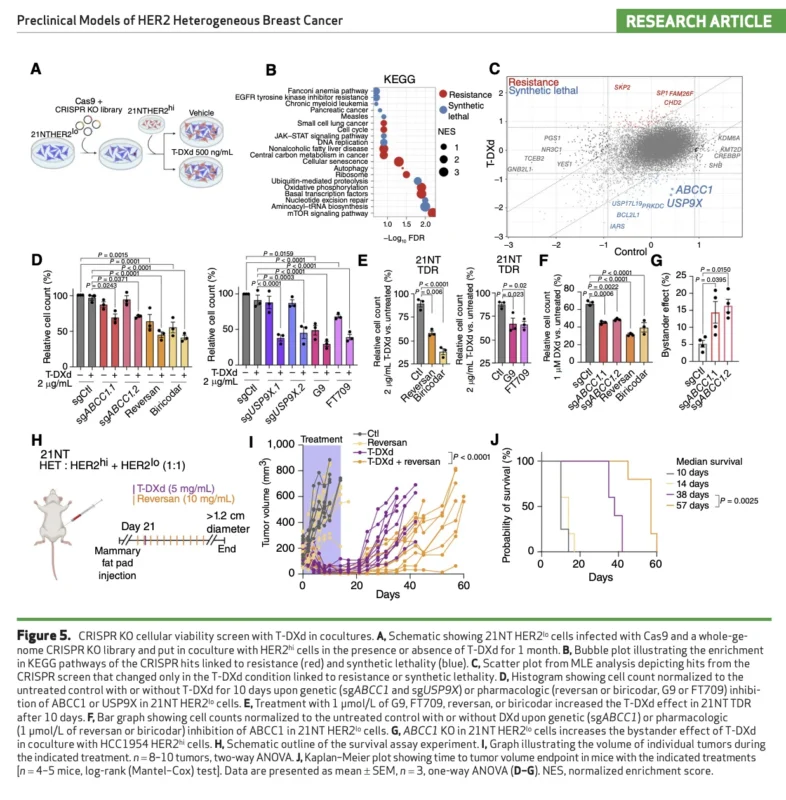
To identify strategies that could sensitize HER2-low cells to T-DXd, the investigators performed a whole-genome CRISPR-Cas9 knockout screen.
Two leading synthetic lethal candidates were identified:
ABCC1, a multidrug transporter associated with drug efflux
USP9X, a deubiquitinating enzyme involved in HER2 protein stability
Genetic or pharmacologic inhibition of either ABCC1 or USP9X increased T-DXd activity in HER2-low cells.
ABCC1 inhibition also enhanced sensitivity to the DXd payload and increased the T-DXd bystander effect in coculture models.
In mouse models of HER2-heterogeneous breast cancer, combining the ABCC1 inhibitor reversan with T-DXd produced greater tumor suppression and prolonged recurrence-free survival compared with T-DXd alone.
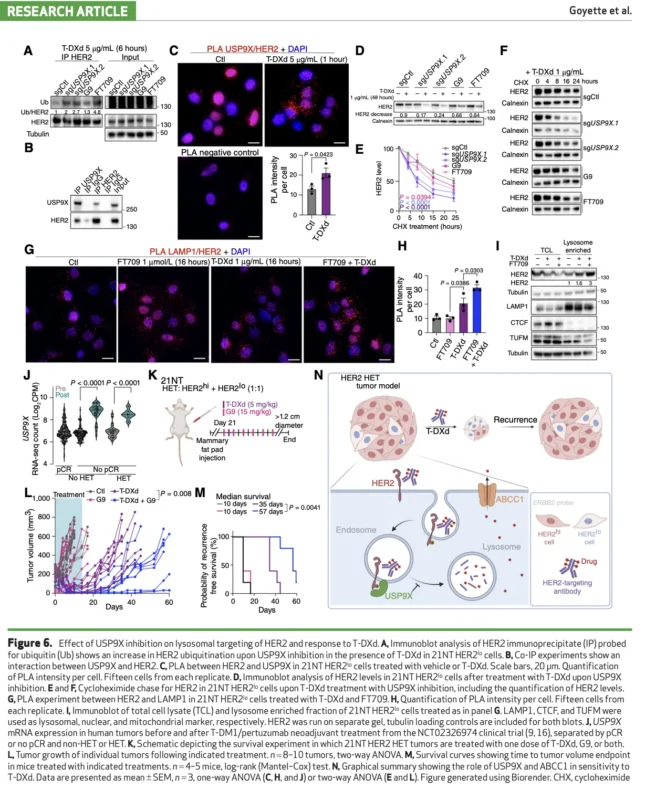
USP9X Inhibition May Improve HER2 Lysosomal Targeting
The study identified a distinct mechanism for USP9X inhibition.
USP9X interacted with HER2 and appeared to contribute to HER2 protein stability.
When USP9X was inhibited, HER2 became more ubiquitinated and was more effectively trafficked to lysosomes after T-DXd treatment. This increased HER2 degradation and may enhance intracellular release of the ADC payload.
Combining a USP9X inhibitor with T-DXd led to more pronounced tumor suppression and longer recurrence-free survival in HER2-heterogeneous mouse models.
The authors also found higher USP9X expression in post-treatment tumors from patients who did not achieve a pathologic complete response after neoadjuvant T-DM1 plus pertuzumab.
This supports the possibility that USP9X may be clinically relevant in resistance to HER2-targeted ADCs.
Clinical Meaning
This is a preclinical study, and its findings should not yet change treatment decisions for patients with HER2-positive breast cancer.
Neither ABCC1 inhibition nor USP9X inhibition has been established as a standard strategy in HER2-heterogeneous disease. USP9X inhibitors remain in early clinical development, and any future combination approach will require careful safety evaluation.
Still, the study provides an important biological framework.
HER2 heterogeneity may be more than a prognostic feature. It may represent a treatment-relevant biomarker that identifies tumors at risk for resistance to HER2-targeted ADCs.
The results also support continued research into rational combinations that target both HER2-high and HER2-low tumor populations.
Potential strategies could include combining HER2-targeted ADCs with HER2 kinase inhibitors or with agents that improve ADC payload delivery and activity in resistant subclones.
Key Takeaway
HER2-low, ERBB2-nonamplified subclones may drive resistance to T-DXd and other HER2-targeted ADCs in HER2-heterogeneous breast cancer.
In new HER2-heterogeneous models, these cells were less sensitive to ADCs but retained sensitivity to HER2 kinase inhibitors. T-DXd treatment selected for HER2-low residual populations and was less durable in heterogeneous tumors than in HER2-high homogeneous tumors.
The study identified ABCC1 and USP9X as potential targets for improving T-DXd activity. Inhibiting either pathway sensitized HER2-low cells to T-DXd, while USP9X inhibition enhanced HER2 trafficking to lysosomes and prolonged recurrence-free survival in preclinical models.
These results provide a rationale for future biomarker-driven therapeutic strategies in HER2-heterogeneous breast cancer.