Breast cancer data for transgender, nonbinary, and gender-diverse individuals remain limited, leaving major gaps in screening, risk assessment, treatment planning, and survivorship care.
A multicenter cohort study published in JAMA Network Open provides one of the most detailed clinical descriptions of breast cancer in this population to date. The analysis included 112 transgender, nonbinary, and/or gender-diverse individuals treated across 22 US academic medical centers.
Patients were diagnosed at a median age of 42.5 years, more than half found their own tumors, and nearly two-thirds reported a family history of breast cancer. Despite these risk and detection patterns, most tumors were hormone receptor positive and diagnosed at an early stage. Estimated five-year breast cancer–specific survival was 96.2%.
The findings are reassuring in the short term, but they also reveal opportunities to improve individualized risk assessment, screening access, genetic counseling, and guideline-concordant treatment (Cortina et al., 2026).
What Did the Multicenter Study Examine?
The retrospective cohort included adults with stage 0–IV breast cancer treated between 1990 and 2023 at 22 US academic medical centers.
The investigators collected detailed information on patient demographics, gender identity, sex assigned at birth, gender-affirming hormone therapy, family history, germline testing, cancer detection, pathology, treatment, recurrence, and survival.
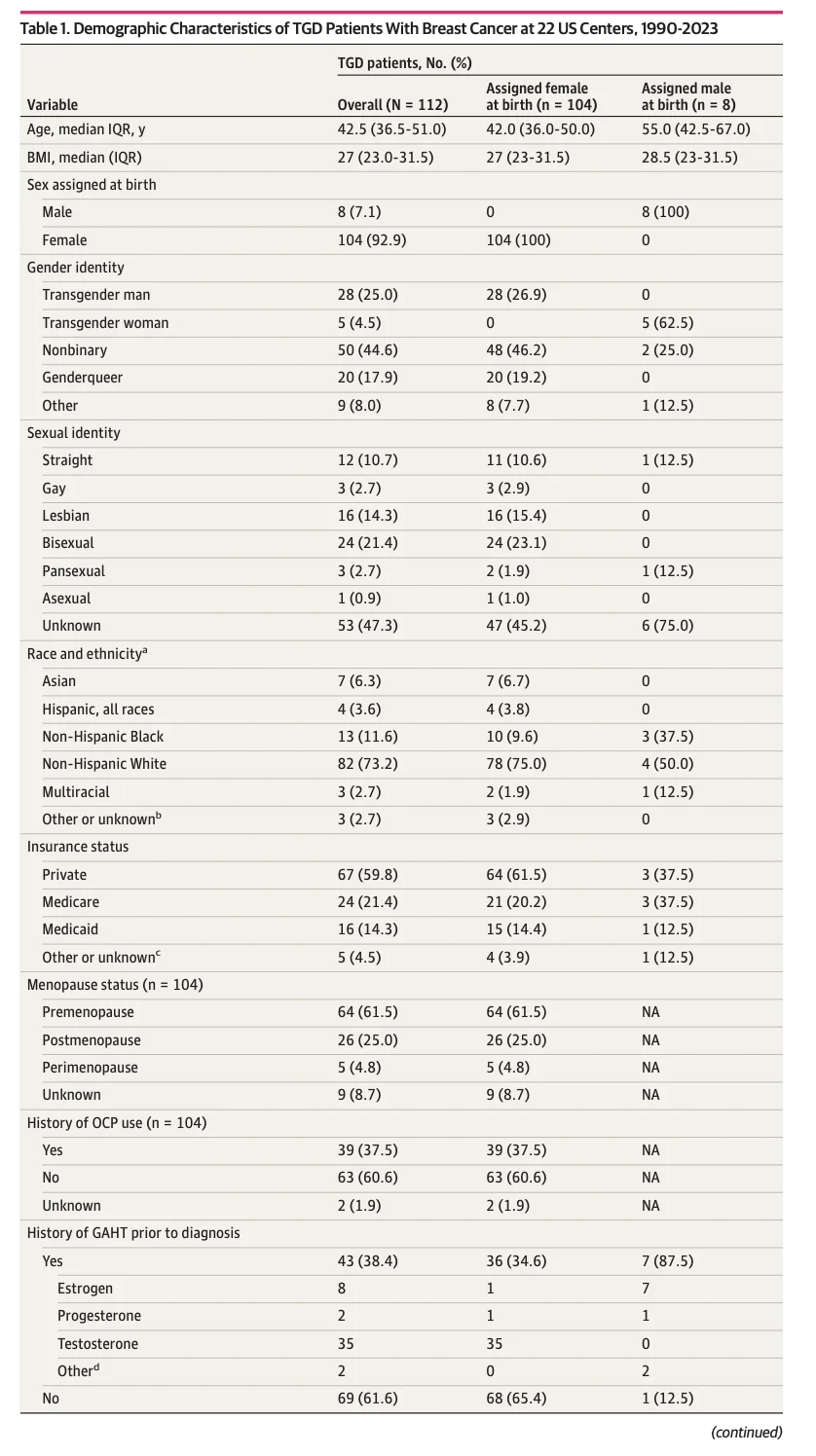
The cohort included 112 individuals and 113 breast cancers, as one patient had bilateral disease. Most participants, 92.9%, were assigned female at birth, while eight were assigned male at birth.
The most frequently documented gender identities were nonbinary, transgender man or man, and genderqueer. Approximately 38.4% had used gender-affirming hormone therapy before their breast cancer diagnosis.
To provide context, the investigators also compared the cohort with more than 480,000 patients in the Surveillance, Epidemiology, and End Results breast cancer dataset. However, the authors emphasized that differences between the groups should not be interpreted as population-level comparisons because of substantial demographic and clinical differences (Cortina et al., 2026).
Most Patients Were Young at Diagnosis
The median age at breast cancer diagnosis was 42.5 years, compared with 62 years in the SEER comparison cohort.
This younger age has important implications for screening and risk assessment. Standard age-based screening approaches may fail to identify younger people with clinically meaningful risk related to family history, inherited pathogenic variants, hormone exposure, or remaining breast tissue after gender-affirming surgery.
The study found that 60.7% of participants had a family history of breast cancer. More than one-third had a first-degree relative with the disease.
The high prevalence of family history suggests that breast cancer risk assessment should not rely exclusively on age, gender identity, or sex assigned at birth. Family history, genetic susceptibility, anatomy, hormone exposure, and previous surgery all need to be considered together.
More Than Half of Tumors Were Self-Detected
A central finding was the method through which breast cancer was discovered.
Overall, 51.8% of patients detected their own tumors through self-examination or symptoms. Only 27.7% were diagnosed through screening mammography.
An additional 13.4% were diagnosed incidentally through pathological examination of tissue removed during gender-affirming chest masculinization surgery.
Even among individuals with a first-degree family history or an identified pathogenic germline variant, self-detection remained more common than screening detection.
These findings point to gaps in risk-based screening. They also show why clinicians need to discuss breast and chest awareness with patients who retain breast tissue, regardless of their gender identity or previous gender-affirming care.
Self-detection is not a substitute for screening. A palpable or symptomatic cancer may already be larger than a lesion identified through routine imaging. Earlier identification of high-risk individuals could increase the proportion diagnosed through planned surveillance.
Genetic Risk Was Common
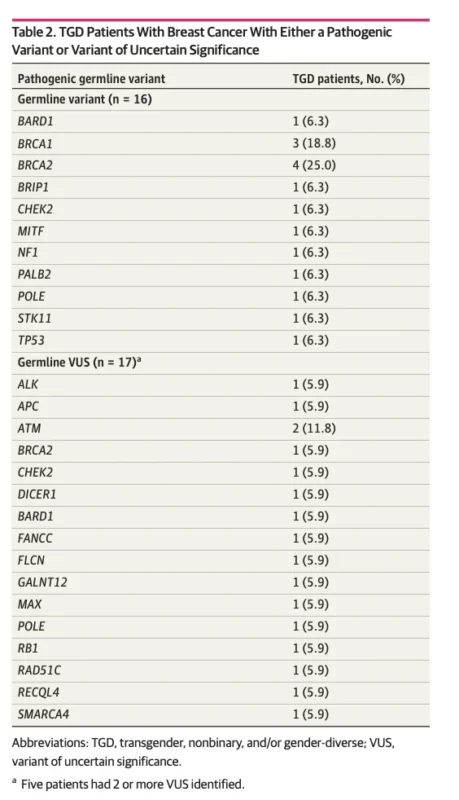
Genetic counseling was offered to 89.3% of participants, and 84 underwent germline testing.
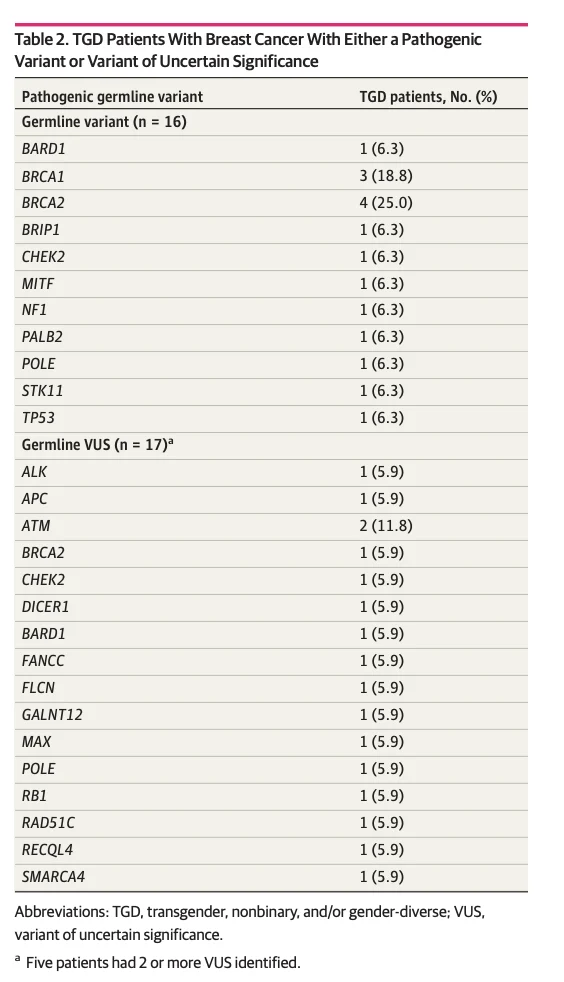
Among those tested, 16 had a pathogenic germline variant. Across the entire cohort, this represented 14.3% of patients.
The most frequently identified pathogenic variants involved BRCA2 and BRCA1, although variants were also reported in PALB2, TP53, CHEK2, BARD1, and several other cancer-associated genes.
Among the eight individuals assigned male at birth, two had a pathogenic variant, one in BRCA2 and one in PALB2.
The authors noted that the overall pathogenic variant rate was higher than estimates reported in contemporary cohorts of cisgender women with breast cancer. However, this may partly reflect the younger study population, strong family histories, referral patterns, and high testing rates at academic centers.
The findings support early genetic counseling when family history or other risk factors are present, particularly before gender-affirming chest surgery.
Why Risk Assessment Matters Before Chest Masculinization Surgery
Gender-affirming chest masculinization surgery removes breast tissue to create a masculine chest contour, but it is not generally equivalent to an oncologic risk-reducing mastectomy.
Residual breast tissue can remain, meaning future breast cancer risk is reduced to an uncertain degree rather than eliminated.
In this cohort, 12 participants had undergone chest masculinization surgery before their breast cancer diagnosis. Fifteen cancers were identified incidentally through pathology obtained during such procedures, including some in patients whose cancer was completely removed at surgery.
These findings reinforce two clinical points.
Individuals with a meaningful family history or suspected inherited risk need personalized risk assessment and genetic counseling before surgery. Patients with a pathogenic variant or markedly elevated lifetime risk may wish to discuss an oncologic risk-reducing operation rather than standard chest masculinization alone.
The results also support routine pathological assessment of tissue removed during gender-affirming chest procedures. Preoperative imaging cannot identify every malignancy or high-risk lesion (Cortina et al., 2026).
What Types of Breast Cancer Were Diagnosed?
Most tumors had features generally associated with endocrine-responsive disease.
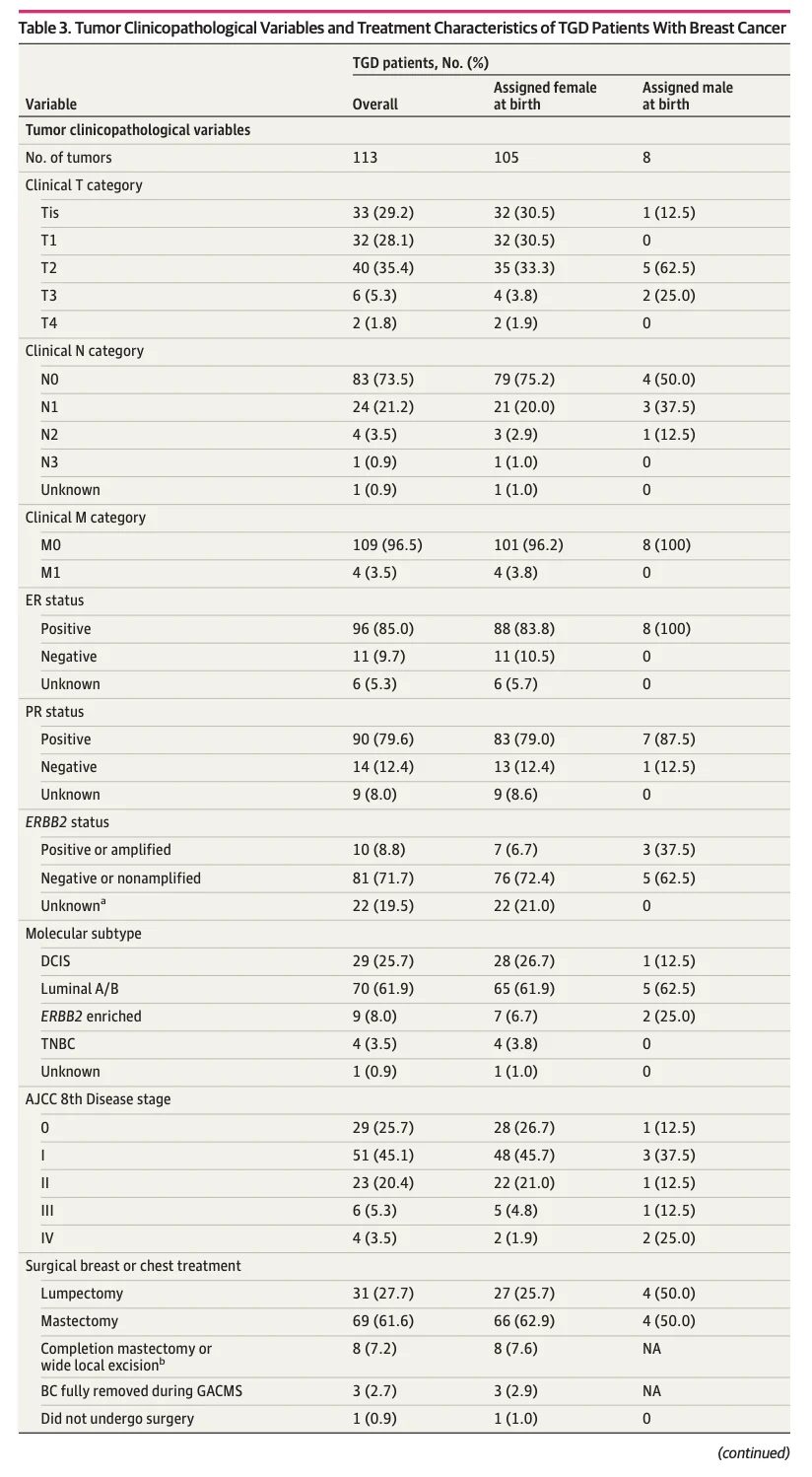
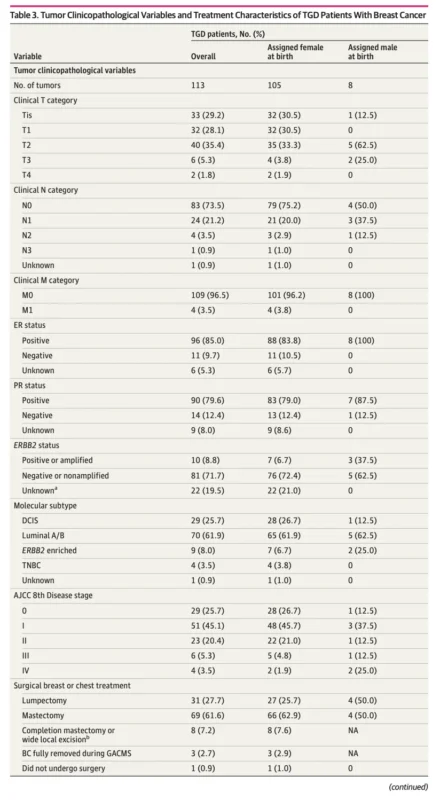
Approximately 85.7% were hormone receptor positive, while 8.8% were HER2 positive or amplified and 3.5% were triple-negative breast cancers.
Disease was commonly diagnosed at an early stage. Ductal carcinoma in situ accounted for approximately one-quarter of cases, while 45.1% were stage I.
Most patients underwent surgery. Mastectomy was performed in 61.6%, while 27.7% underwent lumpectomy. Many patients who underwent mastectomy did not receive reconstruction, which may have reflected individual preferences for a flat or masculine chest.
Treatment decisions in this population may involve both oncologic and gender-affirming goals. Shared decision-making needs to address cancer control, chest appearance, reconstruction preferences, hormone use, fertility, sexuality, and quality of life without assuming that all patients have the same priorities.
Endocrine Therapy and Gender-Affirming Hormones Require Individualized Discussion
The interaction between hormone receptor–positive breast cancer, endocrine therapy, and gender-affirming hormone therapy remains one of the most clinically complex areas highlighted by the study.
Among patients with hormone receptor–positive disease, some stopped gender-affirming hormone therapy after diagnosis, while others continued or began treatment afterward.
Seventeen patients with hormone receptor–positive breast cancer used gender-affirming hormones after diagnosis. Approximately half also received endocrine therapy.
The study did not find a statistically significant difference in locoregional recurrence according to postdiagnosis gender-affirming hormone use. However, the numbers were small, treatment patterns were heterogeneous, and follow-up was limited.
These data cannot establish whether continuing estrogen, testosterone, or other hormone-modulating therapies after breast cancer is safe. They also cannot determine the effect of combining gender-affirming hormones with tamoxifen, aromatase inhibitors, or ovarian suppression.
Treatment requires careful, patient-centered discussion involving oncology, endocrinology, primary care, and gender-affirming specialists. The goal is to protect cancer outcomes while minimizing unnecessary interruption of medically important gender-affirming care.
Were Patients Receiving Standard Breast Cancer Treatment?
Most patients received surgery and systemic treatment according to tumor characteristics, but the study identified some areas where care could potentially be improved.
Among patients advised to take endocrine therapy, approximately 84% received it. However, a proportion of patients with hormone receptor–positive disease declined endocrine treatment.
Among the 31 patients treated with lumpectomy, nine did not receive adjuvant radiotherapy. This represented 29.0% of the breast-conserving surgery group.
No statistically significant recurrence difference was observed according to radiotherapy or endocrine therapy receipt. However, these comparisons involved small subgroups and few events. They should not be interpreted as evidence that either treatment can be safely omitted.
The study instead highlights the need to understand why recommended therapies are declined or discontinued. Possible factors include concerns about gender dysphoria, treatment-related body changes, interactions with gender-affirming hormones, mistrust, access barriers, and inadequate communication.
Short-Term Breast Cancer–Specific Survival Was Favorable
After a median follow-up of 38 months, estimated five-year breast cancer–specific survival was 96.2%.
Twelve patients experienced locoregional recurrence, corresponding to 10.7% of the cohort. Two developed distant recurrence and subsequently died from metastatic breast cancer.
The favorable breast cancer–specific survival is reassuring, but follow-up remains relatively short. Many hormone receptor–positive breast cancers recur more than five years after diagnosis, making longer observation essential.
The survival estimate also comes from a relatively small cohort treated mainly at academic centers. Outcomes may differ in populations with less access to specialized oncology, genetics, gender-affirming services, and multidisciplinary care.
What Should Change?
The study does not support a single screening or treatment algorithm for every transgender, nonbinary, or gender-diverse person.
Instead, it supports a more individualized model based on anatomy, age, family history, inherited risk, previous breast or chest surgery, hormone exposure, and personal goals.
Risk assessment needs to occur earlier, especially before chest masculinization surgery. Patients who meet screening criteria need access to appropriate imaging, even when gender markers in medical or insurance systems do not align with traditional screening pathways.
Clinicians also need clearer evidence on the management of gender-affirming hormones after hormone receptor–positive breast cancer. These decisions currently depend on limited data and individualized risk-benefit discussions.
The Bottom Line
This multicenter study of 112 transgender, nonbinary, and gender-diverse individuals with breast cancer found that patients were generally young, often had substantial familial or inherited risk, and most commonly detected their own tumors.
More than half of cancers were self-detected, 14.3% of patients had a pathogenic germline variant, and 13.4% of cancers were found incidentally through pathology from gender-affirming chest surgery.
Most tumors were hormone receptor positive and diagnosed at an early stage. Estimated five-year breast cancer–specific survival was favorable at 96.2%.
The findings support earlier individualized risk assessment, improved screening access, routine pathological review of tissue removed during chest masculinization surgery, and multidisciplinary treatment planning that integrates both cancer care and gender-affirming goals.
References
- Cortina CS, Brazauskas R, Flanagan MR, et al. Characteristics of gender-diverse patients with breast cancer. JAMA Network Open. 2026;9(7):e2624824. doi:10.1001/jamanetworkopen.2026.24824.
- de Blok CJM, Wiepjes CM, Nota NM, et al. Breast cancer risk in transgender people receiving hormone treatment: nationwide cohort study in the Netherlands. BMJ. 2019;365:l1652.
- Brown A, Lourenco AP, Niell BL, et al. ACR Appropriateness Criteria: Transgender breast cancer screening. Journal of the American College of Radiology. 2021;18(11S):S502-S515.
- Cathcart-Rake EJ, Chan A, Menendez A, et al. Cancer care for transgender and gender-diverse people: practical recommendations. CA: A Cancer Journal for Clinicians. 2025;75(1):68-81.