First-line CDK4/6 inhibitor plus endocrine therapy remains the standard backbone for most patients with HR-positive/HER2-negative metastatic breast cancer. But a new real-world study in ESMO Open raises an important question: do all biologic subgroups benefit equally from this approach?
The study suggests that patients with germline BRCA2 pathogenic variants may have significantly poorer outcomes with first-line CDK4/6 inhibition plus endocrine therapy compared with patients who have negative germline testing.
This does not immediately change practice. But it adds to a growing body of evidence that BRCA2 status may matter for treatment sequencing in ER-positive metastatic breast cancer.
A Real-World Study Focused on Germline and Tumor HRR Alterations
The investigators conducted a multicenter, real-world, case-control study including 233 patients with HR-positive/HER2-negative metastatic breast cancer treated with first-line CDK4/6 inhibitor plus endocrine therapy.
The cohort included:
- 116 patients with homologous recombination repair pathogenic variants
- 117 matched controls with negative germline testing
Among the HRR-altered group, 67 patients had germline BRCA2 pathogenic variants, making BRCA2 the most common alteration in the study. Other alterations included BRCA1, PALB2, ATM, CHEK2, RAD51C, and BRIP1.
To reduce baseline differences between groups, the authors used inverse probability of treatment weighting, including factors such as age, endocrine resistance, visceral metastases, number of metastatic sites, breast cancer subtype, menopausal status, and type of CDK4/6 inhibitor.
Shorter PFS in Germline BRCA2 Carriers
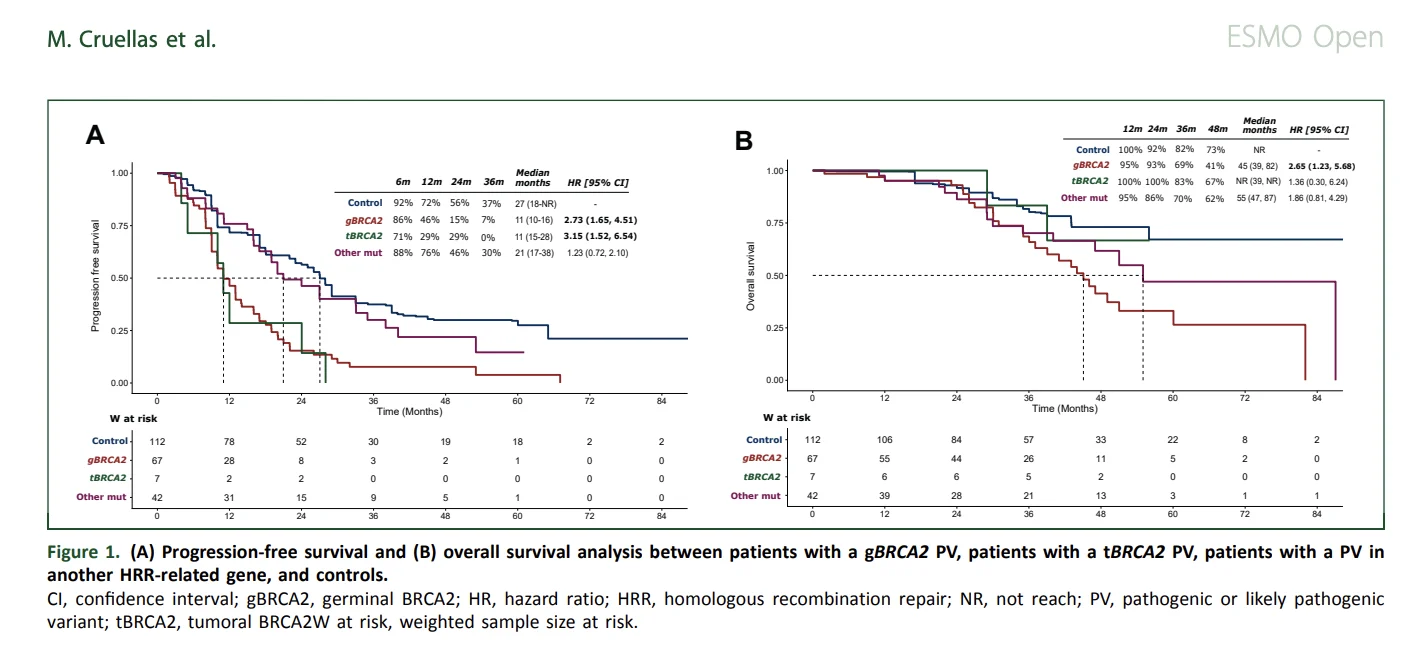
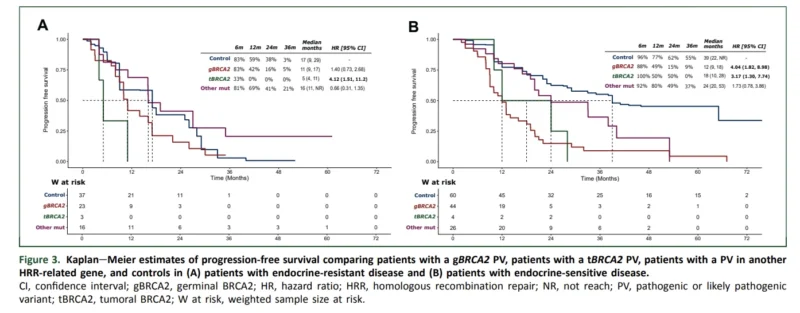
After a median follow-up of 44 months, patients with germline BRCA2 pathogenic variants had significantly shorter progression-free survival than controls.
Median PFS was:
- 11 months for germline BRCA2 carriers
- 27.1 months for controls
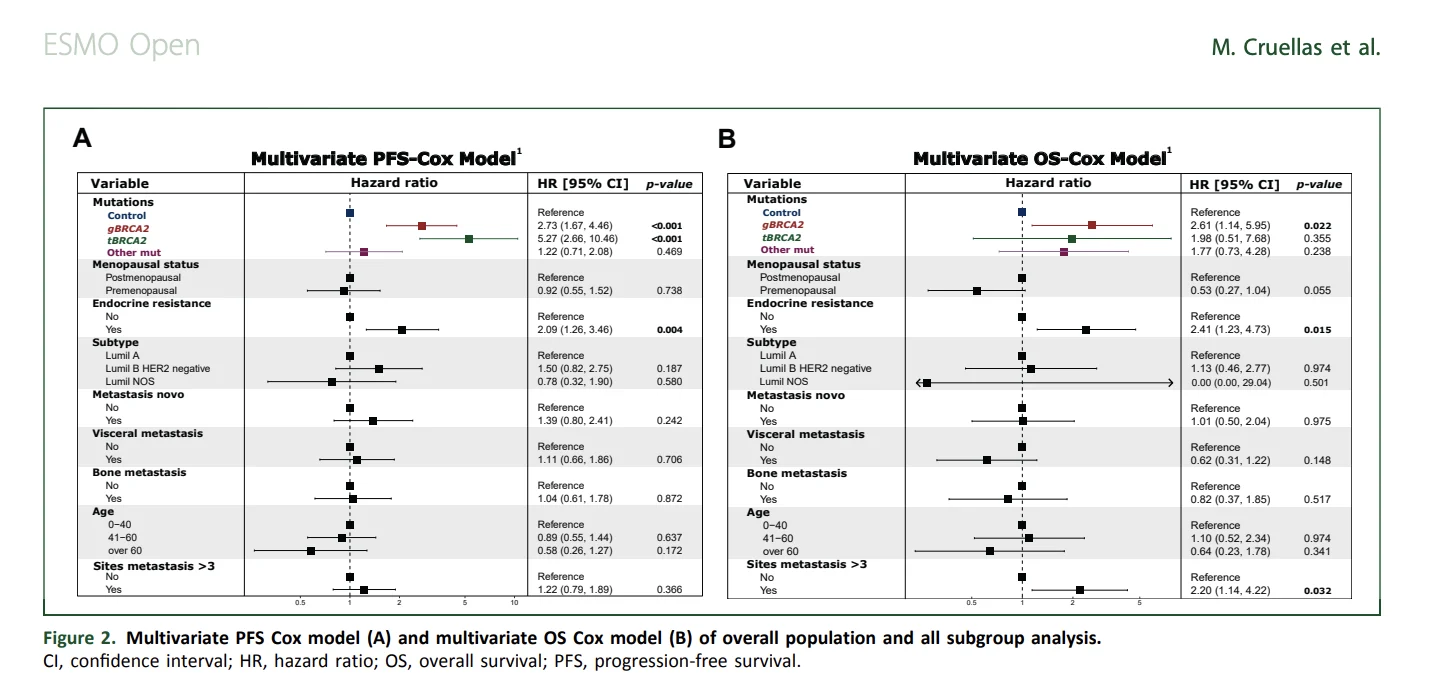
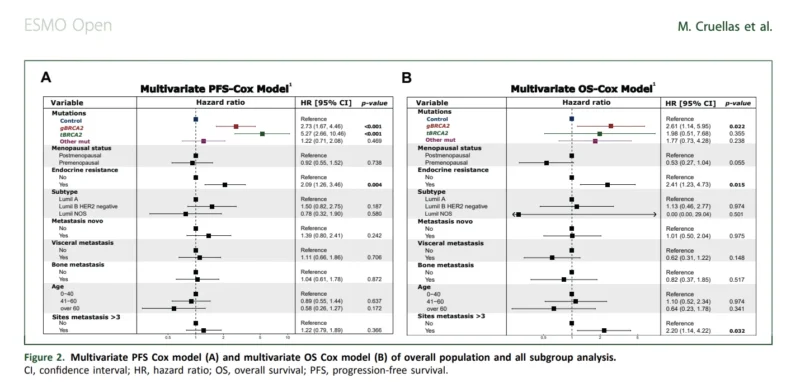
The adjusted hazard ratio for PFS was 2.73, indicating a substantially higher risk of progression or death compared with controls.
Patients with tumor-detected BRCA2 pathogenic variants also had a short median PFS of 11 months, although this subgroup was small and should be interpreted cautiously.
By contrast, patients with pathogenic variants in other HRR-related genes had a median PFS of 21 months, and outcomes were not significantly different from controls.
The Signal Was Strongest in Endocrine-Sensitive Disease
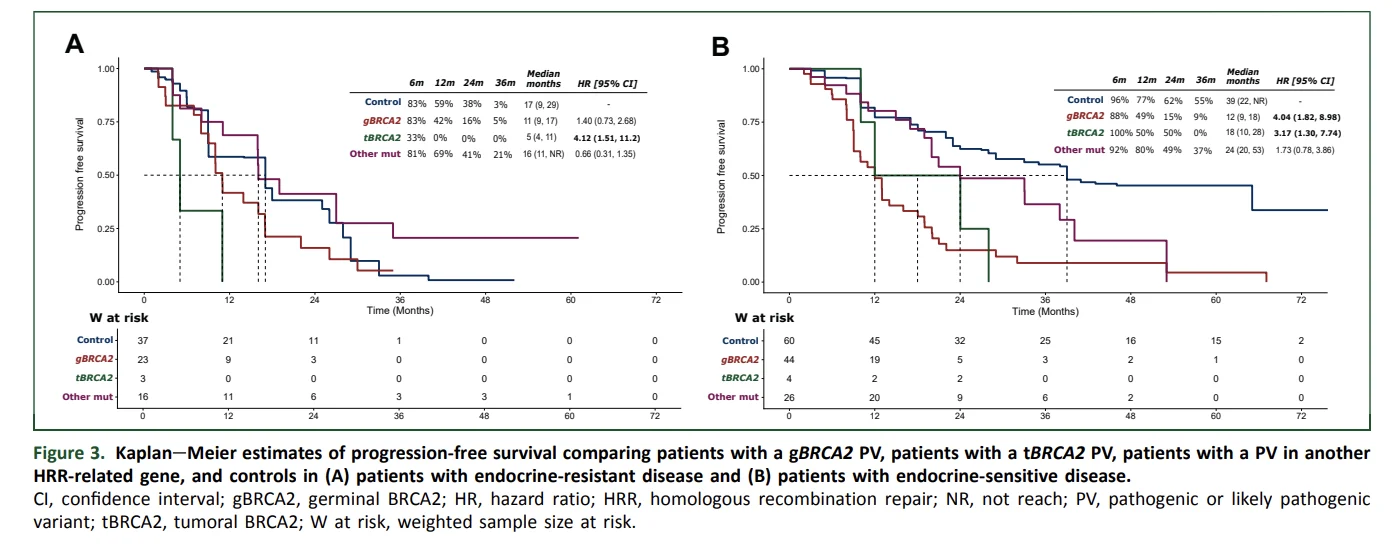
One of the most clinically relevant findings appeared in patients considered endocrine-sensitive.
Among endocrine-sensitive patients, germline BRCA2 carriers had a median PFS of 12 months, compared with 39 months in controls. The hazard ratio was 4.04.
This is important because endocrine-sensitive disease is usually expected to do well with endocrine therapy plus CDK4/6 inhibition. The fact that germline BRCA2 carriers progressed earlier despite endocrine sensitivity suggests that BRCA2 status may identify a biologically distinct subgroup.
The authors emphasize that this finding should not be interpreted as proof of causality. BRCA2 status may reflect adverse tumor biology rather than direct resistance to CDK4/6 inhibitors. Still, the observation is clinically important.
Overall Survival Was Also Shorter
Overall survival was also shorter among patients with germline BRCA2 pathogenic variants.
Median OS was 45.1 months for germline BRCA2 carriers, compared with not reached in controls. In multivariable analysis, germline BRCA2 was independently associated with worse OS, with an adjusted hazard ratio of 2.61.
Other independent predictors of shorter OS included endocrine resistance to adjuvant therapy and the presence of three or more metastatic sites.
Why Might BRCA2 Affect CDK4/6 Outcomes?
The study explored potential resistance mechanisms in available tumor samples.
One biologically plausible explanation is RB1 loss of heterozygosity, a known mechanism of resistance to CDK4/6 inhibition. Among pre-CDK4/6 inhibitor samples from BRCA2 pathogenic variant carriers that were evaluable for RB1 LOH, most showed RB1 LOH.
However, the molecular subset was small. RB1 LOH was evaluable in only six pretreatment BRCA2 samples, with four showing LOH, one equivocal, and one without LOH. The patient without RB1 LOH had a longer PFS of 47 months, but the sample size was too limited for firm conclusions.
These data should be viewed as hypothesis-generating, not definitive proof of mechanism.
PARP Inhibitors May Remain Active After CDK4/6 Inhibition
The study also examined patients who received a PARP inhibitor after CDK4/6 inhibitor therapy.
Among 26 patients treated with second-line PARP inhibition, median PFS was 11.1 months. The authors note that this is comparable to prior data in HR-positive/HER2-negative BRCA-mutated metastatic breast cancer, suggesting that PARP inhibitors may remain effective after CDK4/6 inhibitor exposure.
This supports the need to better define whether some BRCA2-mutated patients should receive PARP inhibition earlier in the metastatic treatment sequence.
What This Means for Clinical Practice
The findings do not establish that CDK4/6 inhibitors should be avoided in all patients with germline BRCA2 pathogenic variants.
CDK4/6 inhibitor plus endocrine therapy remains a key first-line standard for HR-positive/HER2-negative metastatic breast cancer. However, this study suggests that BRCA2 carriers may represent a subgroup with poorer outcomes on this backbone, particularly when progression occurs earlier than expected despite endocrine-sensitive disease.
The practical message is not to abandon CDK4/6 inhibitors. It is to think more carefully about genetic testing, biology, sequencing, and clinical trial design.
For patients with germline BRCA2 pathogenic variants, future studies should clarify whether earlier PARP inhibitor-based strategies, SERD-based combinations, or alternative targeted approaches may improve outcomes compared with the current standard sequence.
The Bottom Line
This ESMO Open real-world study suggests that germline BRCA2 pathogenic variants are independently associated with shorter PFS and OS in patients with HR-positive/HER2-negative metastatic breast cancer treated with first-line CDK4/6 inhibitor plus endocrine therapy.
The strongest signal was seen in endocrine-sensitive disease, where median PFS was 12 months for germline BRCA2 carriers versus 39 months for controls.
These results are not practice-changing on their own, but they raise an important clinical question:
Should BRCA2-mutated ER-positive metastatic breast cancer follow the same first-line sequence as all other ER-positive disease?
Prospective trials are now needed to define the optimal sequencing of CDK4/6 inhibitors, endocrine therapy, SERDs, and PARP inhibitors in this population.
References
- Cruellas M, Rodriguez-Hernandez A, Carità L, Seguí E, Cejuela M, Lema L, et al. Impact of BRCA2 pathogenic variants on outcomes to first-line CDK4/6 inhibitors plus endocrine therapy in HR-positive/HER2-negative metastatic breast cancer. ESMO Open. 2026;11(8):108335. doi:10.1016/j.esmoop.2026.108335.
- Safonov A, Lee M, Brown DN, et al. Homologous recombination deficiency and hemizygosity drive resistance in breast cancer. Nature. 2026;652:752-762.
- Robson ME, Tung N, Conte P, et al. OlympiAD final overall survival and tolerability results: olaparib versus chemotherapy in patients with a germline BRCA mutation and HER2-negative metastatic breast cancer. Annals of Oncology. 2019;30(4):558-566.
- Litton JK, Hurvitz SA, Mina LA, et al. Talazoparib versus chemotherapy in patients with germline BRCA1/2-mutated HER2-negative advanced breast cancer: final overall survival results from the EMBRACA trial. Annals of Oncology. 2020;31(11):1526-1535.