
Immunotherapy has fundamentally transformed the treatment landscape of lung cancer, particularly through immune checkpoint inhibitors (ICIs) targeting the PD-1/PD-L1 axis. Despite these advances, clinical responses remain highly heterogeneous, with only a subset of patients deriving durable benefit. This variability has driven intense interest in predictive biomarkers capable of guiding patient selection and optimizing therapeutic strategies. Although research output in this area has expanded rapidly over the past two decades, knowledge remains fragmented, and a comprehensive synthesis of global research trends and emerging biomarker frontiers has been lacking. This study addresses that gap by providing the first large-scale bibliometric and visualization-based analysis of biomarkers in lung cancer immunotherapy from 2001 to 2025.
Study Design and Methods
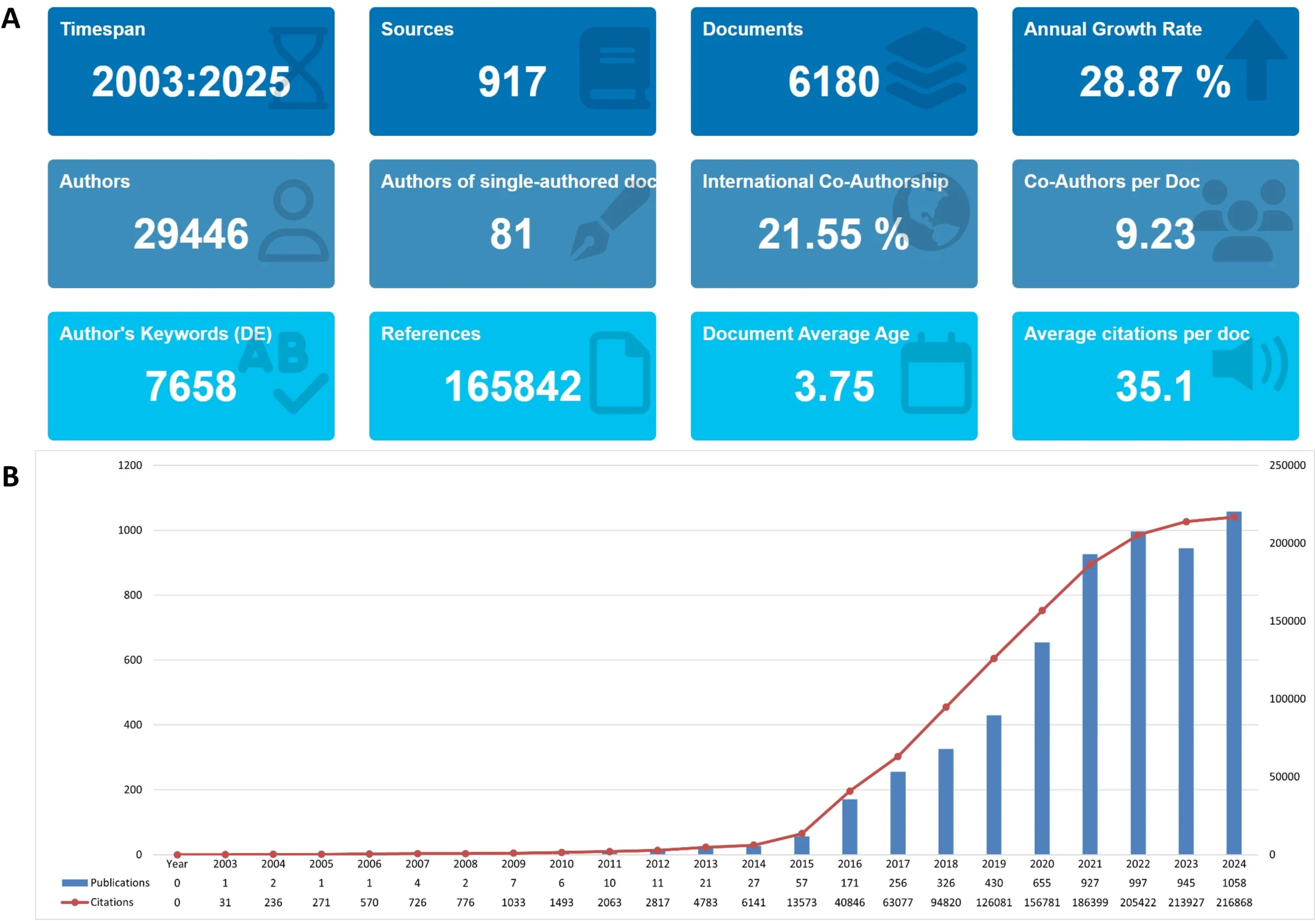
A comprehensive bibliometric analysis was conducted using 6,180 publications retrieved from the Web of Science Core Collection, covering the period from January 2001 to March 2025. Only original research articles and reviews published in English were included. Advanced scientometric tools—Bibliometrix, VOSviewer, and CiteSpace—were employed to analyze publication trends, country and institutional contributions, author productivity and influence, journal impact, keyword evolution, co-citation networks, and citation burst dynamics. This multi-tool approach enabled both static and temporal visualization of the intellectual structure, collaborative networks, and emerging research frontiers within the field.
Results
Global Research Growth and Evolution
Research on biomarkers in lung cancer immunotherapy demonstrated a clear three-phase evolution: an incubation phase (2003–2014), a rapid expansion phase (2015–2022), and a maturation phase (2023–2025). The field exhibited a robust annual growth rate of 28.87%, reflecting sustained and escalating scientific engagement following the clinical success of ICIs.
Geographic and Institutional Contributions
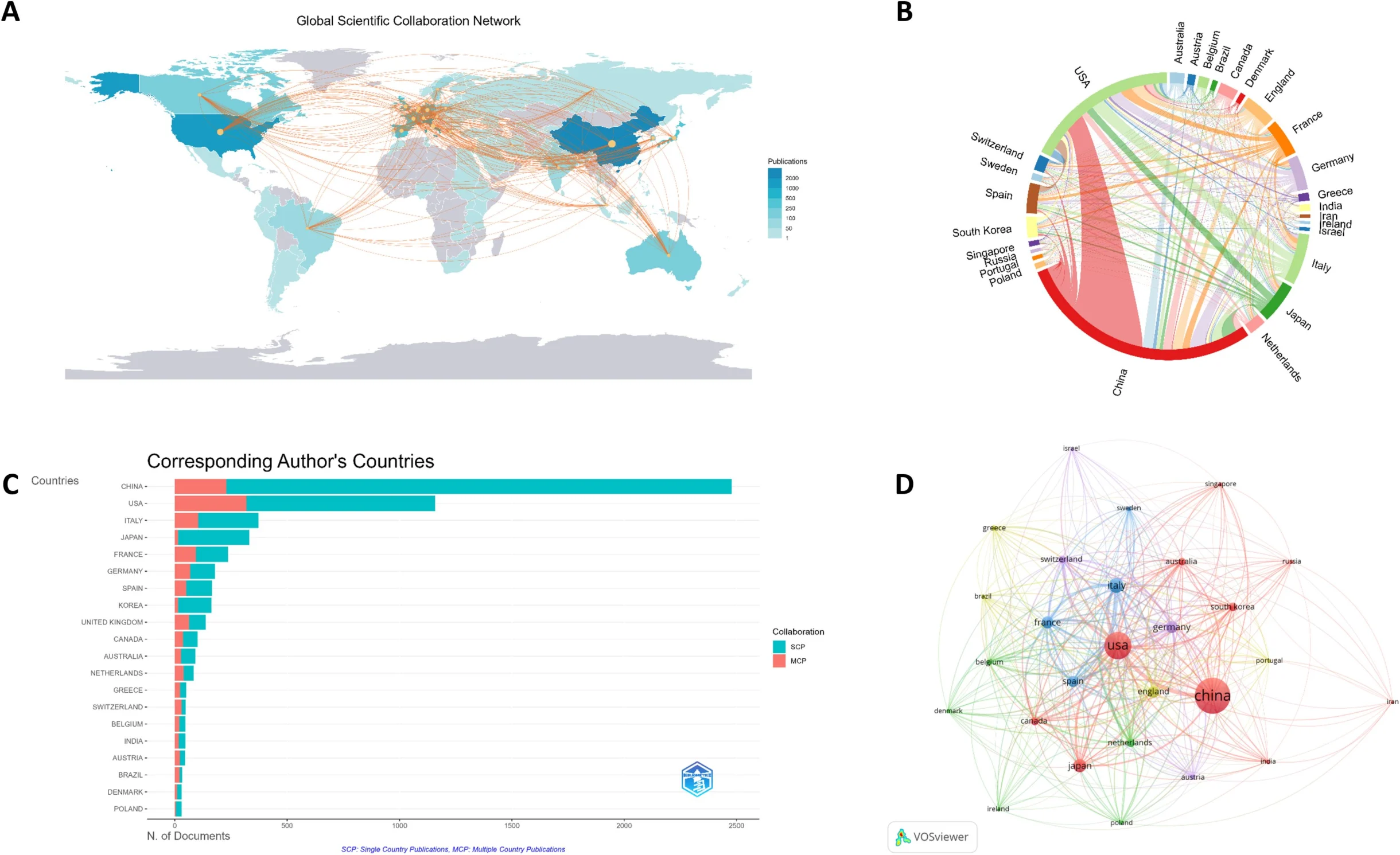
China emerged as the most productive country in terms of publication volume, while the United States led decisively in citation impact and H-index, indicating greater global academic influence. Harvard University was the most influential institution, ranking first in publication output, total citations, and H-index. International collaboration was more prominent among Western countries, whereas East Asian nations demonstrated higher productivity but relatively lower rates of multinational co-authorship.
Journals and Authors
CANCERS published the highest number of articles, whereas the Journal for Immunotherapy of Cancer was the most cited journal, underscoring its central role in disseminating influential research. Among authors, WANG Y was the most prolific, while RAMALINGAM SS was the most cited, highlighting the impact of high-quality, practice-changing clinical research over sheer publication volume.
Knowledge Structure and Citation Dynamics
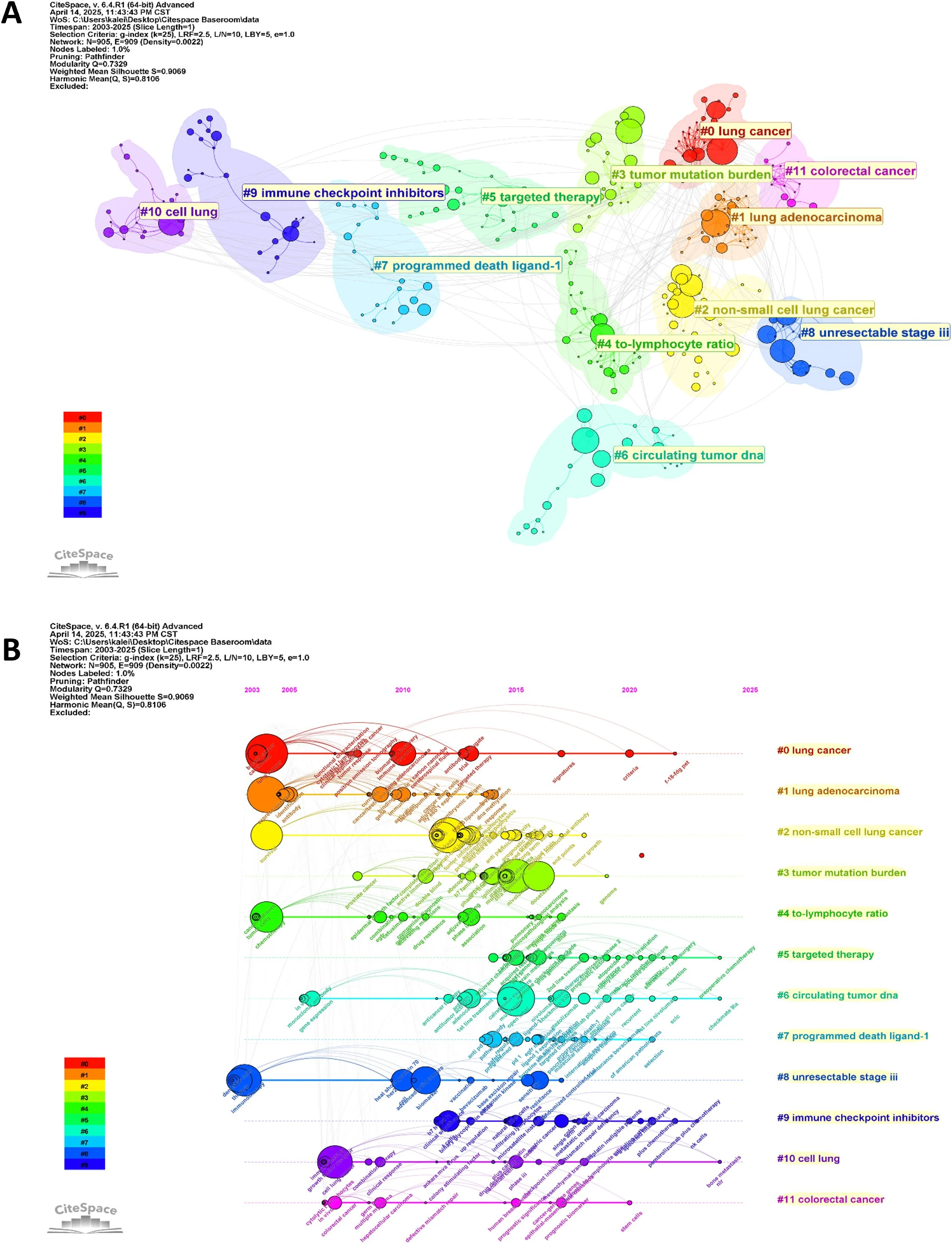
Highly cited references clustered around mechanism-driven biomarker discovery, PD-1/PD-L1 biology, and tumor mutational burden (TMB). Citation burst analysis identified landmark trials such as CheckMate 816, IMpower133, KEYNOTE-024, and IMpower010 as enduring drivers of biomarker research, reflecting parallel advances in both advanced and resectable NSCLC settings.
Emerging Biomarkers and Research Frontiers
Keyword and cluster analyses revealed a decisive shift from single-analyte biomarkers toward integrated, system-level approaches. Prominent emerging themes included:
- Genomics and multi-omics integration, enabling deeper characterization of tumor antigenicity and immune contexture
- Immune infiltration patterns, emphasizing spatial and functional organization of the tumor immune microenvironment
- Circulating biomarkers, such as ctDNA and soluble PD-L1, supporting dynamic and non-invasive monitoring
- Gut microbiome signatures, highlighting systemic immune modulation via the gut–lung axis
- Artificial intelligence and pattern-based modeling, facilitating high-dimensional data integration and predictive accuracy
These interconnected domains collectively signal a paradigm shift toward multidimensional, context-aware biomarker frameworks.
Clinical Insights
Bibliometric patterns mirrored clinical priorities across disease stages. In advanced NSCLC, biomarker research focused on optimizing response prediction for combination immunotherapy regimens, while in resectable disease, attention centered on recurrence risk stratification using ctDNA clearance, immune remodeling signatures, and spatial immune profiling. Importantly, the data underscore that no single biomarker sufficiently captures immunotherapy responsiveness; instead, composite models integrating molecular, cellular, and systemic features are increasingly necessary.
Key Takeaway Messages
- This is the first comprehensive bibliometric analysis of biomarkers in lung cancer immunotherapy
- The field has transitioned from exploratory biomarker discovery to clinical validation and integration
- Research focus is shifting toward multi-omics, immune infiltration, circulating biomarkers, and microbiome-based models
- International collaboration and AI-driven integration are critical for advancing precision immunotherapy
- Future progress depends on systems-level biomarker frameworks, not isolated markers
Conclusion
This bibliometric and visualization analysis maps the intellectual evolution of lung cancer immunotherapy biomarker research over 25 years, revealing a clear paradigm shift toward multidimensional integration and translational relevance. As the field matures, the convergence of genomics, immune architecture, circulating biomarkers, and microbiome science—supported by artificial intelligence—will be essential for moving from population-based treatment approaches to precision-driven immunotherapy. Strategic international collaboration and prospective validation studies will be key to translating these insights into meaningful clinical benefit for heterogeneous lung cancer populations.
Read Full Article Here