The fourth week of January 2026 brings a tightly curated selection of GI Oncology discussions spanning hepatocellular carcinoma, pancreatic cancer, colorectal cancer, gastric cancer, and esophageal cancer. This week’s 10 must-read posts highlight how the field is moving in parallel on two fronts: deeper biological resolution (single-cell and pathway-level insights) and more pragmatic care optimization (perioperative outcomes, palliative endoscopy, and quality-of-life profiling).
Across these contributions, a consistent theme emerges: progress in GI Oncology is increasingly driven by better stratification and better execution—linking molecular determinants (e.g., Wnt signaling, YAP/TAZ, ERBB2 alterations, immuno-oncologic biomarkers) with real-world decision points in surgery, locoregional therapy, and supportive care.
Lara A. Caglayan, MD – Resident, Radiation Oncology, University Hospital Bonn; Co-Chair, YOU (Young Oncologists United), jDEGRO
“New Publication Alert!
I’m pleased to share our recently published narrative review in ctRO – Clinical and Translational Radiation Oncology, focusing on the efficacy and immunological impact of combined ICIs and SBRT in hepatocellular carcinoma.
I would like to thank Univ.-Prof. Dr. med. Eleni Gkika, MBA, for her continuous support and guidance throughout this work.
I am also very grateful to all co-authors for their collaboration and valuable contributions.”
Anton Venhuizen – Postdoctoral Researcher, Cambridge Institute for Medical Research
“Excited to share that work from my PhD in the lab of Madelon Maurice at UMC Utrecht – Center for Molecular Medicine has been published in iScience!
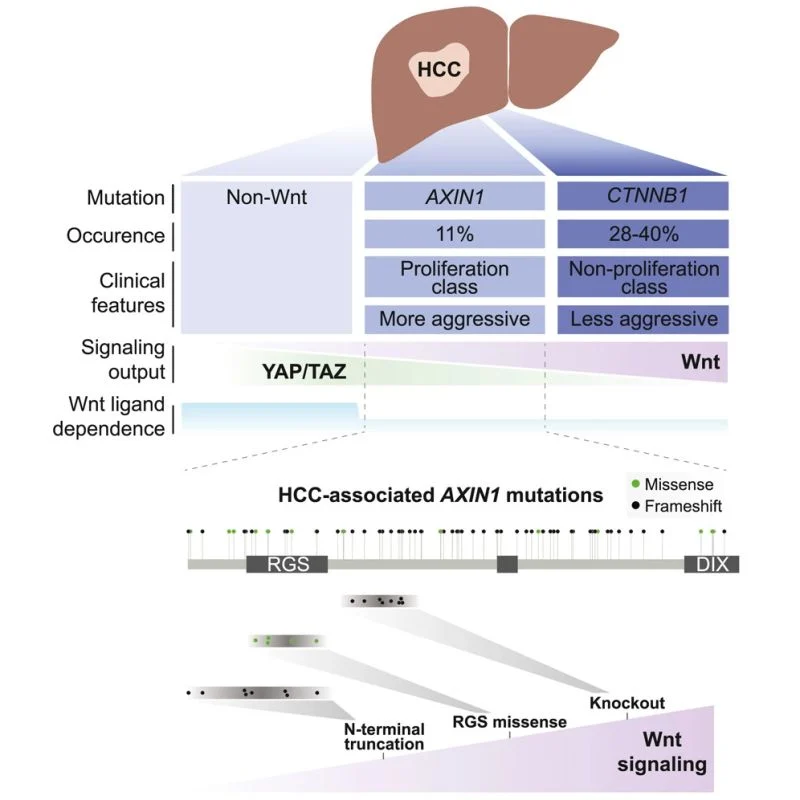
Why do mutations in two Wnt pathway genes associate with different clinical features in hepatocellular carcinoma (HCC)?
We find that mutations in AXIN1 induce low but physiologically relevant levels of Wnt signalling but also allow for YAP/TAZ activity. Meanwhile, mutations in the gene for β-catenin induce high Wnt activity but block YAP/TAZ-mediated transcription. In addition, we compared the effects of different types of AXIN1 mutations in HCC and were surprised to identify an overlooked class of frameshift mutations that results in N-terminal truncation rather than knock-out. We hope our data can help guide patient stratification and treatment of this terrible disease.”
Giovanni Marchegiani, MD, PhD – Academic Pancreas Surgeon, Hepato-Pancreato-Biliary (HPB) and Liver Transplant Surgery, Padova University Hospital
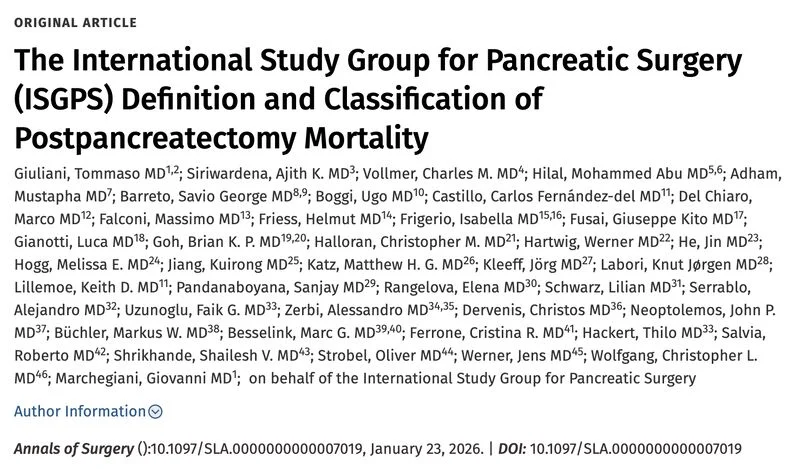
Post pancreatectomy mortality: the new seminal paper from the ISPGS is out on Annals of Surgery
PPM event occurring within 90 days from pancreatectomy linked to it through root-cause analysis
- 3 categories identify windows for opportunity / avoid failure to rescue
- Vascular / technical complexity (15-30%)
- Pancreas specific complications – mainly POPF (45-65%)
- Cardiopulmonary and cerebrovascular deaths (10-25%)
Wafik S. El-Deiry, MD, PhD, FACP – Associate Dean for Oncologic Sciences, Warren Alpert Medical School of Brown University, Providence, RI
“Genomic evolution of pancreatic cancer at single-cell resolution”
Ntebogeng Kgokong, MSc(Med) – Senior Medical Biological Scientist; Member, HPCSA Committee of Medical Scientists
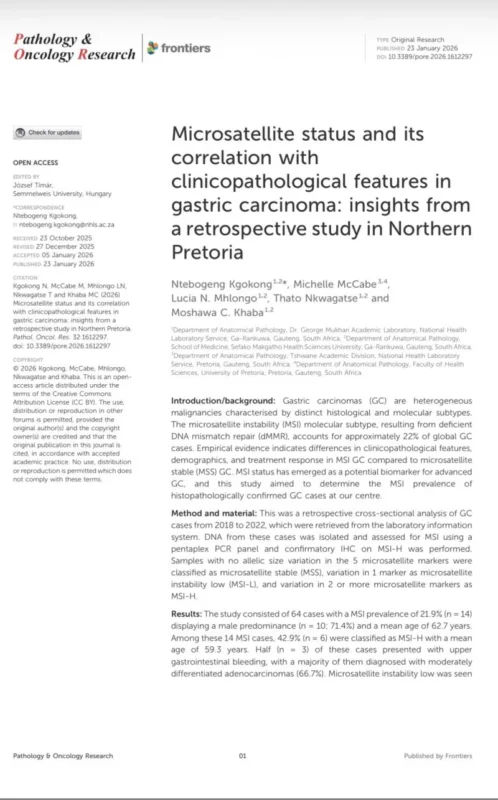
“I’m pleased to share that our journal article, “Microsatellite status and its correlation with clinicopathological features in gastric cancer,” has been published in Pathology and Oncology Research
Grateful to my co-authors and collaborators for their valuable contributions, and to the journal for the opportunity to publish our findings. Looking forward to further discussions and future research in this area.”
Davide Ciardiello – Medical Oncologist, Division of Gastrointestinal and Neuroendocrine Tumors, IEO, Istituto Europeo di Oncologia
“In recent years, the prognostic and predictive role of HER-2 in colon cancer has been the subject of debate.
Recent evidence supports that HER-2 alterations are associated with a poor prognosis. At the same time, the predictive role of ERBB2 amplifications does not represent a clear mechanism of resistance (HER-2 IHC 2+ cases?) to anti-EGFR drugs. Even less known is the impact of ERBB2 mutations.
In this scenario, with the limitations of an exploratory analysis conducted on a small number of cases, we evaluated the potential role of HER-2 alterations in the response to FOLFIRI+cetuximab in the framework of the CAPRI-2 GOIM clinical trial.
At baseline, the assessment of HER-2 was performed with CGP tests on liquid biopsy (and in most cases also tissue) with the FoundationOne platform.
In total, 6% of cases had ERBB2 amplifications and/or mutations.Our analysis confirmed the unfavorable prognostic role of HER-2.
At the same time, we observed that patients with ERBB2 mutations in almost all cases had a very short PFS. These data are in line with data from Germani MM et al. JCO 2025.Larger case studies will be needed to confirm the results, however I am increasingly convinced that pathogenic mutations in ERBB2 represent a mechanism of resistance to anti-EGFR drugs in mCRC.”
Shivan Sivakumar – Associate Professor of Oncology, University of Birmingham; Honorary Consultant in Medical Oncology, NHS
In collaboration with colleagues at Bristol Myers Squibb, I am delighted to have co-led this study with Eugene Drokhlyansky and others to have built one of the most detailed tissue maps of pancreatic cancer. We have profiled 39 patients in extensive detail to further understand the exquisite detail of this disease. The paper is up now and I will post more detail about this later on in the week!
Ammar Sarwar – Professor of Radiology; Chief of Interventional Radiology
“!!Radiation Lobectomy with Resin Microspheres!!
Excited to share our new study on using resin radioembolization to perform radiation lobectomy for HCC and cholangiocarcinoma.
Key points:
1) Mostly 3-day precalibration microspheres
2) Single compartment prescription dosimetry
3) Target absorbed dose 150-200 Gy.
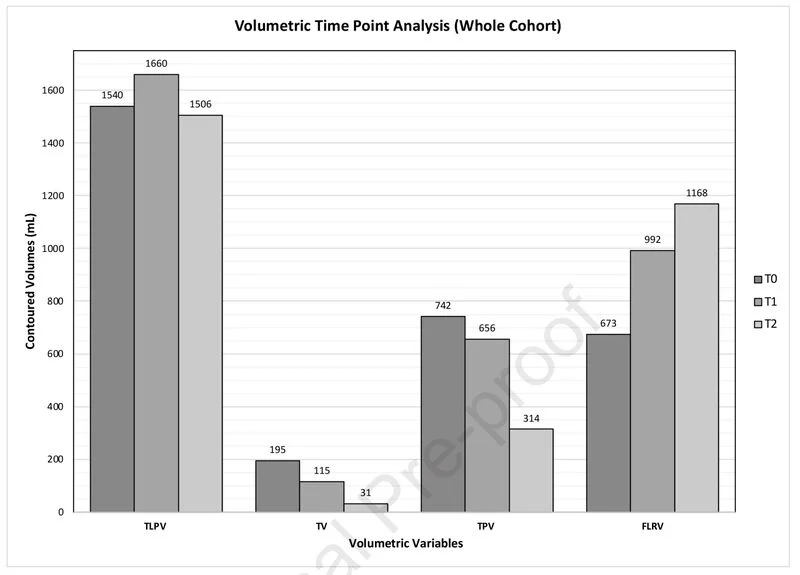
4) Kinetic growth rate of 1.5%/week, which is greater than prior resin studies that used BSA dosimetry and more similar to PVE
5) Caution: Single center study with small sample size and 25% resection rate”
Julien Vos – MD, PhD; GP Trainee and Postdoctoral Researcher
“Research is hard work and this new publication is a perfect example. What began as a simple research question developed into a more complex project spanning several years. However, with a little determination and a great team, we were able to address it. Here’s what we found:
Patients treated for esophageal cancer are at risk of poor health-related quality of life (HRQoL). Using data from a nationwide cohort study, we identified 2 cross-sectional and 5 longitudinal HRQoL profiles in these patients. Understanding these HRQoL profiles can help manage expectations and guide more personalized and timely supportive care”
Toufic Kachaamy, MD, FASGE, AGAF, FACG – Leader, Inventor, Entrepreneur; Med-Tech Consultant; Wellness Expert
“I’m excited to share that our latest article has been published in GIE: Gastrointestinal Endoscopy, VideoGIE, and iGIE
This prospective cohort study evaluated the use of serial palliative liquid-nitrogen spray cryotherapy (LNSC) in patients with advanced EsophagealCancer.
Our findings demonstrate that repeated cryotherapy is feasible, safe, and effective for palliation, with meaningful improvement in dysphagia and symptom control, while maintaining a favorable safety profile.
Gratitude to Nick Shaheen for leading this effort and for the opportunity to work with such a fantastic group of collaborators.”
Find out 10 Must-Read Posts in GI Oncology from the third week of January on OncoDaily.