The second week of December brought important advances across GI Oncology, spanning health equity, real-world evidence, mechanistic immuno-oncology, neoadjuvant strategies, surgical decision-making, and early translational research.
This week’s highlights underscore the evolving complexity of GI cancer care in 2025. Population-level and real-world studies illuminate how socioeconomic factors, molecular subtypes, and metastatic patterns shape outcomes in hepatocellular and colorectal cancers, while mechanistic insights continue to explain long-observed clinical signals in immunogenic disease.
At the same time, progress in multimodal treatment remains central, with new data refining neoadjuvant immunotherapy approaches, surgical intensity, and precision biomarker development across upper GI, colorectal, neuroendocrine, and liver cancers. Together, these updates reflect another week of practice-relevant progress across the GI oncology landscape.
Kennedy Ng, MD – Medical Oncologist, National Cancer Centre Singapore; Founder and Director, TriGen; Clinical Director, Division of Population Health and Integrated Care, Singapore General Hospital
“Excited to share our new paper in ESMO Gastrointestinal Oncology: how socioeconomic status shapes survival in hepatocellular carcinoma (HCC).
Across 15 studies and 199,404 patients, our systematic review and meta-analysis found that:
– Patients with lower income had worse overall survival from HCC.
– Those with absent or reduced insurance coverage had significantly poorer survival
– Most of the available data come from higher-income settings, underscoring the need for more evidence from low- and middle-income countries (LMIC) and Asian populations, where the HCC burden is high.After a decade of failed Ph III studies from 2008 to 2018, there has been an explosion of systemic therapy options for patients with advanced liver cancer. Almost 20% of patients in the HIMALAYA trial who received dual immunotherapy are alive at 5 years. Something unheard of just a few years ago.
Innovation in HCC is now outpacing our ability to deliver it equitably. If we don’t tackle income, insurance coverage, and structural barriers head-on, these innovations risk widening survival gaps.
Grateful to work with an amazing multidisciplinary team spanning medical oncology, hepatology, HPB surgery, public health and policy to bring this together. Much more work is needed on:
– Designing health financing models that do not leave our most vulnerable patients behind
– Building capacity in LMIC where liver cancer burden is high
– Emphasizing the need for equity metrics in liver cancer guidelines, trials, and health-system performance indicators”
Daisuke Kotani, MD, PhD – Medical Oncologist; Gastrointestinal Oncology; Colorectal Cancer; Real-World Evidence and Precision Medicine
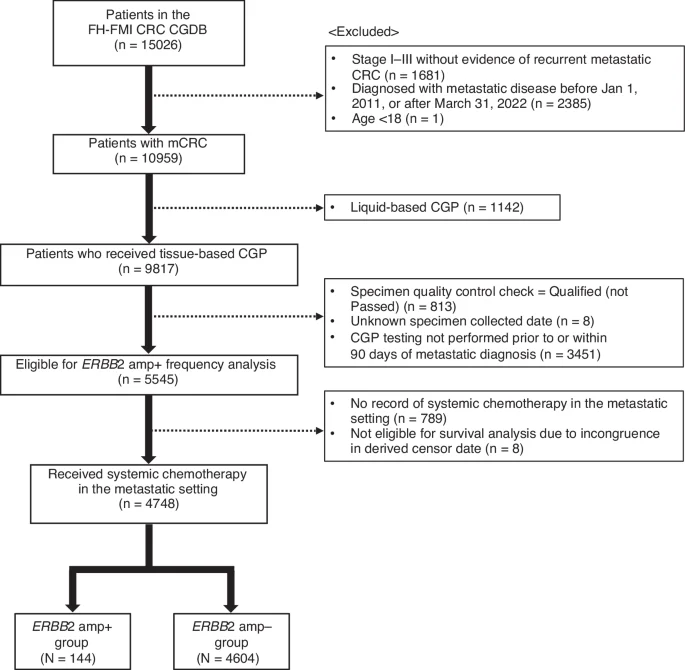
“Our colleague Dr. Matsubara reports RWD of ERBB2-amplified mCRC
144 (3.1%) of 5,545 patients from Flatiron database
Associated with worse PFS but not OS
No significant difference in OS between 1L anti-EGFR mAb vs bev”
Maen Abdelrahim, MD – Professor of Medicine; Chief of GI Medical Oncology; Medical Director, CCAT Phase I Center, Houston Methodist
“Our HMRI President and CEO Edward Jones gave an inspiring leadership opening remarks at Houston Methodist GI Oncology Summit 2025.
Big thank you to him and to all speakers, session chairs, panelists, scientific committee and course directors, as well as the CME office team for their contributions to the success of our Summit!”

Nicholas Hornstein, MD – GI Medical Oncologist; Colorectal Cancer; Translational and Immuno-Oncology Research
“ALASCCA showed that a century-old drug could change adjuvant outcomes in colorectal cancer.
This work helps explain the biology behind that signal.New mechanistic data in NEJM identify platelet-derived thromboxane A2 as an active suppressor of antitumor immunity during metastatic spread, acting through ARHGEF1 on T cells.
By inhibiting COX-1, low-dose aspirin reduces TXA2 signaling, preserves T-cell activity, and limits metastatic outgrowth.
The effect appears most relevant in immunogenic tumors, including MMRd and PI3K-altered colorectal cancer—populations enriched in ALASCCA.
This is not about repurposing for novelty.
It is about finally understanding why a simple intervention altered cancer outcomes long before we could explain it.”
Enes Erul, MD – Oncology Fellow, Ankara University
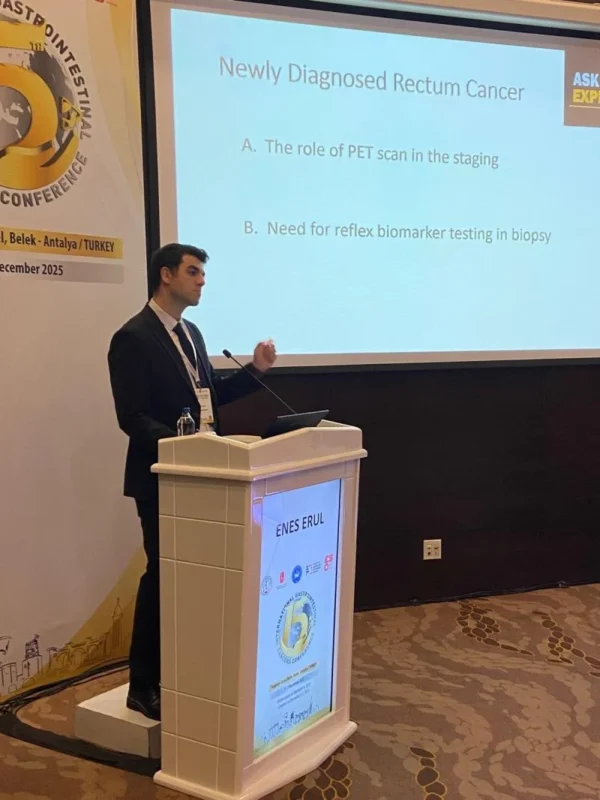
“Honoured to take part in the 15th International Gastrointestinal Cancers Conference (IGICC) in Belek–Antalya, one of the most important international GI meetings in our region.
I had the pleasure of presenting a multidisciplinary tumor board case on
‘Potentially Resectable Liver Metastatic Colorectal Cancer’ and learning from true leaders in the field of GI oncology, surgery, radiology and radiation oncology. The depth of discussion and the practical insights shared will definitely influence my daily practice. Osman Abbasoglu Mehmet Artac Gurkan Tellioglu Murat Cantasdemir Banu Atalar Ofer PurimA very special thanks to Deniz Can Güven, who has supported, guided me and opened doors for me since my internal medicine residency, and to Prof. Dr. Şuayib Yalçın Prof. Sahin Lacin for organising this outstanding congress and for his continuous leadership in GI oncology. European School of Oncology
It was also a great opportunity to reconnect with friends and colleagues and to build new collaborations for the future.”
Kunal Nandy, MD – Hepatobiliary, Pancreatic, and Gastrointestinal Surgical Oncologist; Laparoscopic and Robotic Surgery
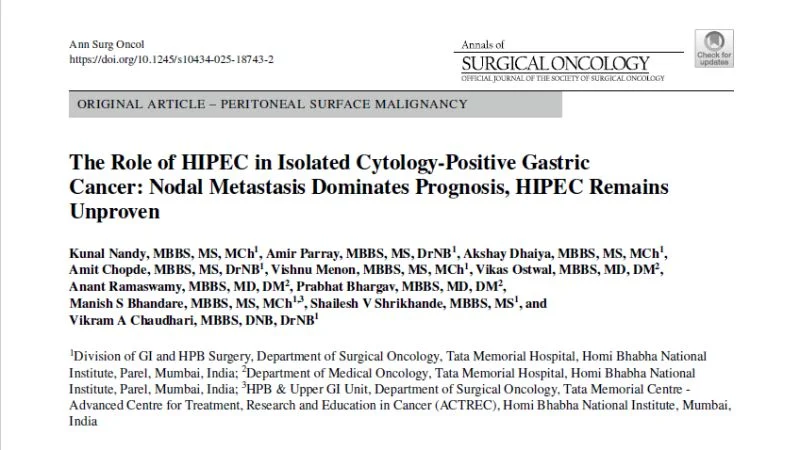
“Pleased to share our recent work published in Annals of Surgical Oncology.
‘The Role of HIPEC in Isolated Cytology-Positive Gastric Cancer: Nodal Metastasis Dominates Prognosis, HIPEC Remains Unproven.’
We analyzed 558 gastric adenocarcinoma patients (2017–2023) who received neoadjuvant chemotherapy followed by radical gastrectomy. We specifically examined patients with positive peritoneal cytology but no macroscopic peritoneal metastases — a group where the merit of prophylactic HIPEC is debated.
Our data indicate that nodal metastasis is the dominant prognostic factor, and that routine prophylactic HIPEC cannot be recommended based on current evidence.
This reinforces the need for carefully designed prospective trials, refined risk stratification, and shared decision-making with patients.
Grateful to my mentors for the opportunity.
Do go through the manuscript in the link and share opinions.”
Vivek Subbiah, MD – Medical Oncologist; Early-Phase Clinical Trials; Precision Oncology; Neuroendocrine Tumors
New precision oncology data explore the relevance of DLL3 as a therapeutic and imaging target in gastroenteropancreatic neuroendocrine neoplasms.
“Delta-Like Ligand 3 Expression and Functional Imaging in Gastroenteropancreatic Neuroendocrine Neoplasms | JCO Precision Oncology.”
Erman Akkus, MD – Medical Oncologist; Upper Gastrointestinal Cancers; Esophageal and Gastric Cancer; Immunotherapy and Multimodal Treatment Strategies
New phase II data evaluate the integration of immune checkpoint inhibition into neoadjuvant multimodal therapy for esophagogastric adenocarcinoma.
“Pembrolizumab, Radiotherapy, and Chemotherapy in Neoadjuvant Treatment of Malignant Esophago‐gastric Diseases (PROCEED): A single‐arm phase 2 trial.”
Nour Bzour – Medical Student, Jordan University of Science and Technology
“New publication!
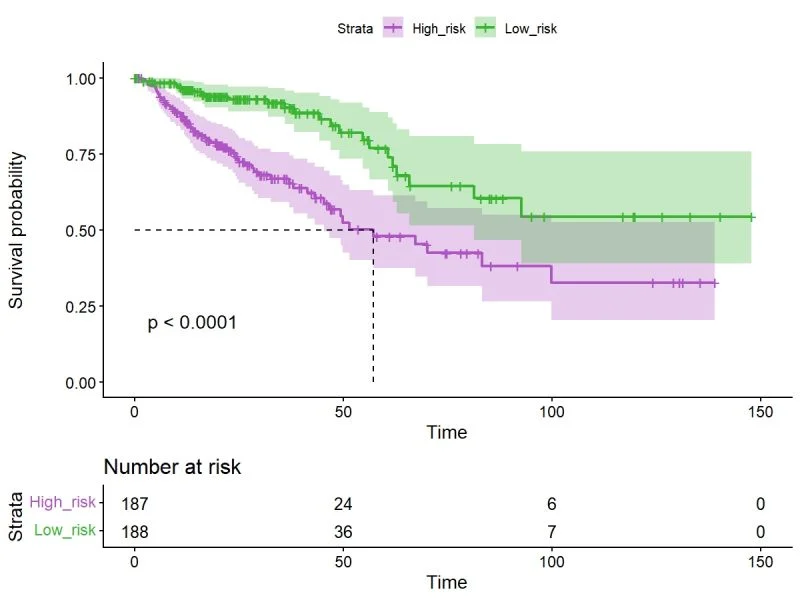
Our study identifies epithelial cell marker genes linked to colorectal cancer survival using single-cell analysis.
Key findings:
– SPINK1 → better outcomes
– TIMP1 → worse outcomesIn addition to these markers, age was an independent predictor of survival. We combined these independent features to build a risk score model, stratifying patients into high-risk and low-risk groups.”
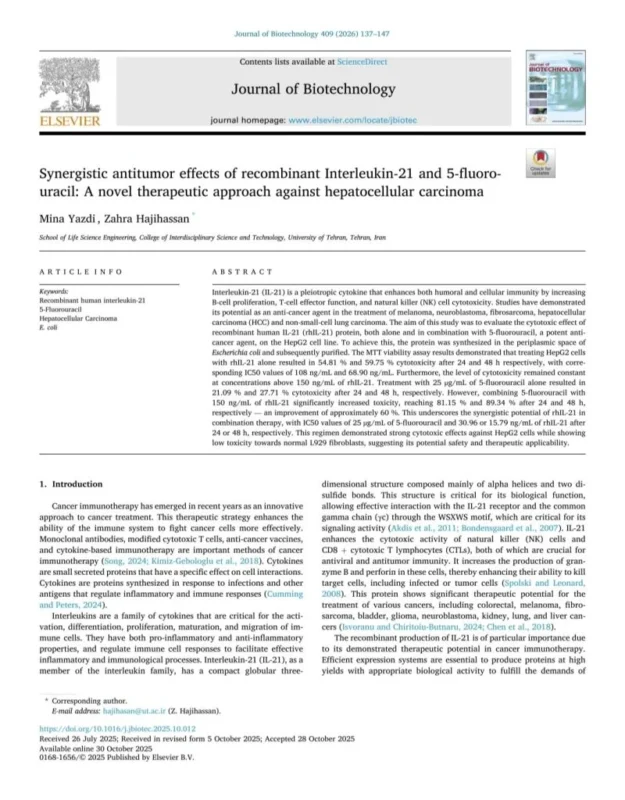
Mina Yazdi, MSc – Master of Science in Biotechnology, University of Tehran
New preclinical data explore cytokine–chemotherapy synergy as a potential therapeutic strategy in hepatocellular carcinoma.
“I am pleased to announce the publication of our recent research article in the Journal of Biotechnology:
‘Synergistic antitumor effects of recombinant Interleukin-21 and 5-fluorouracil: A novel therapeutic approach against hepatocellular carcinoma’
This study investigates the synergistic effects of recombinant Interleukin-21 and the chemotherapeutic agent 5-fluorouracil in cancer treatment. The results demonstrate that the combination induces stronger cytotoxic effects in HepG2 cells, commonly used in Hepatocellular Carcinoma research, compared to 5-FU alone, while maintaining low cytotoxicity toward L929 normal cells. These results highlight the potential of IL-21–based approaches for developing more effective therapeutic strategies.
This publication reflects months of dedicated experimental work, encompassing a range of techniques including bacterial culture and protein expression, SDS-PAGE and immunoblot analysis, protein purification and characterization, MTT-based cell viability assays, and statistical analysis.
I would like to express my gratitude to my supervisor, Dr. Zahra Hajihassan, for her guidance and support throughout this research.”