The first week of December delivered important developments across GI oncology, with progress spanning neoadjuvant strategies, immunotherapy in complex populations, precision biomarkers, surgical quality, and translational science. Highlights include whole-genome ctDNA–guided TNT for GEJ cancer, the launch of a landmark trial for liver-transplanted patients with recurrent HCC, and compelling translational data showing durable KRAS-pathway–targeted tumor regression in PDAC models.
New real-world evidence informed outcomes in fibrolamellar carcinoma and MSS colorectal metastases, while surgical teams reported key insights on volume-outcome relationships in gastric cancer and consensus-driven standards for rectal cancer surgery. Additional advances in hypofractionated radiotherapy and biomarker-driven adjuvant therapy underscore the continued evolution of precision GI cancer care.
Together, these updates reflect another week of meaningful, practice-shaping progress across the GI oncology landscape.
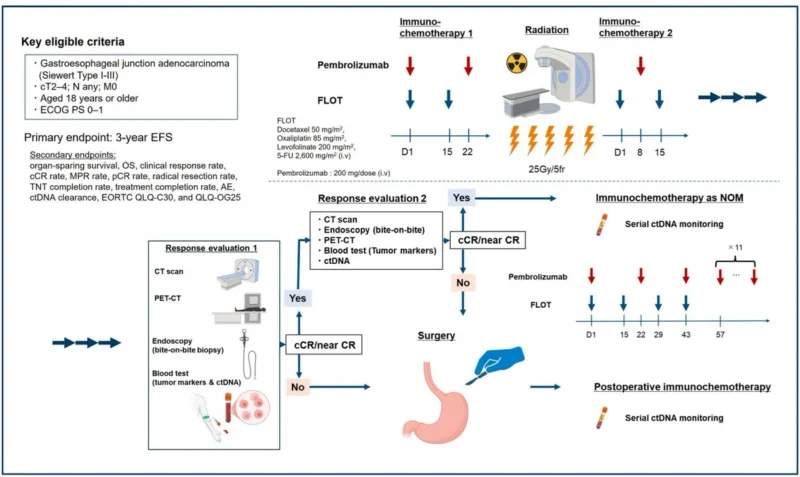
Kohei Shitara, MD – Chief, Department of Gastrointestinal Oncology, National Cancer Center Hospital East (Japan)
“Pleased to share our ongoing phase II TNT protocol (FLOT, pembrolizumab, short-course radiotherapy) for resectable GEJ adenocarcinoma, integrating whole-genome ctDNA to support clinical complete-response–based organ preservation.”
Nelson Dusetti, PhD – Research Director, INSERM; Pancreatic Cancer & Translational Oncology; Co-founder, Predicting Med
“Happy to share that this collaborative work led by our colleagues at the CNIO has just been published in PNAS.
The paper shows that triple inhibition KRAS^hi + afatinib (EGFRi) + a STAT3 PROTAC (SD36) achieves complete and durable regression of pancreatic tumors in PDO, PDX, and murine models, with no relapse for over 200 days and no detectable toxicity.A key conceptual advance: overcoming therapeutic resistance in PDAC requires coordinated inhibition of KRAS downstream (RAF1), upstream (EGFR), and parallel survival pathways (STAT3).
I’m very glad that our team in Marseille could contribute to this international effort, and grateful to the CNIO group for leading such impactful work.
Congratulations to Vasiliki Liaki, Mariano Barbacid, Carmen Guerra, and all co-authors for this remarkable work.”
Manon Allaire, MD – MCU-PH, AP-HP (Assistance Publique – Hôpitaux de Paris)
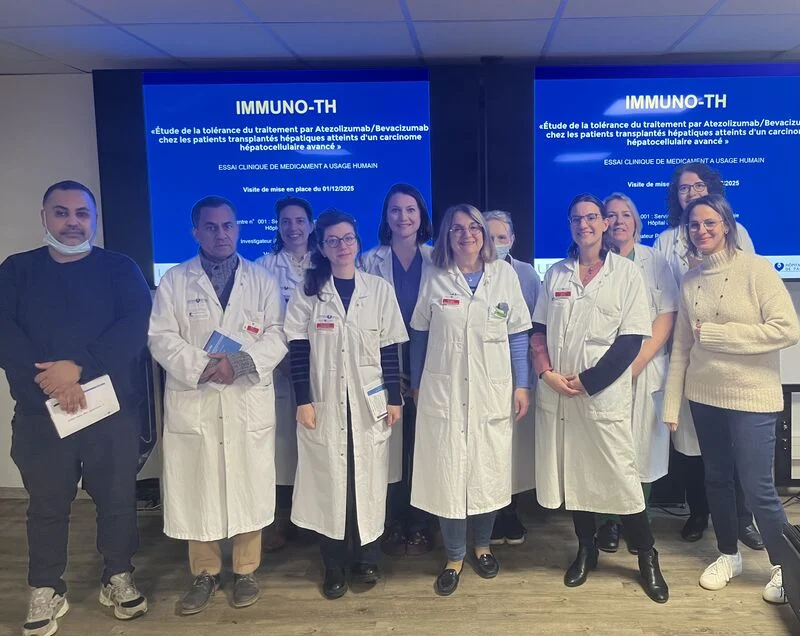
“Official opening of the first investigational site for the PHRC Phase II IMMUNO-TH study.
I am pleased to announce the opening of the first center for the PHRC IMMUNO-TH clinical trial.
This national, multicenter phase II study evaluates the safety and efficacy of the atezolizumab–bevacizumab combination in liver-transplanted patients with recurrent advanced hepatocellular carcinoma, using a standardized immunosuppressive protocol designed to limit the risk of graft rejection.
This is the first study of its kind in this population, addressing a crucial unmet medical need.
My sincere thanks go to the AP-HP, the DRCI, our clinical and scientific teams, and all participating centers for their commitment to launching this important project.
We look forward to advancing knowledge in this complex field and ultimately improving outcomes for liver-transplanted patients facing HCC recurrence.
AP-HP, Assistance Publique – Hôpitaux de Paris Filomena Conti Anne Bissery Lisa Belin Sabrine Nesrine BENAOUMER Marthe DEMBELE”
Florian Lordick, MD, FESMO – Oncologist; Professor of Medicine, University of Leipzig; Head of Medical Oncology; Director, Comprehensive Cancer Center Central Germany
“Congratulations to Alberto Giovanni Leone, Filippo Pietrantonio and co-authors!
Delighted to see the publication of this important meta-analysis evaluating progression-free survival (PFS) as a surrogate endpoint for overall survival (OS) in first-line immunotherapy trials for gastro-esophageal cancers.This comprehensive investigation — spanning 18 randomized clinical trials — provides crucial evidence for the validity of surrogate endpoints in the era of immune checkpoint inhibition.
The findings show that:
In gastro-esophageal adenocarcinoma (GEA), particularly among patients with high PD-L1 expression, PFS demonstrates a moderate to strong correlation with OS — supporting its use as a co-primary endpoint in future trials.
In esophageal squamous cell carcinoma (ESCC), correlations remain weaker, reinforcing the continued importance of OS-based evaluation in this setting.
A special congratulations to Alberto Giovanni Leone for leading this effort and uniting such a dedicated global team of researchers in gastrointestinal immuno-oncology.”
Ibrahim Halil Sahin, MD – GI Medical Oncologist; Colorectal Cancer, Precision Medicine & Immunotherapy
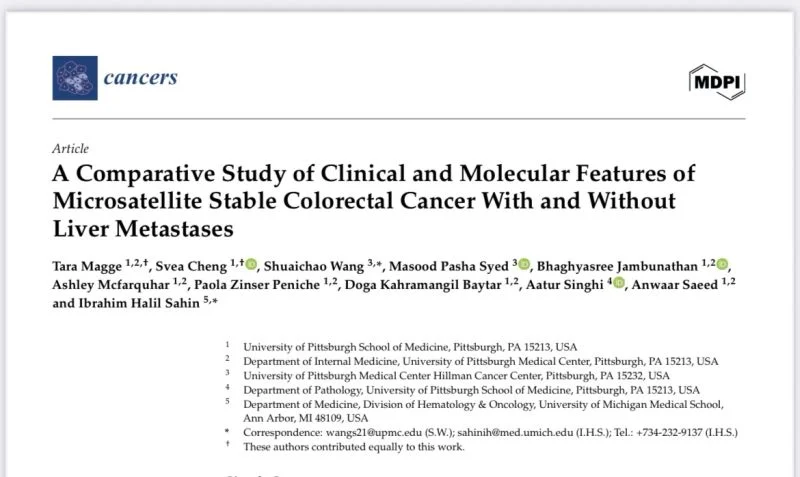
“Our study investigating molecular features of liver and non-liver metastasis of MSS CRC is now published. Proud of my mentees Drs. T. Magge and Svea Cheng who led this work.
Some interesting findings:
• In our study, we observed shorter time on frontline chemotherapy among patients presenting with liver metastasis of MSS CRC, indicating that liver metastasis may also be linked to chemotherapy resistance, similar to what we see with immunotherapy.
• Our study suggests that liver and non-liver metastases of MSS CRC carry relatively similar molecular characteristics with similar frequencies of well-known driver oncogenes.
• Lack of distinct molecular characteristics between liver and non-liver metastasis of MSS CRC points to the tumor microenvironment of the liver as the likely underlying reason for treatment resistance observed in clinical practice.
• An interesting finding from our study: although we observed similar rates of common driver oncogenes such as BRAF and KRAS, their impact at each metastatic site appears to be different.
• Our study is the first to show that BRAF V600E is predominantly prognostic for patients without liver metastasis, while this effect was limited among those presenting with liver metastasis. The opposite interaction was noted for KRAS mutation. These highly interesting findings warrant larger studies to validate our observations.”
Andrea Casadei Gardini, MD, PhD – Associate Professor, Università Vita-Salute San Raffaele
“Congratulations to Federica Lo Prinzi for leading this important work!
New publication on fibrolamellar carcinoma using a large real-world dataset TriNetX.
Proud to share our new paper:
‘Clinical characteristics and outcome of patients with fibrolamellar hepatocellular carcinoma: an analysis of a large population using real-world data’, now published in ESMO Gastrointestinal Oncology.What we did
We conducted a retrospective analysis using the global real-world research network TriNetX, comparing 87 patients with fibrolamellar hepatocellular carcinoma (FLC) with over 211,000 patients with conventional HCC.Key findings
• Overall survival did not significantly differ between FLC and HCC — both in the full cohort and after propensity score matching
• FLC patients showed distinct clinical features (younger age, different biochemical characteristics)
• Parameters such as BMI and liver-related laboratory markers showed notable patterns in the FLC subgroup
• These insights deepen our understanding of FLC prognosis and biology and may inform future study designsWhy this matters
FLC is a rare and challenging subtype of liver cancer. Leveraging TriNetX-powered real-world evidence allowed us to analyze one of the largest patient cohorts ever evaluated for this disease, generating clinically relevant insights for oncologists and researchers.”
Yakup Ergün, MD – Medical Oncologist, Bower Hospital; Evidence-Based Insights on Cancer Care
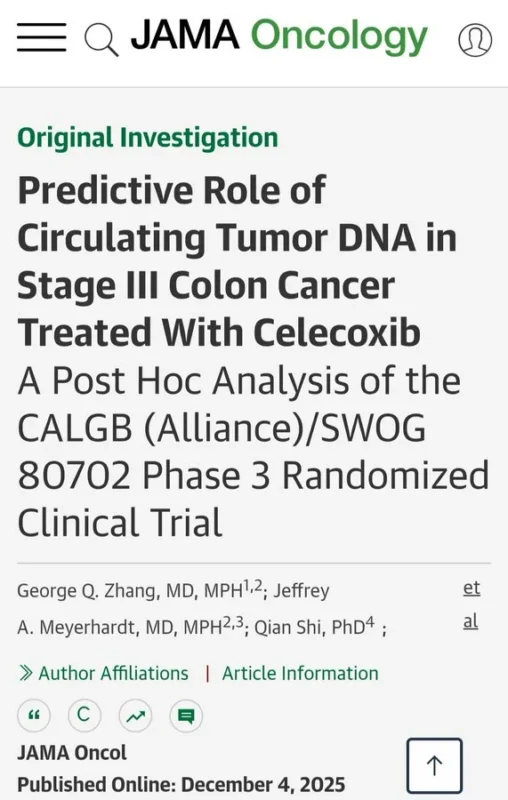
“ctDNA’s prognostic value has already been well established.
What this study adds is the first clear signal that ctDNA may also be predictive for adjuvant celecoxib benefit.In the ctDNA-positive subgroup, adding celecoxib led to a relative risk reduction of roughly 40% in both DFS and OS.”
Jure Salobir, MD – General Surgeon, University Medical Centre Ljubljana; Faculty of Medicine, University of Ljubljana
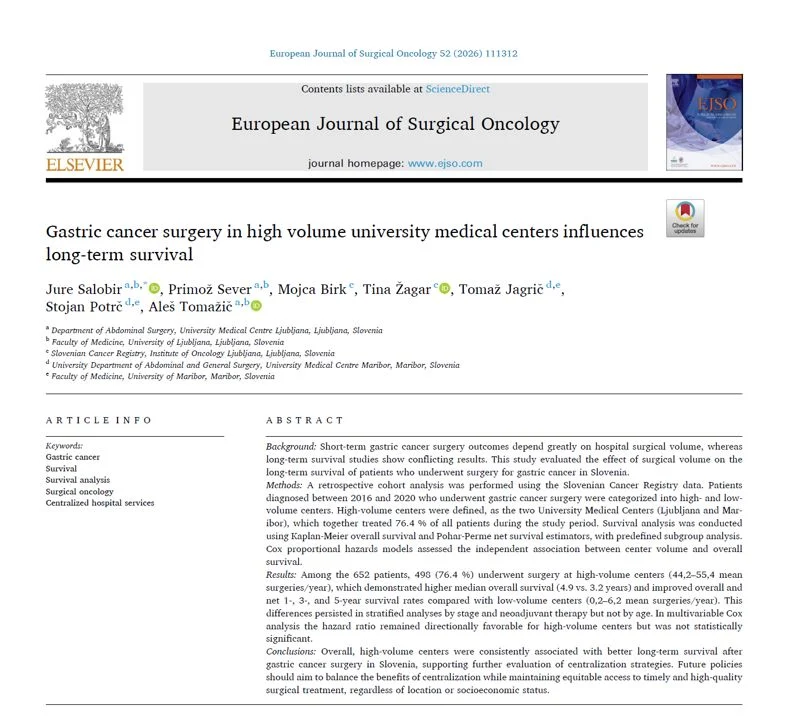
“Proud to share our new open-access article published in the European Journal of Surgical Oncology: Gastric cancer surgery in high-volume university medical centers influences long-term survival.
This study is the result of a collaboration between University Medical Centre Ljubljana, UKC Maribor / University Medical Centre Maribor, and the Slovenian Cancer Registry, Institute of Oncology Ljubljana.We analyzed 652 patients treated for gastric cancer in Slovenia between 2016 and 2020. High-volume centers (UKC Ljubljana and UKC Maribor) treated 76.4% of all patients and demonstrated better long-term survival, with a median overall survival of 4.9 years compared to 3.2 years in low-volume hospitals.
These findings highlight the importance of further centralization of gastric cancer surgery to the two university medical centers, offering patients improved outcomes while ensuring equitable access to care.”
Cédric Schraepen, MD – General Surgery Resident; PhD Candidate, LIGB–KU Leuven; Abdominal Surgery, UZ Leuven; President, Belgian Association of Surgical Trainees (BAST)
“Happy to announce the publication of our first paper during my Rectal Cancer PhD.
Title: Defining key interventions for rectal cancer surgery: a literature review and expert panel consensus.
Key messages from the study:
• Rectal cancer surgery is complex, and outcomes vary widely — identifying what truly matters is essential.
• We reviewed the evidence and partnered with a national expert panel to define key surgical and perioperative interventions that most influence outcomes.
• These consensus-based interventions can help standardize practice, guide quality-improvement efforts, and support training and decision-making in rectal cancer care.Thank you to my co-authors and collaborators for their contributions. Excited to see how this work supports better care for patients worldwide.”
Saheli Saha, MD – Radiation Oncologist
“Thrilled to share that our latest study has been published.
Our paper, ‘Ultra- and Moderately Hypofractionated Radiotherapy for Inoperable Cholangiocarcinoma: A Single-Institution Retrospective Analysis’ is now live in Current Oncology (MDPI).
In this study, we explored outcomes of hypofractionated radiotherapy for inoperable cholangiocarcinoma — examining patterns of recurrence, survival, and, importantly, biliary event-free survival (BEFS).
To our knowledge, this is the first study to quantitatively demonstrate an association between biliary events and overall survival in this patient population. Highlighting BEFS felt especially meaningful, given how rarely it is reported yet how clinically relevant it is for real-world decision-making.
A heartfelt thank you to my co-authors — Aruz Mesci, Laura Dawson, Aisling Barry, Michael Yan, Jelena Lukovic, Ali Hosni, John Kim, Rebecca KS Wong, Jennifer Knox, Zhihui Amy Liu, Cameron Lee, and Chaya Shwaartz — for their guidance and support.”
You can also read about 10 Must-Read Posts in GI Oncology from the fourth week of November on OncoDaily.