The 79th World Health Assembly, held from May 18 to 23, 2026, in Geneva, Switzerland, brings global health leaders together at a critical moment for public health, cancer control, and health system reform. As the decision-making body of the World Health Organization, the Assembly sets priorities that influence national health policies, financing, prevention strategies, and access to care worldwide.
For the oncology community, WHA79 is especially relevant as cancer remains one of the defining global health challenges, requiring stronger commitments to prevention, early detection, treatment access, palliative care, and equitable health systems.
This year’s discussions provide an important platform to connect cancer with broader global priorities, including noncommunicable diseases, universal health coverage, health financing, innovation, and resilient health systems. With organizations such as the Union for International Cancer Control actively engaging around WHA79, the Assembly highlights how cancer policy is increasingly central to the future of global health.
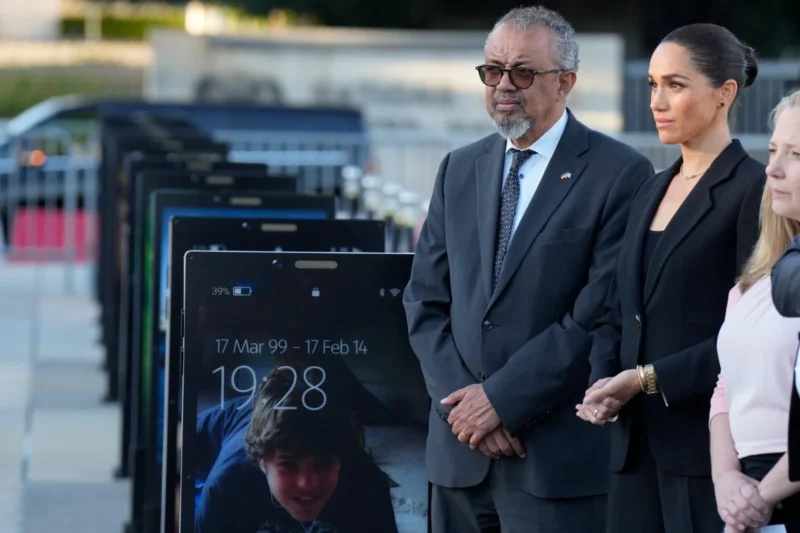
“On the eve of WHA79, we gathered at Place des Nations in remembrance. The names in the Lost Screen Memorial are not statistics. They’re children.
We are facing public health crisis in youth mental health, created by multiple factors, including a lack of digital safety.
We can prevent harm, through rigorously enforced protections and design standards.
We can mitigate harm, through crisis response, family support, and affordable and timely access to care.
And we can coordinate globally.
This memorial must be a call for collective action to ensure digital spaces support health rather than undermine it.
My gratitude to Meghan, the Duchess of Sussex, and the Archewell Philanthropies, for their leadership and commitment.”
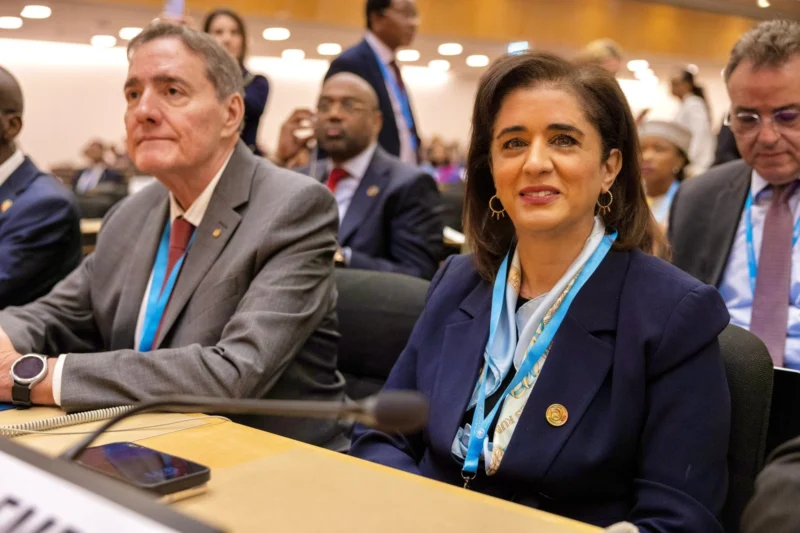
At the Seventy-ninth World Health Assembly, I’m proud to stand alongside WHO EMRO Member States at a defining moment for the Eastern Mediterranean Region and the world.
From responding to emergencies and conflict to advancing pandemic preparedness, sustainable financing, mental health, noncommunicable diseases and polio eradication, the challenges before us are significant, but so is our shared determination to act.
WHA79 is an opportunity for our Region to come together with one voice to champion equity, health security, humanitarian access and resilient health systems for all.
Together, we will work to ensure the priorities of our countries help shape a healthier, safer future for millions across the Eastern Mediterranean Region and beyond.
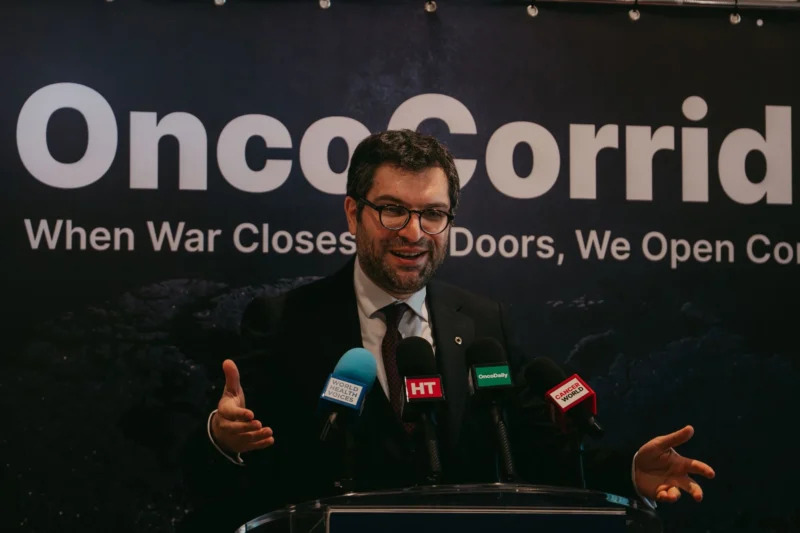
“OncoCorridor is open! May 18th, Geneva, 2026
Years from now, I hope we will look back at this moment not as a meeting in Geneva, but as the day the global oncology community decided that war would no longer automatically mean the end of treatment.
The day we stopped asking, “What can we do?”
And started saying, “This is what we will do.”
Thank you so much everyone who supported and was present:
HRH Princess Dina Mired of Jordan
HE Minister Musaab Nazzal al-Ali
HE Zainab Shinkafi-Bagudu
HE Mykhailo Radutskyi
Dr. Andre Ilbawi
Dr Cary Adams
Prof. Richard Sullivan
Prof. Nazik Hammad
Prof. Charles Balch
Dr. Jamil Debel, M.D, MPH
Dr. Philippe Glasson
Dr. Lamia MAHMOUD
Isabel Mestres
Ishtar Espejo
Pat Garcia-Gonzalez
Prof. Ophira Ginsburg
Thank you very much to the whole team of OncoDaily and The Institute of Cancer and Crisis (ICC). Thanks a lot to the team who made this happen Jemma Arakelyan, MD, PhD Knarik Arakelyan, PhD Emma Tadevosyan
World Health Organization Union for International Cancer Control (UICC) King’s College London Médecins Sans Frontières (MSF) Swiss Medical Network City Cancer Challenge (C/Can) The Max Foundation WHO Regional Office for the Eastern Mediterranean (EMRO) Fundación Aladina CancerWorld Hemostasis Today University of Toronto ISOPT – International Society of Oncology Prevention and Treatments. ”
“Incredible first day WHA79! Such perilous times for people experiencing illness and disability worldwide , and a new fit for purpose global health architecture is yet to be born. Good to take a moment to recognize the importance of our colleagues and friends doing their best to advance a better world for all!
W
Andre Ilbawi, Giulia Segafredo Carlos Rodriguez-Galindo Princess Dina Mired Meritxell Mallafré-Larrosa
& the amaaaazing Shirin Heidari
World Health Organization
Medicines Patent Pool
St. Jude Children’s Research Hospital – ALSAC Texas
GENDRO.ORG
City Cancer Challenge (C/Can) MESSAGE (Medical Science Sex & Gender Equity)
Stay tuned for more updates from the brilliant sessions on gender responsive health systems & integration of sex and gender in health research w The George Institute for Global Health Imperial College London Kate Womersley Alice Witt Carinna Hockham!
GENDRO.ORG
And cancer care in #humanitarian crises w Richard Sullivan Zainab Shinkafi-Bagudu & Dr Cary Adams & Isabel Mestres &
others – moderated by the tireless Nazik Hammad AORTIC- Africa Union for International Cancer Control (UICC) – hosted by the great Gevorg Tamamyan OncoDaily
— and myself- honored to represent Médecins Sans Frontières (MSF) ”
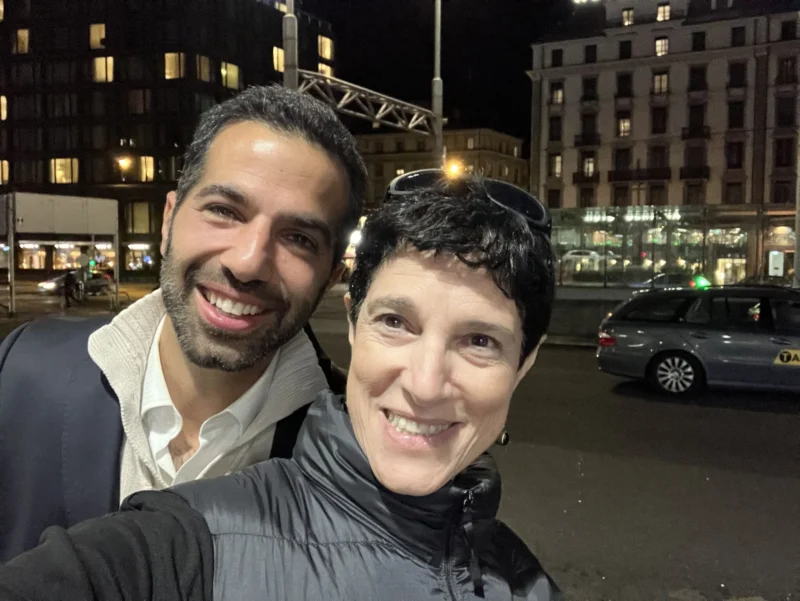
“On the side of WHA79, Regional Director at WHO EMRO Dr Hanan Balkhy passionately addressed the audience at the St. Jude event on childhood cancer survivorship.
Together, we stand by the commitment that no child with cancer will be left behind. Let’s continue working toward a future where every child has access to the care they need.”
“The WHA79 has started. Here with my colleagues and friends, the WHO Regional Directors, working together across all regions for Health for All.
Thanks to Dr. Saia Ma’u Piukala, —the selfie pro—for the pic!”
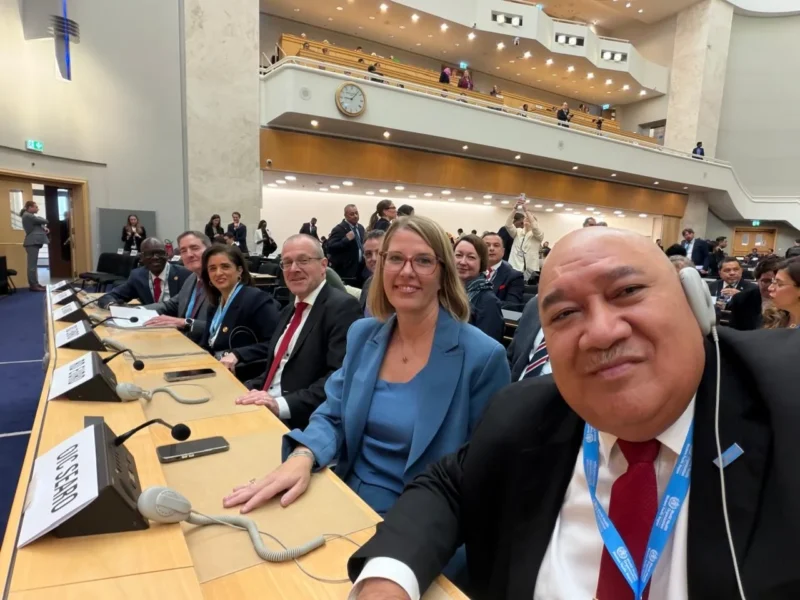
“WHA79 is in full swing, amidst an Ebola outbreak that WHO has declared a public health emergency of international concern, stalled negotiations of the Pathogen Access and Benefits Sharing, multiple discussions on the reform of the global health governance and financing and the pre-election run for the WHO’s DG role.
In every room I find myself in, this week, you will hear me repeating one pragmatic true, unrelentingly: the new generation of global health governance we are designing should be first and foremost about the 4.6 billion people without access to basic health services.
No new DG, no PABS agreement and no future global health governance scheme will have the moral authority to claim success, if half of the world’s population continue to lack access to basic health care services.
That’s why it should be a reset. Let’s that sink in for a moment.
People come first.
A global health architecture that will still leave or push people behind is not what we should be aiming for.
We need to raise the bar, we need to bring in more people under the umbrella of financial protection and access to quality health services.
This will require that we position equity at three mutually reinforcing levels:
stellar governance
unchained partnerships
unlocked access to economic growth enablers
We should get it politically and humanly right.”
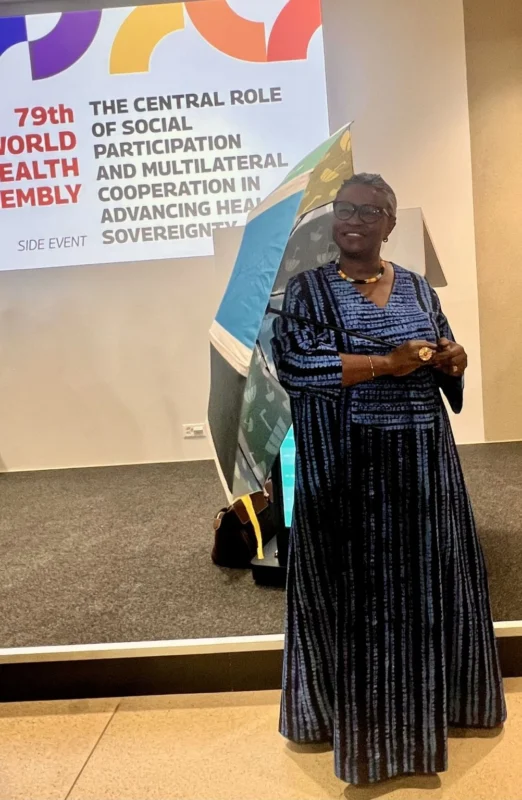
“A meaningful step forward for global health equity.
Proud to see Armenia actively contributing to the international dialogue on bleeding disorders at hashtag#WHA79 in Geneva. Together with global partners, we continue advancing access, awareness, and care for people living with bleeding disorders worldwide.”
“Walk The Talk into WHA79
We started this week not in a meeting room, but walking side by side.
Because our Walk the Talk is more than a tradition. It’s a reminder that change in global health doesn’t happen in statements or strategies alone, it happens when a global health community comes together, committed to equity, to action and to moving forward step by step.
The World Health Assembly #WHA is where the world comes to take this responsibility and have honest discussions about what is working and what’s not working, to face the challenges ahead and to decide what we will actually do to protect, promote and improve people’s health.
This year, those conversations matter more than ever.
We are navigating one of the toughest periods multilateralism has ever faced, with real impact on the way we work, and with growing health threats and a rising tide of misinformation that risks undermining trust in science and evidence itself.
That is why it truly matters to see strong Czech leadership present in Geneva this year , including the Minister of Health Adam Vojtěch. Having the Minister present sends an important signal;that global health matters and that working together, based on evidence and trust still matters.
One of the most powerful message today was from Spain’s Prime Minister Pedro Sánchez with very clear statement : “we will win together but lose separated” It was an important reminder why multilateral #dialogue & #solidarity still matters and got a standing ovation.
From a European perspective, and beyond, WHA is not just about resolutions or formal statements. It is about finding common ground, even when it’s not easy.
It is about listening, learning and deciding — together — how to move forward, and turn shared #responsibility into meaningful #action.
And for me personally, it’s also about the people. WHO biggest asset is our staff! Reuniting with colleagues from across regions, sharing experiences and reminding ourselves that even in difficult times, we are part of something bigger with our shared goal health for all
A demanding, busy week ahead.
But a crucial one.
Stay tuned .”
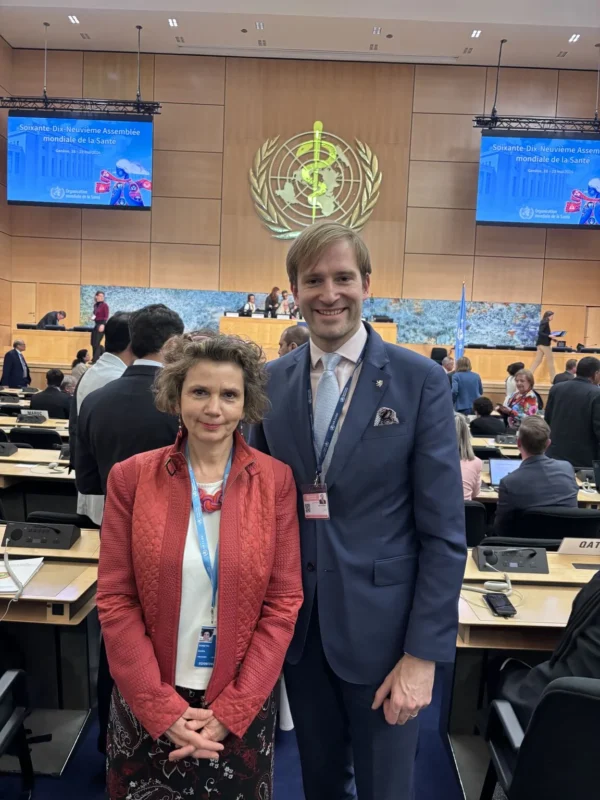
“Today, as the World Health Assembly WHA79 starts, I am happy to announce that this beautiful project is now available in 5 languages!
Spanish, English, Portuguese, French, and Purépecha.
‘I Have The Right To Breathe Clean Air’ is a children’s guide with activities to learn about and explore what it means to breathe clean air.
As both a mother and a Rapporteur, projects like this represent my commitment to every child around the world. Most people do not enjoy clean air, mainly due to a lack of health and environmental protections, and children are among the most vulnerable populations.
Clean air is a substantial element of the right to a healthy environment, and is necessary to enjoy other rights, such as the human right to health.
I want to express my deepest gratitude to the entire team at #LabJAC for this wonderful initiative. The beautiful illustrations are by Azul Ayala Mendoza.
Also to Instituto Alana for their help in the Portuguese version.
All available here (in ‘Nuestras publicaciones’)”
“Very grateful to have Josephine as Chair of the Steering Committee of the inaugural ICN-International Council of Nurses SECN Alliance as we lay the foundation to better support and empower student and early career nurses globally.”
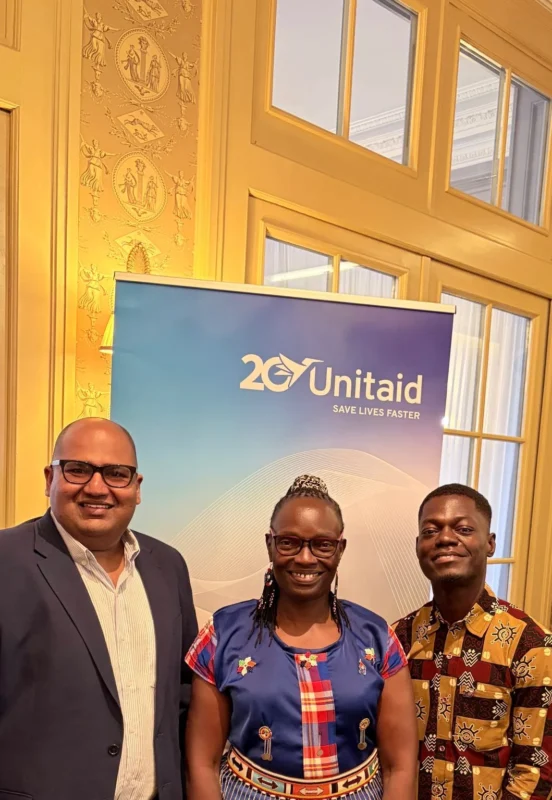
“WHA79 started with representing Joint Learning Network for Universal Health Coverage and Amref Health Africa at the Unitaid and African Medicines Agency session the blind spot in global health reform: access to innovations.”
“Nice piece by Jocalyn Clark in The BMJ spilling the tea on the next World Health Organization Director-General race just as WHA79 gets underway. The next DG will need to be part diplomat, part crisis manager, part institutional reformer, part fundraiser, part politician, and still somehow remain a credible global health leader.”
“I’ve been coming to the World Health Assembly for years. This is one of the few times I’m leaving Geneva with a real sense that change will happen.
At yesterday’s Accra Reset event, the message was clear: countries are setting the agenda—and the system needs to follow.
Three takeaways:
1. Don’t lose this moment to politics.
This is a once-in-a-generation opportunity to build something that works.
2. Donors need to evolve.
Listen more. Respect country priorities. Fund for the long term, not just the next pilot.
3. Build for the world ahead.
Climate and other shocks are already reshaping health—but health systems can’t carry this alone. Resilience has to be built into how we work and live to withstand what is coming.”
“This is an exciting week in Geneva , the week of WHA79. While attending several events, I realized that we may be understating the importance of public health multilateralism and the critical role of global organizations such as #WHO and regional multilateral institutions by focusing too heavily on their role in pandemic preparedness and response.
Perhaps this perspective is influenced by recent public health incidents, including the Ebola outbreak in the DRC. However, while outbreak prevention and response are indeed critical components of the work, I believe there is much more to global health multilateralism that we should not overlook, e.g. norms and standards, guidelines, access to technology, capacity building etc.
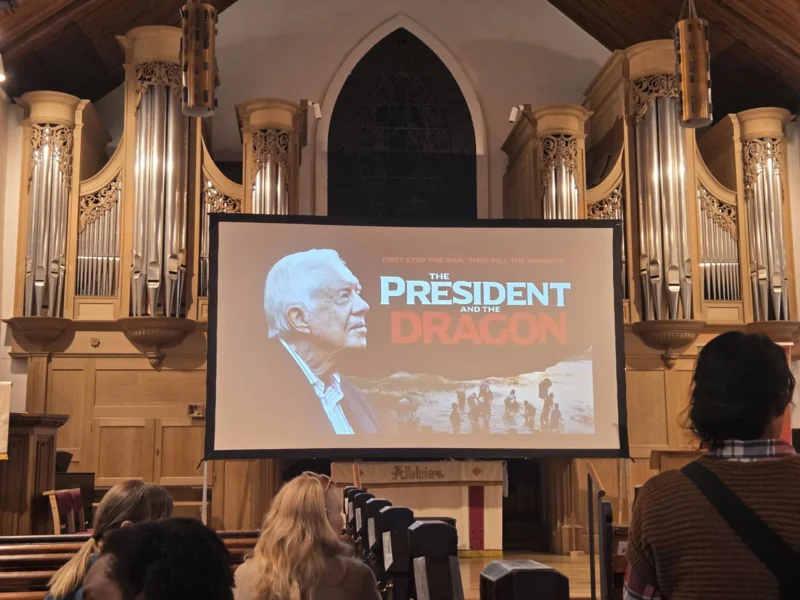
photo Special screening event showcasing “THE PRESIDENT AND THE DRAGON” ”
“Early detection can change the course of care and AI is helping health systems move from delayed response to timely action. Important conversations ahead at WHA 2026 on building equitable healthcare systems with technology at the center.
Looking forward to hearing insights from leaders across global health, policy, and innovation.”
“Addressing participants of the WHA79, I emphasized that at a time when the world is facing geopolitical instability and new health security challenges, united, science-based, and responsible international cooperation is more important than ever.
I also reaffirmed Latvia’s unwavering support for Ukraine’s independence and territorial integrity, condemning Russia’s attacks against Ukraine, including attacks on healthcare infrastructure and medical personnel. In this context, I highly value the work of the World Health Organization in supporting Ukraine’s healthcare system during wartime. I also hope for and call upon termination of all attacks on healthcare workforce and hospitals in other conflict zones around the globe.
I further noted that not only the resilience of health systems is being tested today, but also trust in multilateral cooperation as a whole. Therefore, it is essential to maintain strong support for the work and leadership of WHO, grounded in science and a shared responsibility for public health.”
“Really proud and excited to be sharing this news. Agreements like this don’t happen overnight. Enormous thanks to our colleagues at Roche for their commitment, openness, and for placing their trust in us at the Medicines Patent Pool.
Not only will this licence help us address the significant (and often underestimated) burden of seasonal influenza, it will leave us better prepared for the ever-present risk of a zoonotic influenza pandemic.
Better access for 129+ low- and middle-income countries
Simplified administration with a one-time oral tablet
Accelerating development and availability through technical data packs, reference products, and regulatory support
Increased emphasis on pandemic preparedness and local/regional manufacturing
Please get in touch if you have any questions about the agreement – always happy to chat.”
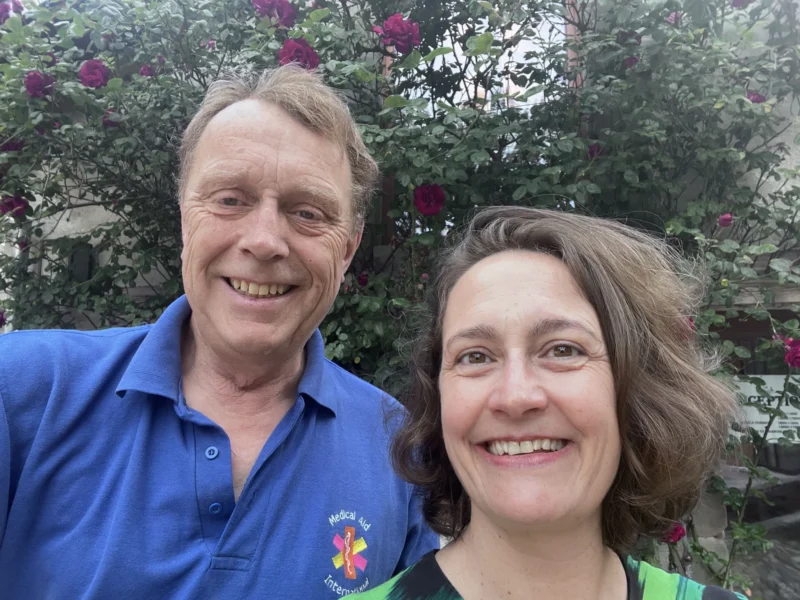
“It’s been a great first day in Geneva for WHA79. This year Medical Aid International (MAI)’s CEO Tim Beacon and I are joining forces to share the good news about appropriate, sustainable and quality products to support conflict, low resource and disaster affected communities. It’s been wonderful to meet so many people whose hospital staff have been upskilled as a result of MAI’s biomedical engineering courses, or whose facilities have been transformed through MAI’s work. Looking forward to the conversations today.”
“As I arrive in Geneva for WHA79, I am thinking of the brave health and community workers in the Democratic Republic of Congo and Uganda who are responding to the latest Ebola outbreak and the lives we have already lost.
I am reflecting on whether we have learned the lessons from the 2014 Ebola outbreak, COVID-19 and HIV. Will we rise above fragmentation and polarisation to act together and urgently? Will we deal effectively with the misinformation and stigma that impede responses?
The latest GPMB report highlights that as infectious disease outbreaks become more frequent, they are also becoming more damaging with widening economic, health, political and social impacts, and less capacity to recover from them. We continue to be mired in the cycle of neglect and panic that the IPPPR warned about.
World Health Organization and Africa CDC have declared a global health emergency in response to the spread of the Bundibugyo virus in the central African region.
Ebola is not a new disease – it was first found in humans in 1976 – but it is one for which not enough funds have been dedicated for treatment and vaccine development. At the same time, science is delivering breakthroughs at a rapid pace and AI could accelerate vaccine development for the Bundibugyo variant. Sadly, our commitment to equity is not keeping pace with science and too many diseases and people remain neglected. This must change!
Heading into discussions at the WHA, it will be forefront on my mind that when it comes to ebola, health and community workers and caregivers face the highest risk of infection. We must urgently do everything we can to support them and those who are now fighting for their lives.”
“The ever-inspiring Dr. Saia Ma’u Piukala at the launch of the Global Coalition On Oral Health.
We need strong leadership and powerful voices in Oral Health, and we thank the Regional Director World Health Organization Western Pacific Region for being a champion for the cause and for using his voice at the highest level to inspire action and elevate oral health on the global agenda. Leadership like this matters, it strengthens the movement, amplifies our message, and helps drive meaningful change.
We advocate every day for oral health, but progress accelerates when leaders stand with us and bring visibility, influence, and urgency to the issue.
A special shout-out to FDI World Dental Federation President Prof. Nikolai Sharkov who spoke at the launch and to all the panelists and moderators Benoit Varenne, Habib Benzian, and Prof. Richard Watt. It is always a pleasure to see your leadership, commitment, and passion in action.
Now the real work begins: from advocacy to implementation.”
“Ahead of the World Health Assembly, I have been thinking about how we can better connect global health discussions in Geneva to realities in countries.
Last month, I coordinated a joint WHO–MPP mission in Sénégal . We engaged with the Ministry of Health, the Institut Pasteur de Dakar and partners around the mRNA Technology Transfer Programme and the WHO Health Technology Access Programme.
In Geneva, we speak the language of resolutions and global commitments.
In country, from multi‑partner meetings and high‑level discussions with Ministry of Health leadership to R&D and manufacturing site visits in Dakar and Diamniadio, the issues are concrete. The language shifts to timelines, capacity, governance, financing and risk.
Bridging these two worlds is not always easy, but it is essential.
Missions like this illustrate how global programmes translate resolutions into real‑world impact, and that is exactly the perspective I hope we carry into the WHA week.”
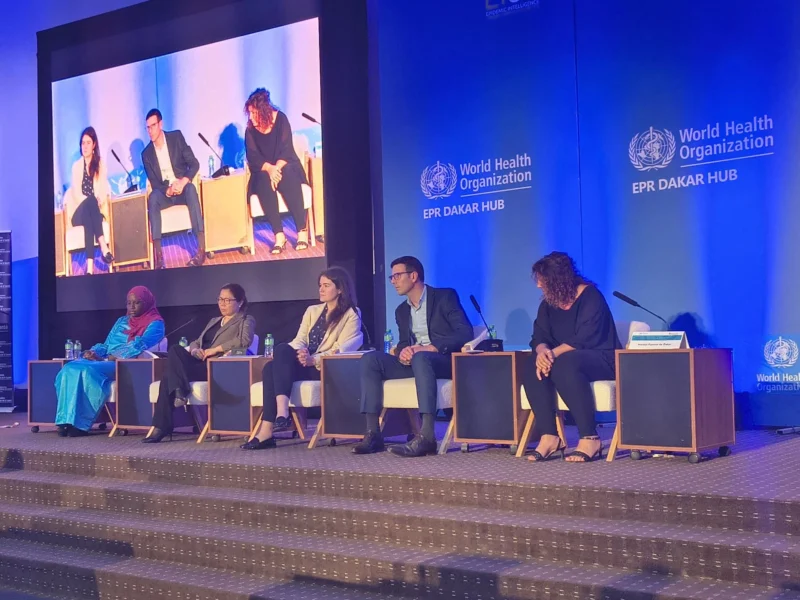
“Today marks the official launch of the Out Of The Shadows Index at WHA79.
The Index is a landmark global benchmark measuring how governments are preventing and responding to sexual violence against children and adolescents.
Covering 60 countries across six regions, representing 83% of the world’s children, it assesses government performance across 23 indicators researched and developed by Economist Impact, with input from technical experts, including youth and survivor voices.
From the Safe Futures Hub perspective, this is exactly the kind of evidence-informed advocacy tool the field needs: clear, accessible, and action-oriented. It equips survivor activists, civil society, youth advocates, policymakers, and funders with the information needed to demand accountability and drive measurable progress.
Huge congratulations to the Together for Girls, Brave Movement, and Economist Impact teams for bringing this important work to life. ”
“Representing the International Diabetes Federation and DoctorsAI from #India on Day 2 at #WHA79 in Geneva.
Across sessions and conversations, one message is becoming increasingly clear: the future of healthcare must be built around access to care — the right care, for the right person, at the right point of time.
That is exactly where digital health and artificial intelligence enter the picture.
At the sidelines of WHA79, several discussions at venues including the InterContinental Geneva focused on strengthening health systems, NCD care, sustainable investment, and early detection of cardio-renal-metabolic conditions. The broader WHA week has also seen a remarkable surge in attention to digital health and AI — with 39 official and unofficial side events focused on data, digital health, and AI, reflecting how central this agenda has become in global health.
For LMICs, this is no longer a distant conversation. Countries are willing to adopt technology. Health systems are looking for scalable solutions. Clinicians are asking how AI can support decision-making, screening, monitoring, and continuity of care.
But one word echoed repeatedly across the rooms: responsibility.
Responsible adoption must mean:
Clinical validation before scale
Equity and access by design
Human oversight and accountability
Data governance and patient trust
Solutions that work in real-world health systems, not only in pilots
WHA79, being held in Geneva from 18–23 May 2026, brings together global health leaders, Member States, civil society, academia, and non-state actors to shape priorities for health systems worldwide.
Some wonderful snapshots with great voices in global healthcare — and many more conversations ahead.
From India to Geneva, the message is clear:
AI and digital health must not just be innovative. They must be responsible, inclusive, and meaningful for the people and health systems that need them most.”
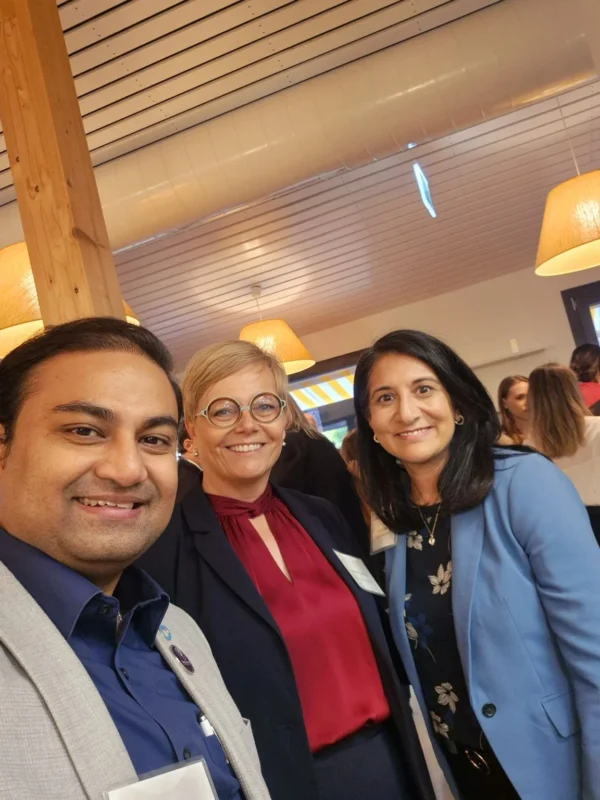
” It’s fitting that this study was published today, as adolescent mental health was on my mind at WHA79 through two powerful sessions: “Accelerating Action for Adolescent Health and Well-being in a Changing World” and “Adequate and Sustained Financing for NCDs and Mental Health.”
As highlighted in the article below, the AAP Global Health team remains deeply committed to advancing research and global collaboration to improve mental health outcomes for children and adolescents. Our approach is grounded in a developmental framework that spans the full continuum of care:
Primary prevention through promoting #socio-emotional health and nurturing relationships
Secondary prevention through screening, identification, and assessment
Tertiary prevention through treatment and co-management with mental health professionals
Supporting healthy mental development requires action across the life course. This includes:
Early childhood: kangaroo care, responsive feeding, and developmental play
Childhood: monitoring emotional development, supporting early literacy, and continued play-based engagement
Adolescence: suicide risk screening, addressing climate-related anxiety, and preventing substance use
We are grateful for the strong partnerships we share with pediatric societies around the world. Together, we are advancing meaningful, coordinated efforts to support the mental health and well-being of children everywhere.”
“𝐁𝐮𝐢𝐥𝐝𝐢𝐧𝐠 𝐭𝐡𝐞 𝐦𝐨𝐦𝐞𝐧𝐭: 𝐰𝐡𝐚𝐭 𝐢𝐭 𝐭𝐚𝐤𝐞𝐬 𝐭𝐨 𝐦𝐨𝐛𝐢𝐥𝐢𝐳𝐞 𝐚𝐧 𝐢𝐝𝐞𝐚 𝐢𝐧𝐭𝐨 𝐚𝐜𝐭𝐢𝐨𝐧
What people see is a 90-minute program.
What it actually takes is months of coordination, judgment calls, and teamwork across time zones.
Yesterday’s Accra Reset side event at the World Health Assembly brought together heads of state, ministers, multilaterals, and media around a single idea: that global health reform must move from dialogue to delivery.
But getting to that moment takes far more than a run of show.
It starts with alignment. Agreeing on the purpose, the message, and the political moment—positioning this as convening as a head-of-state-led push for a new global health architecture rooted in country leadership and execution.
Then comes the choreography. Dozens of stakeholders. Multiple ministries. Last-minute shifts. Delegations with different priorities and protocols. Every detail—arrivals, seating, flow—carefully mapped and remapped, often in real time.
Logistics are everything—and invisible when done right. Rooming, credentials, livestreaming, media coordination, briefing materials. From securing the tech to broadcast globally to managing on-site accreditation for VIPs, the operational backbone determines whether the moment lands.
And then there’s the unexpected. A minister’s flight gets canceled. A speaker runs late from another bilateral. The program shifts. The team adapts—quietly, quickly, and without breaking the flow.
But most of all, it’s about trust. Across teams. With partners. With leaders stepping onto that stage. The ability to bring together high-level participants and create space for a focused, meaningful exchange depends on relationships built long before the event itself.
Because in the end, execution is what makes ideas real. And if Accra Reset is about anything, it’s exactly that—moving from ambition to action, on the global stage and behind the scenes.”
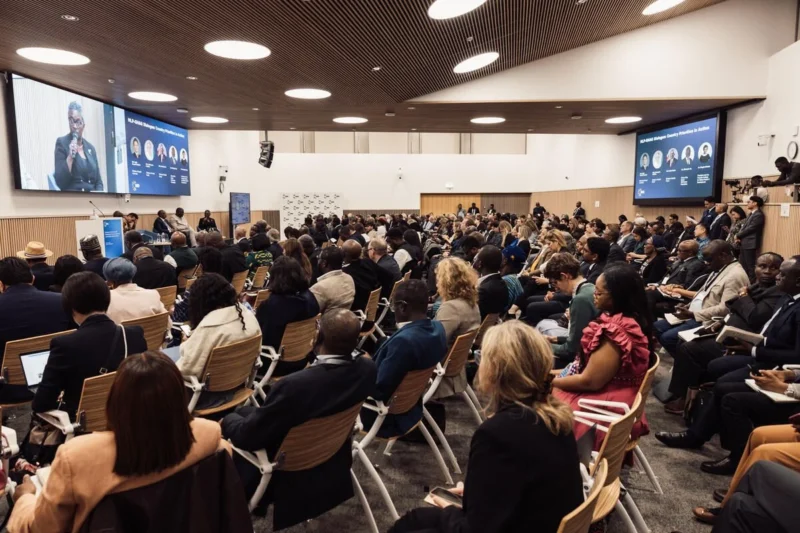
“As the WHA79 opens this weekend, conversations will focus on shrinking aid, fiscal pressure, domestic resource mobilization, and WHO’s proposed strategy on the economics of health for all. But as a recent BMJ commentary reminded me, these discussions remain incomplete when they ignore the psychological factors that shape perceptions of risk and what we believe worthy of investment.
Behavioral science has long shown that we are not purely rational actors. Cognitive biases shape what we perceive as urgent, what we attribute harm to, and ultimately how we act. As a result, acute and visible crises often trigger faster political and public response than gradual deterioration in public systems, even when the long-term harms of the latter may ultimately be greater.
For global health actors, the challenge this week is not only to produce evidence in favor of increased health financing, but to make the economic and structural drivers of ill health visible, immediate, personal, and increasingly difficult to dismiss. Unless that happens, health financing and social protection will continue to be treated as abstract upstream budget decisions, discussed in the cool language of fiscal trade-offs and efficiency, rather than as the foundation that allows societies to remain healthy, productive, and resilient in the first place.
I make that argument here.”
“One of my favorite things about healthcare is that the people trying to solve its biggest problems rarely come from the same backgrounds.
Some build policy.
Some build technology.
Some build systems that operate at a national scale.
And occasionally, all of them end up in the same room.
Really looking forward to joining His Excellency Budi Sadikin, Minister of Health, Indonesia, whose leadership in transforming one of the world’s largest healthcare systems has been remarkable to witness; Dr. Neil Buddy Shah, CEO of Clinton Health Access Initiative, Inc. and Chair of Anthropic ’s Long-Term Benefit Trust, who brings a deeply important perspective on AI, access, and global health equity; and Dr. L Rizka Andalucia, Director General for Pharmaceuticals and Medical Devices at the Ministry of Health of Indonesia, a distinguished health leader with deep expertise in global health governance and strategic policy-making.
We’ll be discussing “The Doctor That Never Sleeps: How AI Breaks the Access Barrier in Healthcare” at the World Health Assembly in Geneva.
Excited for an honest conversation around where healthcare systems are headed next.
19 May 2026
2 PM – 3 PM CET
Ballroom B-C, InterContinental Hotel, Geneva”
Stay informed with more articles like this on OncoDaily
Written by Nare Hovhannisyan, MD