A new step in the search for better treatments for aggressive brain tumors has been announced as Tufts Medical Center enrolled its first patient in NEO100-02, a multicenter Phase 2 clinical trial investigating an experimental nasal drug for patients with high-grade meningioma.
The study is evaluating NEO100, an intranasal formulation of perillyl alcohol, in patients whose meningiomas have remained after treatment, continued growing, or returned following surgery and radiation therapy. The approach could offer a new treatment option for patients with limited alternatives, although its effectiveness in meningioma has yet to be established.
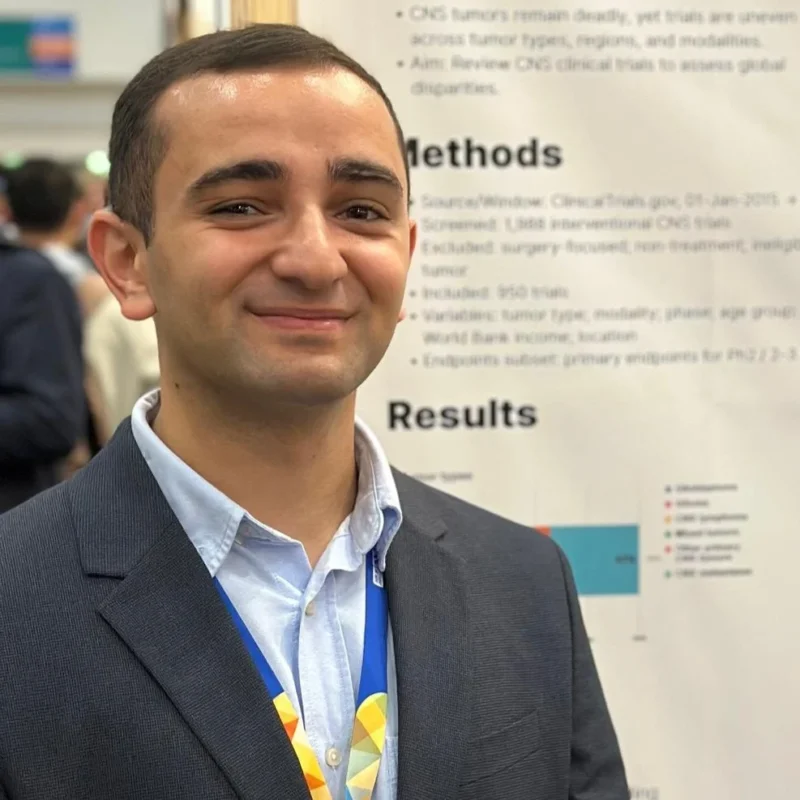
The milestone was announced by Soma Sengupta, MD, PhD, MBA, the study’s principal investigator at Tufts Medical Center, who confirmed the enrollment alongside neurosurgeon Mina Safain and Patricia Ridge.
Why Are New Treatments for Meningioma Needed?
Meningiomas are the most common primary tumors arising within the skull. They develop from the meninges, the protective membranes surrounding the brain and spinal cord. Although most meningiomas are slow-growing and can often be successfully managed with surgery or radiation, some behave more aggressively and carry a substantially greater risk of recurrence.
High-grade meningiomas, classified as World Health Organization (WHO) grade 2 or grade 3, present particular challenges. Even after surgery and radiation therapy, these tumors may return or continue growing, sometimes in locations where additional operations or radiation are difficult or unsafe.
Unlike several other brain tumors, recurrent high-grade meningiomas have no universally established standard systemic drug treatment after local treatment options have been exhausted. This leaves patients and their physicians with limited evidence-based alternatives and highlights the importance of developing new therapies through clinical trials.
NEO100 and the Possibility of Treating Brain Tumors Through the Nose
One of the most interesting aspects of the NEO100-02 trial is how the investigational treatment is administered.
NEO100 is a highly purified formulation of perillyl alcohol, a naturally occurring compound being investigated for its potential anticancer activity. Instead of being administered through intravenous infusion or conventional tablets, NEO100 is delivered intranasally using a nebulized formulation.
This strategy is intended to take advantage of potential nose-to-brain drug-delivery pathways. Researchers hope this approach may help deliver the investigational agent to intracranial tumors while addressing some of the challenges associated with conventional systemic drug delivery.
However, whether intranasal NEO100 can achieve meaningful tumor control or improve survival in patients with meningioma remains a central question of the ongoing trial.
What Will the Phase 2 Trial Investigate?
The NEO100-02 study (NCT05023018) is an open-label, multicenter Phase 2 trial sponsored by NeOnc Technologies. It is designed to evaluate the safety, tolerability, drug exposure, and potential antitumor activity of intranasal NEO100 in patients with residual, progressive, or recurrent WHO grade 2 or 3 meningioma.
The study plans to enroll up to 30 participants across participating clinical centers. Eligible patients generally must have previously undergone maximal safe surgical resection and radiation therapy and have measurable disease on imaging.
Participants will self-administer NEO100 four times daily in repeated 28-day treatment cycles. Treatment may continue until disease progression, withdrawal, or another reason for discontinuation.
The study’s primary endpoint is six-month progression-free survival (PFS-6), which measures the proportion of patients who remain alive without tumor progression six months after starting treatment. Additional assessments include overall survival, radiographic tumor response, and pharmacokinetic measurements.
Because this is a single-arm study without a randomized comparison group, its findings will need careful interpretation before conclusions can be drawn about the treatment’s clinical benefit.
Soma Sengupta Announces the First Enrollment at Tufts
Sharing the milestone on LinkedIn, Soma Sengupta highlighted the importance of expanding clinical trial opportunities for patients with difficult-to-treat meningiomas.
“Enrolling our first participant means we can now contribute directly to that research at Tufts.”
Sengupta also thanked the first participant and the clinical research teams involved in opening the study at Tufts Medical Center. She acknowledged Thomas Chen and Josh Neman for their collaboration in bringing the research to the institution.
Importantly, this announcement marks the first enrollment at the Tufts site, rather than the first patient enrolled in the multicenter trial overall.
What Could This Mean for Patients With High-Grade Meningioma?
For patients facing recurrent meningioma after surgery and radiation, participating in clinical trials may provide access to investigational treatments while helping researchers answer important questions about safety and effectiveness.
NEO100 represents an approach that combines the investigation of a potential anticancer compound with an alternative drug-delivery method. The agent is also being studied in other brain tumor populations, but findings from those studies cannot automatically be applied to meningioma.
The NEO100-02 study remains ongoing, and definitive efficacy results in meningioma have not yet been reported. Nevertheless, the addition of Tufts Medical Center as an enrolling site represents another step toward evaluating whether intranasal therapy can offer meaningful benefits for patients with aggressive or recurrent meningioma.
Read further on OncoDaily: HUTCHMED’s New Brain Tumor Drug Ranosidenib Enters Phase 3 Clinical Trial