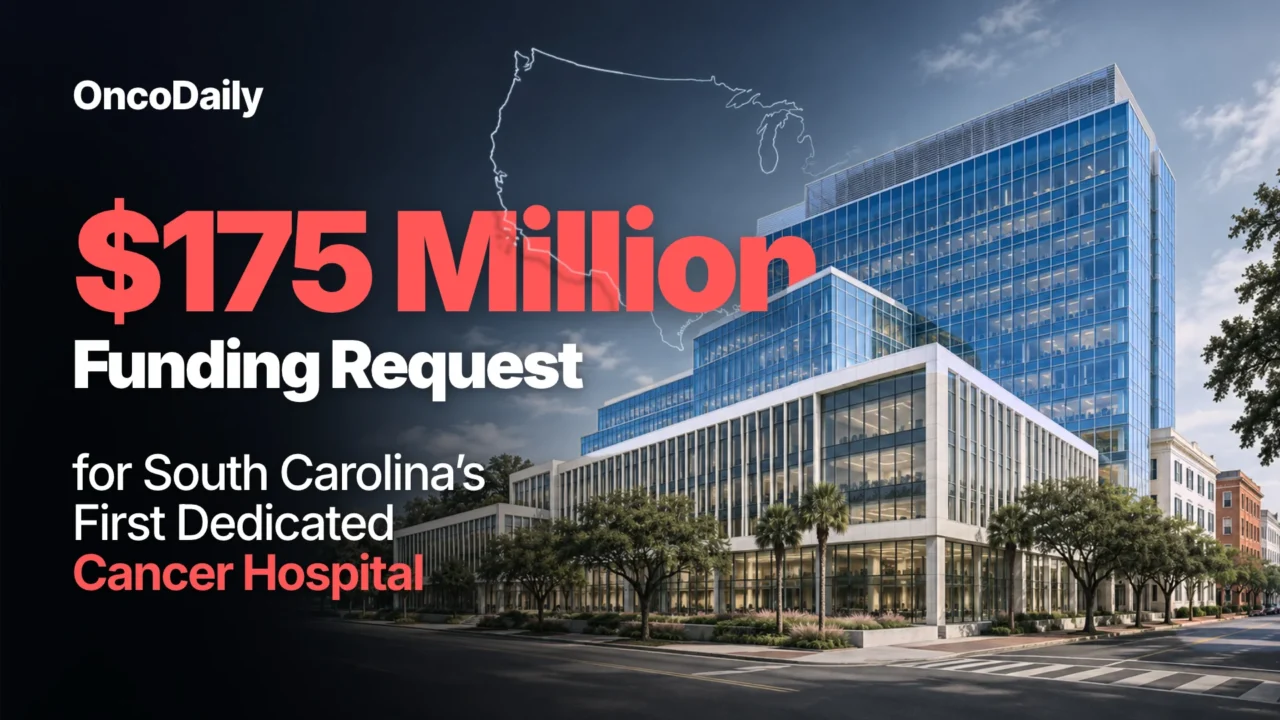
The Medical University of South Carolina (MUSC) is seeking an additional $175 million in state funding to advance construction of a new $1.1 billion cancer hospital in Charleston, alongside a separate $10 million annual request to expand access to advanced cancer treatments in rural communities.
The latest funding requests, reported on November 27, 2026, come as South Carolina’s public colleges and universities collectively seek approximately $2.2 billion in additional state support for the fiscal year beginning July 1, 2027.
For MUSC, the proposal represents more than an investment in hospital infrastructure. It is part of a broader strategy to bring advanced cancer therapies, clinical trials, and specialized oncology services closer to patients who currently face significant geographical barriers to care.
A $1.1 Billion Investment in Cancer Care
MUSC’s proposed Comprehensive Cancer Hospital is expected to become South Carolina’s first dedicated cancer hospital, bringing together services that are currently distributed across multiple facilities.
The South Carolina Legislature previously approved $175 million toward the project during the current fiscal year. MUSC is now requesting the remaining $175 million of its original $350 million state funding proposal.
According to MUSC’s February 2026 announcement, the estimated total cost of the hospital is approximately $1.115 billion, including:
- $885 million for construction.
- $230 million for medical equipment and furnishings.
In addition to government funding, MUSC Health launched a $250 million philanthropic campaign in April 2026 to support the hospital’s development.
The planned 14-story facility will be located in downtown Charleston, adjacent to the existing MUSC Hollings Cancer Center, with an anticipated opening in April 2030.
What Will the New Cancer Hospital Offer Patients?
The new hospital is designed to integrate cancer diagnosis, treatment, research, and supportive services in one location, potentially reducing the need for patients to visit multiple facilities throughout their treatment.
Planned services include advanced diagnostic imaging, cancer surgery, chemotherapy, radiation therapy, stem cell transplantation, cellular therapies, precision oncology, and early-phase clinical trials.
The hospital is also expected to introduce proton therapy to South Carolina, potentially reducing the need for eligible patients to travel outside the state for this specialized form of radiation treatment.
Importantly, moving clinical services into the new hospital would allow the existing Hollings Cancer Center building to be repurposed for cancer research, creating additional space for laboratory investigations and clinical trial development.
In a November 24 statement, Adam Bacik, CEO of the new MUSC cancer hospital, described the project’s ambition:
“We’re creating a destination for cancer care unlike anything South Carolina has seen before.”
Another $10 Million Requested to Expand Cancer Treatment in Rural Communities
Beyond the hospital’s construction, MUSC is seeking $10 million in recurring annual funding to expand access to advanced cancer care across South Carolina, particularly in rural and underserved regions.
According to the institution’s budget request, a central priority is improving access to cellular therapies, which use a patient’s own cells or donor cells as part of treatment.
The requested funds would support rural clinical trials, research programs, and infusion equipment needed to deliver specialized treatments.
This initiative is particularly relevant as cellular immunotherapies, including CAR T-cell therapy and tumor-infiltrating lymphocyte (TIL) therapy, continue to reshape treatment options for selected cancers.
MUSC Hollings Cancer Center has already been developing cellular therapy infrastructure, including efforts to expand TIL-based treatment for melanoma and investigate future applications in lung cancer.
Expanding access through regional partnerships could help more patients participate in clinical trials and receive appropriate components of their cancer care closer to home, while specialized procedures remain concentrated in equipped treatment centers.
The Goal of Becoming an NCI Comprehensive Cancer Center
The investment also supports MUSC’s long-term ambition to achieve National Cancer Institute (NCI) Comprehensive Cancer Center designation.
Hollings Cancer Center is already South Carolina’s only NCI-designated cancer center. However, the institution is pursuing the additional Comprehensive Cancer Center designation, which recognizes extensive capabilities in cancer research, prevention, community engagement, and translation of scientific discoveries into patient care.
MUSC has identified the 2028 NCI renewal cycle as its target for pursuing this designation.
If successful, Hollings would become South Carolina’s first NCI-designated Comprehensive Cancer Center.
The institution has emphasized that expanded clinical infrastructure, stronger research capacity, and improved statewide access to cancer care are important components of this strategy.
What Happens Next?
The additional $175 million hospital request and $10 million rural oncology proposal must still undergo South Carolina’s state budget review and legislative approval process.
Neither allocation is guaranteed.
Nevertheless, the proposals highlight a growing effort to strengthen the state’s oncology infrastructure at a time when demand for specialized cancer care is expected to increase.
For patients, the potential impact extends beyond a new hospital building. The larger objective is to make advanced treatments, innovative clinical trials, and coordinated cancer care more accessible without requiring families to travel long distances.
The key question now is whether South Carolina lawmakers will provide the additional funding needed to turn that vision into reality.
Read further on OncoDaily: Trump Healthcare Reform Talks With Democrats Raise Key Questions