





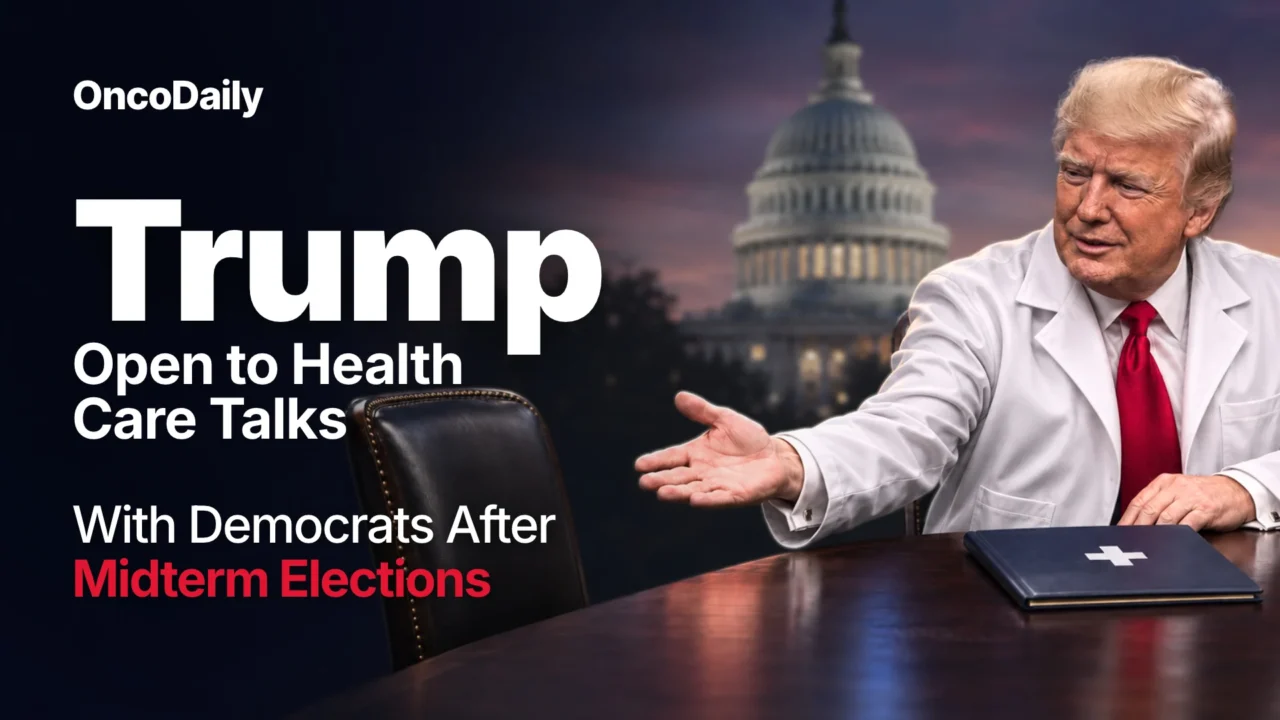
Trump healthcare reform discussions could move forward after US President Donald Trump signaled his willingness to work with Democrats following their victories in the November 2026 midterm elections. His comments have renewed attention on federal health insurance programs, medical costs, and access to cancer care.
Speaking at a White House news conference on November 20, Trump said Democratic lawmakers had contacted him about health care and immigration. He did not identify the lawmakers but suggested that bipartisan agreements could be possible.
Democrats are preparing to take control of both chambers of Congress in January 2027, creating an opportunity for negotiations over health care affordability, Medicaid funding, and Affordable Care Act (ACA) insurance subsidies.
Trump also made clear that he would use his veto power to block legislation he opposed.
“If they want to get things done, I want to get things done, too,” Trump said.
The president suggested that a health care agreement could incorporate proposals from both parties. However, no specific reforms or formal negotiations have been announced.
Healthcare Reform and Health Insurance Costs
Health care affordability was a major issue in the midterm elections and remains a priority for Democrats as they prepare to take control of Congress.
House Democratic leader Hakeem Jeffries has endorsed lowering the Medicare eligibility age, expanding benefits to include dental, hearing, and vision services, and providing health coverage for all children.
Democrats have also called for restoring enhanced ACA insurance subsidies and reversing Medicaid funding cuts enacted under Republican legislation.
The enhanced ACA premium tax credits expired at the end of 2025, leaving many Americans with higher insurance costs.
According to an analysis by KFF, average monthly premium payments among ACA Marketplace enrollees, after tax credits, rose by 58%, from $113 in 2025 to $178 in 2026.
Average deductibles also increased by 37%, from $2,759 to $3,786, as more consumers moved to plans with lower premiums but higher out-of-pocket costs.
These increases can place additional financial pressure on patients who need regular medical appointments, prescription medications, or long-term treatment.
Health insurance affordability is therefore likely to remain a major issue in any Trump healthcare reform discussions with congressional Democrats.
Health Insurance Coverage and Access to Cancer Treatment
Although Trump has not announced any cancer-specific proposals, changes to Medicaid, ACA subsidies, and federal insurance policies could affect access to cancer screening, diagnosis, and treatment.
Health insurance coverage is particularly important for patients undergoing chemotherapy, radiation therapy, or other treatments that require frequent medical visits and follow-up care.
Research from the American Cancer Society has linked inadequate insurance coverage to later-stage cancer diagnoses and poorer survival outcomes.
Cancer patients may also face substantial out-of-pocket expenses, making affordable insurance and uninterrupted coverage important throughout treatment.
Medicaid eligibility requirements have become another concern for cancer advocates.
On November 13, 2026, the Centers for Medicare & Medicaid Services (CMS) announced that states could choose to delay certain Medicaid coverage denials and terminations associated with new work requirements for six months.
The American Cancer Society Cancer Action Network (ACS CAN) welcomed the option and urged states to use it to prevent eligible patients from losing insurance coverage.
The organization also raised concerns about whether cancer patients would qualify for exemptions from the work requirements and called for broader action by Congress.
For people undergoing cancer treatment, losing coverage can mean higher medical bills and potential interruptions in care.
The outcome of future health care discussions could therefore be important for patients who depend on Medicaid or ACA Marketplace insurance.
No Agreement Yet on Health Care Reform
Despite Trump’s willingness to consider negotiations, significant differences remain between the White House and congressional Democrats.
Democratic leaders want to expand insurance coverage, restore ACA subsidies, and reverse Medicaid cuts. Trump, meanwhile, has warned that he will veto legislation he does not support.
No formal agreement has been announced, and the two sides have yet to outline a shared health care proposal.
As Democrats prepare to take control of Congress in January 2027, Medicaid funding, insurance affordability, and ACA subsidies are expected to remain central to the debate.
For the oncology community, any changes to federal insurance programs could affect cancer screening, treatment costs, and continuity of care. However, no cancer-specific reforms have been proposed as part of these potential negotiations.
Written by Evelina Khachaturova