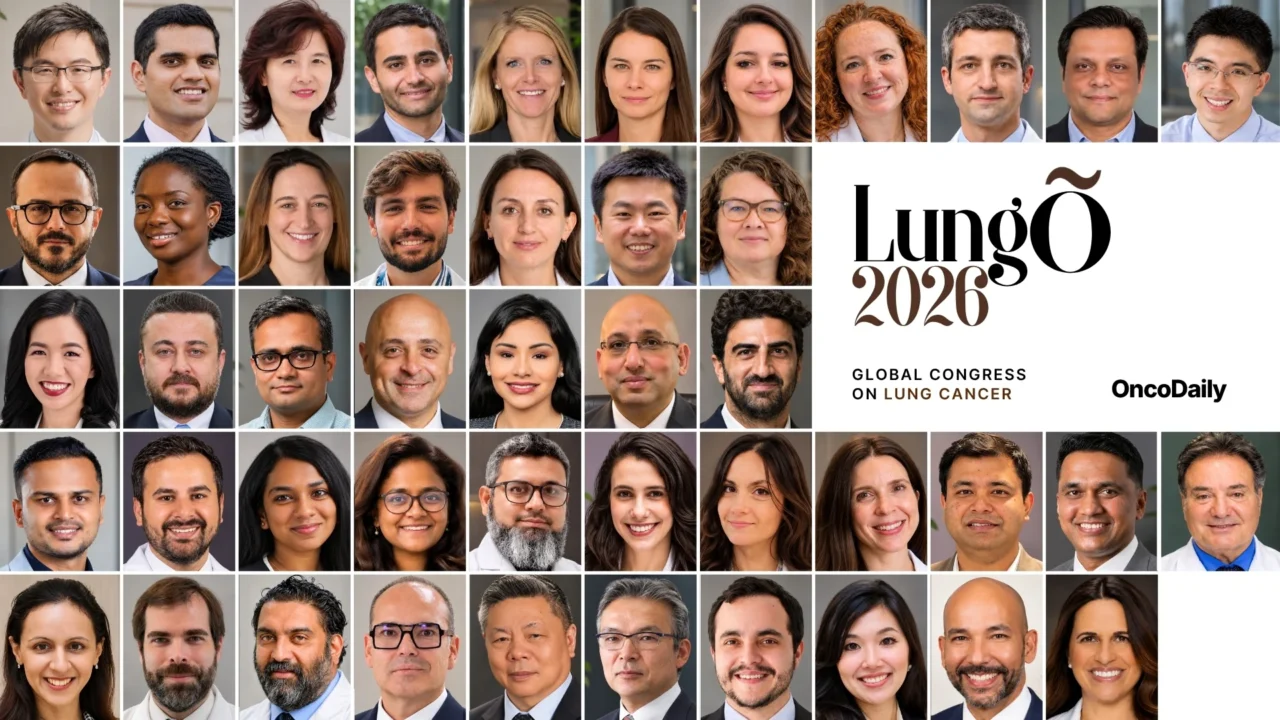
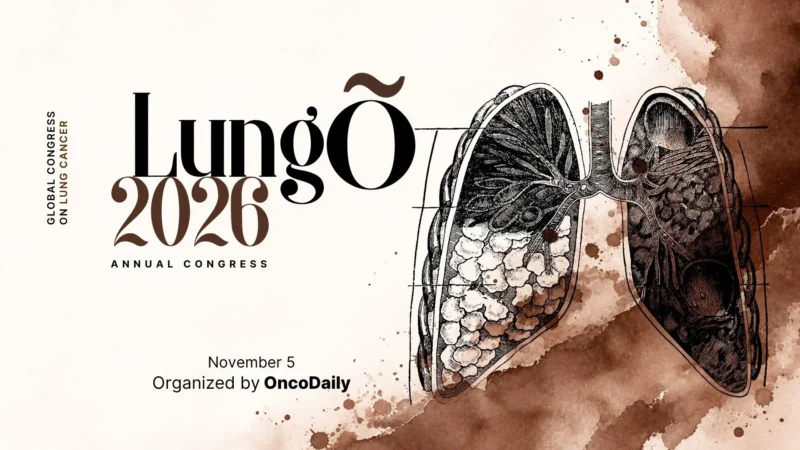
The LungÕ 2026 – Virtual Global Congress on Lung Oncology, organized by OncoDaily as part of its O Series, brought together international experts to examine the latest developments, clinical challenges, and emerging opportunities in lung cancer diagnosis and treatment.
Held virtually on November 5, 2026, the congress featured an extensive scientific programme addressing the evolving management of non-small cell lung cancer (NSCLC), small cell lung cancer (SCLC), molecularly targeted therapies, immunotherapy, thoracic surgery, radiotherapy, early detection, and supportive care.
Through presentations spanning multiple disciplines and healthcare settings, LungÕ 2026 placed particular emphasis on translating scientific advances into clinical decisions, improving treatment selection, managing toxicity, and addressing disparities in access to cancer care.
From established treatment approaches to emerging therapeutic strategies, the congress offered a broad examination of the questions shaping contemporary lung oncology.
Beyond the Latest Treatment: Making the Right Clinical Decision
One of the central themes of LungÕ 2026 was the importance of selecting treatments according to individual patient characteristics rather than relying solely on the newest available therapeutic options.
Pei-Hsing Chen Dobbie addressed this question in a presentation titled “The Right Treatment Is Not Always the Newest Treatment: Personalised and Multidisciplinary Care in Metastatic NSCLC.” The session placed treatment individualization and multidisciplinary decision-making at the center of metastatic lung cancer management.
The programme also examined the growing complexity of first-line treatment selection in molecularly defined NSCLC.
Myung-Ju Ahn discussed the evolving treatment landscape for EGFR-mutant NSCLC, focusing on the clinical decisions surrounding osimertinib and the strategies evaluated in the FLAURA2 and MARIPOSA trials.
Additional perspectives were presented by Blerina Resuli, who reviewed the current landscape of EGFR-mutated NSCLC, and Amr Sakr, whose session addressed second-line treatment following progression on osimertinib.
Hui Jing Hoe further explored treatment strategies beyond osimertinib, including the role of rebiopsy, findings from MARIPOSA-2, and the emerging potential of antibody–drug conjugates (ADCs).
Together, these sessions reflected an increasingly complex treatment environment in which molecular profiling, prior treatment exposure, resistance mechanisms, and patient-specific considerations are central to therapeutic planning.
Precision Oncology: Expanding Options Beyond Established Molecular Targets
Precision medicine occupied a prominent position throughout the scientific programme, with presentations examining both established molecular targets and emerging treatment opportunities.
Sarah Waliany discussed targeted treatment strategies for ALK-, ROS1-, RET-, and NTRK fusion-positive NSCLC, emphasizing the importance of central nervous system considerations in therapeutic selection.
Arianna Marinello addressed the management of fusion-positive advanced NSCLC, while Murilo Cassio reviewed treatment approaches for KRAS-mutated lung cancer.
The programme also included a presentation by Lyudmila Bazhenova on EGFR exon 20 insertions, a molecular alteration for which the therapeutic landscape has expanded considerably.
Imene Hadji examined the next generation of actionable molecular targets, including KRAS, MET, HER2, and BRAF in advanced NSCLC.
The expanding role of HER2-directed treatment was explored further by Estelamari Rodrigues, whose presentation addressed HER2-mutant NSCLC, antibody–drug conjugates, targeted therapies, and treatment sequencing.
Beyond the availability of targeted agents, the congress also considered the practical challenges of connecting patients with appropriate treatment opportunities.
Lei Deng examined pathways from molecular testing to clinical trial enrollment, focusing on rare oncogenic drivers and early-phase therapeutic options in metastatic NSCLC.
These discussions underscored a fundamental challenge in precision oncology: identifying an actionable molecular alteration is only the first step. Ensuring access to the appropriate treatment or clinical trial remains equally important.
Immunotherapy in 2026: New Evidence, Resistance, and Treatment Selection
Immunotherapy remained a major focus of LungÕ 2026, with sessions examining its expanding applications, limitations, and evolving role across different stages of lung cancer.
Thomas Yi Long Wu addressed the evidence surrounding ADAURA, ALINA, and LAURA, focusing on treatment approaches for oncogene-driven NSCLC and the importance of distinguishing targeted therapy strategies from immunotherapy-based approaches.
Nicolas Girard also contributed a presentation titled “Beyond the Immunotherapy Reflex,” adding to the programme’s examination of treatment selection beyond conventional immunotherapy considerations.
In advanced NSCLC, Abhishek Singh discussed emerging PD-1/VEGF bispecific approaches and their potential place in first-line treatment beyond PD-L1-based decision-making.
Aline F. Fares examined immunotherapy resistance and emerging therapeutic strategies, while Natalie Vokes addressed the influence of circulating biomarkers, clinical trial design, and early drug development on contemporary immunotherapy practice.
The perioperative setting received particular attention.
Alina Joy Aksa discussed perioperative immunotherapy in NSCLC, while Edoardo Garbo examined biomarkers of response to neoadjuvant chemoimmunotherapy.
The congress also featured Ahmed Rabea’s keynote lecture on the five-year results of IMpower010, examining the implications of adjuvant atezolizumab for patients with resected NSCLC.
Across these presentations, a recurring question emerged: how can clinicians better identify patients most likely to benefit from immunotherapy while avoiding ineffective or unnecessary treatment?
From Resectable Disease to Stage III NSCLC: Rethinking Multimodal Treatment
The management of potentially curable lung cancer represented another major area of discussion.
Tetsuya Mitsudomi examined decision-making in resectable NSCLC, particularly the balance between surgical intervention and systemic treatment.
Filippo Gallina explored the evolving role of thoracic surgery in the era of multimodal treatment, considering the influence of perioperative systemic therapies on contemporary surgical practice.
Amit Kulkarni addressed perioperative strategies for resectable NSCLC without actionable genomic alterations, further highlighting the growing importance of integrating systemic and local treatment approaches.
For unresectable stage III disease, Francesco Passiglia discussed new phase III evidence and the question of whether treatment outcomes can be improved beyond the PACIFIC approach.
Radiotherapy also received dedicated attention.
Vivek Ghosh presented “Redefining Lung Cancer Cure through SBRT,” examining the role of stereotactic body radiotherapy in lung cancer treatment.
Narek Shaverdian addressed the practical challenges of delivering curative-intent thoracic radiotherapy, particularly in settings where healthcare resources may be limited.
The integration of systemic and local treatment was explored further by Puneeth Iyengar, whose presentation focused on managing oligometastatic and oligoprogressive disease.
Collectively, these sessions highlighted the importance of coordinated multidisciplinary care as treatment options expand across the continuum of localized, locally advanced, and metastatic lung cancer.
Antibody–Drug Conjugates: New Therapeutic Opportunities and New Safety Challenges
The development of antibody–drug conjugates has introduced additional therapeutic possibilities in lung cancer, alongside important questions concerning treatment selection and adverse-event management.
Abinash Hota examined ADCs targeting TROP2, HER3, and B7-H3, with particular attention to the prevention and early recognition of interstitial lung disease and ocular toxicity.
Rajat Thawani provided a dedicated discussion of ADC-associated toxicity management in lung cancer.
The programme also addressed the practical management of adverse events associated with immunotherapy and other emerging treatments.
Luisana Sisca discussed the management of immune-related adverse events in patients receiving immunotherapy, while Amarendra Amar focused on managing immune-related and ADC-associated toxicities beyond tertiary care centers.
These presentations reflected the increasing importance of supportive clinical infrastructure as anticancer therapies become more complex.
Effective treatment requires not only access to new drugs but also the ability to recognize complications early, coordinate multidisciplinary management, and maintain patient safety throughout care.
Earlier Detection, Better Diagnostics: Strengthening the Foundations of Lung Cancer Care
LungÕ 2026 devoted considerable attention to lung cancer screening, diagnostic innovation, and molecular testing.
Abhishek Shankar examined the challenges and opportunities associated with implementing lung cancer screening in low- and middle-income countries.
Fahmi Zebary also presented on lung cancer screening, contributing to the congress’s broader discussion of early detection.
The application of artificial intelligence was addressed by Allison Chang, whose session explored AI in lung cancer screening and pulmonary nodule management.
Molecular and pathological diagnostics formed another important component of the programme.
Umberto Malapelle discussed next-generation diagnostic approaches in lung cancer, while Yin P. (Rex) Hung reviewed developments in pathological diagnosis and ancillary testing for pulmonary neuroendocrine neoplasms.
Gilberto Lopes examined liquid biopsy at disease progression, including resistance genotyping and the addition of circulating tumor RNA to circulating tumor DNA analysis in a cohort of 600 patients.
Andre Murad addressed molecular residual disease following curative-intent treatment, focusing on the clinical questions surrounding treatment escalation, de-escalation, and continued observation.
The programme also included Andrea Anampa Guzmán’s presentation on dose optimization and pharmacokinetic/pharmacodynamic-informed drug development.
Together, these topics demonstrated how advances in screening, pathology, circulating biomarkers, and molecular diagnostics are influencing lung cancer management from initial detection through treatment monitoring.
Small Cell Lung Cancer: New Directions Across Disease Stages
Although NSCLC accounted for a substantial portion of the programme, LungÕ 2026 also examined developments in small cell lung cancer.
Annie Kanchan presented “Small Cell Lung Cancer in 2026: From ADRIATIC to DLL3—Practical Treatment Across Limited and Extensive Stage.”
The session brought attention to the changing therapeutic landscape of SCLC, including the implications of the ADRIATIC trial and the development of DLL3-directed treatment strategies.
The inclusion of SCLC within the congress reflected the need to address progress across the full spectrum of lung malignancies, including diseases historically associated with limited treatment options.
Beyond Tumor Response: Age, Symptoms, and the Patient Experience
Alongside discussions of treatment efficacy, LungÕ 2026 emphasized the importance of individualized care and quality of life.
Adeline Gonzales examined treatment personalization in older adults with lung cancer, addressing the limitations of relying exclusively on chronological age and Eastern Cooperative Oncology Group (ECOG) performance status when making clinical decisions.
Fionnuala Crowley focused on practical symptom interventions in advanced lung cancer, drawing attention to measures that can improve patients’ daily experiences alongside disease-directed treatment.
These sessions reinforced the importance of considering functional status, treatment tolerability, symptom burden, and individual priorities when developing care plans.
As therapeutic options expand, maintaining quality of life remains a fundamental component of effective lung cancer management.
Innovation Must Reach Patients: Lung Cancer Care Across Healthcare Systems
Global disparities in access to lung cancer prevention, diagnosis, and treatment were another important theme of the congress.
Arman Reza Chowdhury addressed precision oncology in Bangladesh, examining the challenges and opportunities associated with translating scientific innovation into accessible clinical care.
Mary Ann Dadzie presented “How I Treat Lung Cancer in Africa,” offering a regional perspective on clinical decision-making and the realities of delivering oncology care across different healthcare environments.
The programme also included Solange Peters, whose presentation, “Closing the Gap in NSCLC: Addressing Unmet Needs Through Clinical Trials,” focused on the role of clinical research in addressing persistent treatment gaps.
These sessions broadened the congress’s perspective beyond therapeutic development to include the healthcare systems, diagnostic capacity, clinical trial infrastructure, and resources required to make treatment advances available to patients.
The discussions reflected a central consideration for global lung oncology: progress cannot be measured by the development of new therapies alone, but must also account for their accessibility and practical implementation.
A Global Scientific Exchange Across the Lung Cancer Continuum
With contributions from specialists in medical oncology, radiation oncology, thoracic surgery, pathology, diagnostics, and supportive care, LungÕ 2026 brought together a wide range of perspectives on contemporary lung cancer management.
The scientific programme extended from early detection and curative-intent treatment to advanced disease, acquired resistance, emerging drug development, and survivorship-related considerations.
Opening remarks were delivered by Estelamari Rodrigues, while Gilberto Lopes was listed for the closing remarks, bringing the congress’s scientific programme to a conclusion.
Across its sessions, LungÕ 2026 highlighted several interconnected priorities: improving the precision of treatment selection, integrating local and systemic therapies, advancing molecular diagnostics, anticipating treatment-related toxicity, and addressing the inequalities that continue to influence cancer outcomes worldwide.
Looking Ahead: From Scientific Progress to Better Lung Cancer Care
LungÕ 2026 reflected a field undergoing significant change, with an expanding range of therapeutic options and increasingly sophisticated approaches to diagnosis, treatment selection, and disease monitoring.
Yet the congress also brought attention to the practical questions accompanying these advances.
Which patients benefit most from treatment intensification? When should clinicians reconsider established therapeutic approaches? How can resistance be identified and addressed earlier? And how can healthcare systems ensure that scientific progress translates into meaningful improvements in patient care?
By bringing these questions together within a global scientific programme, LungÕ 2026 reinforced the importance of multidisciplinary collaboration, evidence-based decision-making, and equitable access to innovation.
The congress recording is available through the LungÕ 2026 event page on OncoDaily, allowing oncology professionals to revisit the presentations and explore the scientific discussions in greater detail.