
This week in breast oncology highlights a clear shift toward more precise, individualized care, driven by advances in molecular diagnostics, treatment optimization, and real-world clinical insights.
A key theme is the growing role of circulating tumor DNA (ctDNA) and minimal residual disease (MRD), with emerging data suggesting these biomarkers may predict recurrence more accurately than traditional endpoints like pathological complete response. This signals a move toward dynamic, molecular-based risk assessment and earlier intervention.
At the same time, treatment strategies in hormone receptor–positive disease are becoming increasingly refined, with ongoing research exploring optimal endocrine backbones and sequencing in the era of CDK4/6 inhibitors. These developments reflect a broader trend toward tailoring therapy based on prior treatment exposure and disease biology.
Innovation is also expanding through AI-driven diagnostics and risk prediction tools, improving access to personalized decision-making, while advances in radiotherapy and surgical approaches continue to support treatment de-escalation and better quality of life for selected patients.
Together, these developments underscore a field that is becoming more data-driven, patient-centered, and focused on translating scientific progress into meaningful improvements in outcomes.
Michael Lahn – Chief Medical Officer at iOnctura
Building on their previous hypothesis and observations regarding the expression of #PI3Kdelta in solid malignancies (https://lnkd.in/ddCDfBFG), the group of #EvangeliaPapakonstanti have recently published their non-clinical findings on using #roginolisib (formerly known as #IOA244) in breast cancer models.
In addition to their important finding of the role of #PI3Kdelta in breast cancer, they also describe the effect of #roginolisib in reducing the numbers of M2-like macrophages and the effect of #autotaxin (ATX), produced by tumour-associated macrophages (TAMs). The combination of #roginolisib and the #ATXinhibitor #PF8380 resulted in a full tumour control.
Watch post here
Daniel Stover – Medical Oncologist & Computational Biologist at Ohio State University Comperhensive Cancer Center
Can a single ctDNA MRD timepoint predict TNBC recurrence risk?
Recent publication in American Society of Clinical Oncology (ASCO) JCO from Ben Ho Park, MD, PhD & Hunter, et al. suggests “post-therapy ctDNA persistence is strongly associated with recurrence risk, independent of pathologic complete response.”
Was honored to work with Bryan Schneider on the accompanying editorial, “From Prognosis to Action: Circulating Tumor DNA and the Next Phase of Risk Stratification in Triple-Negative Breast Cancer
Watch post here
Jasmin Hundal – MD, Hematology/Oncology Fellow
A clinically important question in ER-positive, HER2-negative advanced breast cancer is no longer just whether to continue targeting the estrogen receptor after progression, but which endocrine backbone may offer the greatest value when paired with CDK4/6 inhibition.
This indirect treatment comparison across EMBER-3, MONARCH 2, and postMONARCH helps address that question.
Using three complementary methods (Bucher, MAIC, and propensity score matching), imlunestrant + abemaciclib demonstrated a consistent numerical reduction in the risk of progression or death compared with fulvestrant + abemaciclib in patients previously treated with endocrine therapy ± CDK4/6 inhibitors:
- Bucher HR 0.77 (95% CI 0.58–1.04)
- MAIC HR 0.77 (95% CI 0.55–1.06)
- PSM HR 0.83 (95% CI 0.56–1.22)
None reached statistical significance, and the analysis was not powered for hypothesis testing, but the consistent directionality across all three methodologies strengthens interpretive confidence.
Equally important is how we interpret cross-trial data:
The comparison underscores the need to account for baseline heterogeneity:
- postMONARCH enrolled only patients progressing on prior CDK4/6i, whereas EMBER-3 included ~40% without prior exposure
- Despite this, fulvestrant PFS was similar across trials (~5.3 vs 5.5 months), highlighting the role of underlying prognostic differences and reinforcing the value of adjusted approaches (MAIC/PSM) and anchored comparisons when contextualizing outcomes. While limitations inherent to ITCs remain, including residual confounding, follow-up durations differed across trials (13–14 months in EMBER-3/postMONARCH vs. 80 months in MONARCH 2), and subgroup analyses were limited, the consistency of findings across methodologies supports the evolving role of oral SERDs as a meaningful endocrine backbone.
- As more patients receive CDK4/6 inhibitors earlier in their disease course, optimizing endocrine sequencing will increasingly depend on prior therapy, disease biology, toxicity, route of administration, and patient preference.
This is where the field is moving: toward more precise endocrine backbones, more individualized sequencing, and, hopefully, more durable disease control.
Watch post here
Kevin O’Hayer – SVP Head of Clinical Development, Synnovation Therapeutics
“Couldn’t be prouder of our tiny (but optimally efficient) team here at Synnovation. From Discovery Chemistry to Clinical Development and everyone in-between, it truly takes a village to take an idea and turn it into a potential best-in-class agent to improve care for patients with PI3Ka mutated tumors.
Watch post here
Rohit Gosain, MD – Community Hematologist &Oncologist | ‘Oncology Brothers’ Podcast Co-host | Computer Engineer
Cancer does not follow a calendar. Prevention, regular screening and early detection is what we pushed for in this Forbes article!
With Rahul Gosain, MD, MBA at the Wilmot Cancer Institute and my practice here with Roswell Park Comprehensive Cancer Center we reiterated the importance of prevention and screening: HPV vaccination, Mammogram, and colonoscopy!

Watch post here
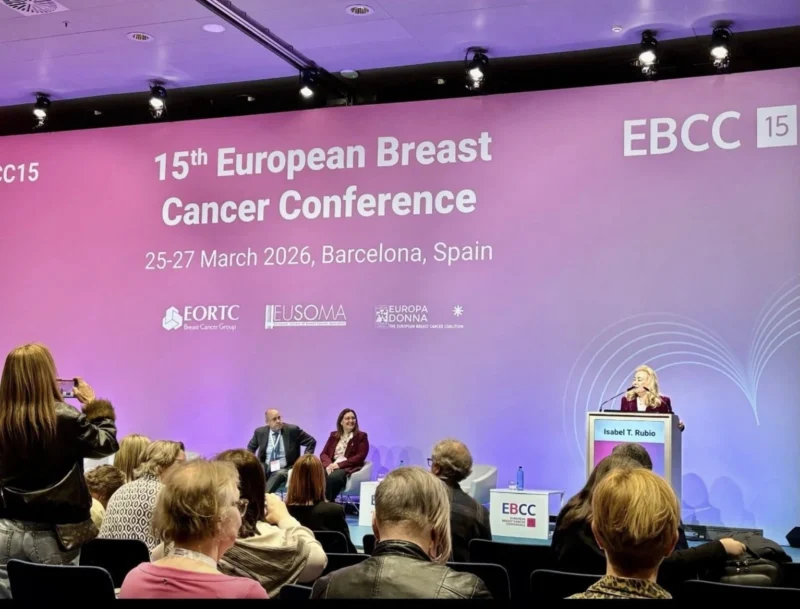
Isabel Rubio – Breast Surgical Oncgologist at Clinica de Navarre
#EBCC15 has started. The European multidisciplinary conference holding more than 1500 participants from 81 countries.. global and multidisciplinary to improve breast cancer care. Dr. Javier Cortés Castán Isabel T. Rubio @stellamastora join with an unique goal @EUSOMA EORTC – European Organisation for Research and Treatment of Cancer @EuropaDonna
Watch post here
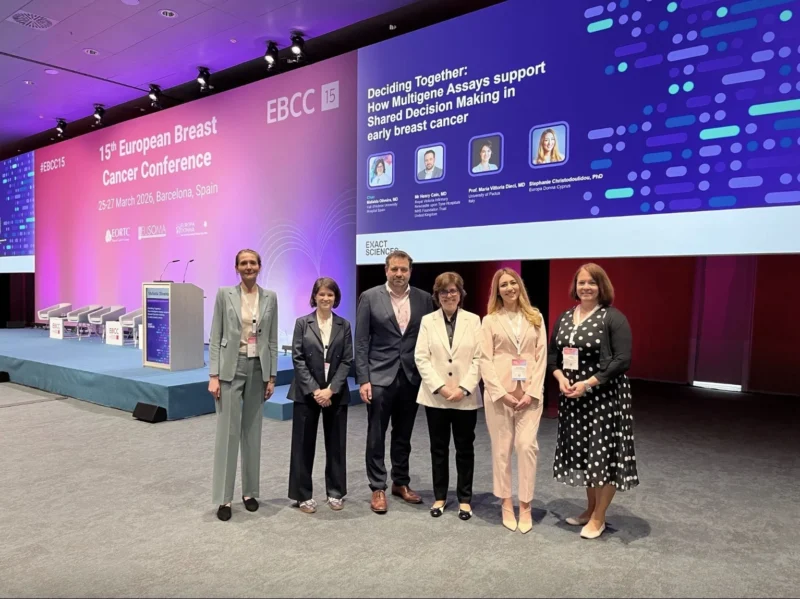
Rebea Foerster – International Medical Director at Abbot Cancer Diagnostics
Truly rewarding days at #EBCC15. One of the highlights for me was our symposium today on shared decision‑making in early breast cancer and the important role multigene assays can play in supporting clearer, more individualized treatment discussions.
Hearing different perspectives from a surgeon, oncologist, and patient advocate underscored how essential transparent communication and robust diagnostic insights are in guiding people through complex decisions.
I’m grateful for all the thoughtful conversations throughout the conference — they reaffirm how collaboration across disciplines continues to move our field forward.
Shouting out to my team, especially Eva and Magdalena, great job!
Watch post here
Cristina Chang MD – Chief Medical Officer at Harvest Integrated Research
“Risk-Adapted Radiotherapy for Breast Cancer: Long-Term Outcomes
“The results of our study show that tailoring the extent of #radiotherapy according to how well the chemotherapy has worked to treat cancer in the lymph nodes leads to very low and reassuring recurrence rates in the breast and surrounding area. In a selected group of patients, we see very low recurrence rates even when we leave radiotherapy out completely.”
Advanced Head and Neck Cancer: #Pembrolizumab With or Without Lenvatinib
The phase III LEAP-010 trial showed an improved objective response rate and progression-free survival—but not overall survival—with the addition of first-line lenvatinib to pembrolizumab in patients with recurrent or metastatic head and neck squamous cell carcinoma and a PD-L1 combined positive score of ≥ 1.
Coated #Implant May Benefit Outcomes in #Breast Reconstruction Following #Mastectomy for Breast Cancer
In women receiving breast reconstructive surgery after mastectomy for breast cancer, the risk of scarring and the need for further corrective surgery may be reduced with use of a polyurethane-coated breast implant, according to findings from the #OPBC-09 PRExRT study, presented at the 15th European Breast Cancer Conference (#EBCC15) in #Barcelona.
AI Model for Predicting Oncotype #DX 21-Gene Recurrence Score
Researchers have developed an AI model based on digital histopathology slide images and clinical features to predict the Oncotype DX 21-gene recurrence score in patients with hormone receptor–positive, #HER2-negative invasive breast cancer.
Dynamic, Accessible Risk #Stratification Tool Created for Smoldering Multiple Myeloma
A dynamic risk stratification tool for patients with smoldering multiple #myeloma may predict their chance of progression to active multiple myeloma more accurately than established models, study findings suggest.
Early Results Demonstrate Safety and Efficacy of Mutant #Calreticulin–Specific Monoclonal Antibody in Myelofibrosis
In patients with CALR exon 9–mutated #myelofibrosis who were resistant or intolerant to prior #JAK inhibitor therapy, or ineligible for such treatment, the first-in-class mutant calreticulin–specific #monoclonal antibody #INCA033989, given as monotherapy or in combination with #ruxolitinib, appeared to be well tolerated and resulted in spleen and #anemia responses and symptom improvements, based on preliminary dose escalation data from two global #phase I studies.”
Watch post here
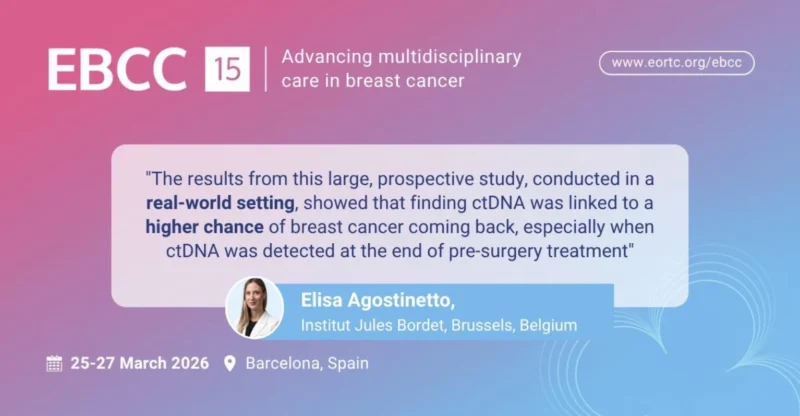
Elisa Agostinetto – Clinical Research Fellow at Institute Jules Bordet
“Glad to see our work highlighted at the European Breast Cancer Conference #EBCC15
Our findings come from the collaboration between Institut Jules Bordet and Fondazione IRCCS Istituto Nazionale dei Tumori di Milano and support the role of circulating tumor DNA for risk stratification of patients with early #breastcancer treated with neoadjuvant treatment
A special thanks to Gabe Sonke for the insightful discussion!”
Watch post here
Sucharu Prakash, MD – Director of Quality, Texas Oncology
#MRD IMPRESSIVE! Replace pCR in #breast cancer- Who would have thought?
Ultrasensitive #ctDNA detection BETTER predictor of disease recurrence in patients receiving #neoadjuvant therapy than pathologic complete response.
This on the heels of other trials proving MRD based approach allows #escalation/deescalation and shows #SURVIVAL benefit!MRD continues to evolve and we are in the midst of a genomic #revolution and huge global growth in the #MRD space!
I get questions daily about minimal residual disease/ cDNA testing in solid tumors. Confusing arena- numerous labs offering the test, varying sensitivity, data not mature, tumor informed vs not…but data helps.
On average, MRD positivity predicts relapse 6 to 12 months before imaging. Exciting numerous #trials in non small cell lung, breast, bladder, ovarian. Is one lab better than the other…not sure!
Coverage by payors much improved thanks to #biomarker bill #SB989.
#NCCN guidelines lagging behind. Look forward to more data and inclusion on pathways”
Watch post here