More predictable regulatory review and a single ethical assessment for multicenter studies are changing how sponsors plan clinical trials in Brazil. At Clinical Development in LATAM: Brazil Unlocked, speakers examined the reforms behind that shift and the work still needed to implement them consistently.
Organized by ODC Life Sciences with MassBio on September 24, 2026, at MassBio Hub in Cambridge, Massachusetts, and online, the event was covered by OncoDaily.
The regulatory block featured Tatiana Cacioli, Head of Operations and Regulatory Affairs at ODC Life Sciences; Maiko Tonini, representing the Brazilian Ministry of Health; and Renato Alencar Porto, PhD, President of Interfarma and former ANVISA Director.
Their presentations addressed regulatory timelines, ethics review, national oversight, and the infrastructure required to support an expanding research environment.
A More Predictable Regulatory Timeline
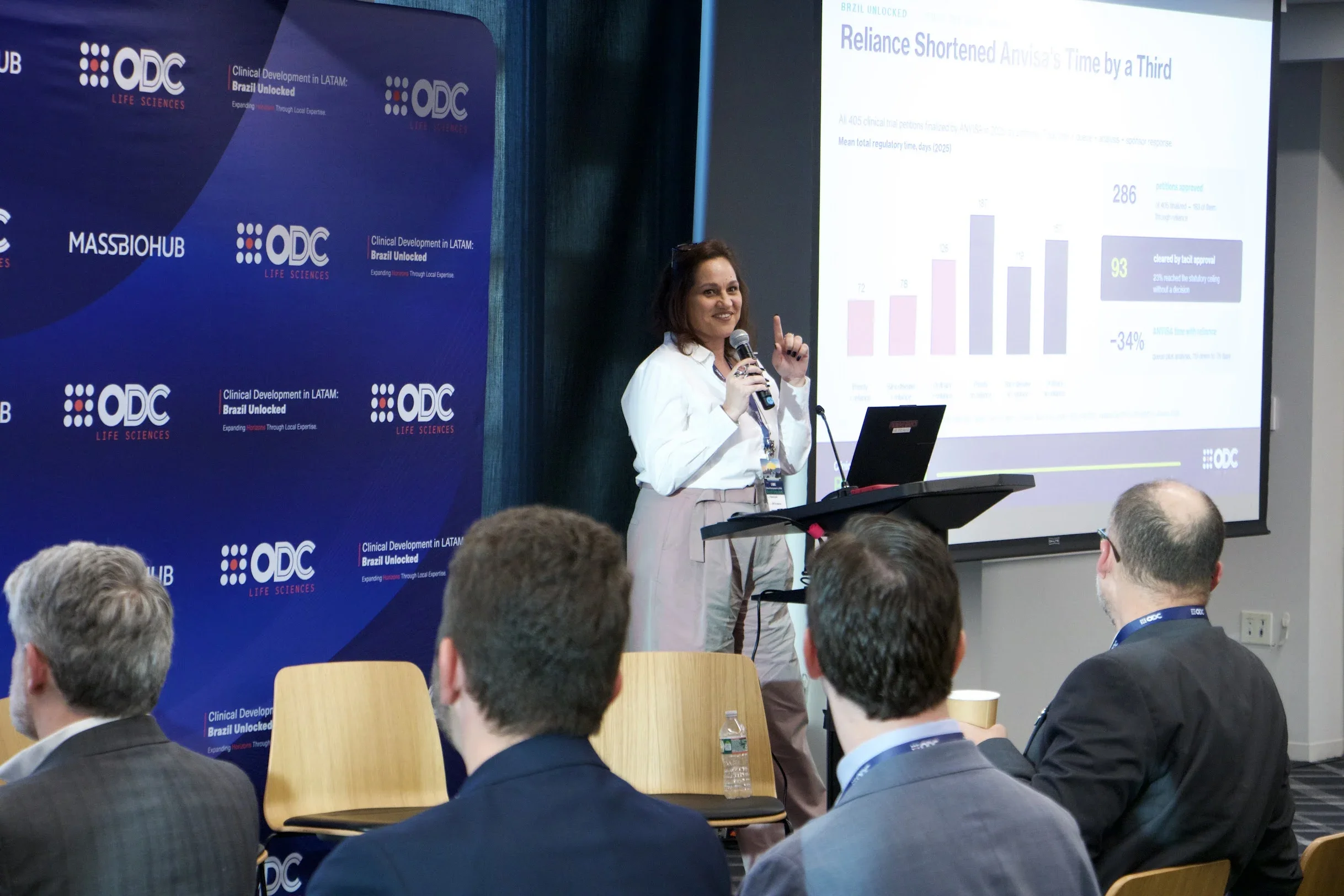
Cacioli opened with a figure that she described as an important achievement for clinical development in Brazil: 90 business days.
Under ANVISA’s RDC 945/2024, this is the maximum review period specified for the relevant clinical trial petitions. ANVISA’s guidance also explains that, if the agency does not respond within the applicable period, clinical development may proceed under the prescribed mechanism after the necessary ethical approvals. This concerns authorization to conduct research; it does not constitute marketing approval for the investigational medicine.
Cacioli outlined several routes that may improve the review process, depending on eligibility. These included reliance on assessments by recognized foreign regulatory authorities, prioritization for certain studies, and optimized assessment based on risk and complexity.
ANVISA’s framework provides for optimized analysis through both regulatory reliance and risk-and-complexity assessment.
For sponsors, Cacioli’s operational message was to assess these options early and prepare the appropriate documentation before submission.
One Ethical Review for a Multicenter Protocol
A second major focus was the move toward a single ethical review for multicenter research.
Previously, repeated assessments across participating institutions could create additional questions and delays. Brazil’s Law 14.874/2024 establishes review by one research ethics committee for a multicenter protocol, with notification of the other participating committees. Ministry of Health guidance acknowledges that operational implementation is progressive as workflows are standardized.
Tonini explained that the transition requires education, national coordination, and continuing oversight. A longstanding system cannot change uniformly through legislation alone.
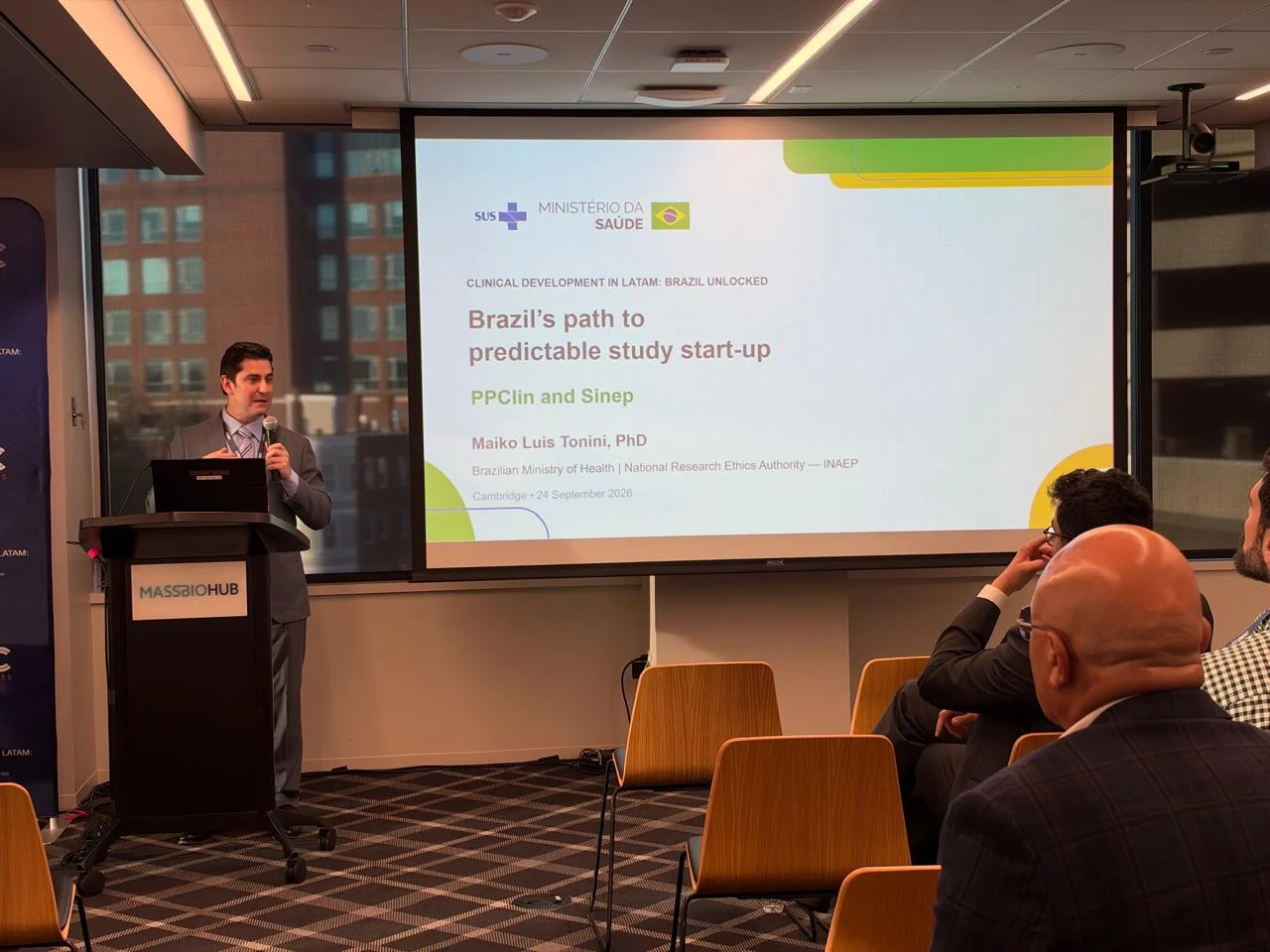
Maiko Tonini, representing the Brazilian Ministry of Health, said:
“Right now, you have a single ethical review.”
He described the role of the Instância Nacional de Ética em Pesquisa (INAEP) in providing guidance, clarifying how review timelines should be counted, and supporting consistent application of the new framework.
Data Presented on Ethics Review Performance
Tonini presented an analysis of 528 records of privately sponsored pharmaceutical clinical trials from the first halves of 2024, 2025, and 2026.
In that analysis, the median time from submission to the end of the ethics review process fell from 59 business days in 2024 to 52 in 2025 and 36 in 2026.
He emphasized that the 36-day figure included document assessment, committee review, and the time taken by applicants to respond to questions.
The proportion of studies approved after one or two review rounds also increased, from 38% in the first half of 2024 to 81% in the first half of 2026, according to the data he presented.
Tonini also acknowledged continuing implementation gaps, including instances in which participating committees reassessed protocols that had already received approval. Training and guidance were helping reduce those cases, but further work remained.
Site Readiness Must Keep Pace
Faster review changes what sponsors and sites need to prepare in advance.
Cacioli described how contracts, budgets, import planning, and logistics can progress alongside regulatory and ethical assessment. Tonini similarly emphasized the need for a clear submission package covering all participating sites.
Maiko Tonini said:
“Earlier approval, one ethical review, and sites that are prepared.”
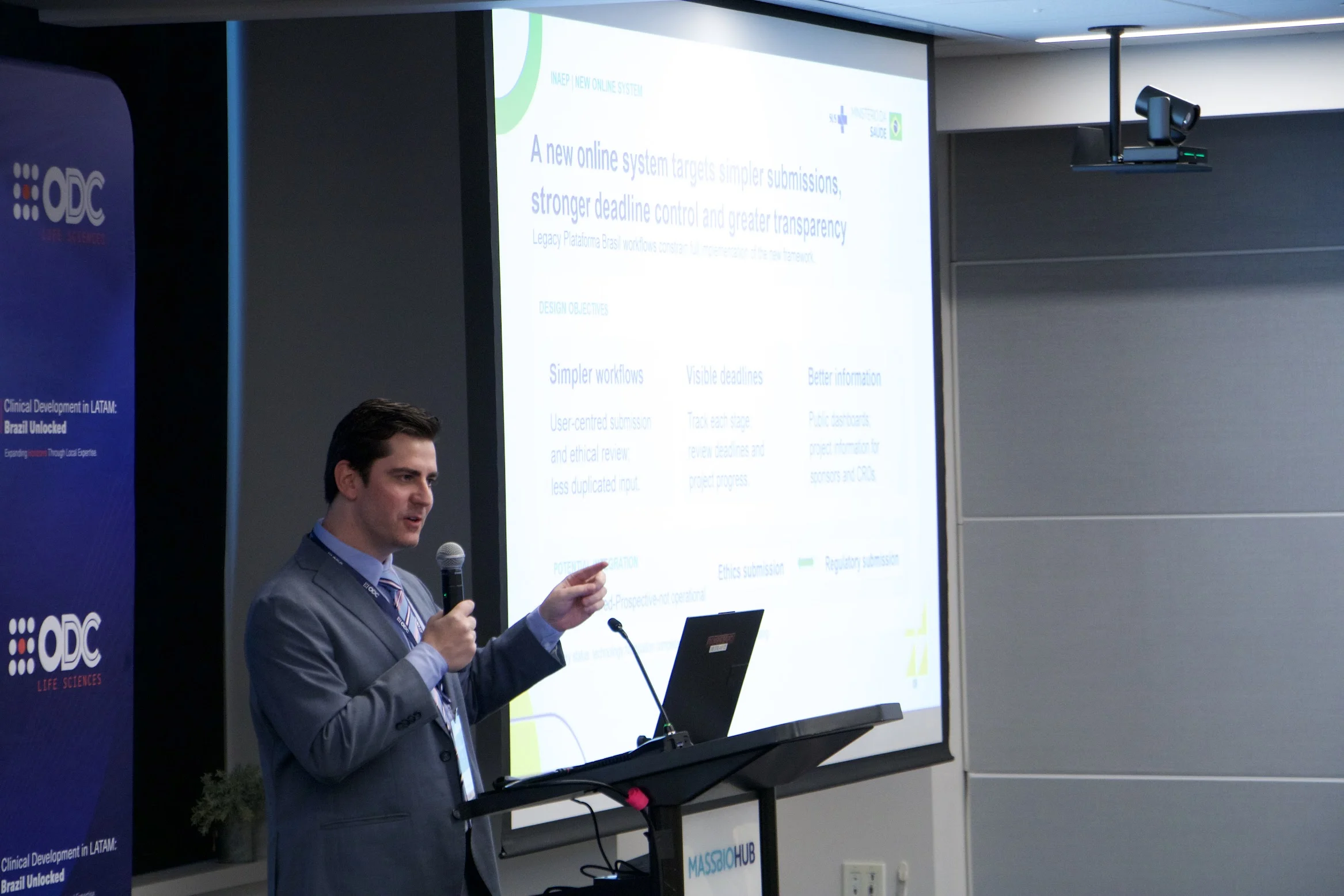
He also outlined Ministry of Health initiatives to map research capacity, strengthen site quality, and improve digital infrastructure. These included plans to replace the existing Plataforma Brasil system with workflows better aligned with the new legislation.
Interfarma’s Focus on Sustainable Growth
Porto placed the reforms within Brazil’s broader effort to attract research investment and strengthen its pharmaceutical innovation ecosystem.
He described Interfarma’s work with IQVIA to develop a database tracking clinical research activity, intended to support decisions with evidence about studies, investment, and operational performance.
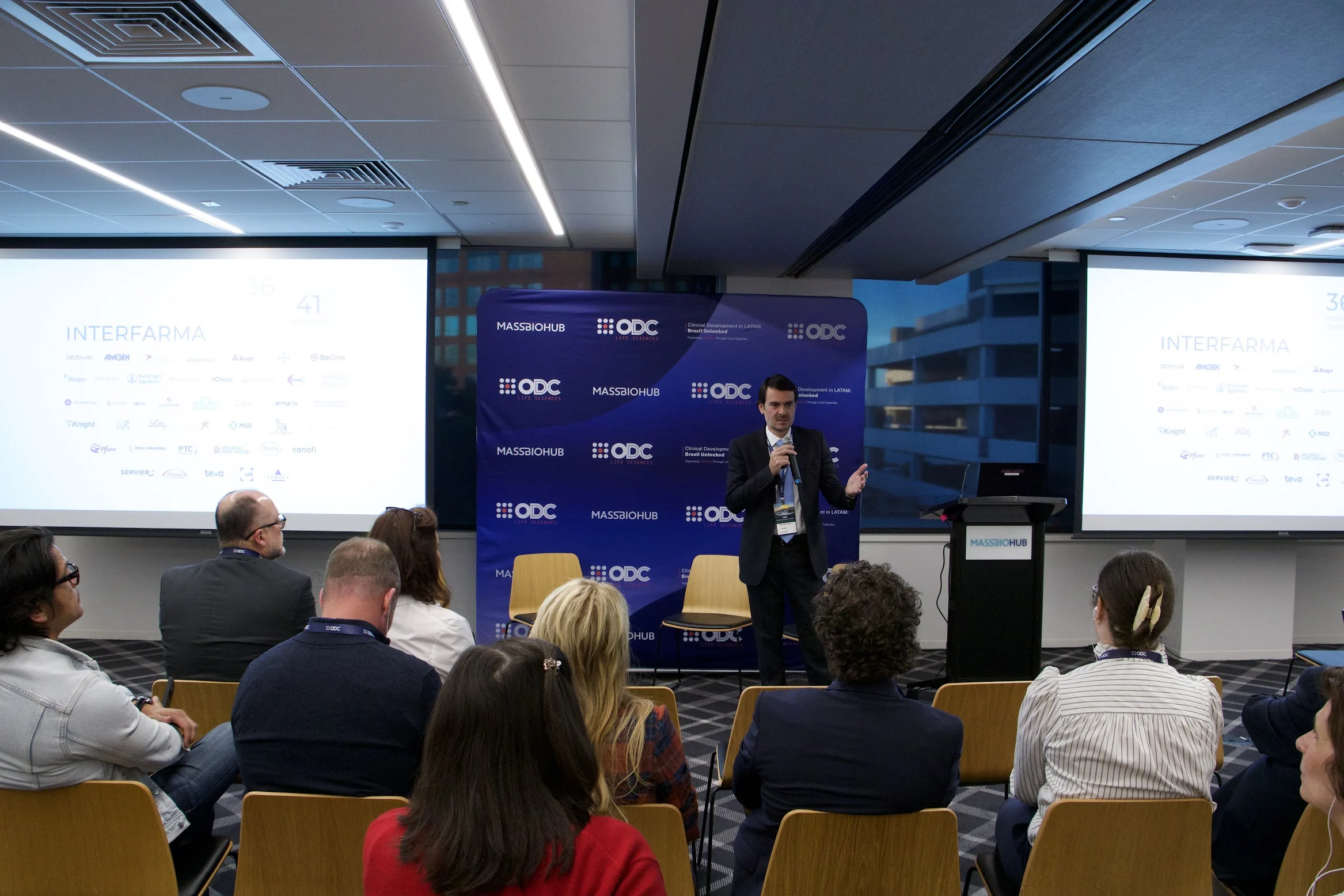
His presentation emphasized that shorter timelines must be accompanied by consistent execution. Attracting additional trials creates a responsibility to maintain quality as research volume grows.
The session showed how regulatory reform, ethical oversight, and site preparation are becoming more closely connected in Brazil. For sponsors, the practical task is to plan these elements together and assess each study against the applicable requirements.
Read further on OncoDaily: Brazil Unlocked: Biotech Leaders and Investors Make the Case for Earlier Clinical Trial Planning