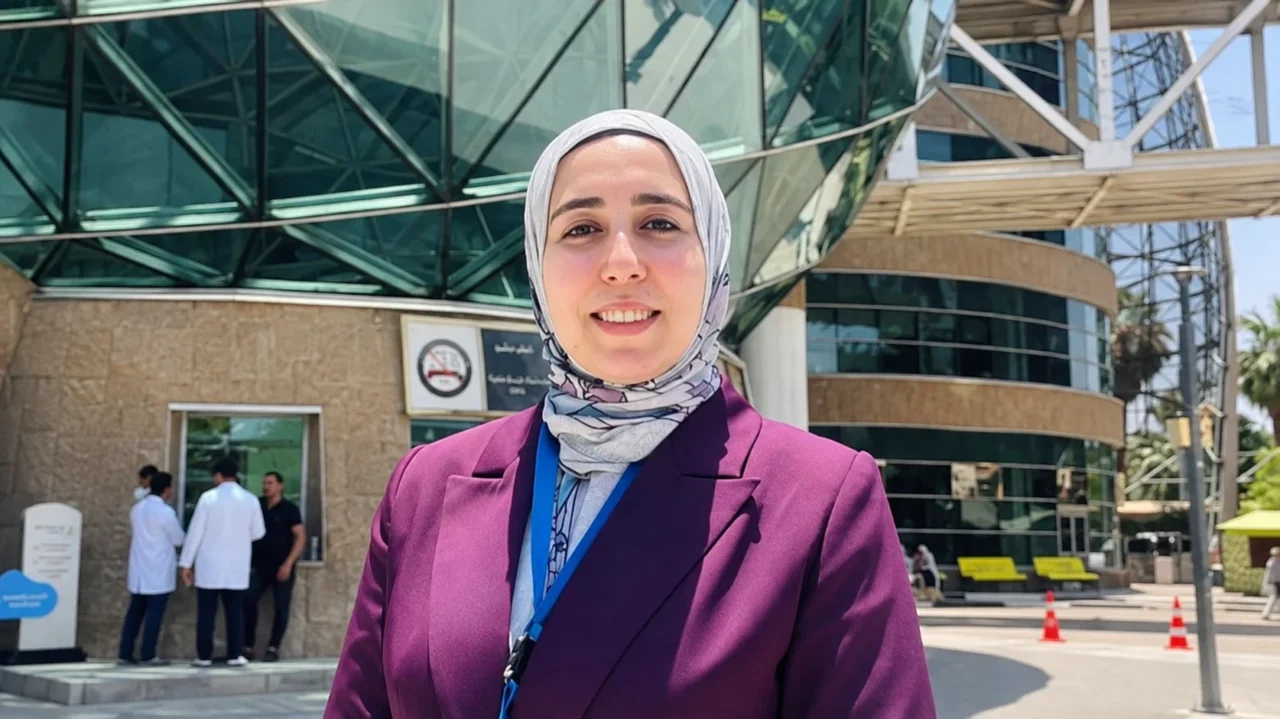
Omnia Ahmed Mabrouk, Oncology Clinical Coordinator and Oncology Registrar at Saudi German Hospital Egypt, shared on LinkedIn:
“It is truly a pleasure to see our abstract published in Annals of Oncology. A moment that feels both rewarding and heartwarming!
My deepest gratitude goes to my dear professor and mentor, Dr. Rasha Elsaka, for her thoughtful review, valuable guidance, and meticulous editing throughout this work. I am equally grateful to my supervisors for their continuous support and mentorship.
Grateful for this milestone, motivated for what lies ahead, and looking forward to many more, Inshallah!”
Title: Association of Clinicopathological Characteristics With Outcomes of CDK4/6 Inhibitor Therapy in Metastatic HR+/HER2− Breast Cancer: Real-World Experience From Alexandria
Authors: O.A. Abou Hussein, R.O.M. Elsaka, H.F. El Akkad, Y.A.M. Rostom.
Key Takeaways
- Meaningful treatment efficacy: Second-line CDK4/6 inhibitors showed encouraging outcomes in HR+/HER2− metastatic breast cancer, with 18-month PFS of 39.4% and OS of 71.6%.
- Metastatic disease burden matters: The location of metastases significantly influenced both PFS and OS. Patients with non-visceral disease had the best outcomes, while those with brain metastases had the worst.
- HER2 status and Ki-67 were not predictive: Neither HER2 status (including HER2-low) nor Ki-67 expression was significantly associated with 18-month PFS.
- Other clinical factors showed no significant impact: Endocrine resistance, prior chemotherapy and patient age were not significantly associated with PFS.
- Potential drug interaction identified: Concomitant proton pump inhibitor (PPI) use was associated with shorter PFS (P=0.036) among patients receiving palbociclib.
- Acceptable tolerability: CDK4/6 inhibitor treatment was generally well tolerated, with no significant association between age and toxicity or dose modifications.
Overall Conclusion
The study highlights the importance of metastatic disease burden and location in predicting outcomes with second-line CDK4/6 inhibitors. It also identifies a potential association between PPI use and shorter PFS during palbociclib treatment, suggesting that concomitant medications may deserve closer attention.
Read the full article.
You may also be interested in: ESMO 2026 Redefines Early Breast Cancer Care: New Standards for HER2-Positive, Triple-Negative and HR-Positive Disease