






Mustafa Raoof, Surgical Oncologist And Cancer Researcher at City of Hope National Medical Center, shared on X:
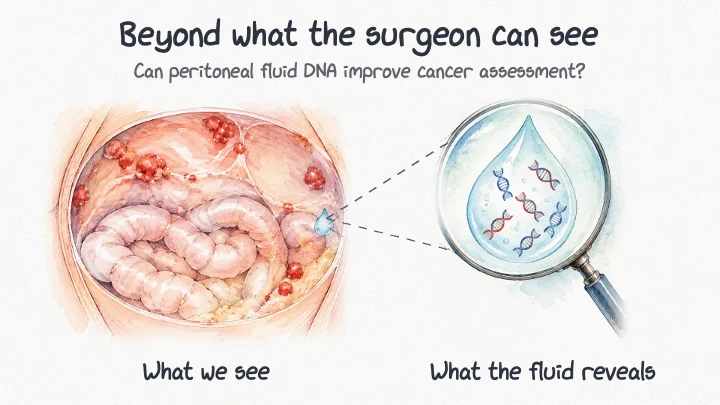
” Can a few milliliters of peritoneal fluid tell us more about cancer prognosis than what we see during surgery?
Our new study in JCO Precision Oncology suggests it might.
Title: Tumor-Agnostic Profiling of Peritoneal Fluid Tumor DNA as a Robust Prognostic Biomarker in Peritoneal Carcinomatosis
Authors: Muhammad Talha Nawaz, Muhammad Talha Waheed, Tiane Li, M. Daniyal Tanweer, Kirsten Dennison, Stephanie M. McGregor, Syed Nabeel Zafar, Marwan Fakih, Yanghee Woo, Daneng Li, Bradon R. McDonald, Mustafa Raoof, Muhammed Murtaza
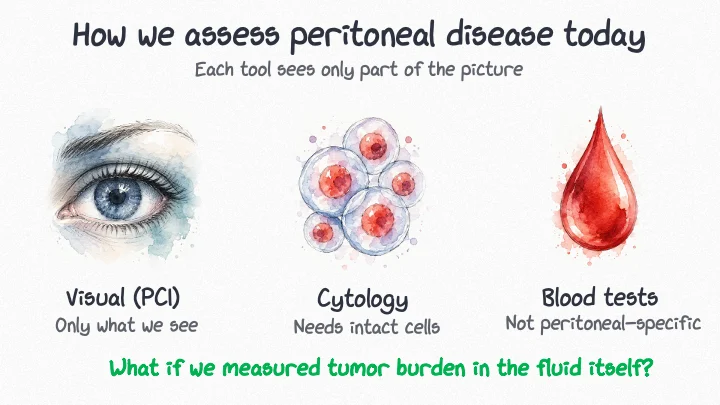
The clinical problem.
For patients with peritoneal metastases, we largely rely on:
- Visual assessment (PCI)
- Cytology
- Blood-based biomarkers
But these tools have limitations. What if we could quantify tumor burden directly from peritoneal fluid?
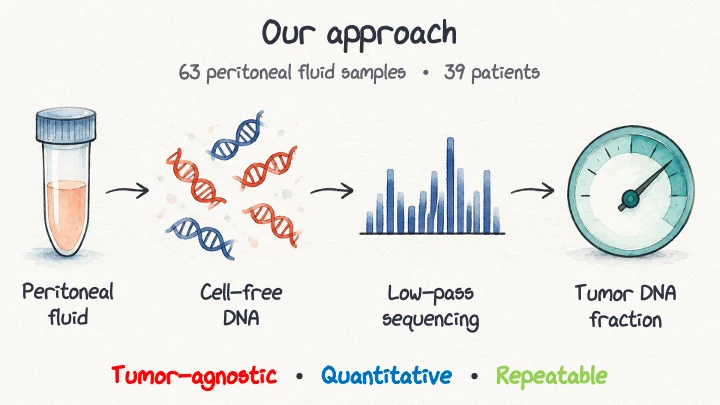
Our approach.
We measured tumor-derived DNA from 63 peritoneal fluid samples from 39 patients with gastrointestinal cancer and peritoneal carcinomatosis.
- Tumor-agnostic
- Quantitative
- Potentially useful for longitudinal monitoring.
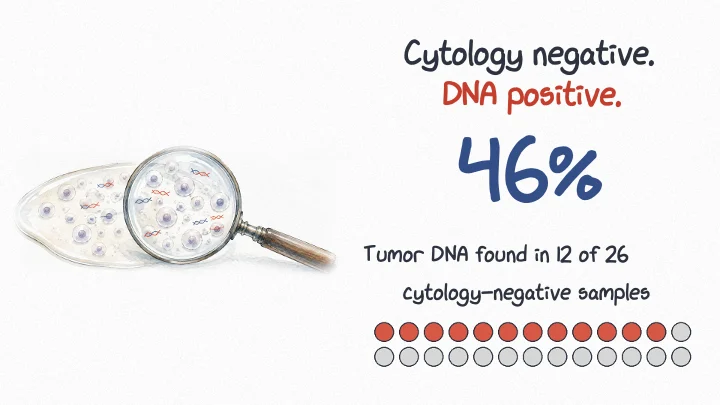
Finding 1: Detection.
We detected peritoneal tumor DNA (ptDNA) in:
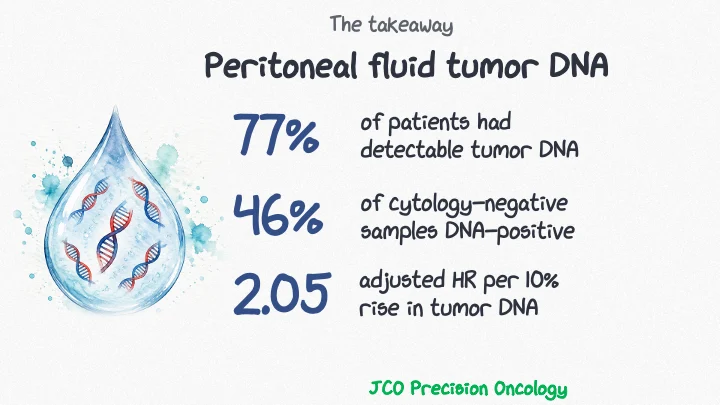
- 77% of patients
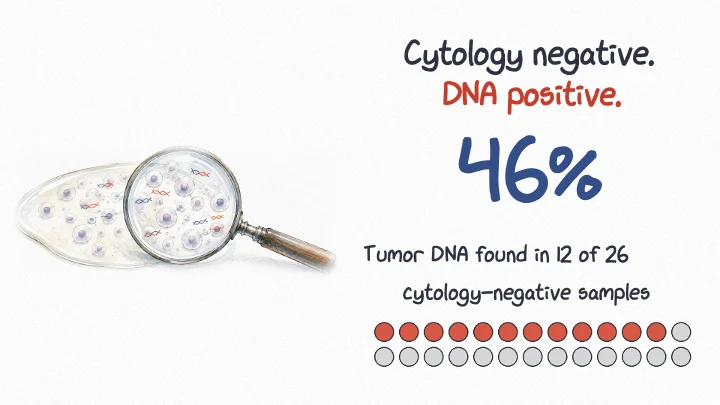
- 46% of cytology-negative samples
Think about that. Nearly half of cytology-negative samples still contained detectable tumor DNA.
Finding 2: Prognosis.
Here’s where things get interesting. Higher ptDNA tumor fraction was strongly associated with worse overall survival.
- HR 2.05 for every 10% increase in tumor fraction P < .001
And the association remained significant after adjusting for PCI.
Finding 3: Tracking Disease.
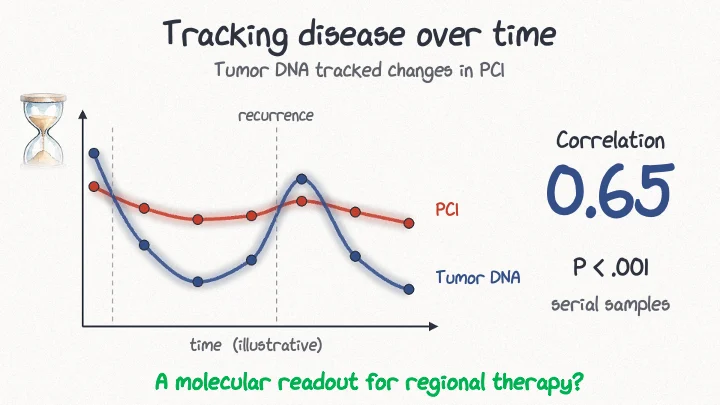
In patients with serial samples, changes in ptDNA tumor fraction correlated with changes in PCI.
- Spearman ρ = 0.65, P < .001
Exciting possibility: Peritoneal fluid could be a molecular tool for monitoring response to regional therapy?
Why this matters?
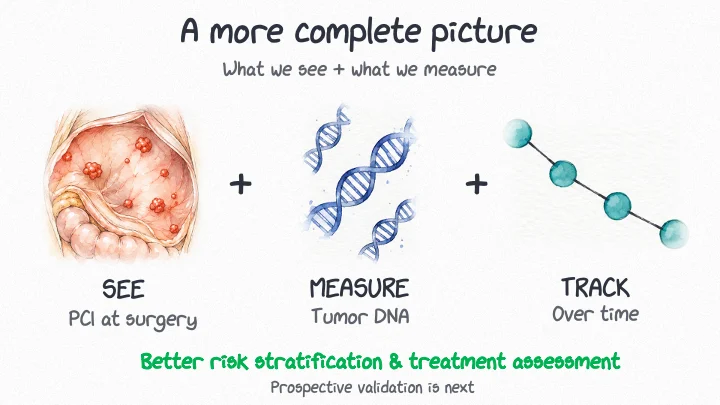
Imagine a future where peritoneal metastases are assessed using:
- What we see: PCI
- What we measure: ptDNA
- How disease changes: Serial monitoring
Pending prospective validation, this could improve risk stratification and treatment assessment
The takeaway.
Peritoneal metastases need better biomarkers.
Tumor-agnostic peritoneal fluid DNA profiling is:
- Feasible
- Frequently detects tumor DNA
- Provides prognostic information independent of PCI.”
You can also read: