By Carmen Monge – Lived Experience Advocacy Hub, OncoDaily
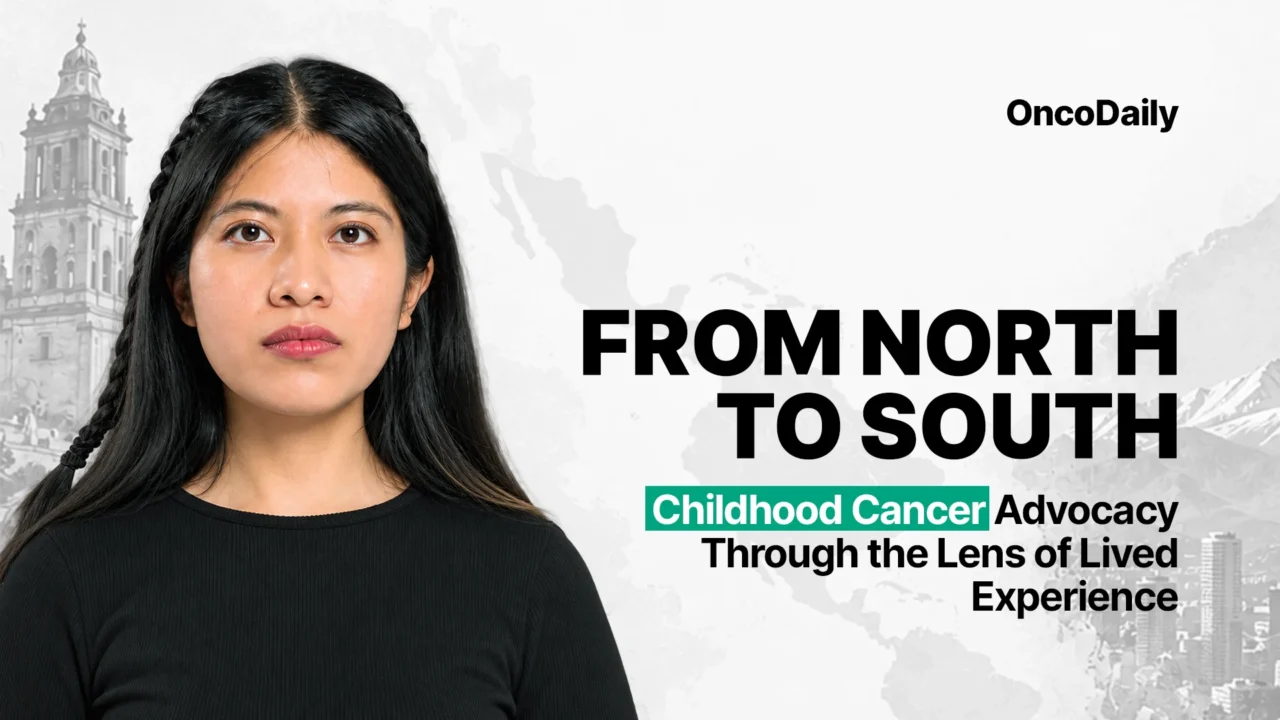
From Mexico to Chile, two childhood cancer survivors are turning their lived experience into advocacy and calling for a future where survivors should be on the table.
Every September, Childhood Cancer Awareness Month brings attention to children diagnosed with cancer around the world. We speak about diagnosis, access to treatment and survival. We celebrate survival and it is also a reminder on how many patients do not survive.
But what happens with everything else in the life of a childhood cancer survivor? and the system alone is taking care of it? or we need new people to work on what also matters for people with lived cancer experience?
In Latin America, childhood cancer survival rates vary greatly between countries, the number of survivors are increasing and their needs are changing. The childhood cancer survivors are asking the cancer community to look beyond survival, towards the physical, psychological and social consequences that can remain long after treatment ends.
From Mexico in the north to Chile in the south, Liz Rivero and Rodrigo Villegas grew up with childhood cancer in two very different circumstances. Today, both are using their lived experience to advocate for those who will come after them.
Their journeys are different. Their message is remarkably similar: finishing treatment does not mean the childhood cancer journey is over.
Mexico: “What hurt me most was her (her mother) pain.”
For Liz, experiencing childhood cancer in Mexico meant confronting not only the disease, but everything surrounding it.
She and her mother did not have social security coverage. Cancer quickly became more than a medical diagnosis.
“I understood that having cancer is not only about medical care. It involves many other things that are not seen, that are not always taken into account, but that weigh heavily.”
When Liz thinks about the most difficult part of her experience, she does not immediately remember chemotherapy or being in hospital.
She remembers her mother.
She remembers watching her trying to remain strong while simultaneously caring for her daughter, working, completing paperwork and finding whatever they needed to continue.
“What hurt me most was her pain. I was a child and I couldn’t help her. I could only watch her carry everything.”
For Liz, faith became an important source of strength during some of their darkest moments. But her experience also exposed her, from a very young age, to the structural realities surrounding illness.
She began to understand that what governments prioritise – or fail to prioritise – has consequences for real families.
That experience ultimately influenced her decision to study Law.
“Since I was a child, I saw injustices,” she explains. “I understood that advocating means demanding that rights are fulfilled.”
Chile: Returning to the hospital from the other side
Thousands of kilometres south, Rodrigo Villegas experienced childhood cancer in Chile at the age of 11.
Diagnosed with a right mandibular rhabdomyosarcoma, he underwent surgery, chemotherapy and radiotherapy at Hospital Roberto del Río.
At that age, he says, a child does not necessarily understand the full meaning of having cancer. What remains are memories of hospitals and treatment, hair loss, changes to the body and the interruption of an ordinary childhood.
Some changes remain visible long after treatment ends.
Rodrigo has a facial scar that became part of his story. Growing up also meant learning to navigate other people’s looks and questions and deciding when, and whether, he wanted to tell someone that he had experienced cancer.
Years later, his relationship with the hospital took an extraordinary turn.
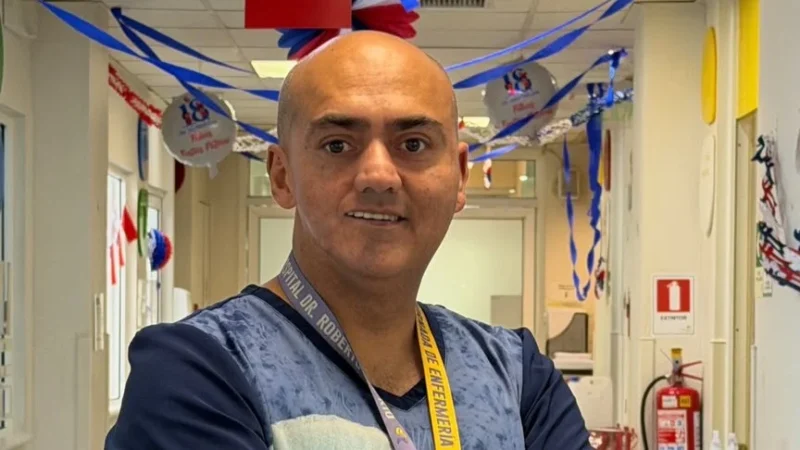
Rodrigo studied nursing and eventually returned to Hospital Roberto del Río — this time not as the child waiting for treatment, but as a paediatric oncology nurse caring for children and families experiencing cancer themselves.
“Sometimes I think that I work in the same places where I was once that child sitting and waiting for chemotherapy. Today I enter those rooms as a nurse.”
Knowing cancer from both sides has changed the way he practises nursing.
It has also shaped his advocacy.
When treatment ends, another journey begins
Despite growing up with cancer in different countries and healthcare contexts, Liz and Rodrigo converge on one issue: survivorship needs far greater attention.
For Rodrigo, completing chemotherapy does not necessarily mean everything is finished.
After treatment comes another stage – returning to school, meeting peers again, adapting to changes in the body and beginning to rebuild a life.
Liz describes a similar gap.
“Many times, when treatment ends, we are left alone, as if everything ended there and we had to figure things out on our own.”
Both call for a broader understanding of what successful childhood cancer care should mean.
Survivors may experience physical late effects, but the consequences can also be psychological, educational and social. Mental health, returning to school, social reintegration, quality of life and the transition into adulthood can all become part of survivorship.
And families need support too.
For Liz, improving childhood cancer care in Mexico requires greater awareness, stronger public policies and adequate resources – not only for medicines, but also for the mental health of children and their families.
For Rodrigo, Chile has made significant progress in paediatric oncology, but greater attention is still needed to what happens during and especially after treatment.
“Curing the disease is not enough,” he says.
From lived experience to action
Neither Liz nor Rodrigo wants survivorship to be reduced to an inspirational story.
They want lived experience to become action.
Liz is a co-founder of Faros de Vida, a Latin American network of childhood cancer survivors that is part of Childhood Cancer International. The network grew from a reality familiar to many survivors: after treatment, they often no longer feel included in the cancer conversation, despite continuing to have questions, late effects and psychological needs.
By connecting survivors across the region, Faros de Vida aims to create community, mutual support and a collective voice.
In Chile, Rodrigo created Huellas de Vida, an initiative designed to inform, accompany and give voice to childhood cancer patients, families and survivors.
He deliberately wants the conversation to go beyond stories of overcoming cancer.
He wants to talk about scars. Fear. Mental health. Returning to school. Late effects. Families. And the experiences that can disappear from view once active treatment has ended.
Both are also looking beyond their national borders and towards a growing Latin American community of survivors.
More than survivors
Perhaps one of the most important messages emerging from their stories is that people who experienced cancer as children should not only be invited into cancer spaces to recount what happened to them.
Their knowledge can contribute to what happens next.
Survivors can help researchers understand questions that matter beyond clinical outcomes. They can show healthcare professionals where support disappears after treatment. They can help organisations identify needs that may otherwise remain invisible. And they can bring lived realities into conversations about public policy.
As Rodrigo puts it, survivors should not be seen only as patients or statistics, but as people whose experience can contribute to research and improve care for future generations.
Liz echoes that call from Mexico: survivors need to be heard and included in the decisions being made in their countries.
From Mexico to Chile, their journeys show two different ways lived experience can become expertise.
One survivor is studying Law after childhood cancer showed her why rights and public policy matter. Another returned to the very hospital where he received chemotherapy and now walks into its rooms as a paediatric oncology nurse.
Their stories remind us that childhood cancer survivorship is not simply an endpoint to celebrate.
It is a life stage that deserves care, research, policy and representation of its own.
And perhaps, during Childhood Cancer Awareness Month, one of the most important things the cancer community can do is not only speak about survivors – but make space to listen to them.
You can also read:
Stephanie Kauffman: “How Can I Help?”