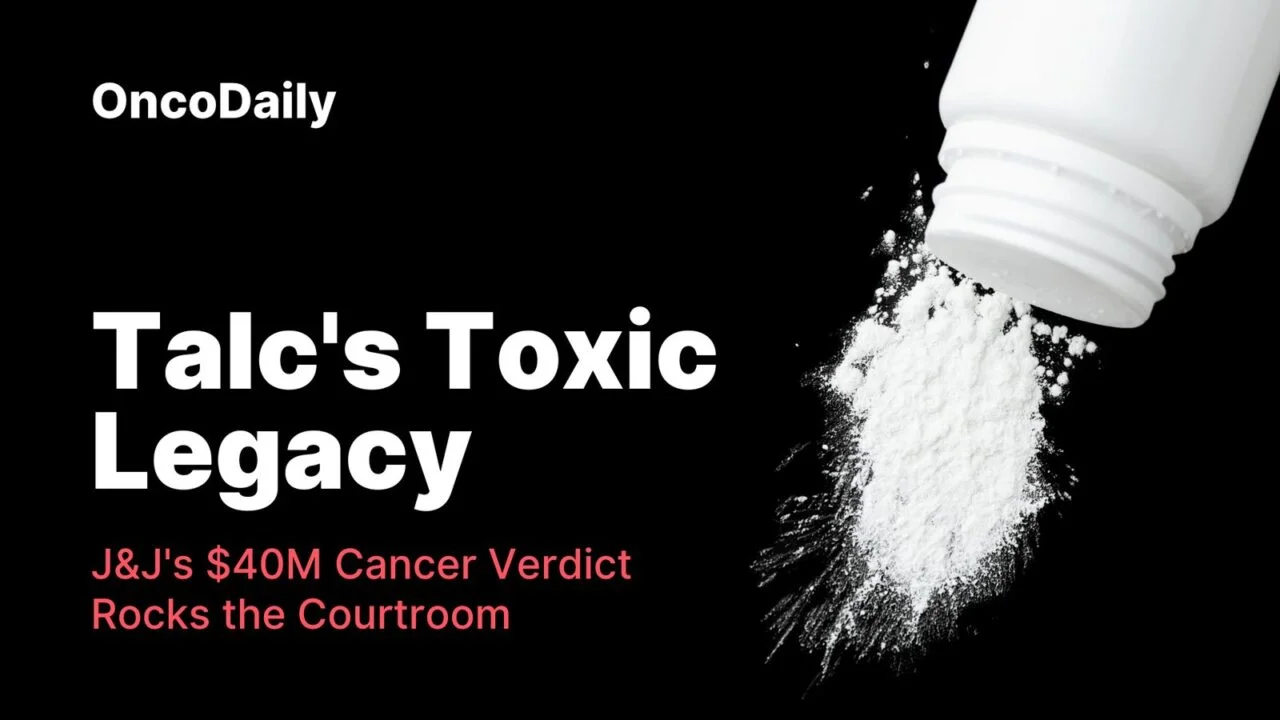
On December 12, 2025, a Los Angeles jury ordered Johnson & Johnson (J&J) to pay $40 million in compensatory damages to two women who developed ovarian cancer after decades of using the company’s talc-based baby powder. The verdict marks another significant legal setback for the healthcare giant, which continues to appeal adverse rulings while maintaining that its products are safe.
Photo: Depositphotos
The case adds to a long line of talc-related lawsuits that have kept Johnson & Johnson at the center of a global scientific, legal, and public health controversy.
What Is Talc and Why Has It Been Controversial for Decades?
Talc is a naturally occurring mineral widely used in cosmetics and personal care products for its moisture-absorbing properties. The controversy surrounding talc arises from two main issues: its geological proximity to asbestos and epidemiologic evidence linking genital talc use to ovarian cancer risk.
In nature, talc and asbestos can form close together. If talc is not carefully mined and purified, it can be contaminated with asbestos fibers—known carcinogens. While Johnson & Johnson has long stated that its talc products were asbestos-free, independent analyses and historical documents have fueled ongoing scrutiny.
Beyond contamination concerns, multiple observational studies over the past several decades have examined whether genital application of talc powder may increase ovarian cancer risk. Proposed biological mechanisms include particle migration through the reproductive tract and chronic inflammation of ovarian tissue. While study results have not been entirely consistent, several large meta-analyses have reported a small but statistically significant association, particularly for serous ovarian cancer subtypes. Daniel W Cramer, Epidemiology. 2016 Apr
Amid mounting litigation, Johnson & Johnson stopped selling talc-based baby powder in the U.S. and Canada in 2020, followed by a global discontinuation in 2023, citing commercial reasons.
Inside the Los Angeles Case: Evidence, Findings, and Damages
The plaintiffs, Monica Kent and Deborah Schultz, argued that long-term genital use of Johnson & Johnson’s baby powder contributed to the development of their ovarian cancers. During the trial, expert witnesses testified about talc particle migration, inflammatory pathways, and epidemiologic evidence suggesting dose-response relationships.
Jurors also reviewed internal company documents and scientific literature presented by both sides. Ultimately, the jury concluded that Johnson & Johnson failed to adequately warn consumers about potential risks.

Photo: Depositphoto
The verdict awarded $40 million in compensatory damages. Notably, no punitive damages were issued. Johnson & Johnson has stated it plans to appeal the decision.
Johnson & Johnson’s Defense: Science, Regulation, and Legal Strategy
Johnson & Johnson continues to maintain that its talc products do not cause cancer and that decades of use by millions of consumers support their safety. The company emphasizes that talc is not classified as a carcinogen by major regulatory bodies, including the U.S. Food and Drug Administration.
The company also highlights that it has won the majority of recent ovarian cancer talc trials, arguing that adverse verdicts reflect emotional jury responses rather than scientific consensus. J&J cites studies showing inconsistent associations and stresses that correlation does not prove causation.
A Broader Legal Landscape: Thousands of Lawsuits and Global Impact
The Los Angeles verdict comes amid a massive legal landscape. Johnson & Johnson faces more than 67,000 talc-related lawsuits in the United States, spanning ovarian cancer and mesothelioma claims.
In October 2025, a California jury awarded $966 million in a mesothelioma case linked to talc exposure one of the largest verdicts to date in this litigation.
Earlier cases across multiple U.S. jurisdictions have produced mixed outcomes, with some juries ruling in favor of plaintiffs and others siding with Johnson & Johnson.
Internationally, the issue continues to expand. In the United Kingdom, approximately 3,000 claimants are pursuing legal action. Meanwhile, Johnson & Johnson’s efforts to resolve claims through a $9 billion bankruptcy settlement strategy have repeatedly failed in U.S. courts.
Consumer behavior has also shifted. Talc-free powders now dominate store shelves, reflecting both legal pressure and changing public perception.
You Can Also Read Does Plastic Cause Cancer? Myths and Facts by OncoDaily
Public Health Lessons From a Prolonged Legal Reckoning
While the scientific debate continues, systematic reviews and expert panels increasingly acknowledge that a persistent association between genital talc use and ovarian cancer risk cannot be fully dismissed, even if causality remains contested.
The December 2025 verdict does not resolve the controversy but it reinforces key public health lessons: the importance of transparent risk communication, precautionary product design, and independent oversight when long-term exposure is involved.
As appeals move forward and global litigatio 20:25:24n continues, the talc controversy remains a powerful example of how science, law, and consumer trust intersect—and sometimes collide over decades.
Written by Aharon Tsaturyan, MD, Editor at OncoDaily Intelligence Unit
FAQ
Does talc cause ovarian cancer?
There is no definitive proof of causation, but multiple observational studies have found a small association between long-term genital talc use and ovarian cancer. Some large cohort studies report no increased risk, while meta-analyses of case-control studies suggest a modest association, especially for serous ovarian cancer. The scientific debate remains ongoing.
Why was Johnson & Johnson ordered to pay $40 million?
In December 2025, a Los Angeles jury found that Johnson & Johnson failed to adequately warn consumers about potential risks associated with long-term genital talc use. The verdict awarded compensatory damages only and did not conclude that talc definitively causes ovarian cancer.
Is Johnson & Johnson baby powder still sold with talc?
No. Johnson & Johnson stopped selling talc-based baby powder in the U.S. and Canada in 2020 and globally discontinued talc products in 2023, replacing them with cornstarch-based alternatives. The company stated the decision was commercial, not safety-related.
How could talc reach the ovaries?
Research suggests that microscopic talc particles applied to the genital area may migrate through the vagina, uterus, and fallopian tubes to the ovaries. This migration could potentially trigger chronic inflammation, a proposed mechanism for cancer development.
What do major health authorities say about talc and cancer?
Major regulatory bodies, including the U.S. FDA, have not classified cosmetic talc as a proven carcinogen. The International Agency for Research on Cancer (IARC) has previously classified perineal use of talc-based body powder as “possibly carcinogenic” (Group 2B), reflecting limited but suggestive evidence.
How many talc lawsuits does Johnson & Johnson face?
As of late 2025, Johnson & Johnson faces more than 67,000 talc-related lawsuits in the United States, involving ovarian cancer and mesothelioma claims. Thousands of additional cases are pending internationally, including in the United Kingdom.
Why are court verdicts on talc cases so different?
Verdicts vary because juries weigh scientific evidence, expert testimony, and legal standards differently. Some juries focus on failure-to-warn arguments, while others prioritize the lack of definitive causal proof. This leads to mixed outcomes across jurisdictions.
Are talc-free powders safer?
Cornstarch-based powders do not carry the same asbestos or particle-migration concerns as talc and are widely considered a safer alternative. This has driven a major shift in consumer products toward talc-free formulations.
What are the public health lessons from the talc controversy?
The talc litigation highlights the importance of transparent risk communication, precautionary product design, and independent oversight when products are used long-term by millions of people. Even small potential risks can become significant public health issues at population scale.