November is Lung Cancer Awareness Month, a period that compels global attention toward a disease that remains the most lethal cancer worldwide. The challenges that persist, and the developing science that’s reshaping how we catch, treat, and ultimately prevent lung cancer.
Why Lung Cancer Awareness Is Crucial
Lung cancer persists to be the leading cause of cancer death globally and in the United States. In the U.S. alone, it is estimated that about 226,650 people will be diagnosed with lung cancer in 2025, approximately 124,730 people will die from it this year, and every two minutes an individual in the U.S. is diagnosed with lung cancer. Lung cancer accounts for more deaths than breast, prostate, and colorectal cancers combined (American Cancer Society Lung Cancer statistics).
It is considered the most lethal because statistics show that globally, nearly 2.5 million people get diagnosed with lung cancer every year, and more than 1.8 million die from the disease (IARC).
Lung cancer’s impact is profound because early symptoms are often absent or nonspecific, leading to delayed diagnosis; smoking remains the primary risk factor, causing 80–90% of cases, Tatevik Margaryan, Ambassador at The Max Foundation and Head of Department of Non-Communicable Disease Prevention and Health Promotion at the National Center for Disease Control and Prevention (NCDC), wrote a post on LinkedIn on the hidden risks of smoking, which you can read about here; and other factors, radon, air pollution, occupational exposures, secondhand smoke,also contribute (American Cancer Society).
Screening remains underused, even though low-dose CT (LDCT) reduces mortality in eligible individuals (American Cancer Society MediaRoom). Despite these challenges, increased awareness, early detection, and treatment advances are real and they matter.
Lung Cancer Risk Factors:Understanding What Increases Risk
The first and most well-known risk factor for lung cancer is Tobacco Smoke (both Primary and Secondary) Smoking cigarettes is the single most significant risk factor, linked to 80–90% of lung cancer deaths in the United States.
People who smoke are 15 to 30 times more likely to develop lung cancer than non-smokers, with risk increasing the more and longer a person smokes. (CDC) Secondhand smoke also significantly increases risk; inhaling smoke from others’ cigarettes exposes lungs to carcinogens even in never-smokers. It’s important to note that up to 10–20% of lung cancer cases occur in people who have smoked fewer than 100 cigarettes in their lifetime or never smoked at all. In these cases, the other risk factors are implicated.
Radon Gas Exposure- Radon is a naturally occurring, odorless, invisible radioactive gas that can accumulate indoors from soil and rock. It is the second leading cause of lung cancer in the U.S. and the leading cause among never-smokers. Even low levels over the years increase cancer risk, particularly when combined with smoking. Occupational Carcinogens- also raise lung cancer risk, especially among smokers: asbestos, arsenic, chromium, nickel, beryllium, diesel exhaust, silica, and other industrial chemicals.
These agents can damage lung tissue and, in many cases, interact synergistically with tobacco smoke to further elevate risk( American Cancer Society) Air Pollution- Outdoor air pollution, especially fine particulate matter from vehicle exhaust and industrial emissions, has been linked to a modest but measurable increase in lung cancer risk.
Long-term exposure contributes to DNA damage in lung cells and increases the likelihood of malignant transformation, a pattern seen even in never-smokers.( CDC). Family history and genetic factors also play a role; having a first-degree relative with lung cancer modestly increases risk, suggesting shared genetics and environmental exposures (American Cancer Society – Lung Cancer Risk Factors). Prior Chest radiation, such as radiation therapy to the chest for other cancers, increases the likelihood of developing lung cancer later, especially in individuals who smoke. (CDC)
Lung Cancer by the Numbers: Covered in Facts
Here’s a snapshot of the latest verified statistics: In the United States (2025 estimates), there are approximately 226,650 new cases of lung cancer and about 124,730 deaths each year, with a lifetime risk of roughly 1 in 16 people developing the disease. About 87% of cases are non–small cell lung cancer (NSCLC) and around 13% are small-cell lung cancer (SCLC) (American Cancer Society. Globally, lung cancer accounts for about 2.5 million new diagnoses and roughly 1.8 million deaths annually, with tobacco smoking responsible for approximately 85% of cases worldwide(IARC)
Survival, Across all stages, the 5-year relative survival rate for lung cancer remains approximately 27–28% in the United States (American Cancer Society, SEER). When lung cancer is detected at a localized stage, outcomes improve substantially, with 5-year survival rising to ~64% (Lung Cancer Foundation of America; SEER). These figures reinforce a consistent truth: outcomes remain difficult overall, but early detection is the single most powerful factor can change the direction of ones prognosis.
Still, Lung cancer, like majority of cancers, is compelex. Survival rate of the cancer varies widely depending on histology, stage, and molecular profile:
Metastatic Non–Small Cell Lung Cancer (NSCLC)
Historically, metastatic NSCLC carried a 5-year survival rate of ~5% or lower (Siegel et al., CA Cancer J Clin, 2023). Over the last decade, however, targeted therapy has transformed outcomes for certain molecular subsets like EGFR-mutated NSCLC:
Third-generation EGFR inhibitors such as osimertinib have demonstrated median overall survival exceeding 38 months in clinical trials (Soria et al., FLAURA Trial, NEJM 2018) or NRG1 fusion–positive NSCLC, a rare and previously known as a treatment-refractory subgroup, the emergence of zenocutuzumab, a bispecific HER2/HER3-targeting antibody, has shown promising antitumor activity and meaningful clinical responses, offering a long-awaited option for this molecular subset (Nguyen et al., 2025).
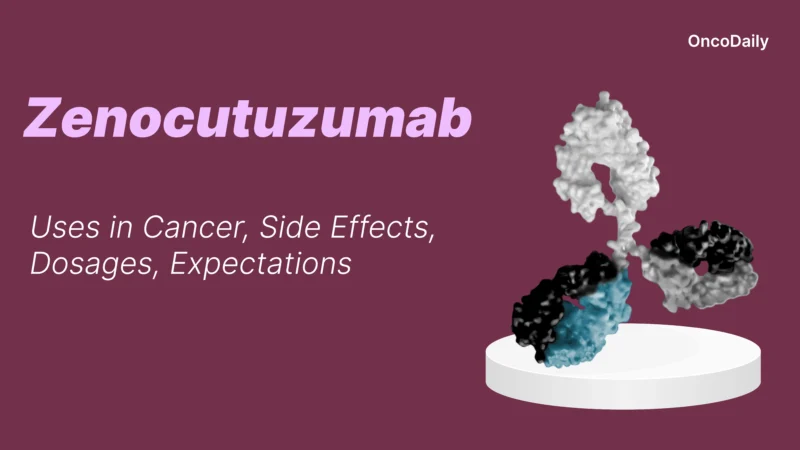
Read More About Zenocutuzumab on Oncodaily
Patients without mutations but with high PD-L1 expression may benefit from first-line immunotherapy called Pembrolizumab (KEYNOTE-024). Median overall survival surpassed 26 months, significantly longer than platinum chemotherapy (Reck et al., NEJM 2019). Despite these gains, most patients with metastatic NSCLC will eventually experience progression due to resistance mechanisms. This underscores the need for ongoing research and highlights the value of catching disease sooner through screening.
Metastatic Small Cell Lung Cancer (SCLC)
Prognosis remains far more challenging for SCLC due to its aggressive biology and rapid spread. The 5-year survival for metastatic SCLC: <2% historically (Siegel et al., 2023; NCI SEER). But due to the recent additions of immunotherapy to first-line chemotherapy (e.g., atezolizumab or durvalumab) have improved median survival modestly but have not yet approached the long-term survival gains seen in some NSCLC subsets. Even with modern therapies, late-stage SCLC remains one of the most difficult cancers to treat, making prevention, risk-reduction, and earlier detection crucial.
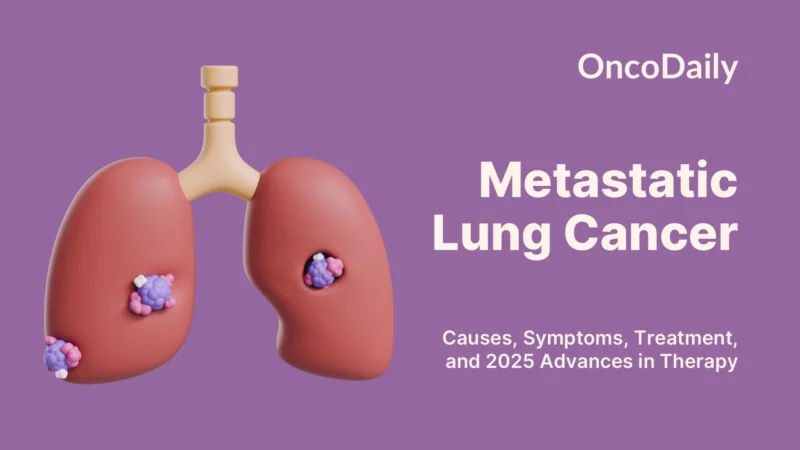
You can read more on Metastatic Lung Cancer on OncoDaily
Key Messages From December’s Awareness Efforts
Lung Cancer Awareness Month isn’t just about statistics, it’s about stories, education, and action. This December highlighted several major themes: early detection saves lives and must be expanded, with low-dose CT (LDCT) screening remaining one of the few proven mechanisms to reduce lung cancer mortality. Yet uptake is still low, as a recent study showed that only about 1 in 5 eligible adults had documented up-to-date screening even though broad adoption could prevent tens of thousands of deaths over five years (see the American Cancer Society press release:
Latest ACS Lung Cancer Data: Only 1 in 5 Eligible Adults in U.S. Screened for Lung Cancer; 62,000 Lives Over 5 Years Could Be Saved if All Eligible Screened). Screening guidelines and access continue to evolve, and awareness efforts emphasized that persistent respiratory changes should prompt immediate evaluation, especially for high-risk individuals. Another major issue is stigma, which continues to hamper progress; for decades, lung cancer was framed as a smoker’s disease, and while smoking remains the dominant risk factor, lung cancer affects anyone with lungs, including people who have never smoked.
Never-smokers represent a significant and growing portion of cases, underscoring the need for broader awareness and more inclusive screening discussions (see the Very well Health article on rising lung cancer in non-smokers: Lung Cancer Is Rising in Non‑Smokers. Scientists Are Looking for Causes).
Treatment advances are also transforming outcomes: immunotherapy and targeted therapies have improved survival across many subtypes, and personalized medicine based on tumor genetics has become standard in many centers. Importantly, survival benefits are increasingly tied to combining modern systemic therapy with early detection, reinforcing how critical timely diagnosis remains alongside therapeutic innovation.
Read More About Immunotherapy for Lung Cancer in OncoDaily
Yet access to these advances is unequal, and global disparities persist — another key point emphasized this month.
Where We Go From Here: Priorities Moving Forward
Expanding screening and early diagnosis is essential, as stronger public health initiatives, broader eligibility guidelines, and insurance support can help catch lung cancer sooner, when it is most treatable. Increased investment in research is also critical; despite its enormous impact, lung cancer does not receive a proportionate share of funding relative to its mortality burden, and more support is needed to advance screening tools, preventive strategies, and treatment options.
Sustaining education year-round is another priority, since early symptoms are often subtle, such as persistent cough, breathlessness, chest pain, fatigue, or voice changes and continued awareness among communities and clinicians helps reduce delays in care. Finally, providing holistic support remains vital, as lung cancer affects emotional, financial, and social well-being, and patient-focused care, including psychological support and caregiver resources, must extend beyond medical treatment.
How You Can Help: Beyond Awareness
Share credible information on symptoms and risk factors, encourage eligible individuals to discuss low-dose CT screening with their healthcare provider (American Lung Association), support tobacco cessation programs without stigma, advocate for clean air policies and radon testing, and amplify patient stories and advocacy efforts. Every conversation increases understanding and early detection saves lives.
Notable Figures Affected by Lung Cancer
Dana Reeve, an actress and advocate, died of lung cancer at age 44 despite never having been a smoker, illustrating that lung cancer can affect anyone. Leonard Nimoy, the beloved actor known worldwide for Star Trek, also passed from lung cancer, highlighting the disease’s reach across all walks of life. Paul Kalanithi, a neurosurgeon and author of When Breath Becomes Air, shared his powerful personal narrative of living with advanced lung cancer, bringing profound public insight into the human experience behind the disease.
Pop Culture Highlight: Film That Promotes Awareness
The infamous book by John Green and later film The Fault in Our Stars (2014), a story that is famously known by a lot of millennials and Gen Z ;features a character whose cancer recurrence is metastatic lung cancer. While it’s a work of fiction, the story brings emotional depth to understanding how lung cancer affects young people and families, fostering empathy and broader awareness in popular culture.
Written by Hasti Donyagardrad, MD
“Know the facts this Lung Cancer Awareness Month — lung cancer can affect anyone with lungs. Early detection and screening save lives.” — LUNGevity Foundation awareness message LUNGevity Foundation
“This Lung Cancer Awareness Month, help us spread the word that increased awareness and action — from screening to research advocacy — are crucial to reducing deaths from this disease.” — GO2 for Lung Cancer advocacy toolkit message GO2 for Lung Cancer