Yasmin Karimi, MD, reported updated 3.5-year follow-up data from the Phase 1/2 NCT03075696 study of fixed-duration glofitamab monotherapy in R/R mantle cell lymphoma, highlighting durable responses across patients with and without prior BTKi exposure.
Need for Off-the-Shelf Therapies
Relapse or refractory MCL remains associated with poor long-term outcomes, particularly after progression on covalent BTKi. While CAR T-cell therapy has improved outcomes for selected patients, many individuals remain ineligible or experience relapse, underscoring the need for effective, accessible and durable off-the-shelf treatment strategies.
Glofitamab is a CD20×CD3 BsAb with a 2:1 configuration. In the Phase 1/2 NP30179 study (NCT03075696), fixed-duration glofitamab monotherapy administered with obinutuzumab pretreatment and step-up dosing demonstrated high, durable responses, and a manageable safety profile in heavily pretreated patients, including those previously exposed to BTKi therapy. The current analysis provides extended follow-up from this cohort.
Study Design and Patient Population
Patients with R/R MCL who had received ≥1 prior systemic therapy were enrolled in this multicenter, open-label Phase 1/2 study. Obinutuzumab pretreatment was administered on C1D1 as either a single 1000 mg dose or a split 2000 mg dose for CRS mitigation. Glofitamab step-up dosing consisted of 2.5 mg on C1D8 and 10 mg on C1D15, followed by target dosing of 16 mg or 30 mg every 3 weeks during cycles 2-12.
Key efficacy endpoints included ORR, CR rate, DoCR, DoR, PFS, and OS, while safety assessments focused on TEAEs, including CRS.
As of September 8, 2025, 61 patients with R/R MCL were enrolled and 60 received glofitamab. The median age was 72 years, and the median number of prior therapy lines was 2.
High-risk disease features included Ki-67 ≥30% in 62.3% of patients, TP53 mutations in 19.7%, and blastoid/pleomorphic morphology in 9.8%.
Efficacy Outcomes
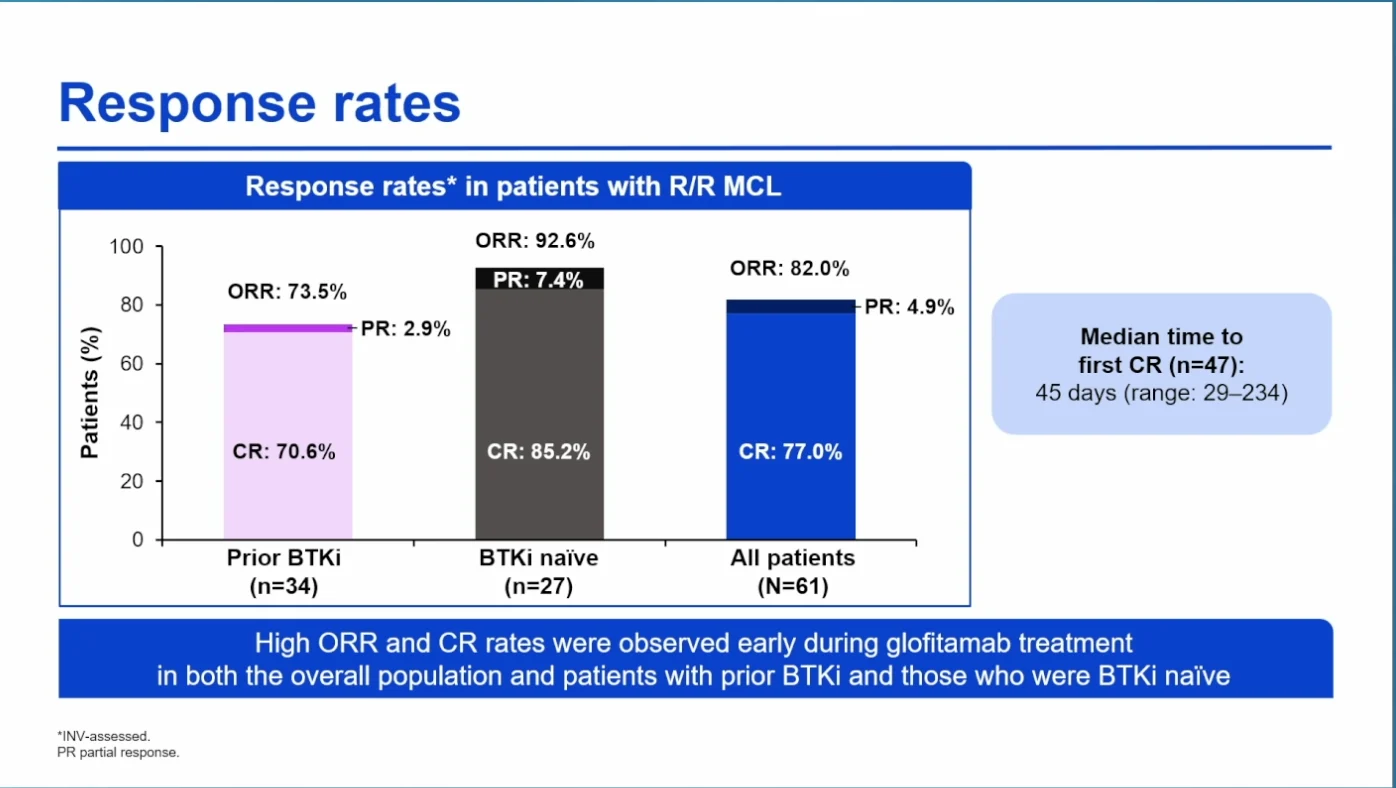
After a median follow-up of 41.5 months, fixed-duration glofitamab monotherapy demonstrated high and durable responses, with an ORR of 82.0% and a CR rate of 77.0%. Median time to first CR was 45 days.
Across BTKi-naïve (n=27) vs BTKi-exposed (n=34) patients:
- CR rate: 85.2% vs 70.6%
- ORR: 92.6% vs 73.5%
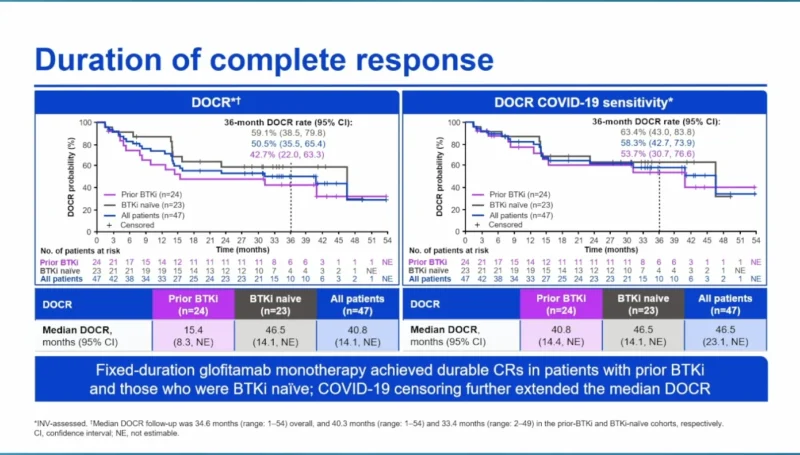
- Median DoCR: 46.5 vs 15.4 months
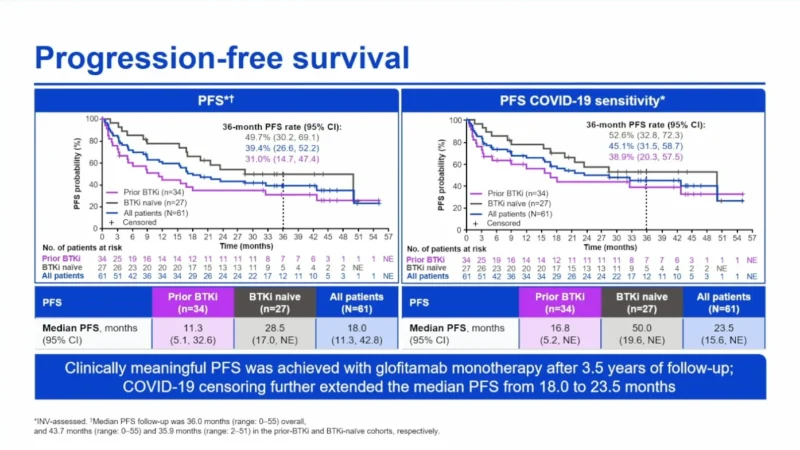
- Median PFS: 28.5 vs 11.3 months
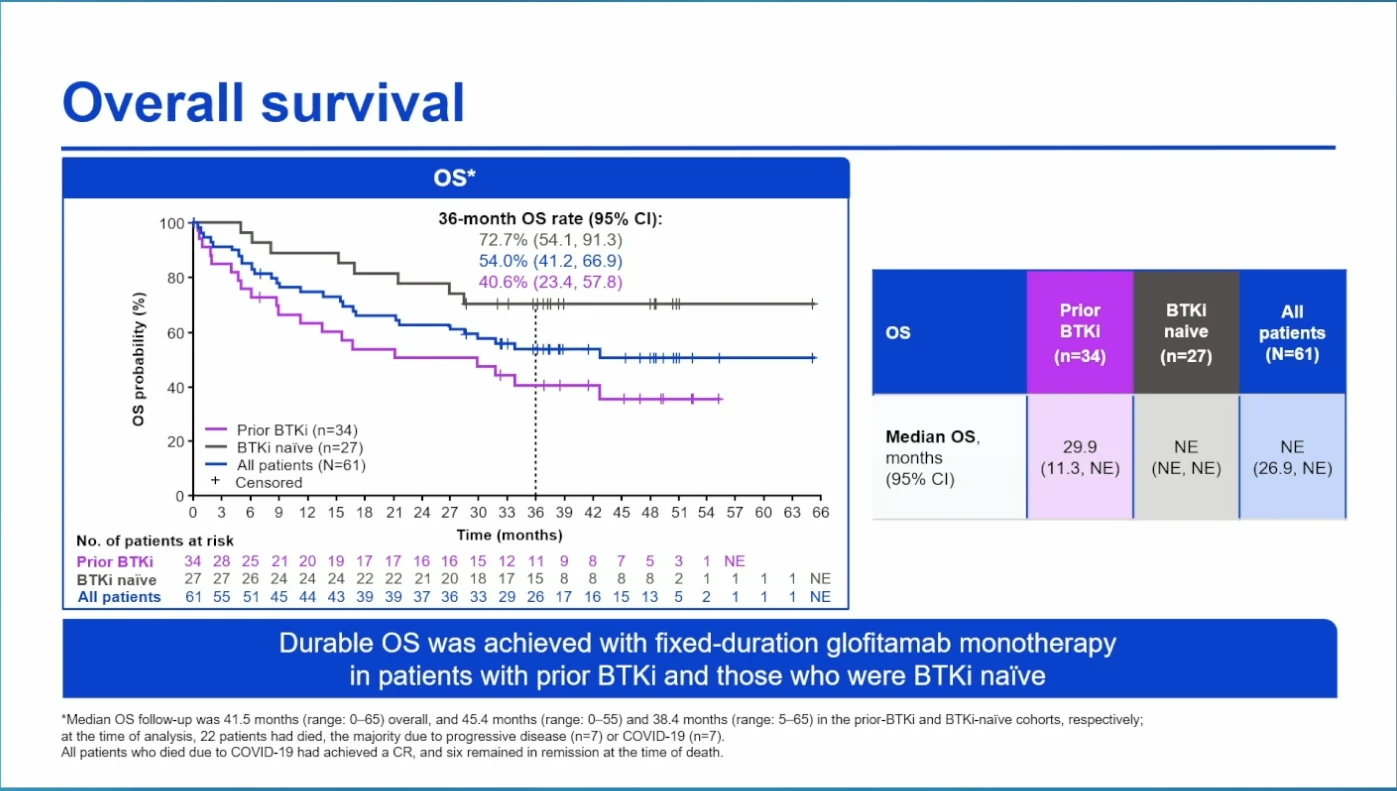
- Median OS: not reached vs 29.9 months
- 36-month OS rate: 72.7% vs 40.6%
Landmark analyses
Median DoCR in the overall cohort was 40.8 months, while median PFS reached 18.0 months and median OS was not reached. In COVID-19 sensitivity analyses, median DoCR and PFS further improved to 46.5 and 23.5 months, respectively. Among patients achieving CR at EOT, the 24-month post-EOT PFS and OS rates were 65.6% and 77.3%, respectively. Additionally, undetectable MRD at C3 and EOT was associated with prolonged PFS.
Safety Signals
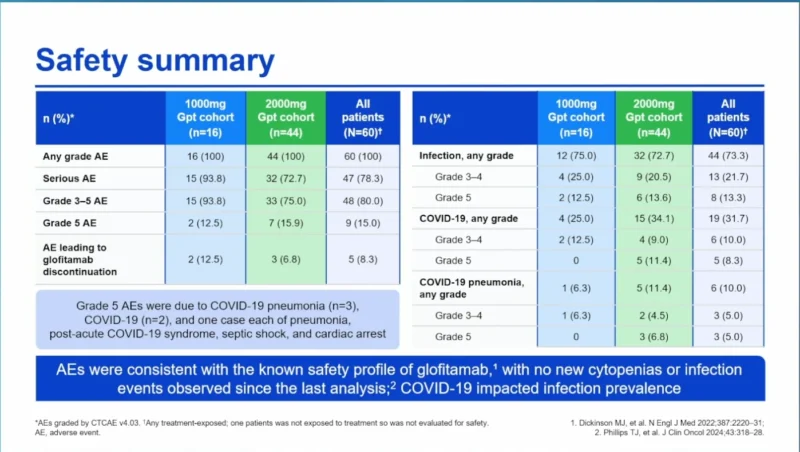
CRS was the most common AE, occurring primarily during the cycle 1 step-up dosing period, most were Grade 1-2. The incidence appeared lower with the 2000 mg obinutuzumab pretreatment strategy, and events decreased substantially beyond cycle 1.
Infections remained clinically relevant during long-term follow-up, including COVID-19-related events, which contributed to infection prevalence and several Grade 5 adverse events during the pandemic period. Importantly, no new cytopenias or infection-related safety signals emerged with longer follow-up.
Peripheral B-cell depletion occurred rapidly after treatment initiation and was sustained during therapy, followed by gradual recovery after treatment completion. Recovery above the lower limit of normal was observed approximately 12-18 months after EOT.
Knowledge Generated
Extended follow-up confirmed high and durable responses with fixed-duration glofitamab monotherapy in patients with R/R MCL, including those previously exposed to covalent BTKi therapy.
Responses were maintained beyond EOT, particularly among patients achieving CR. COVID-19 sensitivity analyses suggested that the durability of benefit may have been underestimated during the pandemic period. The safety profile remained manageable and consistent with prior analyses, though CRS remains an important focus for future optimization.
Relevance
It is a suitable treatment for patients in need of rapid disease control and is under investigation in the Phase 3 GLOBRYTE trial, comparing glofitamab with investigator’s choice BR or R2 in R/R MCL.