This week in hematology, researchers and clinicians shared new findings across acute leukemias, lymphomas, multiple myeloma, and cellular therapies. Long-term results from the FORTE trial, updated American Society for Transplantation and Cellular Therapy (ASTCT) toxicity classifications, discussions of the roles of TP53 and NPM1 mutations in myeloid malignancies, and many more.
Ahead of the American Society of Hematology 2026 meeting, artificial intelligence has its own dedicated sessions on molecular diagnostics, digital pathology, transplant outcome prediction, and synthetic data for clinical research.
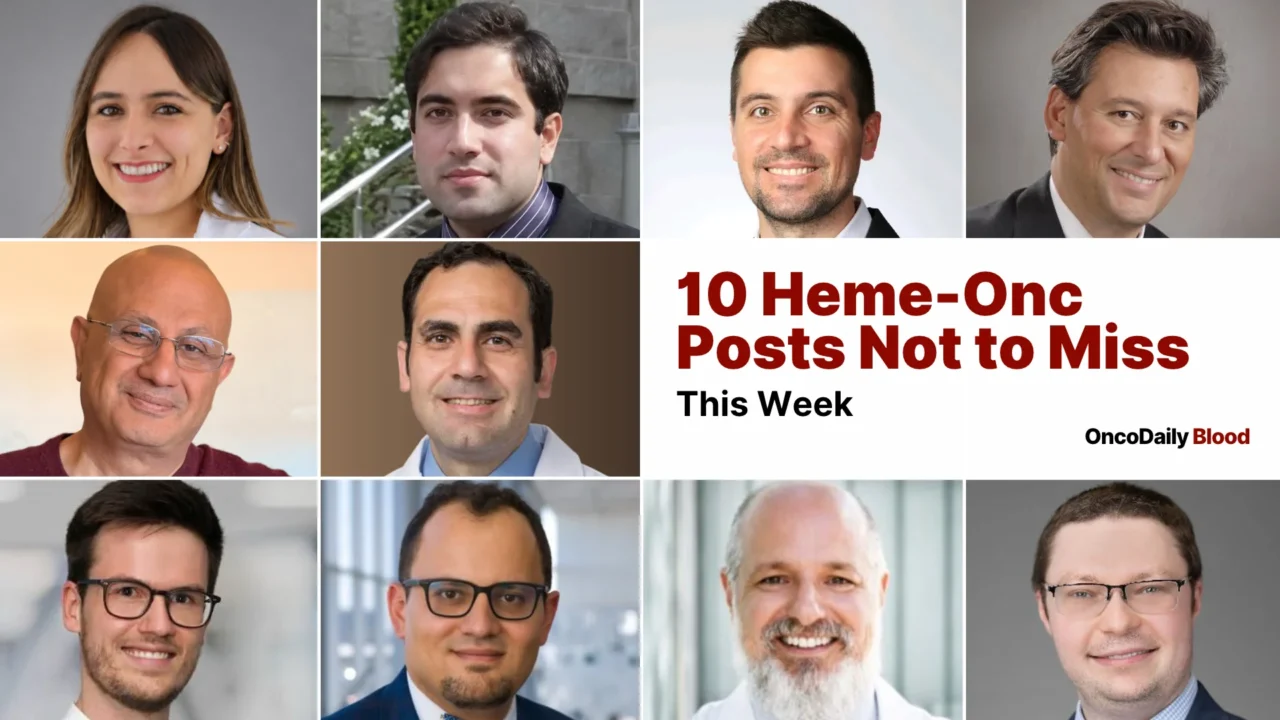
Here are 10 heme-onc posts not to miss this week.
Samer Al Hadidi – Associate Professor at the Harold C. Simmons Comprehensive Cancer Center/UT Southwestern Medical Center
” Long-term FORTE trial results
Median follow-up: 8.3 years from first randomization and 7.1 years from maintenance randomization. Diagram showing the number of patients discontinuing treatment due to adverse events.
Induction/consolidation: Median PFS was 98 months with KRd-ASCT vs 70 months with KRd12 (HR 0.71) vs 67 months with KCd-ASCT (HR 0.66).
Maintenance: 7-year PFS was 55% with KR vs 51% with R (HR 0.67); curves converged approximately 4 years after the second randomization.
Overall survival (R1): 8-year OS was 76% with KRd-ASCT vs 68% with KCd-ASCT (HR 0.65) vs 73% with KRd12 (NS). Median OS was not reached in any arm.
Overall survival (R2): 7-year OS was 82% with KR vs 77% with R (NS).
KR maintenance helps, but the benefit doesn’t last: adding 2 years of carfilzomib to lenalidomide improved PFS and MRD conversion and reduced MRD resurgence. The benefit was lost approximately 2 years after carfilzomib discontinuation, with no PFS2 or OS gain.”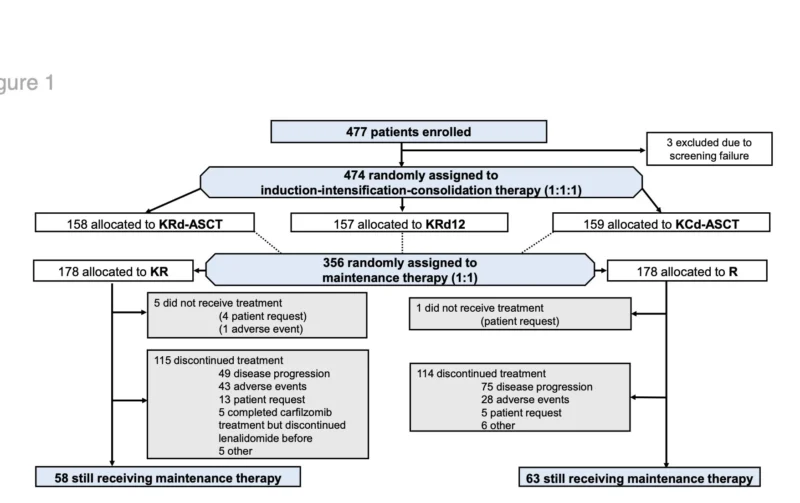
Yan Leyfman – Medical Correspondent at OncLive, Co-Founder and Executive Director of MedNews Week
“Not all patients with relapsed/refractory multiple myeloma respond to T-cell–redirecting bispecific antibodies in the same way. Can we identify who is most likely to benefit—and who faces a particularly high risk of early progression?
A multicenter study involving 15 US centers developed and externally validated a prognostic model for patients receiving BCMA-directed bispecific antibodies or talquetamab, a GPRC5D-directed T-cell engager. The analysis included 943 treatment courses, with 92% of patients classified as triple-class refractory. Median progression-free survival (PFS) was 6.4 months.
Six factors independently associated with inferior PFS were incorporated into the CHARGE index:
Cytogenetic risk: del(17p) or ≥2 high-risk cytogenetic abnormalities
Hyperferritinemia: ferritin ≥600 ng/mL
Anemia: hemoglobin <9 g/dL
Relapse: within 18 months of frontline therapy
General performance status: ECOG ≥2
Exposure to prior BCMA-directed therapy
The score separated patients into three clinically distinct risk groups:
Low risk: median PFS 21.8 months
Intermediate risk: 7.1 months
High risk: 1.6 months
Importantly, this discrimination was reproduced in an independent International Myeloma Foundation cohort of 173 patients, where median PFS was not reached, 7.0 months, and 3.0 months, respectively. The CHARGE index offers a practical framework for integrating disease biology, inflammatory status, functional reserve, and treatment history into prognostic assessment.
As bispecific antibodies become increasingly integrated into the myeloma treatment landscape, identifying patients at risk for early progression may help inform treatment sequencing, clinical trial selection, and expectations of benefit. The next question is whether risk-adapted strategies can improve outcomes for patients in the highest-risk group.”
Mistral Castellanos – Médica Sur, Department of Hematology and Bone Marrow Transplantation, Mexico City, Mexico
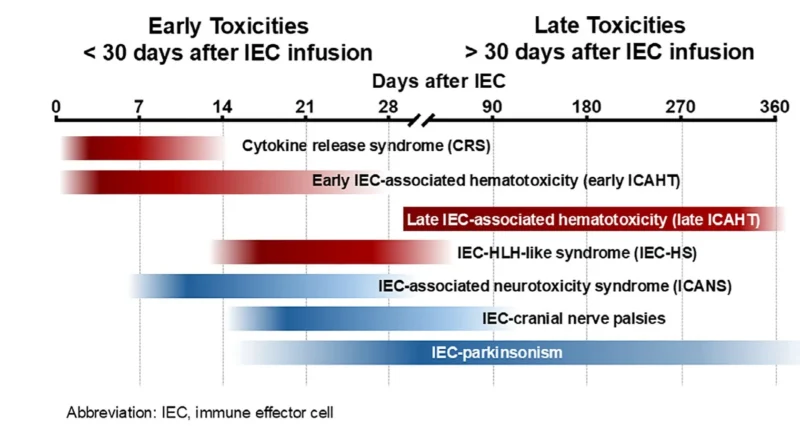
“The ASTCT update on toxicities from immune effector cell therapy (CAR-T and more) is out Transplant Cell Ther 2026.
It’s no longer just CRS and ICANS: now there are 11 categories, including delayed neurotoxicities and on-target off-tumor toxicities. “
Amer Zeidan – Professor of Medicine and Chief of Hematologic Malignancies at Yale Cancer Center
“1/ TP53 mutations are the worst news in higher-risk MDS. But what actually drives the prognosis — one hit or two, the size of the clone, or whether you get a transplant? Our new Blood Cancer Journl paper, led by Dr Tariq Kewan tackles these.
2/ The cohort: 1,485 patients with higher-risk MDS from the international Consortium for MDS VALIDATE database, all treated with hypomethylating agents (HMAs). 392 of them — 26% — carried a TP53 mutation.
3/ First, the headline, and hardly a surprise: TP53-mutated disease is brutal. Median overall survival was 11.5 months vs 23.9 months for TP53 wild-type. Half the survival, on the same HMA backbone.
4/ Now the surprise. We classified every TP53 mutation as monoallelic or biallelic, two ways — WHO 2022 and ICC 2022. By WHO, 72% were biallelic; by ICC, 84%. Monoallelic was just 4% by ICC. And survival? No difference. Mono vs bi didn’t matter, but remember this cohort is entirely higher-risk disease, majority with excess blasts, and everyone received HMA therapy.
5/ Why so few monoallelic cases? In higher-risk MDS, TP53 is almost always multi-hit by the time we see it — and some “monoallelic” cases likely hide a second hit, like copy-neutral loss of heterozygosity, that routine testing misses.
6/ What did matter was the size of the clone — the variant allele frequency (VAF). In patients with under 10% blasts, a VAF below 10% marked a better-survival group. And a VAF of 19% or higher predicted worse survival, even after transplant.
7/ Here’s the transplant finding that matters most. Among TP53-mutated patients, those who went on to allogeneic transplant lived a median 18.9 months vs 9.2 without transplant. Two-year survival: 42% vs 9%.
8/ And that transplant benefit held regardless of allelic status — biallelic included. Two-year survival for biallelic TP53 after transplant was 42–44%, vs 8–10% without. Transplant didn’t erase the risk, but it cut it down substantially.”
Alberto Mussetti – Department of Hematopoietic Cell Transplantation and Cell Therapy, Catalan Institute of Oncology, Hospital Duran i Reynals, L’Hospitalet de Llobregat, Barcelona, Spain
“I am so glad the American Society of Hematology added dedicated sessions on Artificial Intelligence this year. We should ride this revolution!
A summary of AI oral sessions (made by Claude AI) in Hematology this year at ASH 2026!
“From Cells to Code”
• AML profiling in a single platform (RAMD)
• Raman spectroscopy quantifying T/B/NK subsets straight from the CBC tube (~1,000 samples)
• Federated AI for digital pathology (Pathroclus)
• Peptide-HLA stability prediction for antigen prioritization
• Bone marrow organoids for aza/ven sensitivity testing
“From Algorithms to the Clinic”
• A foundation model built for HSCT, predicting relapse and NRM
• Generative synthetic cohorts for CLL outcomes and comparative effectiveness
• EDEN: synthetic data for rare diseases and trial design
• Plasma cfDNA methylation for MRD in AML
• DNA methylation classification in pediatric acute leukemia
• Cell-surface spatial architecture and HMA response
What stands out
• Foundation models are reaching transplant data
• Synthetic data is moving into real-world evidence and trial design
• Federated approaches are tackling multicenter data sharing
• Diagnostics are shifting from morphology toward integrated, data-driven readouts
The practical question for all of us is how quickly these tools can be validated and used in routine care.
Which of these do you think will reach the clinic first?”
Francesco Forconi – Professor, University of Southampton, United Kingdom
“Thank you to the HAIRY CELL LEUKEMIA FOUNDATION for supporting the very first chemotherapy-free trial in the UK for patients with relapsed/refractory classic hairy cell leukaemia. There is a fundamental need to offer more precise treatments other than purine analogues that are toxic in HCL.
A team of UK experts in Birmingham, Leeds, Leicester, Royal Marsden and Southampton, coordinated by the Southampton Clinical Trials Unit at the University of Southampton Faculty of Medicine will investigate the combination of sonrotoclax with zanubrutinib given to R/R HCL in the MAYFLOWER trial. Supported by BeOne Medicines.”
Jan Christian Schröder – Postdoctoral Research Fellow and Physician Scientist, Dana-Farber Cancer Institute, Harvard Medical School
“BPDCN is a rare myeloid neoplasia with poor outcomes and limited treatment options. In our recent multicenter study published in the Journal of Hematology & Oncology, we report on 32 patients treated with the CD123-targeted fusion protein Tagraxofusp outside of clinical trials across 13 centers, compared to a historical cohort of 40 patients treated with chemotherapy-based regimens.
Tagraxofusp was associated with manageable toxicity and high response rates, and importantly durable responses were achieved in patients undergoing consolidative allogeneic stem cell transplantation. This large cohort contributes critical real-world evidence to improve the management of BPDCN-patients, and supports tagraxofsup as an induction strategy that may increase the proportion of BPDCN patients who can proceed to stem cell transplantation.”
Raul Cordoba – Department of Hematology, MD Anderson Cancer Center Madrid, Spain
“Fixed-duration epcoritamab plus R-CHOP for newly diagnosed LBCL with an IPI score of 3 to 5: results from the EPCORE NHL-2 trial.”
Nathan Punwani – Blood and Marrow Transplant Physician, Mayo Clinic
“The OPTI-AML randomized controlled trial results are finally published! For the first 2 cycles of hypo-methylating agent therapy, 14 days/cycle of venetoclax is NOT equivalent to 28 days/cycle for AML patients. Higher composite remissions were seen with extended duration treatment (81% vs 69%).
There was also a statistically non-significant trend toward better overall survival for those patients who received extended duration treatment Interestingly, the higher response observed with 28 days of venetoclax was accounted for by more remissions induced in the NPM1 and IDH2 mutated AML subgroups. After subtracting out those genetic subgroups, the remission rate was equivalent (45%) between the 14 and 28 day treatment arms.
Where does this leave us? The physician’s prime directive of “do no harm” and the biology of the disease should ultimately dictate how intense treatment should be. For frail AML patients who lack an NPM1 or IDH2 mutation, less is more. For fit individuals who have an NPM1/IDH2 mutation, I would offer the full 28 day course for induction therapy until remission has been achieved.”
Shahram Mori – Director of Acute Leukemia. Transplanter and Malignant Hematologist, AdventHealth
“Does a lower NPM1 VAF mean higher risk in AML?
The PETHEMA study by Gil et al., published in Blood in October 2026, raises a new question: Does the NPM1 VAF burden matter?
In 688 patients with NPM1-mutated AML, the study identified VAF of 31.4% as the cutoff for two prognostic groups. Patients in the NPM1-low group had inferior overall survival (HR 1.46) and relapse-free survival (HR 1.40).
The co-mutations added another layer of complexity. DNMT3A (~50%), FLT3-ITD (46%), TET2 (22%), and IDH2 (20%) were the most frequent co-mutations.
Higher VAFs for DNMT3A, KRAS, PTPN11, and non-ITD FLT3 mutations were associated with worse outcomes, while a higher IDH2 VAF was associated with better outcomes. Interesting was that NPM1-low AML shared clinical and molecular features with secondary AML. They inferred that NPM1 mutations generally arose after epigenetic and spliceosome lesions and before signaling and transcription factor mutations.
Could a low NPM1 VAF reflect a later leukemic subclone emerging from an “pre-leukemic” MDS-like clone?
So what do we do with this information? Among patients who achieve molecular MRD negativity, does a low baseline NPM1 VAF still identify a group at higher risk of relapse? Should we consolidate with allo-HCT in first remission?”