At the 2026 ASCO Annual Meeting, Joaquin Mateo, MD, PhD, presented final results from ZZFIRST, a randomized phase 2 trial evaluating enzalutamide plus talazoparib in metastatic hormone-naïve prostate cancer.
Androgen deprivation therapy plus androgen receptor pathway inhibition has improved outcomes in metastatic hormone-naïve prostate cancer, but responses remain variable. ZZFIRST explored AR–PARP cotargeting in this setting and included tumor biopsies collected during treatment to study tumor adaptation to ADT plus AR pathway inhibition.
The study was funded by Pfizer S.L. and Astellas Pharma Europe LTD.
Read more about Prostate Cancer Cure Rate on OncoDaily.
Study Design
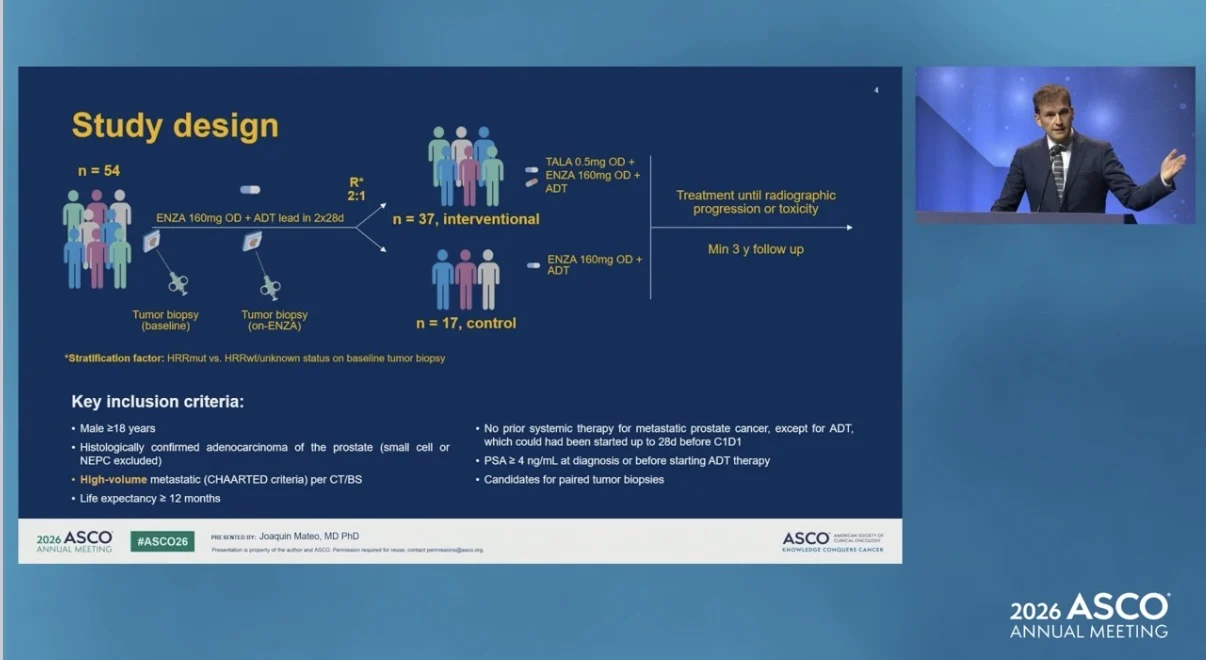
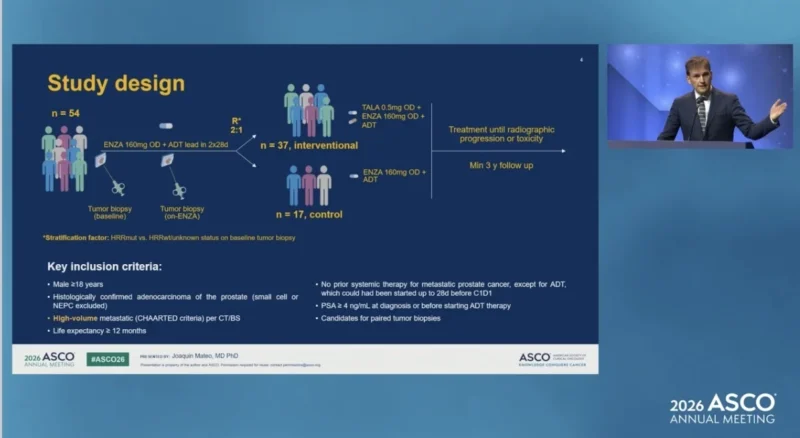
ZZFIRST was an open-label, randomized academic phase 2 trial. Eligible patients had high-volume metastatic hormone-naïve prostate cancer by CHAARTED criteria and PSA of at least 4 ng/mL.
All patients received standard ADT and started enzalutamide 160 mg daily. After two 28-day cycles, patients were randomized 2:1 to receive enzalutamide plus talazoparib 0.5 mg daily or continue enzalutamide alone. Treatment continued until radiographic progression or toxicity.
Randomization was stratified by HRR mutation versus HRR wild-type or unknown status on baseline tumor biopsy. The primary endpoint was the 12-month PSA below 0.2 ng/mL response rate for enzalutamide plus talazoparib. Key secondary endpoints included radiographic progression-free survival, PSA progression-free survival, time to castration resistance, overall survival, and safety. Transcriptomic analysis was performed on paired baseline and on-treatment tumor biopsies.
Results
A total of 54 patients were enrolled, including 37 in the enzalutamide plus talazoparib arm and 17 in the enzalutamide arm. Seven patients had HRR gene alterations by tumor tissue next-generation sequencing. Visceral metastases were present in 23 patients overall, including 18 patients in the enzalutamide plus talazoparib arm and 5 patients in the enzalutamide arm. Most patients had de novo metastatic disease.
At a median follow-up of 3.6 years, the study met its primary endpoint. The 12-month PSA below 0.2 ng/mL response rate was 73.0% with enzalutamide plus talazoparib, meeting the prespecified primary endpoint against the a priori threshold, and 64.7% with enzalutamide alone. The exploratory between-arm comparison was not statistically significant.
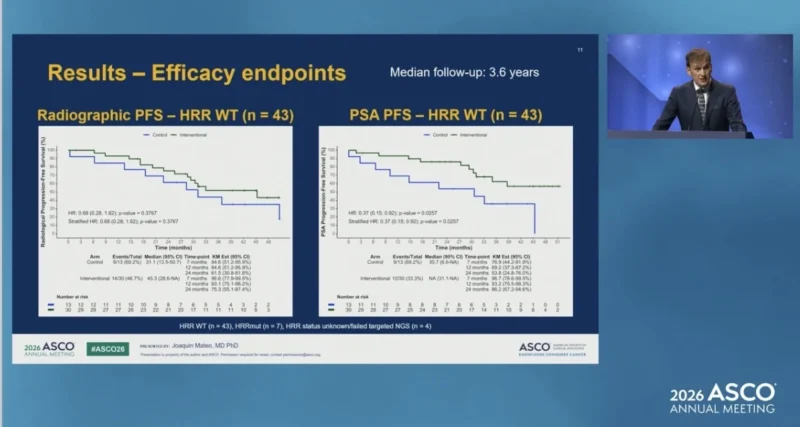
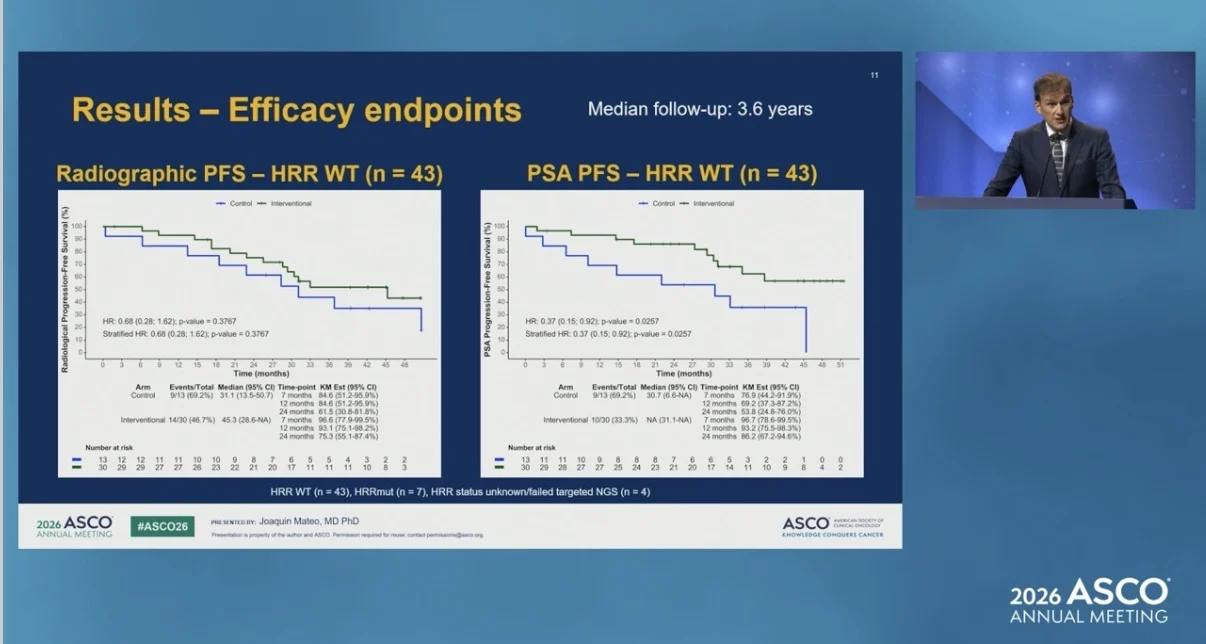
Median radiographic progression-free survival was 45.3 months with enzalutamide plus talazoparib and 31.1 months with enzalutamide alone. Median PSA progression-free survival was not reached with enzalutamide plus talazoparib and was 30.7 months with enzalutamide alone.
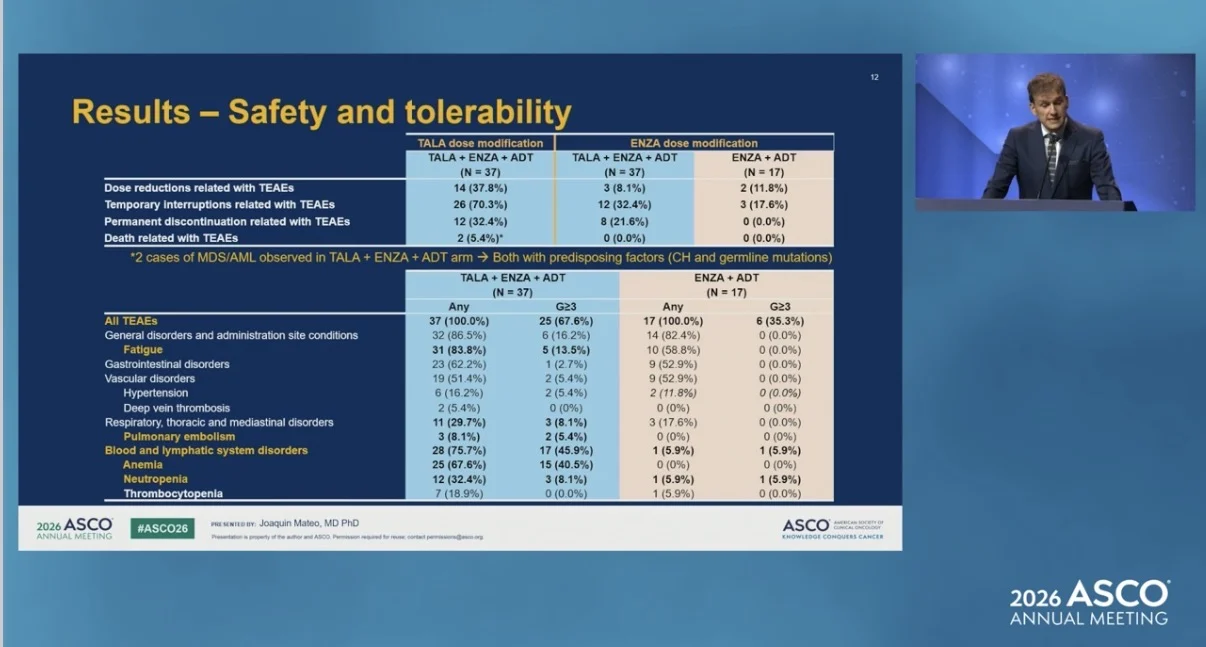
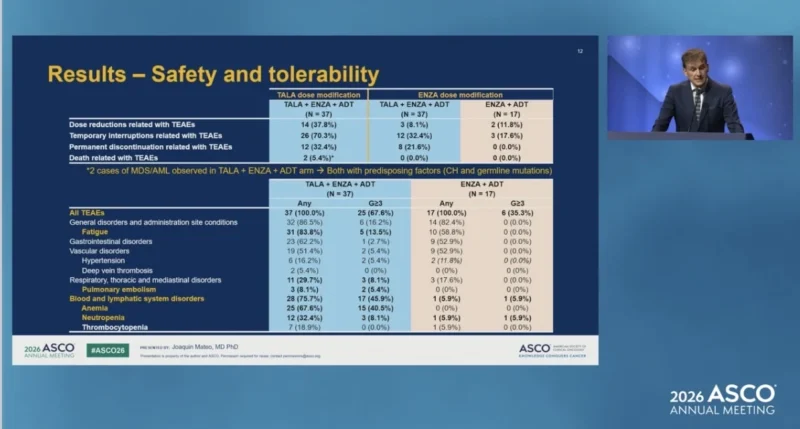
In the enzalutamide plus talazoparib arm, fatigue and anemia were among the reported treatment-emergent adverse events. Grade 3 or higher fatigue occurred in 13.5% of patients, and grade 3 or higher anemia occurred in 40.5%. Talazoparib dose reductions were required in 14 patients.
Two cases of MDS/AML were observed in the enzalutamide plus talazoparib arm; both patients had predisposing factors, including clonal hematopoiesis and germline mutations. Transcriptomic analysis of on-treatment versus baseline biopsies showed suppression of androgen receptor signaling and proliferation signatures, with upregulation of inflammatory and epithelial–mesenchymal transition signatures.
Conclusion
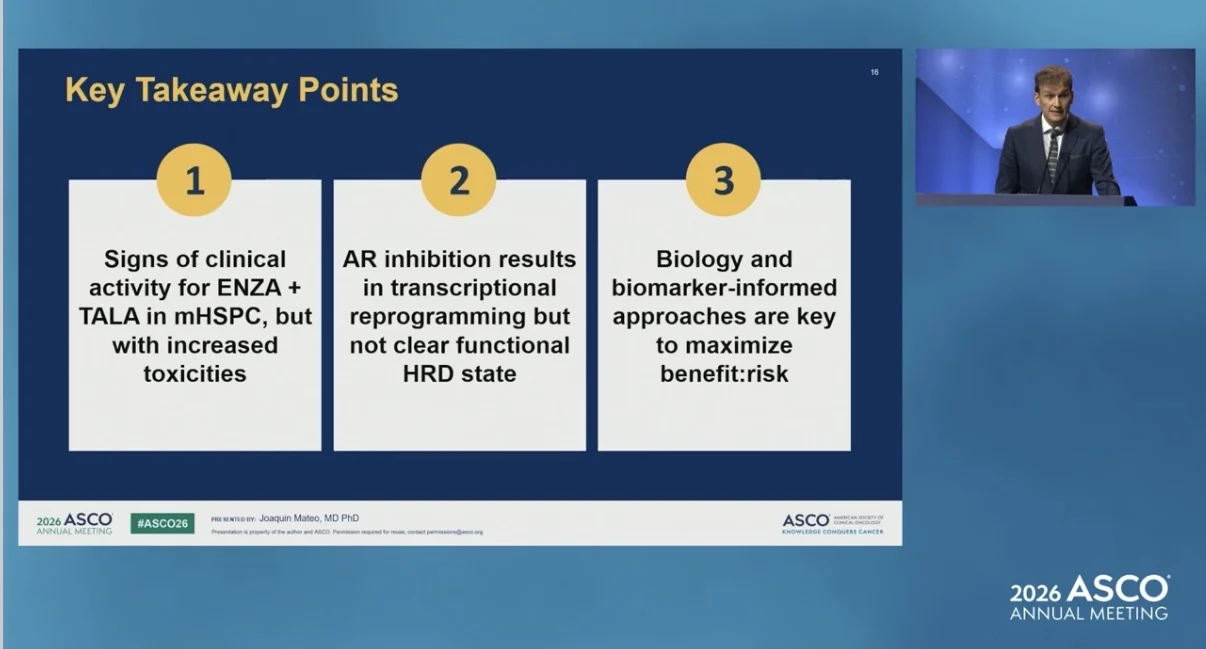
Final results from ZZFIRST showed signs of clinical activity for enzalutamide plus talazoparib in high-volume metastatic hormone-naïve prostate cancer, but with increased toxicity. The paired biopsy analysis showed transcriptional reprogramming with androgen receptor inhibition, although a clear functional homologous recombination deficiency state was not demonstrated.
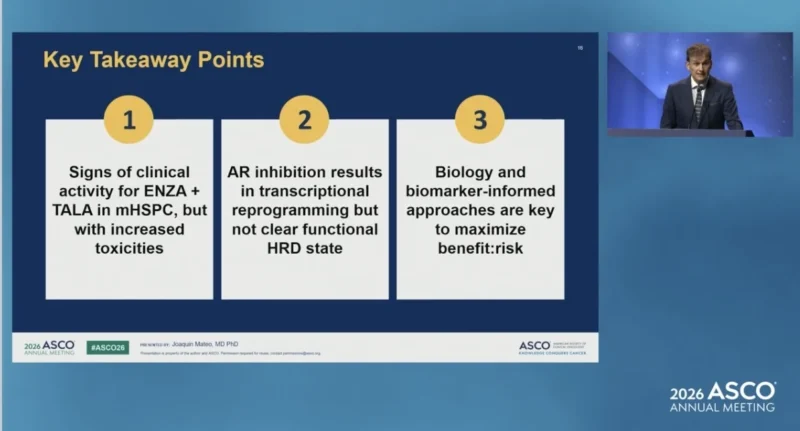
These findings support further biologically informed and biomarker-guided investigation of AR–PARP strategies to better define which patients may derive the greatest benefit.
The full abstract is available on the official ASCO website.