
Prostate cancer treatment has changed substantially over the past decade, with multiple systemic therapies now available across different stages of disease. Despite these advances, chemotherapy remains an important component of care for selected patients, particularly when more intensive disease control is required.
The role of chemotherapy has evolved alongside advances in hormone therapy, targeted treatments, and precision medicine. Its use today requires careful consideration of disease characteristics, expected benefit, potential toxicity, and the overall goals of treatment.
As treatment options continue to expand, understanding where chemotherapy fits within modern prostate cancer management remains essential for clinicians involved in the care of patients with advanced disease.
When Is Chemotherapy Used in Prostate Cancer?
Chemotherapy is primarily used in advanced or metastatic prostate cancer, where the disease cannot be controlled with local treatments alone.
Its role depends on whether the cancer remains sensitive to testosterone suppression or has progressed despite castrate testosterone levels.
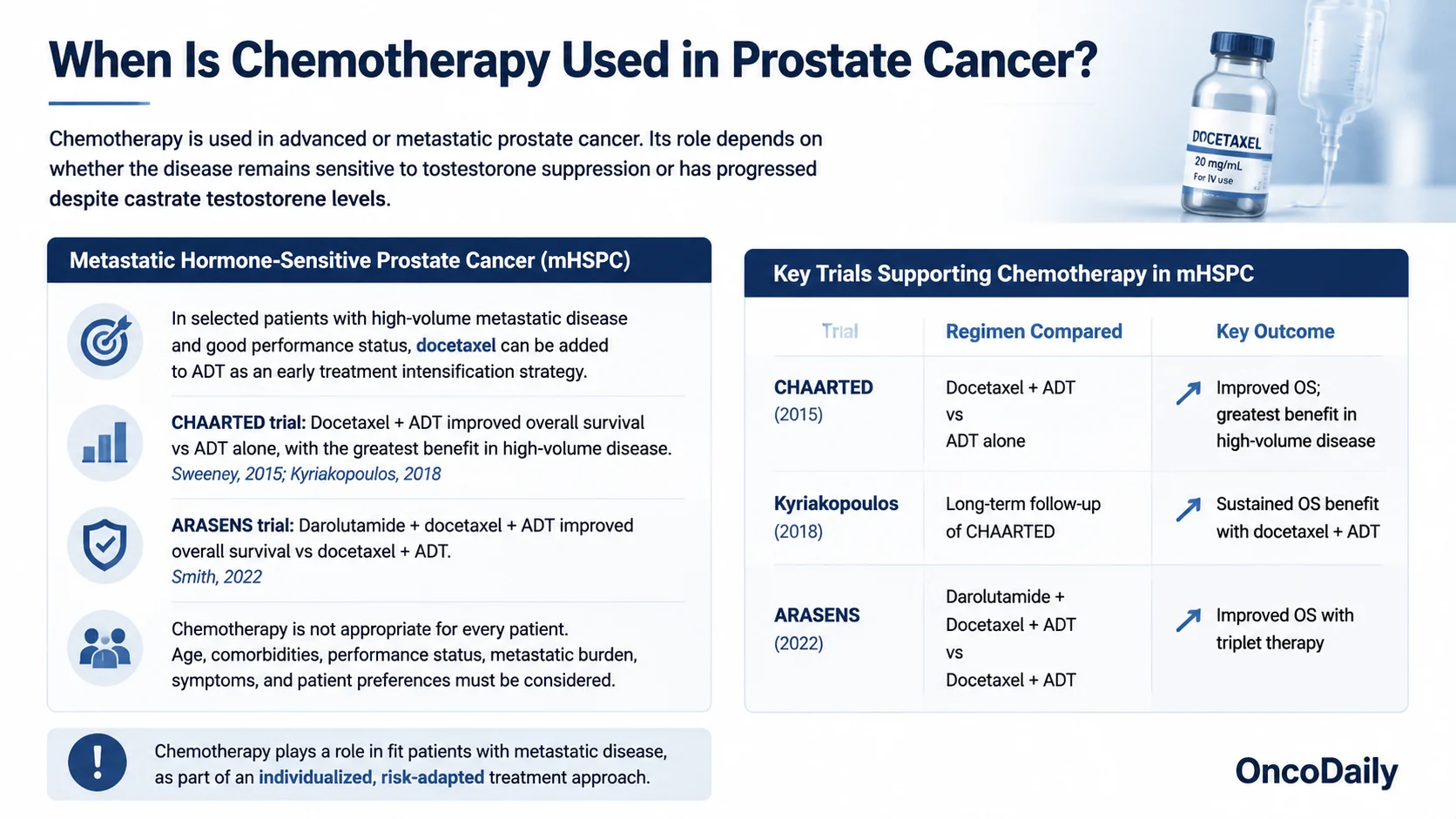
Metastatic Hormone-Sensitive Prostate Cancer (mHSPC)
Metastatic hormone-sensitive prostate cancer refers to disease that has spread but still responds to androgen deprivation therapy (ADT).
In selected patients, particularly those with high-volume metastatic disease and good performance status, docetaxel can be added to ADT as an early treatment intensification strategy.
The CHAARTED trial demonstrated that adding docetaxel to ADT improved overall survival compared with ADT alone, with the greatest benefit observed in patients with high-volume disease (Sweeney, 2015). Long-term follow-up continued to support this benefit (Kyriakopoulos, 2018).
More recently, treatment strategies have moved toward combination approaches. In selected fit patients, docetaxel may be combined with ADT and an androgen-receptor pathway inhibitor, creating a triplet regimen. The ARASENS trial showed improved overall survival with darolutamide added to ADT and docetaxel compared with ADT and docetaxel alone (Smith, 2022).
However, chemotherapy is not appropriate for every patient. Age, comorbidities, performance status, metastatic burden, symptoms, and patient preferences must all be considered.
Chemotherapy in Metastatic Castration-Resistant Prostate Cancer
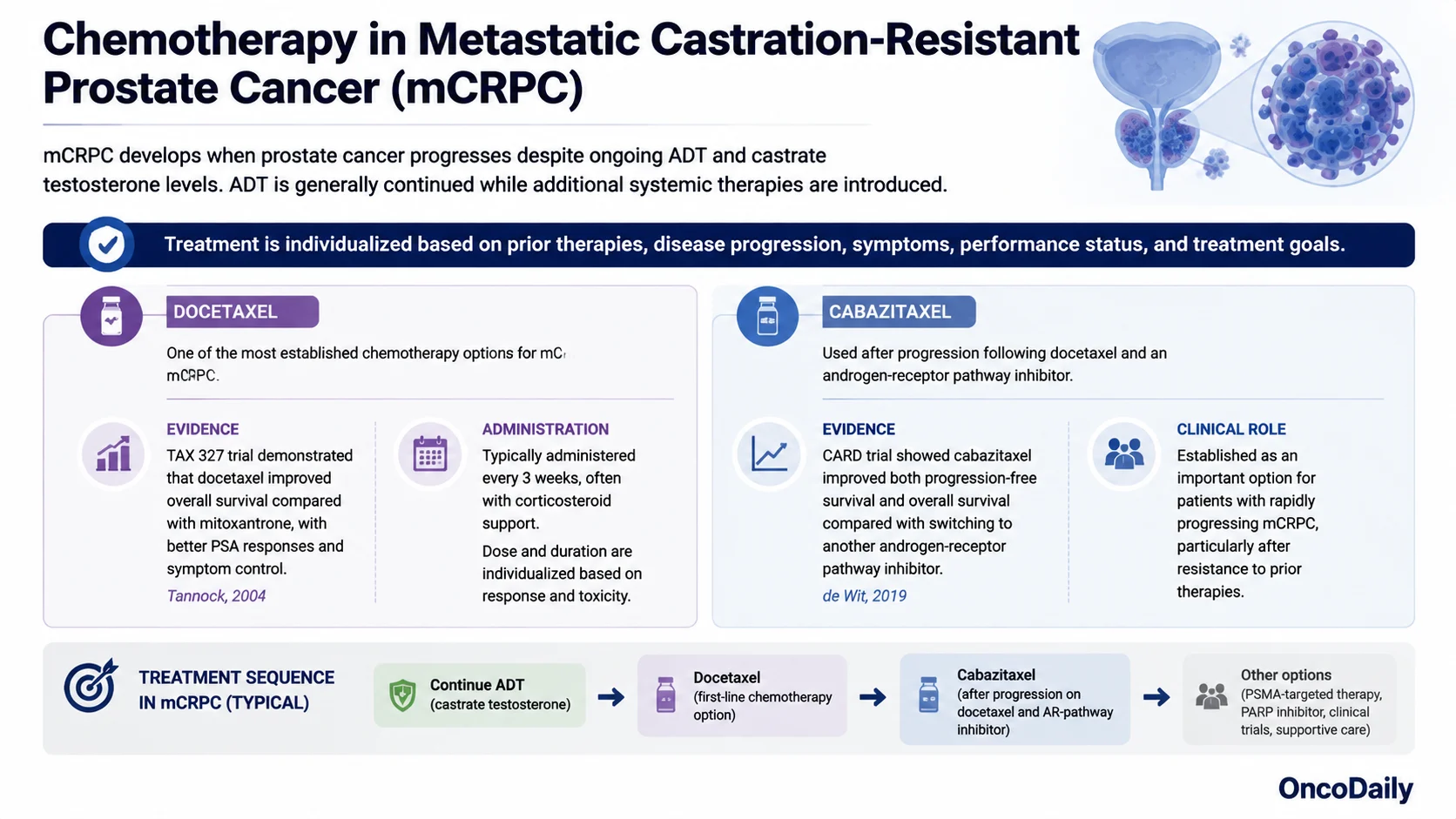
Metastatic castration-resistant prostate cancer (mCRPC) develops when prostate cancer progresses despite ongoing ADT and castrate testosterone levels.
Although the cancer is no longer controlled by hormone suppression alone, ADT is generally continued while additional systemic therapies are introduced.
Docetaxel
Docetaxel remains one of the most established chemotherapy options for mCRPC.
The TAX 327 trial demonstrated that docetaxel improved overall survival compared with mitoxantrone and provided better PSA responses and symptom control (Tannock, 2004).
Docetaxel is commonly administered every three weeks, often with corticosteroid support, although dosing and duration are individualized according to response and toxicity.
Cabazitaxel
Cabazitaxel is mainly used after progression following docetaxel and an androgen-receptor pathway inhibitor.
The CARD trial showed that cabazitaxel improved both progression-free survival and overall survival compared with switching to another androgen-receptor pathway inhibitor in patients previously treated with docetaxel and hormone-directed therapy (de Wit, 2019).
This established cabazitaxel as an important treatment option for patients with rapidly progressing mCRPC.
Which Chemotherapy Drugs Are Used for Prostate Cancer?
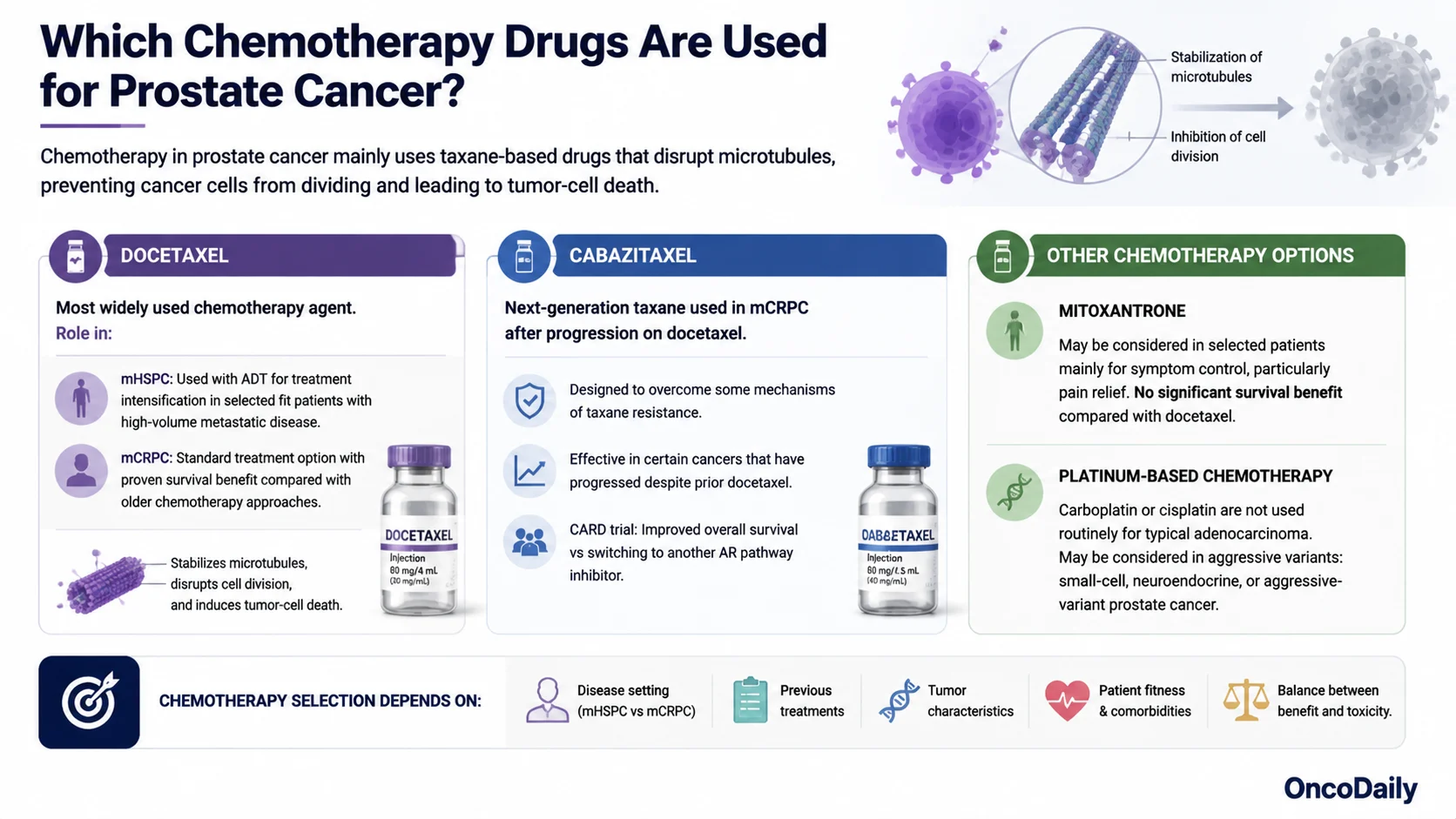
The chemotherapy drugs used in prostate cancer mainly belong to the taxane class, which works by disrupting microtubules structures that cancer cells need to divide and grow. The two main agents used in clinical practice are docetaxel and cabazitaxel, while other chemotherapy approaches are reserved for specific situations.
Docetaxel
Docetaxel is the most widely used chemotherapy agent in prostate cancer and has an established role in both metastatic hormone-sensitive prostate cancer (mHSPC) and metastatic castration-resistant prostate cancer (mCRPC).
In mHSPC, docetaxel is used as part of treatment intensification, particularly in selected patients with high-volume metastatic disease who are fit enough to tolerate chemotherapy. In mCRPC, it remains a standard treatment option and has demonstrated survival benefit compared with older chemotherapy approaches.
By stabilizing microtubules and disrupting cell division, docetaxel prevents cancer cells from proliferating and ultimately leads to tumor-cell death.
Cabazitaxel
Cabazitaxel is a next-generation taxane primarily used in mCRPC after progression following docetaxel-based therapy.
It was developed to overcome some mechanisms of taxane resistance, allowing it to remain effective in certain prostate cancers that have progressed despite previous docetaxel treatment. The CARD trial established cabazitaxel as an important option for patients who have progressed after both docetaxel and androgen-receptor pathway inhibitors.
Other Chemotherapy Options
Other chemotherapy agents have more limited roles in prostate cancer.
Mitoxantrone may still be considered in selected patients, mainly for symptom control, particularly pain relief. However, unlike docetaxel, it has not demonstrated a significant survival benefit.
Platinum-based chemotherapy, including carboplatin or cisplatin, is not routinely used for typical prostate adenocarcinoma. It may be considered in specific aggressive forms of disease, such as small-cell prostate cancer, neuroendocrine prostate cancer, or aggressive-variant prostate cancer, where tumor biology differs from conventional prostate cancer.
Overall, chemotherapy selection depends on the disease setting, previous treatments, tumor characteristics, patient fitness, and the balance between expected benefit and treatment-related toxicity.
How Is Chemotherapy Planned and Monitored in Prostate Cancer?
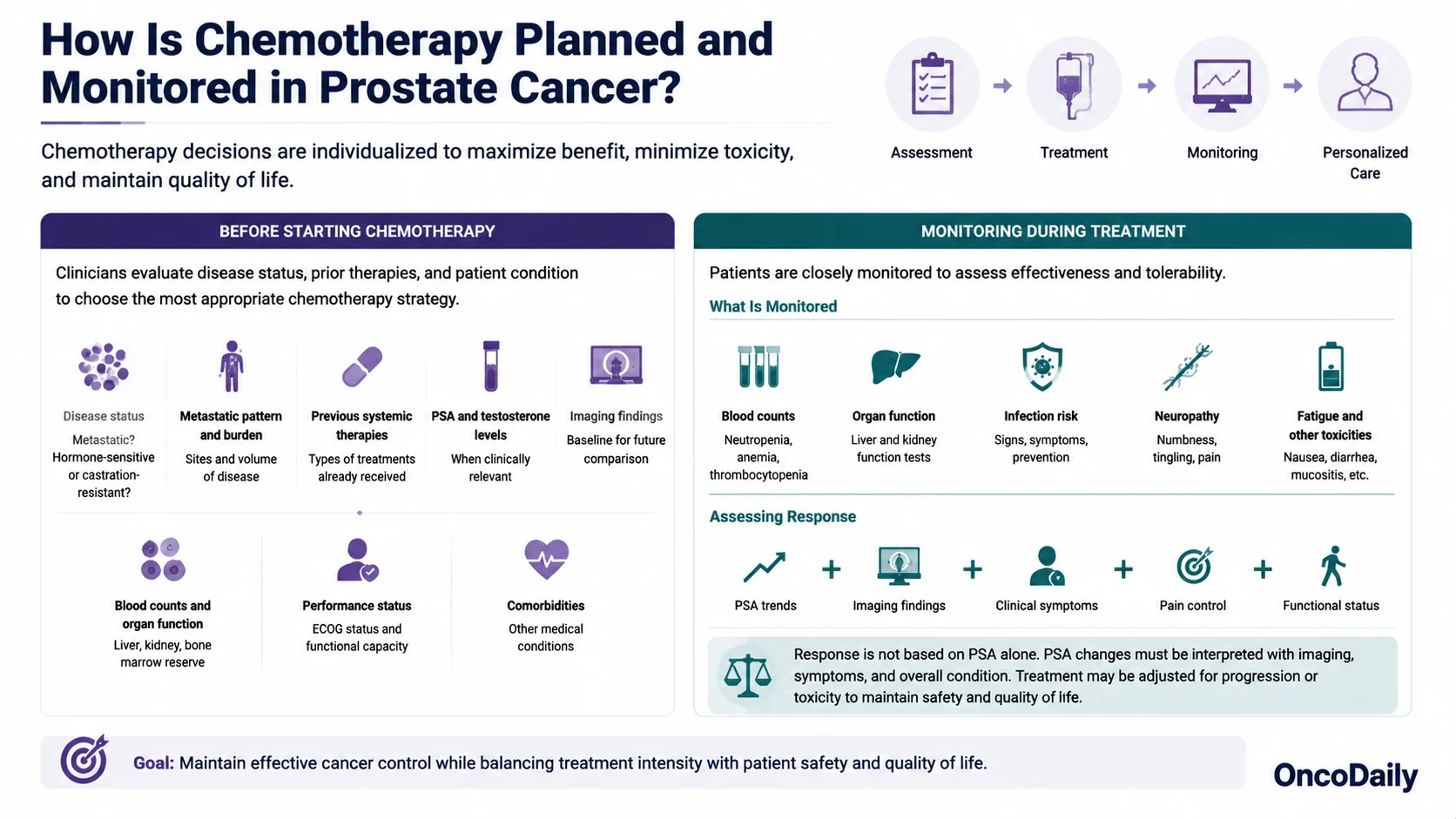
Chemotherapy planning in prostate cancer begins with understanding the extent of disease, previous treatments, and overall patient condition. Before starting therapy, clinicians assess whether the cancer is metastatic, whether it remains hormone-sensitive or has become castration-resistant, and which treatment options are most likely to provide benefit.
Important factors considered include the pattern and burden of metastases, previous systemic therapies, PSA and testosterone levels when relevant, imaging findings, blood counts, organ function, performance status, and comorbidities.
Because chemotherapy can provide meaningful survival benefits but also carries significant toxicity risks, treatment decisions are individualized. The goal is not only to control the cancer, but also to maintain quality of life and ensure that the expected benefit outweighs treatment-related risks.
Monitoring During Treatment
Once chemotherapy begins, patients are closely monitored to assess both treatment effectiveness and tolerability.
Follow-up evaluations typically include blood counts, liver and kidney function tests, assessment of infection risk, neuropathy, fatigue, and other treatment-related toxicities. Clinicians also monitor disease response using a combination of PSA trends, imaging findings, symptoms, pain control, and overall functional status.
Importantly, treatment response is not determined by PSA changes alone. A rising or falling PSA level must be interpreted together with imaging, clinical symptoms, and the patient’s overall condition. In some situations, disease progression or treatment toxicity may require dose adjustments, treatment delays, or a change in therapy.
The overall approach is to maintain effective cancer control while balancing treatment intensity with patient safety and quality of life.
What Are the Side Effects of Chemotherapy for Prostate Cancer?
Because chemotherapy targets rapidly dividing cells, it can affect both cancer cells and healthy tissues with high cell turnover. As a result, treatment can cause a range of side effects, which vary depending on the chemotherapy agent used, dose intensity, and individual patient factors.
The most common side effects of taxane chemotherapy, including docetaxel and cabazitaxel, include fatigue, reduced blood-cell counts, increased infection risk, anemia, peripheral neuropathy, hair loss, nausea, diarrhea, and mucositis.
Docetaxel may also cause fluid retention and hypersensitivity reactions, while cabazitaxel is particularly associated with neutropenia and gastrointestinal toxicity, including diarrhea.
One of the most important chemotherapy-related complications is neutropenia, which can increase the risk of serious infections. In patients considered at higher risk for febrile neutropenia, growth-factor support such as G-CSF may be used to reduce this risk.
Managing side effects is an essential part of treatment. Clinicians may use supportive medications, adjust chemotherapy doses, or delay treatment when needed to maintain the balance between effective cancer control, treatment safety, and quality of life.
You can also read Chemotherapy and Side Effects: What to Expect and How to Manage Them on OncoDaily.

The Future Role of Chemotherapy in Prostate Cancer
Chemotherapy remains an important part of prostate cancer treatment, but its role is becoming increasingly personalized and integrated with other therapies. Rather than being used alone, chemotherapy is now combined with treatments such as androgen-deprivation therapy (ADT), androgen-receptor pathway inhibitors, targeted therapies, and radioligand therapies in selected patients.
The future challenge is identifying which patients are most likely to benefit while minimizing unnecessary toxicity. As precision medicine continues to advance, chemotherapy will remain an important tool — but as one component of a broader, individualized treatment strategy.
Written by Marine Marachlian, MD
FAQ
When is chemotherapy used for prostate cancer?
Chemotherapy is mainly used for advanced or metastatic prostate cancer, especially when systemic disease control is needed.
Is chemotherapy used for localized prostate cancer?
No, chemotherapy is not routinely used for most localized prostate cancers.
What is the main chemotherapy drug used for prostate cancer?
Docetaxel is the most widely used chemotherapy agent in prostate cancer.
What is the difference between docetaxel and cabazitaxel?
Docetaxel is used earlier, while cabazitaxel is mainly used after progression following docetaxel-based therapy.
Does chemotherapy improve survival in prostate cancer?
Yes. Trials such as CHAARTED, TAX 327, and CARD demonstrated survival benefits in selected patients.
Is ADT continued during chemotherapy?
Yes. ADT is generally continued in metastatic castration-resistant prostate cancer.
How is chemotherapy selection decided?
It depends on disease stage, previous treatments, tumor characteristics, patient fitness, and treatment goals.
How is response to chemotherapy monitored?
Response is assessed using PSA trends, imaging, symptoms, and overall clinical status.
What are common side effects of chemotherapy?
Common effects include fatigue, neutropenia, infection risk, neuropathy, hair loss, nausea, and diarrhea.
What is the future role of chemotherapy in prostate cancer?
Chemotherapy will remain part of personalized treatment strategies alongside newer systemic therapies.