
From October 12 to 18, the third week of October brought together important updates across GU oncology, with expert posts covering prostate cancer, bladder cancer, renal cell carcinoma, molecular biomarkers, and emerging treatment strategies.
This week’s selection includes updates on bone health agent use and skeletal events in metastatic castration-resistant prostate cancer, the phase 2 ZZ-FIRST trial evaluating talazoparib plus enzalutamide in high-volume metastatic hormone-naïve prostate cancer, sequential intravesical gemcitabine and docetaxel in BCG-unresponsive non–muscle-invasive bladder cancer, urinary DNA methylation profiling in low-grade bladder cancer, and PSMA PET/MRI-guided biopsy in patients with PI-RADS 3 lesions from the PANDORA study.
Other posts highlight the safety and efficacy of adding atezolizumab to prostate-directed SBRT and systemic therapy in de novo metastatic prostate cancer, metformin added to androgen-deprivation therapy in prostate cancer, neoadjuvant stereotactic ablative radiotherapy for renal cell carcinoma with inferior vena cava tumor thrombus, upcoming VOLGA and KEYNOTE-B15 ctDNA data at ESMO 2026, and a meta-analysis of perioperative immune-based strategies in cisplatin-eligible muscle-invasive bladder cancer.
Together, these posts reflect the continued evolution of GU oncology across supportive care, treatment intensification, intravesical therapy, molecular profiling, precision imaging, radiotherapy, bladder preservation, perioperative treatment, and biomarker-guided clinical research.
Kim van der Velden — MD; PhD Candidate in Urology; UMCG; Radboud University | Netherlands
“New publication in JNCI (Oxford University Press)! How has bone health care in metastatic prostate cancer changed over the past decade? Our latest study looks at real-world practice in the Netherlands.
Our paper ‘Trends in Bone Health Agent Use and Skeletal Events in Metastatic Castration-Resistant Prostate Cancer’ is now online in the Journal of the National Cancer Institute.
Using real-world data from the Dutch CAPRI registry (18 hospitals), we compared over 2,100 patients with bone-metastatic CRPC (2016–2021) with a historical cohort (2010–2015), previously published in Clinical Genitourinary Cancer.
A changing population: patients were older, frailer, and more often pre-treated with life-prolonging drugs in the castration-sensitive setting (35% vs. 0%).
An implementation gap: bone health agent use dropped from 60% to 28%, and only 8% started at the guideline-recommended time.
Targeted use: early bone protection was mainly reserved for high-risk patients, who, consistent with their higher baseline risk, had the most skeletal events.
A persistent burden: although skeletal events declined (0.26 to 0.21 per patient-year), more than half of patients still experienced one during follow-up.
This gap does not simply reflect poor adherence, but a risk-adapted, largely reactive approach in a population that differs substantially from the patients in the original trials. Re-evaluating bone protection strategies for today’s mCRPC population is the next step.”
Adam B. Weiner, MD — Urologist, Cedars-Sinai; David Geffen School of Medicine at UCLA | United States
“PARP-i for marker unselected prostate cancer
ZZ-FIRST Trial
n=54 high-volume mHNPC, biomarker-unselected (only 14% HRR-altered)
RCT phase 2 (ZZ-FIRST), 2-cycle enza lead-in then 1:2 randomization
Enzalutamide +/- talazoparib, all on ADT
Median f/u 3.6 yr
Primary met vs a 40% threshold (12-mo PSA <0.2 RR 73% combo), but head-to-head it did not beat enza alone: 73% vs 65%, p=0.54
rPFS 45.3 vs 31.1 mo, HR 0.64 (0.28–1.42), p=0.27. OS HR 1.04
Grade ≥3 AEs 68% vs 35%, anemia 41%. 2 fatal therapy-related myeloid neoplasms in the combo arm.
In HRR-unselected high-volume mHNPC, talazoparib added toxicity without clear benefit over enza alone.”
Yu Guang Tan — Consultant Urologist, Singapore General Hospital; Urologic Oncology, Minimally Invasive and Robotic Surgery; Prostate and Bladder Cancer | Singapore
“First prospective multicentre cohort study evaluating Gem doce in strictly BCG unresponsive NMIBC. 3m and 12m HGRFS at 89% and 68%. Comprehensive QoL assessment demonstrated preserved functional outcomes, tolerability and minimal side effects.
Big thanks to all the patients who have been enrolled at our high-risk BCa clinic, and to the collaborative support from Duke Urology.”
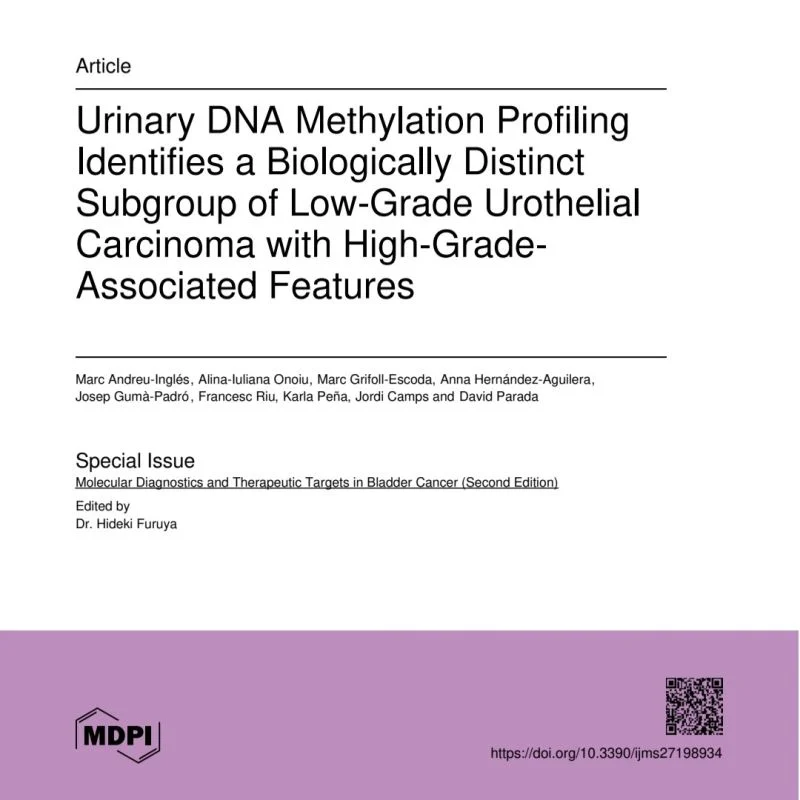
Marc Andreu Inglés — Clinical Biologist; Molecular Pathology Specialist; PhD Researcher in Oncology; Biomedical Scientist; Salut Sant Joan Reus-Baix Camp; Universitat Rovira i Virgili | Spain
“Happy to share our latest publication in the International Journal of Molecular Sciences!
In this study, we used urinary DNA methylation profiling to explore the heterogeneity of low-grade bladder cancer. Our results identify a subgroup with molecular and histological features associated with high-grade disease, including higher Ki67 expression, more frequent MTAP loss and a higher rate of recurrence.
These findings suggest thar urinary DNA methylation could help identify patients with more agressive tumors despiste their low-grade histology. In the future, this approach could contribute to more personalized follow-up, helping avoid unnecessary invasive procedures and reducing the burden of bladder cancer surveilance for patients.”
Romain Diamand — Associate Professor of Urology | Head of the Willy Gregoir Prostate Cancer Center | GU Oncology | Robotic Surgery | Belgium
“Delighted to share that PANDORA has been accepted for publication in The Journal of Urology!
PI-RADS 3 lesions remain one of the grey zones of prostate MRI. Most of these biopsies are negative, yet we cannot afford to miss clinically significant cancer.
In this prospective paired diagnostic study (NCT06867588), 66 patients with a PI-RADS 3 lesion underwent [¹⁸F]JK-PSMA-7 PET/MRI before biopsy.
Key findings:
PSMA PET-targeted biopsy detected csPCa in 15% of patients compared with 6% for MRI-targeted biopsy (P=.03)
Sensitivity 100%, specificity 82% and negative predictive value 100% (according to PSMA PET status)
68% of biopsies could potentially have been avoided
These results should be interpreted alongside the recently published PRIMARY2 trial (James Buteau, Michael Hofman, Louise Emmett et al.). Taken together, they support a growing role for PSMA PET in the diagnostic pathway and could reshape how we manage men with equivocal MRI findings, sparing many of them an unnecessary biopsy without compromising detection.Important questions remain, particularly around cost and the availability of PSMA PET/MRI (or /CT), which is still far from accessible in every center. Larger validation and health economic evaluation are the next steps.”
Sean McBride — Vice Chair, Clinical Strategy, Operations, and Professional Practice, Department of Radiation Oncology, Memorial Sloan Kettering Cancer Center, Brooklyn, New York, United States
“1/n Our Ph2 trial of Atezolizumab added to SOC prostate-directed SBRT + ADT/ARPI in de novo metastatic prostate cancer.
TL;DR: we found unacceptable, synergistic toxicities attributable to the combination of SBRT (CT guided, 7.5-8 Gy x 5, QOD; daily CBCT with intra-fraction monitoring for most) and IO: sigmoid colon perforations x 2.
There were no significant improvements in tumor control end-points compared to historical controls within the group as a whole.”
Farah Fakhri — Final-Year Medical Student, Royal College of Surgeons in Ireland (RCSI) | Ireland
“I’m pleased to share our newly published systematic review and meta-analysis, published in Prostate Cancer and Prostatic Diseases (Springer Nature), which examines whether adding metformin to androgen-deprivation therapy (ADT) benefits men with prostate cancer. We pooled six randomized trials (2,415 participants), including the large 2025 STAMPEDE platform trial.
At 12 months, metformin modestly reduced waist circumference (1.12 cm) and HbA1c (0.07%), but did not improve overall survival. A possible benefit in high-volume metastatic disease came from a single trial and warrants further study.
ADT often brings weight gain and insulin resistance, and these results suggest metformin may help offset some of that metabolic burden. The evidence does not support using it for survival benefit, and its oncological role remains an open question for future trials.”
Raquibul Hannan — GU Radiation Oncologist and Physician-Scientist, UT Southwestern | United States
“Excited to share our JAMA Oncology phase 2 trial of neoadjuvant SAbR for RCC with IVC tumor thrombus!
1-year RFS: 71.4%, meeting the prespecified criterion.
Feasible with encouraging safety findings. Larger trials are next!”
Dillon Cockrell, MD — GU Oncologist, DCI Center for Prostate and Urologic Cancers, Duke; Former Hematology/Oncology Chief Fellow, UNC; Phase I Clinical Trials | United States
“2/4 Bladder Cancer at ESMO26
VOLGA — LBA2
Positive EFS/OS topline announced for durva + EV. Looking for the magnitude of benefit, surgical outcomes, and toxicity.
We know EV+IO has led to major improvements in outcomes for MIBC. Can we offer a less toxic perioperative paradigm with omission of post-op EV?
KEYNOTE-B15 ctDNA — 4734O
Molecular response with perioperative EV + pembrolizumab in MIBC.
Can ctDNA identify residual risk beyond what we learn from surgical pathology?
Particularly interested in discordant results. Identifying a favorable-risk group is different from proving we can safely reduce treatment.”
Enrique Grande — Medical Oncologist | One Oncology Madrid Program Director at Quironsalud | Global Leader in GU Oncology & Bladder Cancer | AI & Digital Oncology | Spain
“New meta-analysis confirming the benefit of perioperative immune-based strategies in cisplatin-eligible MIBC (NIAGARA + KEYNOTE-B15).
Meaningful EFS and OS gains — but the two regimens are not interchangeable. Patient selection matters.”

Find out 10 Must-Read Posts in GI Oncology from the October 12 to October 18 on OncoDaily.