
From October 5 to 11, the second week of October brought together important updates across GU oncology, with expert posts covering bladder cancer, prostate cancer, renal cell carcinoma, urothelial carcinoma, testicular cancer, and liquid biopsy research.
This week’s selection includes updates on perioperative treatment questions in muscle-invasive bladder cancer, intraductal and invasive cribriform carcinoma in prostate cancer risk stratification, triplet therapy in renal cell carcinoma, olaparib plus abiraterone in non-BRCA-mutated metastatic castration-resistant prostate cancer, and urine cell-free RNA profiling for bladder cancer detection and treatment response prediction.
Other posts highlight testicular cancer self-exam guidance, TURBT completeness as a key trial variable in SAKK 06/19, TROFUSE-055 and bladder surgery-sparing strategies, FGFR-altered urothelial carcinoma in the enfortumab vedotin–pembrolizumab era, and a multiplexed liquid biopsy assay for androgen receptor alterations in metastatic castration-resistant prostate cancer.
Together, these posts reflect the continued evolution of GU oncology across perioperative treatment, pathology-based risk stratification, treatment intensification, biomarker-driven selection, liquid biopsy, bladder preservation, trial design, survivorship, and precision oncology.
Brigida Anna Maiorano — GU Oncology, IRCCS San Raffaele Hospital and Scientific Institute | Italy
“Just published!
What is the contribution of the single components in a perioperative approach? This is one of the most pressing unmet needs in MIBC.
There is a need for clinical trial data on this topic, as our IPD comparison between pembrolizumab from PURE-01 and EV pembro from KN-905 shows on ESMO Open.
Enjoy the reading!”
Rui Bernardino — MD, PhD | Urologist | Robotic Surgeon | Single Port | Clinical Scientist | United States
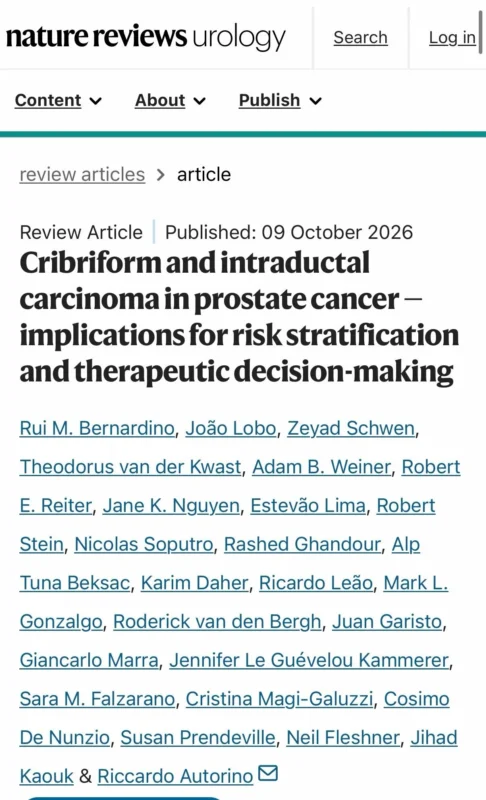
“Our multicentre review in Nature Reviews Urology explores the implications of intraductal carcinoma (IDC) and invasive cribriform carcinoma for prostate cancer risk stratification and treatment decisions.
These aggressive histological patterns are associated with adverse pathology, recurrence, metastasis and prostate cancer mortality. Yet they remain under-recognized and inconsistently reported.
Several key messages emerge:
Detection remains a challenge: biopsy identifies these patterns in only about half of affected men, and MRI-targeted sampling does not fully close this gap.
Their presence has important implications for patient selection for active surveillance and focal therapy.
Their molecular features provide a rationale for investigating biomarker-directed treatments, but morphology alone does not establish benefit from a particular therapy.
Consistent pathology reporting, better detection and prospective studies are essential to translate these findings into more precise treatment decisions.”
Javier Molina Cerrillo — Medical Oncologist focused in GU and endocrine tumors at Ramón Y Cajal University Hospital in Madrid, Steering committee ARON Research Working Group | Spain
“Is triple therapy enough in renal cell carcinoma (RCC)?
I’m pleased to share our new article, published in ESMO Open, addressing an important question in the evolving treatment landscape of RCC.
Despite major advances in combination strategies, triple therapy is not the end of the story. More intensive treatment does not necessarily translate into durable disease control for every patient, and important challenges remain in balancing efficacy, toxicity, and long-term outcomes.
The next step in RCC treatment should not simply be adding more drugs, but identifying the right strategies for the right patients.
I invite you to read our new publication and join the discussion.”
Giuseppe Procopio — Chief of Genitourinary Oncology | Director Prostate Program | Full Professor Qualified | FICOG and Meet-URO President | Italy
“New insights from PROpel: olaparib + abiraterone in non-BRCA-mutated mCRPC
A new analysis from the phase 3 PROpel trial, published in European Urology Oncology, provides further insights into the efficacy and safety of olaparib plus abiraterone in patients with metastatic castration-resistant prostate cancer (mCRPC) without BRCA1/2 mutations.
While the greatest benefit observed in PROpel was seen in patients with BRCA1/2 mutations, this post hoc exploratory analysis focused specifically on the 693 patients without BRCAm, representing 87% of the randomized population.
What did the analysis show?
In the non-BRCAm subgroup, the addition of olaparib to abiraterone was associated with a 5.1 month improvement in median investigator-assessed radiographic progression-free survival (rPFS):
24.1 vs 19.0 months
HR 0.76 (95% CI 0.61–0.94)
The blinded independent central review was consistent with these findings, with median rPFS of 27.6 vs 16.6 months (HR 0.72; 95% CI 0.58–0.90).
For overall survival, however, the difference was more limited: median OS was 39.6 months with olaparib + abiraterone vs 38.0 months with abiraterone alone (HR 0.91; 95% CI 0.73–1.13). This contrasts with the substantially greater treatment effect previously observed in the BRCAm population and reinforces the importance of understanding which patients derive the greatest benefit from PARP inhibitor-based combinations.
Additional exploratory endpoints also favored the combination, including PSA50 response, time to first cytotoxic chemotherapy and time to PSA progression. Importantly, the addition of olaparib did not significantly worsen health-related quality of life, and no new safety signals were identified.
These findings suggest that the activity of PARP inhibitor-based combinations may extend beyond BRCA-mutated disease. At the same time, the heterogeneous nature of the non-BRCAm population and the absence of a clear OS benefit highlight the need for more refined biomarker strategies to identify the patients most likely to benefit from treatment intensification.
An important contribution to the ongoing discussion on how molecular characterization can further refine treatment selection in advanced prostate cancer.”
Enrique Grande — Medical Oncologist | One Oncology Madrid Program Director at Quironsalud | Global Leader in GU Oncology & Bladder Cancer | AI & Digital Oncology | Spain
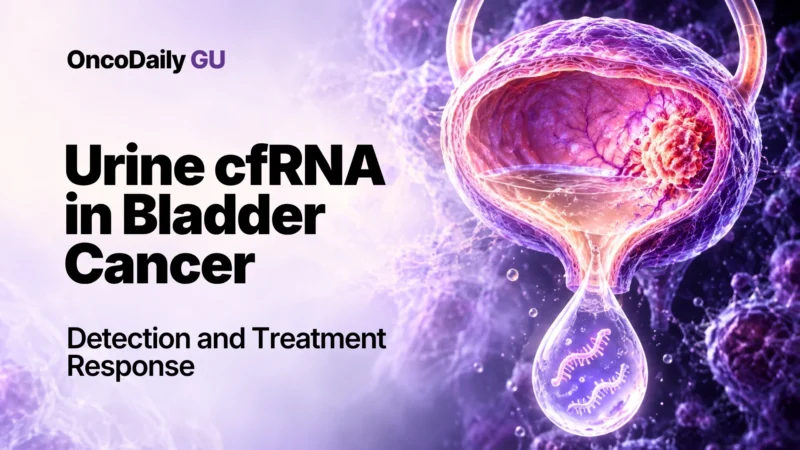
“On Nature Medicine – Urine cell-free RNA profiling, uRARE-seq, for bladder cancer detection and treatment response prediction: n=683 samples.
95% sensitivity at 90% specificity for localized BLCA, outperforming cytology and urine tumor DNA.
Also predicts response to BCG vs intravesical chemotherapy: AUC 0.93.”
Kamalie Thomas — Graduate Student, University of Central Florida | United States
“Happy to share a first author publication!
Ashley Malvita and I share some insight into the differences between the USPSTF and NCI testicular cancer self-exam guidelines. It is time for an update to the USPSTF, as going off of mortality data gives TC self-exams a D recommendation, which doesn’t take into account the post-treatment morbidities known to TC survivors.
As always, this mini project was mentored by Michael J. Rovito, Ph.D., CHES, CMHE! We argue for TSE in the lab and encourage all men to perform it.”
Francesco Claps — Consultant Urological Surgeon at Istituto Oncologico Veneto IOV – IRCCS | Italy
“Our comment on the SAKK 06/19 trial has just been published in Journal of Clinical Oncology.
The trial added intravesical recombinant BCG (rBCG) to systemic chemoimmunotherapy before radical cystectomy for muscle-invasive bladder cancer.
Few studies bring a genuinely new concept to perioperative MIBC treatment, and SAKK 06/19 is one of them, moving local immune modulation from non-muscle-invasive to invasive disease. pCR was 68% and pathologic response (PaR) 83% at cystectomy, with an adjusted odds ratio for pCR of 5.13 vs its predecessor SAKK 06/17 in a propensity score–weighted comparison.
Yet one of its most striking subgroup findings has received little attention: pCR was 87% after a macroscopically complete TURBT vs 56% after an incomplete one; the gap was much smaller for PaR: 87% vs 80%.
Does ypT0 at cystectomy measure only response to treatment, or also how much tumor had already been removed before it started?
It’s tempting to see complete resection and intravesical therapy as complementary: less macroscopic tumor may let local immunotherapy act more effectively on microscopic residual disease. The data are compatible with this, but differences in baseline tumor burden and resectability remain alternative explanations.
Either way, TURBT completeness matters: it was not included in the propensity score model and has not been reported for SAKK 06/17, so the intertrial comparison cannot account for it. And if pCR partly reflects the initial resection, response-adapted strategies may select for TURBT quality as well as treatment sensitivity, with possible implications for generalizability across centers with different TURBT practices.
Our take-home message: TURBT completeness should be treated as a trial variable in its own right. When pCR is the endpoint, the extent of the initial resection should be prospectively defined, reported and, where appropriate, considered in stratification, especially when local and systemic treatments are combined.”
Tom Powles — Head of Solid Tumor Research at Barts Cancer Institute | United Kingdom
“TROFUSE-055 is a randomized phase 3 non-muscle invasive bladder cancer trial. It’s another trial exploring bladder surgery sparing approaches.
This study tests the combination of SAC-TMT with Pembro: 68% RR in advanced disease, followed by chemoradiation. The control is ChemoRT, with or without NAC.
This study is distinct from EV309, where no chemoRT is given in the study arm.
We will need many trials to identify the optimal approach. The role of chemoRT in ADC-driven cCR is unknown.”
Luigi Formisano — Associate Professor of Medical Oncology at University of Naples Federico II | Italy
“Pleased to share our group’s latest review, published in Critical Reviews in Oncology/Hematology:
‘FGFR-Altered Urothelial Carcinoma in the EV–Pembrolizumab Era: Rationale and Emerging Data for Upfront Triplet Strategies’
We explore the rationale and emerging evidence for integrating FGFR inhibitors with enfortumab vedotin–pembrolizumab, highlighting the potential of upfront triplet strategies and the questions that future clinical trials must address.
Many thanks to all co-authors for their contribution!”
Manish Kohli, MD — Professor of Medicine and Director, Physician Scientist Training Program University of Utah Health | Jack R. and Hazel M. Robertson Presidential Endowed Chair in Cancer Research | United States
“Circulating tumor DNA (ctDNA) applications in metastatic castration-resistant prostate cancer (mCRPC) have typically examined one molecular alteration at a time.
Building on our team’s long-standing NIH-funded work, which include multiple R01-UH2 awards, we are developing a multiplexed liquid biopsy assay that detects four androgen receptor (AR) alterations at both the DNA and RNA levels in a single reaction. This approach reduces cost and conserves the limited sample material available from liquid biopsies.
This effort was led by my longtime colleague Dr. Liang Wang, Moffitt Cancer Center, on our jointly NIH-funded awards and offers a proof-of-principle multiplexing panel that combines complementary measures of critical AR biology central to the outcomes in this cancer. We include determinants such as copy-number alterations (CNA) in AR enhancer and AR intron 1, detection of the ART878A point mutation, and detection of AR-V7 splice variants — all taken together in a single reaction.
Together, these capture DNA and RNA-level alterations that drive AR signaling and therapeutic resistance in mCRPC.
Rather than evaluating each AR alteration in isolation, this approach offers a more integrated view of AR genomic and transcriptomic changes in liquid biopsies, with the potential to inform advanced prostate cancer outcomes.
Further analytical and clinical validation is clearly needed before clinical translation; however, our access to well-annotated real-world biorepositories, high-quality pre-analytic specimens, and continued NIH support provide a strong foundation.
We continue to work eagerly towards validation of the multiplexed assay approach and for defining its role in the molecular management of men with mCRPC, an illness that remains lethal.
We remain deeply grateful to NIH for sustained support of this work!”

Find out 10 Must-Read Posts in GU Oncology from the September 28 to October 4 on OncoDaily.