The second week of November 2026 brought new research findings and expert perspectives across GU Oncology, with updates in prostate, bladder, urothelial, and renal cell cancers. This week’s discussions covered hereditary cancer risk, screening recommendations, treatment strategies, immunotherapy resistance, and emerging biomarkers.
The selection begins with a multicenter study examining urothelial cancer in patients with Lynch syndrome, followed by updated prostate cancer screening recommendations from the American Cancer Society. Other posts highlight the IMPACT UTUC international Delphi consensus on non-metastatic upper tract urothelial carcinoma and new research exploring the tumor microenvironment and mechanisms of immunotherapy resistance in bladder cancer. A further discussion examines regulatory decisions involving ivonescimab in lung cancer, their relevance to GU oncology, and ongoing trials in bladder cancer.
In prostate cancer, experts compared results from STAMPEDE, ENZARAD, and DASL-HiCaP in high-risk non-metastatic disease and shared commentary on the PROTEUS trial. Renal cell carcinoma updates included the final analysis of KEYNOTE-564, evaluating adjuvant pembrolizumab, and research combining spatial biology with machine learning to predict outcomes following sunitinib treatment. The selection also features a review of urinary biomarkers and liquid biopsies in non-muscle-invasive bladder cancer.
Together, these 10 posts provide an overview of recent research and clinical discussions in GU oncology, from screening and treatment decisions to molecular profiling, immunotherapy, and biomarker development.
Niklas Klümper, MD — W2 Professor of Translational Uro-Oncology, University Hospital Bonn | Germany
“Can urothelial cancer be the first sign of Lynch syndrome?
Excited to share our new multicenter study, published in JCO Precision Oncology, led by Antonia Schuler and colleagues!
Among 3,274 individuals with Lynch syndrome, 144 developed 224 primary urothelial cancers.
In 34.7%, UC was the first documented malignancy.
MSH2/EPCAM carrier status was strongly associated with UC risk.
30/31 centrally analyzed tumors were MSI-high.
These findings highlight why hereditary cancer risk assessment matters in urothelial oncology—and why molecular testing may help identify patients and families who could benefit from tailored surveillance.Proud to be part of this collaborative effort with the German Consortium for Familial Intestinal Cancer! Robert Hüneburg”
Shahrokh Shariat, MD — Professor and Chair, Department of Urology; Director, Comprehensive Cancer Center, Medical University of Vienna and Vienna General Hospital; Co-lead, Austrian Comprehensive Cancer Network | Austria
“An important step forward for men’s health! Congratulations to the American Cancer Society on its updated prostate cancer screening recommendations.
The guidance now recommends a PSA blood test every two years for men aged 50–69 at average risk, with earlier and more frequent testing for certain higher-risk groups.
An elevated PSA should first be confirmed. MRI and other tests can then help determine who needs a biopsy. Men with low-risk cancer should be offered active surveillance, helping them avoid or delay unnecessary treatment.
The aim is clear: find dangerous cancers earlier, reduce advanced disease and prevent deaths while limiting harm.
I hope this gives Austria further momentum to introduce organized, risk-adapted prostate cancer screening accessible to all eligible men.
Men and their families deserve timely action.”
Savio Domenico Pandolfo — Urologist, University of Naples Federico II; Assistant Professor, University of L’Aquila | Italy
“I am pleased to share that our paper, “International multidisciplinary Delphi consensus on advanced practice in non-metastatic upper tract urothelial carcinoma (IMPACT UTUC)”, has been published in Nature Reviews Urology.
I am deeply grateful to Prof. Riccardo Autorino MD PhD for his guidance and trust throughout this project.
Sincere thanks to Roberto Contieri, who coordinated the Delphi process with me, and to our steering committee: Maria Carmen Mir, Shilpa Gupta, MD, FASCO, Laura Bukavina MD MPH MSc, Hooman Djaladat and Ithaar Derweesh.
Non-metastatic upper tract urothelial carcinoma (UTUC) is a rare disease in which high-level evidence remains limited and clinical practice varies substantially across diagnosis, staging and treatment.
To address this gap, we conducted a two-round, web-based Delphi process involving an international panel of urologists and medical oncologists from Europe, the Americas and Asia. Consensus was reached on 32 of 40 statements (80%), and the key findings are summarized in the image below.
To our knowledge, this is the first structured international Delphi consensus covering the entire non-metastatic UTUC care pathway. The statements that did not reach consensus are equally informative, as they identify priorities for future prospective research.”
Joseph Steward — Medical, Technical & Marketing Writer | Oncology, Immunotherapy, mRNA Therapeutics, Targeted Therapies | Genomics, Molecular Diagnostics & Biomedical Data Science | United States
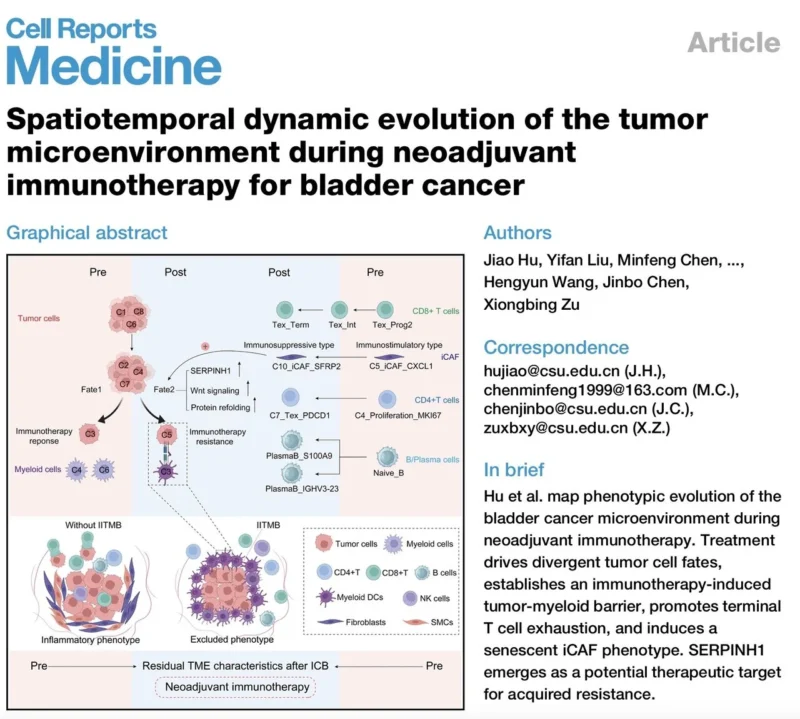
“We characterize the spatiotemporal dynamics of the tumor microenvironment (TME) in bladder cancer (BLCA) samples before and after neoadjuvant immunotherapy in a multicenter real-world cohort (n = 606). We identify two distinct differentiation outcomes in BLCA epithelial cells: sensitivity and resistance to immunotherapy.
Additionally, we identify SERPINH1 as a common target of acquired immunotherapy resistance in BLCA. Furthermore, we characterize an immunotherapy-induced tumor-myeloid barrier, which leads to an excluded immune phenotype and immunotherapy resistance. Finally, we identify T cell terminal exhaustion and a senescent inflammatory cancer-associated fibroblast phenotype as key factors contributing to immunotherapy resistance.
Collectively, we reveal the dynamic phenotypic evolution of the TME in BLCA during neoadjuvant immunotherapy and identify the characteristics of residual lesions after immunotherapy. These findings enrich our understanding of immunotherapy resistance in BLCA and contribute to developing combination therapies to improve patient prognosis.
Paper and research by Jiao Hu and larger team. The excerpt above is from the author’s manuscript.”
Tom Powles — Professor of Genitourinary Oncology, Barts Cancer Institute, Queen Mary University of London | United Kingdom
Today the FDA approved neoadjuvant EV and perioperative duvalumab in muscle invasive bladder during Uromigos Live . This is based on a +ve EFS & OS signal This gives and addition option to 9 cycles of perioperive EVP already approved.
Neeraj Agarwal, MD, FASCO — Medical Oncologist, Dana-Farber Cancer Institute; Co-Director, Prostate Cancer Program, Harvard Cancer Consortium; Editor-in-Chief, ASCO Daily News | United States
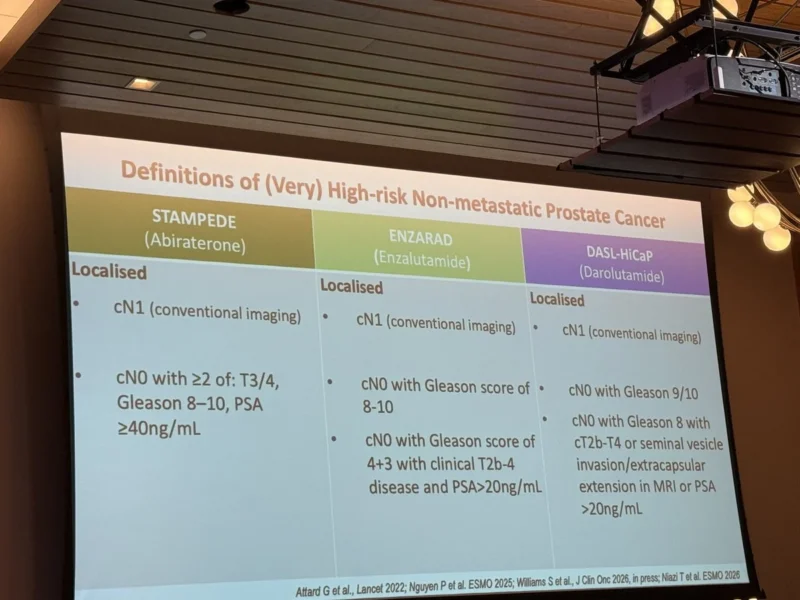
“ADT + ARPI in (very) high-risk non-metastatic ProstateCancer: three trials, three different populations.
MFS HR in all patients:
STAMPEDE (abiraterone) 0.53
ENZARAD (enzalutamide) 0.88
DASL-HiCaP (darolutamide) 0.42In cN1: 0.49 / 0.43 / 0.39.
Case-mix matters.”
Enrique Grande — Medical Oncologist; Medical Oncology Department Director at Quironsalud Madrid | Spain
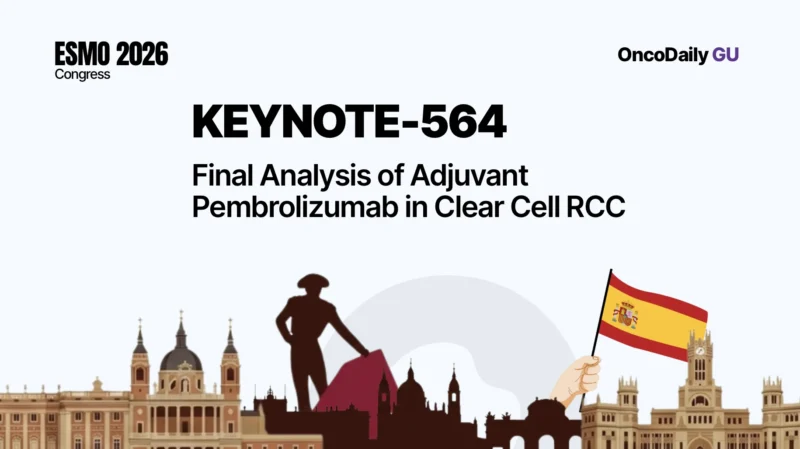
“KEYNOTE-564 final analysis ESMO26: adjuvant pembrolizumab vs placebo in ccRCC at increased risk of recurrence after nephrectomy (n=994; median follow-up ~7 years).
DFS HR 0.68. OS HR 0.70.
7-year OS: 82.3% vs 76.6%.
DFS and OS benefits maintained at the final analysis. No new serious treatment-related adverse events.”
Elshad Hasanov, MD, PhD — Physician-Scientist and Medical Oncologist; Machine Learning/AI in Oncology, Single-Cell Spatial Biology and Clinical Trials | United States
“Excited to share our lab’s latest publication in Signal Transduction and Targeted Therapy, a Nature Portfolio journal with an impact factor of 81.2!
Our study highlights the power of combining spatialbiology and machinelearning to understand treatment response and predict outcomes in renal cell carcinoma, even using older, archival tissue.
Using formalin-fixed, paraffin-embedded (FFPE) specimens from a phase 2 trial of sunitinib in metastatic clear cell renal cell carcinoma, we examined the tumor microenvironment to identify biological programs associated with response and resistance.
Three messages from this work:
Spatial context matters. Examining tumor, myeloid, T-cell, and endothelial compartments separately revealed distinct immune and angiogenic programs associated with treatment outcomes.
Older FFPE tissue remains a valuable resource for discovery. Spatial profiling enabled us to recover clinically informative biology from archived specimens, highlighting the lasting value of tissue collected in earlier clinical trials.
Spatially derived features can support survival prediction. We used these gene-expression features to develop and test machine learning models in the independent phase 3 JAVELIN Renal 101 cohort. The models stratified progression-free survival (PFS) and overall survival (OS) among sunitinib-treated patients, including in a held-out test set.
For me, this is an exciting example of CodetoClinic: connecting tissue biology with computational modeling to advance biomarkers of treatment outcomes.”
Paul Sargos, MD — Radiation Oncologist | France
“Our short comment about PROTEUS 1 is out in the New England Journal of Medicine.
Team POV with Mario Terlizzi, Olivier De Hertogh and GFRU – Groupe francophone de Radiothérapie en Urologie.”
Liang Cheng — Vice Chair, Professor of Pathology and Surgery (Urology), Director of Anatomic Pathology and Molecular Pathology, Warren Alpert Medical School of Brown University; Associate Director, Legorreta Cancer Center | United States
“Urinary biomarkers in non-muscle invasive bladder cancer: translating multiplex and genomic liquid biopsies into clinical practice”
Great work led by Professor Zhang and colleagues, now published online in NPJ Precision Oncology @Nature_NPJ. Honored to be part of this collaborative work.
We review the rapidly evolving landscape of urinary biomarkers and liquid biopsies and their potential to transform the clinical management of bladder cancer. As the field moves beyond conventional cytology and protein assays, RNA panels, DNA mutation and methylation assays, urinary tumor DNA, extracellular vesicles, and emerging multiplex and multi-omic platforms are creating new opportunities for precision-guided care.
These approaches may improve hematuria triage, detect recurrence and minimal residual disease, predict treatment response, and enable more personalized surveillance. High-negative-predictive-value assays may also help safely reduce the burden of repeated cystoscopy in appropriately selected patients while maintaining oncologic vigilance.
The major challenge is now translation into clinical practice. This will require standardized urine collection and processing, reproducible assays, clinically meaningful decision thresholds, prospective biomarker-guided trials, and demonstration of cost-effectiveness.
Looking ahead, the integration of genomic liquid biopsy, extracellular vesicles, multi-omics, and AI may provide a “molecular safety net” for more precise, less invasive, and patient-centered bladder cancer management.

Find out 10 Must-Read Posts in GU Oncology from the first week of November on OncoDaily.