
The first week of November 2026 brought new research and expert perspectives across GU Oncology, with updates covering prostate cancer, kidney cancer, bladder cancer, and testicular cancer. Recent publications explored clinical trial applicability, treatment outcomes, molecular characteristics, and emerging diagnostic approaches.
This week’s selection includes findings from the PIONEER+ initiative examining the applicability of clinical trials to patients with metastatic hormone-sensitive prostate cancer, the development of the RMC-COMPASS prognostic model for renal medullary carcinoma, and discussions on long-term survivorship care in young patients with testicular cancer. Other posts highlight research on FTO-mediated immune evasion in papillary renal cell carcinoma and the clinicopathological characteristics of TFE3-rearranged renal cell carcinoma.
Further discussions cover results from the phase III ENERGIZE trial evaluating perioperative nivolumab in muscle-invasive bladder cancer, AI-based prediction of drug combinations for FGFR-altered urothelial carcinoma, and the use of combined MRI and ultrasound imaging for prostate cancer detection. The selection also includes findings on bladder cancer risk following atypical urothelial cytology and the 2026 APCCC consensus report addressing high-risk localized, locally advanced, and biochemically recurrent prostate cancer.
Together, these 10 posts highlight recent developments in GU oncology, from treatment strategies and molecular research to prognostic assessment, diagnostic innovation, and survivorship care.
Juan Gómez Rivas — Urologist, Hospital Clínico San Carlos; Director, ICUA La Milagrosa; Associate Professor, Complutense University of Madrid (UCM); ESU/ESOU Board Member; Chair of Scientific Activities, AEU | Spain
“Do clinical trials truly represent the patients we treat every day?
Excited to share the latest publication developed within the PIONEER+ EAU UroEvidenceHub initiative!
Using real-world data from 32,585 patients with newly diagnosed metastatic hormone-sensitive prostate cancer (mHSPC), we assessed the applicability of 12 landmark randomized controlled trials.
Key findings:
Up to 55% of real-world patients would have been ineligible for individual pivotal trials.
55–60% met at least one exclusion criterion from the trials evaluated.
Anemia, heart failure, and renal impairment were among the most frequent reasons for exclusion.
Importantly, a substantial proportion of patients receiving trial-tested therapies in routine practice would not have qualified for the trials supporting their use.
The take-home message?
Randomized trials tell us whether treatments work under controlled conditions. Real-world evidence helps us understand how applicable those findings are to the patients sitting in front of us.
We need more inclusive clinical trials, better integration of real-world evidence, and treatment decisions that reflect patient complexity not just disease characteristics.”
Pavlos Msaouel, MD, PhD — Associate Professor of Genitourinary Medical Oncology and Translational Molecular Pathology, MD Anderson Cancer Center | United States
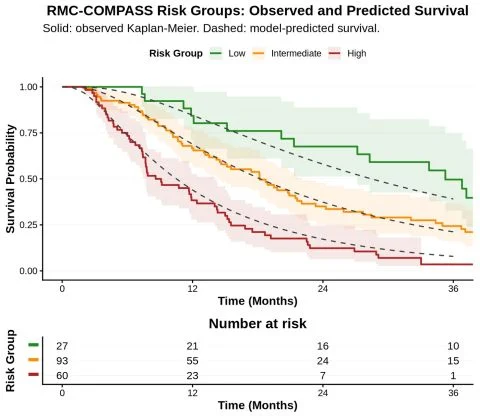
“No disease-specific prognostic model existed for SMARCB1-deficient renal medullary carcinoma (RMC). Our new paper in European Urology Oncology describes the development and internal validation of one, RMC-COMPASS.
The cohort included 180 patients treated at MD Anderson from 2003 to 2025 (median OS 15.2 months; 142 deaths). Overfitting was the central methodological risk: by the Riley criteria, about 580 patients would be needed to develop a 16-parameter model with expected shrinkage of 0.90. We therefore repeated the complete development procedure, including elastic-net variable screening and selection of the accelerated failure time (AFT) distribution, in each of 1000 bootstrap resamples across 50 multiply imputed datasets, so that the optimism estimate reflects every data-driven step.
The final log-normal AFT model retained four variables measured at diagnosis: ECOG performance status, number of involved anatomic disease sites beyond the primary tumor, neutrophil-to-lymphocyte ratio, and corrected calcium. The optimism-corrected C-index was 0.64 (95% CI 0.61–0.71), compared with 0.58 for the IMDC score in the same patients. The calibration slope, 0.895 (95% CI 0.589–1.20), served as the uniform shrinkage factor. Decision curve analysis at 24 months showed apparent net benefit across threshold probabilities of 40–80%.
Discrimination is modest, as expected in a uniformly aggressive disease, and for counseling, calibration of absolute risk matters more than rank order. Refitted on patients diagnosed before 2020, the model kept a C-index of 0.64 in those diagnosed from 2020 onward, but its calibration slope (0.839; 95% CI 0.351–1.30) was imprecise, so recalibration may be needed before absolute risk thresholds are applied to contemporary patients.
RMC-COMPASS is intended for prognostic counseling and for stratification in prospective trials using prespecified groups defined by predicted 24-month OS (<25%, 25–50%, >50%). The complete R code is also freely available with the supplementary material. It covers every step above, from multiple imputation and bootstrap validation of the full selection procedure to shrinkage, calibration, decision curve analysis, and temporal validation. None of these methods is specific to RMC, and the code can serve as a template for rigorous prognostic model development across oncology.”
Daniele Raggi — Consultant Medical Oncologist, Genitourinary Medical Oncology | United Kingdom
“Pleased to see our paper published in European Urology Oncology, discussing the need to rethink long-term survivorship care for adolescents and young adults with testicular cancer.
Looking forward to developing this work through TRANSCEND-XR.
Many thanks to Mohamad Saab, Anna Patrikidou and Jack Gleeson, and all co-authors for their contributions!”
Catarina Teixeira — Postdoctoral Fellow at DBMR | Cancer Research | Fulbright Alumni, Switzerland
“It’s out!
I am very happy to share that our paper “FTO mediated glycolytic metabolism for papillary renal cell carcinoma immune evasion” has just been published in Biomedicine & Pharmacotherapy (open access)!
This project is a big part of my PhD journey. A huge thank you to all co-authors and collaborators, and especially to Prof. Carmen Jeronimo, Prof. Manel Esteller, Vera Gonçalves and the Cancer Biology and Epigenetics Group at IPO Porto Research Center.”
Vassiliki Pasoglou — Radiologist, Cliniques Universitaires Saint-Luc; Clinical Lecturer, UCLouvain | Belgium
“Rare kidney cancers deserve greater attention!
Pleased to share our study: “Clinicopathological Features and Outcomes of Molecularly Confirmed TFE3-rearranged Renal Cell Carcinoma in Adults.”
Through a collaboration between Belgian and French centers, this study explored the clinicopathological characteristics and outcomes of this rare and diagnostically challenging kidney cancer.
Many thanks to all co-authors and collaborators, and a special thanks to Prof. Emmanuel Seront for his boundless enthusiasm and motivation!”
Enrique Grande — Medical Oncologist; Director, One Oncology Madrid Cancer Program, Quirónsalud | Spain
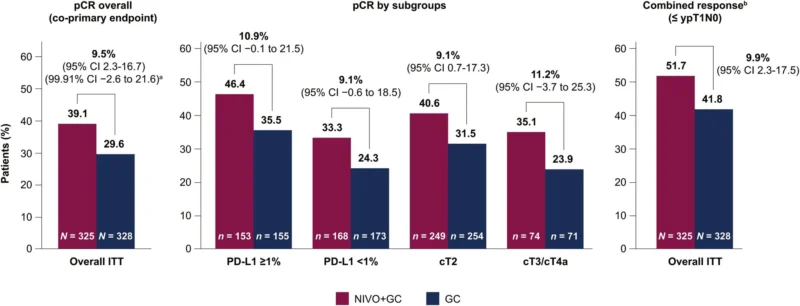
“CA017-078 (ENERGIZE) ESMO26: phase 3 trial of neoadjuvant nivolumab + gemcitabine-cisplatin followed by adjuvant nivolumab vs neoadjuvant gemcitabine-cisplatin in cisplatin-eligible MIBC (n=653).
Neither co-primary endpoint was met: EFS HR 0.94; pCR 39.1% vs 29.6% (not statistically significant).
Exploratory analyses associated ctDNA detection at baseline and at cycle 4 with shorter EFS and OS.”
Hossein Sadr — PhD in Computer Science; Artificial Intelligence in Medicine, Iran
“I am thrilled to share our latest publication in the European Journal of Medical Research (ISI/BMC/Springer)!
By adapting the RAIN protocol, we integrated Graph Convolutional Networks (GCN) with systematic network meta-analysis to predict synergistic drug combinations for bladder cancer. Our AI-driven model successfully identified the triplet Cisplatin + Erdafitinib + Epirubicin as a highly promising computational candidate for FGFR-altered urothelial carcinoma (OR = 0.45).
It was a privilege to collaborate on this multidisciplinary project with my esteemed colleagues Mohsen Askari, Dr. Ali Akbar Kiaei, Mahnaz Boush, Dr. Zeynab Barzegar, and Dr. Mozhdeh Nazari.”
Mirabela Rusu — Associate Professor of Radiology, Stanford University | United States
“Prostate ultrasound is seen as an inferior modality compared to MRI when it comes to revealing prostate cancer. Yet urologists know that most cancer are hypoechoic (dark) on ultrasound, but don’t feel that they cant reliably find clinically significant cancer on ultrasound alone. Radiologists would rather read a prostate MRI.
Our recent study, “An artificial intelligence model combining MRI and ultrasound images (MRUSuNet) for prostate cancer detection outperforms radiologist MRI interpretation” published in BJUI showed that the ultrasound information should not be ignored when it comes to detecting cancer. when added to MRI, ultrasound improves the ability of the models to detect clinically significant cancer.”
Laura Bukavina, MD, MPH, MSc – Urologic Oncologist | Assistant Professor, Cleveland Clinic | Translational Research Lead, GU Oncology | PI, Bukavina Lab | Associate Editor, European Urology, United States
“Congrats jaymsiva on this clinically important publication.
what to do with urothelial typical of unknown significance (AUS) and odds of BC development always struggle in clinic
Largest contemporary series of de novo urothelial atypia (n=103)
5-yr bladder cancer risk 6.5% with AUS median time to progression 1.7 years
Perhaps scoping again in 1-2 years may not be a bad idea”
Neal Shore — Medical Director, CPI, Carolina Urologic Research Center; Director, START GU Oncology Center of Excellence | United States
“Management of Patients with High-risk Localised, Locally Advanced, and Biochemically Recurrent Prostate Cancer: Report from the 2026 Advanced Prostate Cancer Consensus Conference”

Find out 10 Must-Read Posts in GU Oncology from the October 19 to 31 on OncoDaily.