
The third week of May brought together important updates across GU oncology, with 10 posts highlighting new research, regulatory developments, expert perspectives, and clinical discussions in prostate, bladder, kidney, and penile cancers.
This week’s selection includes updates on automated prostate radiotherapy workflows, molecular subtypes in metastatic clear cell renal cell carcinoma, salvage radiotherapy after radical prostatectomy, Pluvicto in PSMA-positive metastatic prostate cancer, real-world olaparib use in BRCA-mutated mCRPC, 5-year CheckMate 274 results, ASCO26 oncology data, dual ctDNA and utDNA monitoring in bladder-sparing therapy, HPV evaluation in penile cancer, and perioperative PADCEV plus pembrolizumab in cisplatin-ineligible MIBC.
Together, these posts reflect the breadth of current GU oncology research and practice, from radiotherapy innovation and molecular profiling to biomarker-guided treatment, perioperative bladder cancer strategies, nuclear medicine, and precision oncology.
Jakob Liermann — Associate Professor; Senior Attending Physician in Radiation Oncology and Radiotherapy at Heidelberg University Hospital; Research Scientist at the German Cancer Research Center (DKFZ) | Germany
“Fully automation for prostate radiotherapy – now part of our clinical routine workflow!
Reducing preparation time from 87 min. to 9 min.
86% clinically acceptable plans after full automation
Physician review including all available clinical information and imaging as well as QA still being mandatory, for sure
Congrats to David Neugebauer for his scripting skills and fantastic work on this topic!”
Alan Reyes Mondragón, MD — Clinical Oncologist & Medical Manager GU Cancers | Mexico
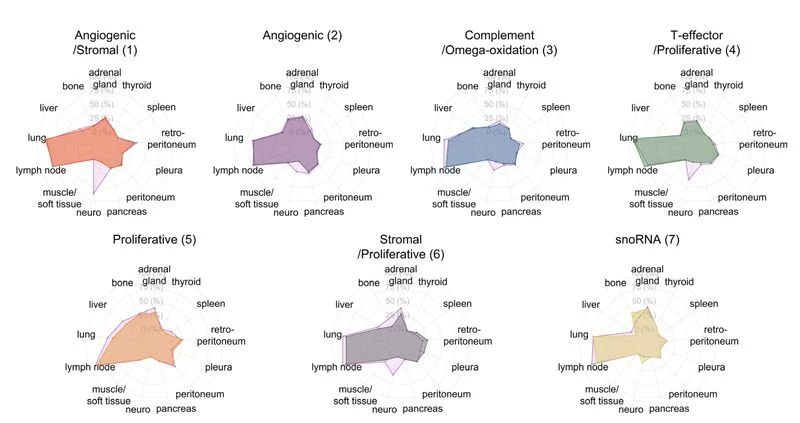
“Metastatic ccRCC is no longer a “one disease fits all” entity.
The IMmotion150 molecular analysis identified 7 distinct transcriptomic clusters:
- Angiogenic/Stromal
- Angiogenic
- Complement/ω-oxidation
- T-effector/Proliferative
- Proliferative
- Stromal/Proliferative
- snoRNA
Angiogenic clusters (1–2) demonstrated higher pancreatic tropism and significantly greater benefit from VEGF-targeted TKIs such as sunitinib. In contrast, proliferative clusters (4–5) showed more lymph node disease and a more aggressive biological phenotype.
Metastatic patterns may reflect tumor biology; we increasingly need to tailor treatment according to biological and molecular behavior — not only clinical risk scores. Precision oncology in RCC is moving beyond histology alone.”
Luigi Formisano — Associate Professor of Medical Oncology at University of Naples Federico II | Italy
“I am pleased to share the publication of the work by Fortuna Migliaccio in Prostate Cancer and Prostatic Diseases (Nature Portfolio).
The paper, entitled:
“Salvage radiotherapy with or without hormonal therapy for biochemical recurrence after radical prostatectomy: a systematic review and meta-analysis”
represents a scientific contribution to the management of biochemical recurrence in prostate cancer after radical prostatectomy.
Congratulations to Fortuna Migliaccio and all co-authors for their contribution.”
Antonio Maldonado — Antonio Maldonado — Head of Nuclear Medicine, Molecular Imaging PET-CT and Radiometabolic Theranostics at Quirónsalud University Hospital Madrid and Hospital La Luz, Quirónsalud Hospital Group | Spain
“Novartis said new data from the PSMAddition trial shows Pluvicto can significantly reduce PSA progression in patients with hormone-sensitive, PSMA-positive metastatic prostate cancer. The findings were presented at the American Urological Association meeting as the company seeks to expand the indications for Pluvicto.”
Dianne Bosch — Urology Resident (AIOS), PhD Candidate | The Netherlands
“We are happy to share our latest work with you:
“From Genomic Testing to Olaparib Treatment: Real-World Utilization and Outcomes in BRCA-Mutated Metastatic Castration-Resistant Prostate Cancer” has been published online in Drugs – Real World Outcomes.
In this large real-world cohort of 1996 Dutch metastatic castration-resistant prostate cancer (mCRPC) patients (2016–2021; follow-up to January 2024), genomic testing was limited and inconsistently applied across medical centers. Despite the small number of eligible BRCAm patients, most (27/35) received olaparib, with more favorable outcomes observed in the earlier initiated taxane-naïve setting.
We believe that lowering the threshold for genomic testing is essential to optimize personalized therapy in metastatic prostate cancer.
We want to thank everyone that contributed.”
Enrique Grande — Medical Oncologist | One Oncology Madrid Program Director at Quironsalud | Global Leader in GU Oncology & Bladder Cancer | Spain
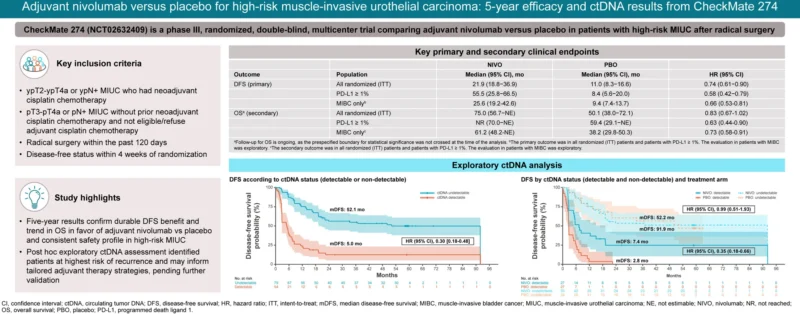
“5-year CheckMate 274 results confirm durable DFS benefit with adjuvant nivolumab in high-risk MIUC (HR 0.74 all patients; HR 0.58 in PD-L1 ≥1%), with no new safety signals.
Exploratory ctDNA analyses identify two distinct prognostic groups, supporting its potential to refine adjuvant treatment selection.”
Nancy Ghattas — Vice President, US Oncology Commercial Franchise Head, Immuno-Oncology, AstraZeneca | United States
“This content is intended for US audiences only.
As our AstraZeneca team counts down to ASCO26 in the next few days, we’re accelerating our IO momentum with new phase III data across liver, bladder and lung cancers:
We’ll present data from the EMERALD-3 Phase III study, evaluating our treatment combination and transarterial chemoembolization (TACE) in unresectable hepatocellular carcinoma eligible for embolization. It’s a cornerstone of our strategy to intervene earlier in liver cancer.
We’ll be sharing five-year overall survival data and patient-reported outcomes from the POTOMAC Phase III trial in high-risk non-muscle-invasive bladder cancer. May has been a significant month of bladder cancer advancements and we’re looking forward to gaining even more traction at ASCO next week.
We’ll spotlight our approach to treating lung cancer across every stage of the disease. Exploratory analyses from the AEGEAN Phase III study will examine the impact of our neoadjuvant medicine on the tumor microenvironment and their association with event-free survival in resectable early-stage NSCLC. We’ll also present the TRITON Phase IIb trial of our combination therapy plus chemo in metastatic nonsquamous NSCLC with specific mutations.
We have a proven track record of practice-changing medicines and pioneering pipeline advances that have transformed cancer care over the last decade – and we’re not letting up. With more than 85 abstracts featuring 10 approved and 13 potential new medicines, including 25 oral presentations, we’re heading into ASCO on a mission to expand our leadership in IO as we work to eliminate cancer as a cause of death.”
José Daniel Subiela — Uro-Oncologist; Urothelial Carcinoma Specialist; Robotic Surgery and Kidney Transplant Surgeon; Clinical Researcher, Hospital Ramón y Cajal and University of Alcalá | Spain
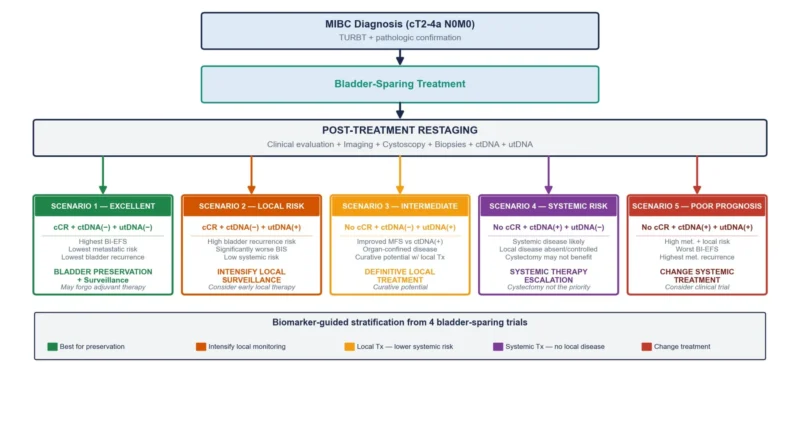
“Out now in European Urology — our editorial on dual-biomarker monitoring (ctDNA + utDNA) for bladder-sparing therapy in muscle-invasive bladder cancer.
Four recent independent trials converge on a single message: plasma ctDNA and urinary tumor DNA (utDNA) provide complementary, non-overlapping clinical information, and use of either alone may be insufficient.
ctDNA — a systemic sentinel with a local blind spot
ctDNA predominantly reflects systemic disease burden — and local recurrence remains largely undetected by plasma-based assays alone.
utDNA — filling the local gap
utDNA predicts pathological complete response (pCR) with an AUC of 0.80. By contrast, utDNA provides no information on systemic disease.
A unified framework — five actionable clinical scenarios (see attached figure)
• Dual-negative cCR (ctDNA−/utDNA−) → 2-year bladder-intact event-free survival ~91%, metastatic risk ~4.5%. Strongest candidates for bladder preservation.
• Isolated utDNA+ with cCR (ctDNA−/utDNA+) → high local recurrence risk (70%; HR 6.47). Intensified local surveillance despite low systemic risk.
• No cCR but ctDNA− (ctDNA−/utDNA+) → definitive local therapy retains meaningful curative potential (MFS HR 3.85; 95% CI 1.02–16.7).
• Isolated ctDNA+ without cCR (ctDNA+/utDNA−) → systemic disease without detectable local residual tumor. Escalate systemic therapy; radical cystectomy is not the priority.
• Dual positivity without cCR (ctDNA+/utDNA+) → poorest prognosis (HR 8.33; 95% CI 1.38–50.36 for recurrence, salvage surgery, or systemic-therapy change). Change in systemic strategy rather than immediate local surgery.
We therefore propose that dual-compartment liquid biopsy — plasma ctDNA as a systemic sentinel, urinary tumor DNA as a local one — represents a rational investigational framework for future bladder-sparing trials, as neither compartment alone is sufficient.”
Sabina Davidsson — Head of the Research and Development Unit, Department of Urology | Sweden
“I am very pleased to present the latest article from our penile cancer research at Örebro University Hospital, “Histological and Molecular Evaluation of HPV in Primary Tumors and Lymph Node Metastases of Penile Cancer.” Excellent work by our doctoral student Luiza Dorofte, whose thesis will include this study.”
Prof. Dr. Axel S. Merseburger — Director of the Department and Outpatient Clinic of Urology | Germany
“Practice changing in uro-oncology:
The positive CHMP opinion for perioperative PADCEV + pembrolizumab in cisplatin-ineligible MIBC is another major step toward redefining the treatment landscape for bladder cancer patients who historically had limited systemic treatment options before and after cystectomy.
The EV-303 / KEYNOTE-905 data are highly impressive:
• 60% reduction in risk of recurrence, progression or death
• 50% reduction in risk of death
• pCR rates approaching 60%Particularly relevant is that these data address a population we all struggle with in daily practice: patients unfit for cisplatin but still facing a very high recurrence risk after surgery.
We are clearly witnessing the transition from classic chemotherapy-only perioperative concepts toward ADC + immunotherapy combinations with meaningful survival impact.
Exciting times for uro-oncology — and likely only the beginning of a broader perioperative evolution in bladder cancer.”

Find out 10 Must-Read Posts in GU Oncology from the second week of May on OncoDaily.