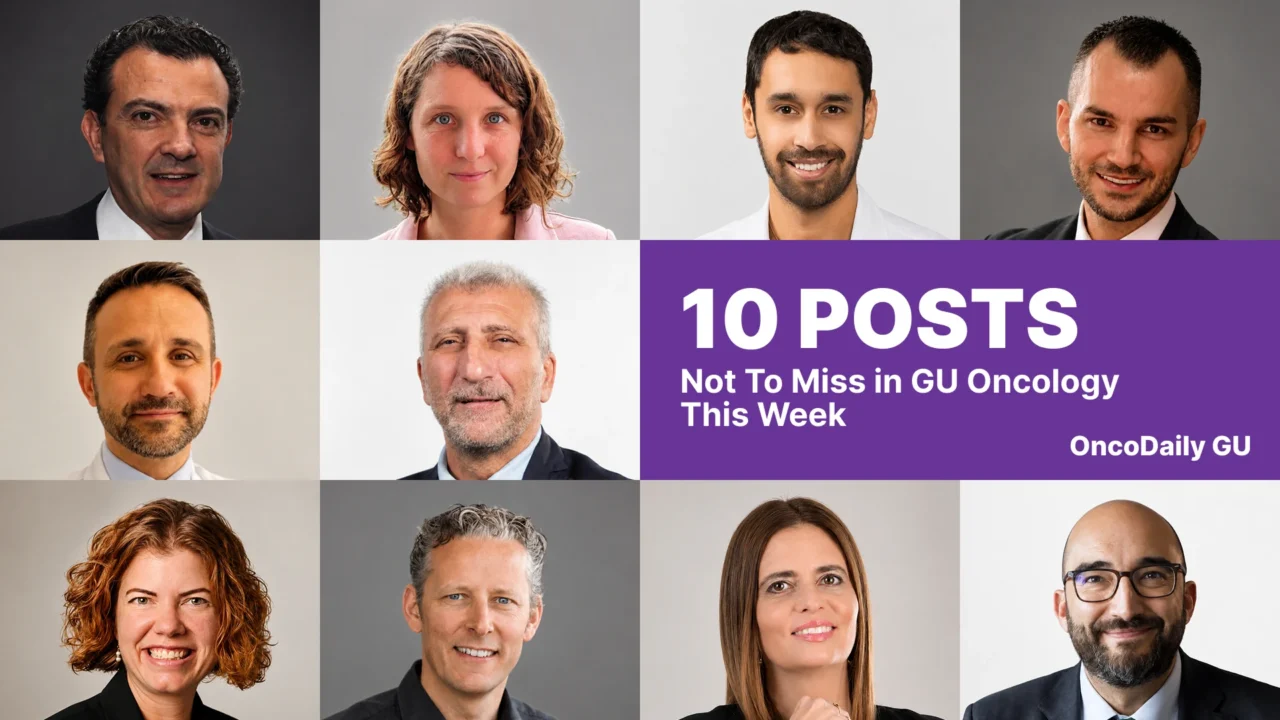
The fourth week of June brought together important updates across GU oncology, with expert posts covering prostate, bladder/urothelial, and kidney cancers.
This week’s selection includes ASCO Guideline clarification for mCRPC, the DUTRENEO study in muscle-invasive bladder cancer, immunotherapy combinations in refractory metastatic urothelial cancer, single-fraction SBRT in localized prostate cancer, and real-world treatment intensification in high-volume metastatic hormone-sensitive prostate cancer.
The selection also covers the European Commission approval of enfortumab vedotin plus pembrolizumab in cisplatin-ineligible resectable muscle-invasive bladder cancer, a translational model of radioresistance in endocrine-exposed prostate cancer, AI-based CT decision support in renal cell carcinoma, Stockholm3 versus PSA for prostate cancer screening, and a preoperative risk model for nonmetastatic renal cell carcinoma.
Together, these posts reflect the continued movement of GU oncology toward more precise treatment selection, improved risk assessment, translational innovation, and multidisciplinary cancer care.
Giuseppe Procopio — Chief of Genitourinary Oncology; Director Prostate Program; FICOG and Meet-URO President | Italy
“An important clarification regarding the ASCO Living Guideline for mCRPC has been published in the JCO Journals.
PSMA PET positivity is an eligibility criterion for ^177Lu-PSMA-617 radioligand therapy, but it should not be interpreted as excluding patients from radium-223 or other therapies whose activity is independent of PSMA expression.
The available evidence supports the use of radium-223 in appropriately selected patients regardless of PSMA status. Following valuable feedback from colleagues in the field, upcoming updates to the ASCO Living Guideline will further clarify this concept and ensure that the graphical treatment algorithms are fully aligned with the intended recommendations.
This exchange underscores the value of the Living Guideline model, which enables the rapid integration of expert feedback and the continuous refinement of recommendations as evidence evolves.”
Enrique Grande — Medical Oncologist; Director of the Cancer Program at Quirónsalud Madrid | Spain
“DUTRENEO trial is out!
Durvalumab + tremelimumab as neoadjuvant treatment of patients with MIBC prospectively selected by a positive IFN-gamma signature.
Thanks to the investigators and, of course, patients and their families!
Spatial architecture contributes to failure of bulk biomarker-guided neoadjuvant immunotherapy selection in bladder cancer: The DUTRENEO study.”

Read more about DUTRENEO Study on OncoDaily.
Michiel van der Heijden — Medical Oncologist at The Netherlands Cancer Institute | Netherlands
“The treatment paradigm for metastatic urothelial cancer has changed tremendously, and anti-CTLA-4 has struggled, mainly due to underpowered phase 3 endpoints. Still, a major question remains whether we can improve immunotherapy benefit in metastatic urothelial cancer.
We are very happy to have published our investigator-initiated ICRA study, testing tremelimumab ± paclitaxel ± durvalumab in therapy-refractory metastatic urothelial cancer.
A project spanning many years, involving fantastic researchers at my group and collaborators, in which we optimized the dose, expanded in a two-stage design with extensive translational research in tumor biopsies and mouse models.
Remissions, some durable, were observed, but further research may identify better partners for synergy as many new drugs are in development.”
Ciro Franzese — Director of Radiation Oncology Unit at Humanitas San Pio X Hospital; Associate Professor in Radiation Oncology; Assistant Director of Radiation Oncology Residency Program | Italy
“New publication in JAMA Oncology.
Stereotactic radiotherapy for prostate cancer continues to push the boundaries of hypofractionation.
The newly published multicenter phase 1/2 ONE-SHOT study demonstrates the feasibility of single-fraction SBRT at 19 Gy in patients with localized prostate cancer, meeting its primary endpoint with a 3-year biochemical relapse-free survival of 92.9%, along with an excellent safety profile and minimal impact on quality of life.”
María Natalia Gandur Quiroga, MD — GU Medical Oncologist; Head of GU Tumours at Ángel H. Roffo Oncology Institute, University of Buenos Aires | Argentina
“Proud to share our new ARON-3 study, now in European Urology Oncology.
“Doublet Versus Triplet Therapy in High-volume Metastatic Hormone-sensitive Prostate Cancer Patients with Bone Metastases: Results from the ARON-3 Study.”
It is a true honor to be part of this international collaboration with dear colleagues across the ARON network, contributing real-world evidence to one of the most relevant questions in metastatic hormone-sensitive prostate cancer:
How should we select patients for treatment intensification?
Over the past years, the management of mHSPC has rapidly evolved from ADT alone to doublet and triplet strategies.
However, in daily practice, the question is not only whether triplet therapy works, but rather:
Which patients are most likely to benefit from triplet therapy — and who may do well with doublet therapy?
In this ARON-3 analysis, we evaluated real-world outcomes in patients with CHAARTED-defined high-volume mHSPC and bone metastases treated with either:
• ADT + ARPI doublet therapy
• ADT + docetaxel + darolutamide triplet therapy
The study included 841 patients, treated across 47 oncology centers in 16 countries.
Key findings:
• 75% of patients received doublet therapy
• 25% received triplet therapy
• Triplet therapy was associated with improvement in ECOG performance status and reduction in opioid use at 12 weeks
• Overall, clear differences between doublet and triplet therapy were not observed across the entire cohort
• In patients with >10 bone metastases, triplet therapy was associated with improved time to treatment failure
• Overall survival was numerically favorable in some higher-burden subgroups, but not statistically significant
The clinical message is important and nuanced:
Not every patient with high-volume mHSPC may require the same degree of upfront intensification. Bone metastatic burden may help refine treatment selection, but prospective validation is essential.
For me, this work also reinforces the value of real-world international collaborations.
Clinical trials define standards. Real-world data help us understand how those standards translate into everyday practice across different regions, healthcare systems, and patient populations.
Very grateful to all co-authors and collaborators involved in this effort, and especially proud to contribute from Latin America to a global GU oncology research network.
Congratulations to the ARON-3 team and all participating centers.”
Daniel Castellano — Medical Oncologist; Head of GU Unit at Hospital Universitario 12 de Octubre; Complutense University of Madrid | Spain
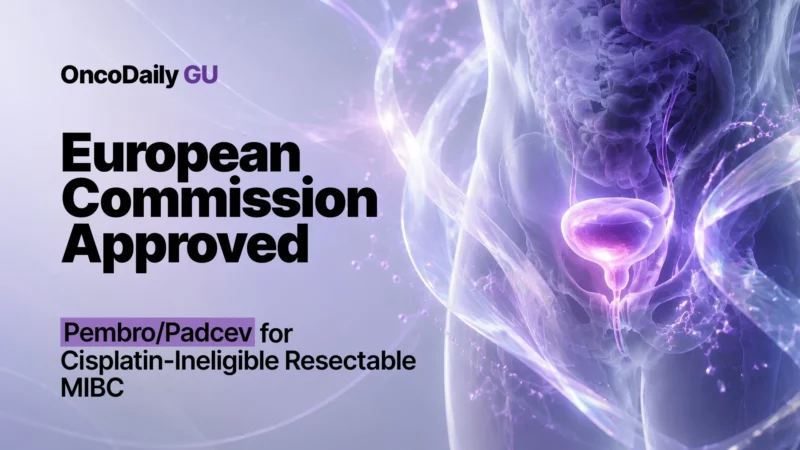
“European Commission approves PADCEV™ (enfortumab vedotin) in combination with Keytruda® (pembrolizumab) as the first and only approved perioperative treatment option for cisplatin-ineligible patients with resectable muscle-invasive bladder cancer.”
Miloš Grujić — Radiation Oncologist; Head of Department; PhD Candidate; Prostate Cancer Specialist
“Very happy to share that our new article has been published today in Frontiers in Endocrinology.
In this Hypothesis and Theory paper, we propose a translational model of radioresistance in endocrine-exposed prostate cancer.
The central idea is simple but clinically important: androgen receptor suppression may initially radiosensitize prostate cancer, but in some tumors sustained endocrine pressure may later promote inflammatory signaling and epigenetic remodeling, creating a more treatment-tolerant and relatively radioresistant state.
Rather than viewing endocrine therapy and radiotherapy response as static, we argue that this biology may be dynamic over time — and that serial biomarker profiling could help identify when adaptive resistance begins to emerge.
I hope this work will stimulate future translational studies on endocrine-aware personalization of radiotherapy in prostate cancer.”
Alessa Hering — Assistant Professor and AI Researcher at the Medical Imaging Department, Radboud University Medical Center | Netherlands
“When we talk about AI for kidney cancer imaging, the first question should not be: Can a model predict this?
It should be: Where could an AI model actually support clinical decision-making?
In our newly published paper, we reviewed deep learning research for CT-based clinical decision support in renal cell carcinoma, and placed it in the context of the clinical workflow.
To do this, we combined a scoping review with input from radiologists and urologists, who rated CT-based tasks according to their clinical relevance and the workload involved without automated tools. We also introduced a simple framework to structure the role of AI in clinical practice:
• Automation
replicating routine clinical tasks• Augmentation
making existing assessments more quantitative or less cumbersome• Innovation
predicting information that is not currently accessible from routine CT interpretationThis helped us identify an important mismatch.
Many studies focus on tasks such as benign–malignant classification, RCC subtype prediction, and outcome prediction. These are clinically relevant, but the evidence is often heterogeneous, with limited external validation.
At the same time, several areas that clinicians considered important remain underdeveloped: invasion patterns for staging, lymph node and metastatic assessment, surgical planning, recurrence risk, tumor growth during surveillance, and patient-level outcome prediction.”
Adam B. Weiner, MD — Urologic Oncologist at Cedars-Sinai Medical Center | United States
“PRIMARY2: Can Stockholm3 outperform PSA for #prostatecancer screening?
~12k pts (50–74 yrs) underwent paired PSA + Stockholm3 testing with 2-year registry follow-up.
Compared: Stockholm3 (≥11) vs PSA ≥3 ng/mL for referral to MRI/biopsy.
≥GG2 PCa detection: 90% vs 74% sensitivity.
False negatives cut by >60%: 10% vs 26%.
Specificity nearly identical: 89% vs 90%.
Decision-curve analysis favored Stockholm3, w/ fewer missed significant cancers & fewer unnecessary biopsies.
Implication: Risk-adapted screening w/ Stockholm3 may improve early detection over PSA alone.
Caveats: Only 2-year follow-up, ~25% participation rate, predominantly European cohort, and cost-effectiveness remains to be established.”
Katy Beckermann, MD, PhD — Medical Oncologist; Director of Genitourinary Cancer Research at Tennessee Oncology | United States
“Most kidney cancer risk tools score patients after surgery. This one runs before the first incision, and it’s fully interpretable.
In Nature Communications, Al Larcher and Andrea Salonia built and externally validated a preoperative model for cancer-specific mortality in nonmetastatic RCC.
How it was built:
• Trained on 2,536 patients, externally validated on a separate 580
• Extremely randomized survival trees, kept as a transparent white-box model
• 8 routine preoperative inputs: tumor size, nodal status, performance status, hemoglobin, age, platelets, eGFR, BMI
What carries the weight:
• Tumor size dominates feature importance, approximately 3 times the next variable
• By SHAP, nodal positivity and tumor size drive the largest risk shifts, then performance status and hemoglobin
Efficacy:
• Mean time-dependent AUC 0.895 vs 0.730 for the GRANT-based Cox model
• External C-index 0.88, Brier 0.02, cleanly splitting favorable, intermediate, and unfavorable risk
• Free web app for point-of-care use
Why this matters for your practice: a transparent preoperative estimate, built on labs and exam you already have, can sharpen consent and surveillance before you operate.
Still single-program and retrospective, so prospective multi-site validation is the next bar.”

Find out 10 Must-Read Posts in GU Oncology from the third week of June on OncoDaily.