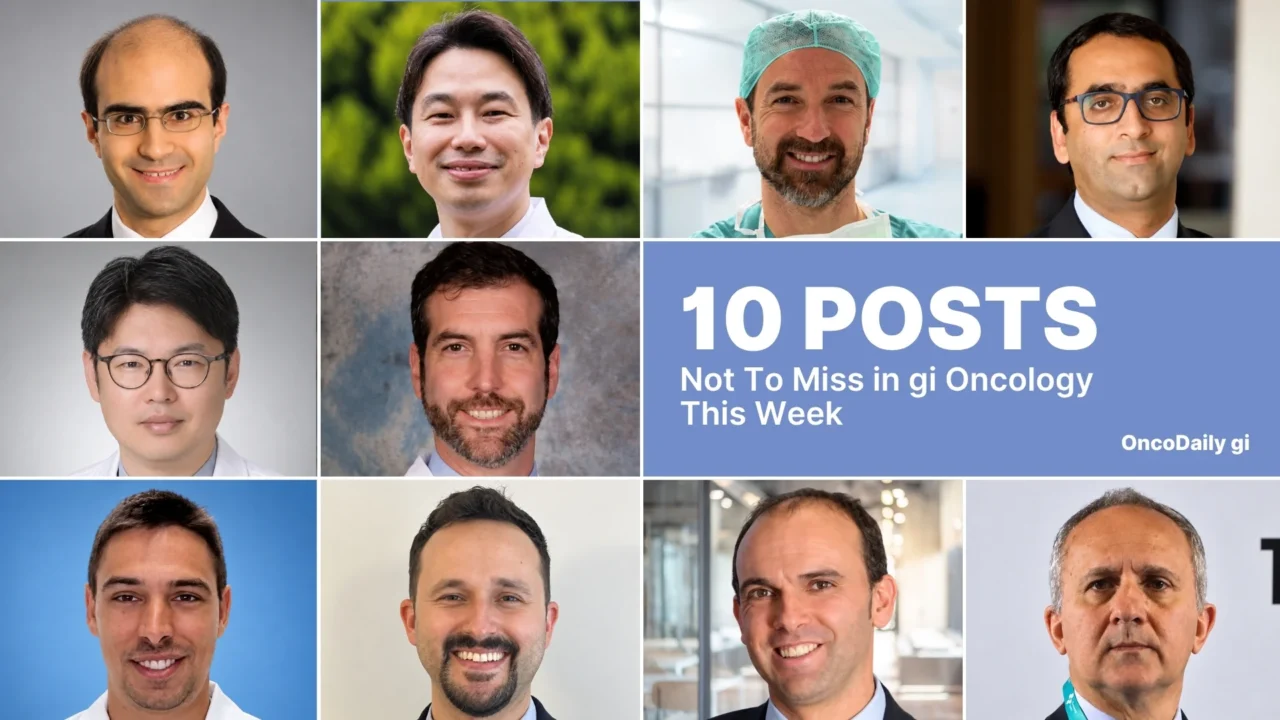
From September 28 to October 4, GI oncology discussions highlighted new data across neuroendocrine tumors, colorectal cancer, pancreatic cancer, upper GI surgery, hepatocellular carcinoma, rectal cancer, and biliary tract cancer.
This week’s selection includes updates on endoscopic resection outcomes in gastroduodenal neuroendocrine tumors, later-line treatment sequencing with regorafenib and FTD/TPI-based therapy in metastatic colorectal cancer, early clinical activity of the KRAS G12D inhibitor GFH375, systemic VCN-01 plus chemotherapy in first-line pancreatic cancer, and the ROBOT-2 trial in upper GI surgery.
Other posts highlight future surgical strategies for hepatocellular carcinoma, radiation therapy plus dual immune checkpoint blockade in metastatic MSS colorectal cancer, tumor-free circulating tumor DNA in node-negative rectal cancer from the phase 2 NEO trial, the NEST trial and neoadjuvant immunotherapy in MSS colorectal cancer, and long-term ASCOT follow-up supporting adjuvant S-1 in resected biliary tract cancer.
Together, these posts reflect the continued evolution of GI oncology across endoscopic treatment, targeted therapy, oncolytic virotherapy, robotic surgery, surgical strategy, immunotherapy combinations, ctDNA-guided research, neoadjuvant treatment, real-world sequencing, and adjuvant therapy.
Rui Morais — Gastroenterology, MD, PhD, FEBGH | Portugal
“I would like to share that our original article entitled “Clinical and oncological outcomes of gastroduodenal neuroendocrine tumours after endoscopic resection in the Western setting – a target trial emulation” was published in Clinical Gastroenterology and Hepatology.
In this paper, probably one of the most hard-working and ambitious recently conducted by our team, we evaluated the clinical and oncological outcomes of 444 gastro-duodenal NETs submitted to endoscopic resection from 24 Western centers. In addition, we performed a target trial emulation to compare different endoscopic resection techniques, while adjusting to possible confounders.
Main findings:
GD-NETs were associated with frequent non-curative endoscopic resections, but low recurrence and tumour-related mortality.
ESD achieved a higher adjusted R0 resection rate and lower local recurrence compared with conventional EMR.
Our results support the refinement of not only the curative resection criteria but also patient and ER technique selection.
I would like to congratulate first authors Francisco Mendes, Rafael José Vieira and Maria Alípio for their incredible work and effort.
In addition, this work would have not been possible with the collaboration of all national and international colleagues!”
Daisuke Kotani, MD, PhD — GI Medical Oncologist, National Cancer Center Hospital East | Japan
“Prospective observational study of treatment sequence with REG and FTD/TPI in mCRC
(A) REG, (B) FTD/TPI, (C) FTD/TPI+bev
OS: 12.2 vs 7.5 vs 10.6 mo
PFS: 1.9 vs 2.1 vs 3.8 mo
IPTW-adjusted OS: (A) 12.2 vs (C) 10.6 mo, HR 1.03
Longer PFS with FTD/TPI+bev, but no difference in OS. While residual selection bias cannot be excluded due to the non-randomized design, the findings suggest the importance of using both REG and FTD/TPI in later-line treatment.”
Victor Moreno — Director Clinical Research, Early Phase Clinical Trials, START Madrid-FJD; Hospital Universitario Fundación Jiménez Díaz, Madrid | Spain
“Great news! Another KRAS G12D selective inhibitor added to the current landscape.
In a phase 1 study, the KRAS G12D inhibitor GFH375 achieved confirmed response rates of approximately 35% in both pancreatic cancer and NSCLC.
No dose-limiting toxicities occurred during escalation, and the MTD was not reached. Nevertheless, 600 mg once daily was selected as the recommended phase 2 dose.”
Manel Cascallo — General Director, Theriva Biologic | Spain
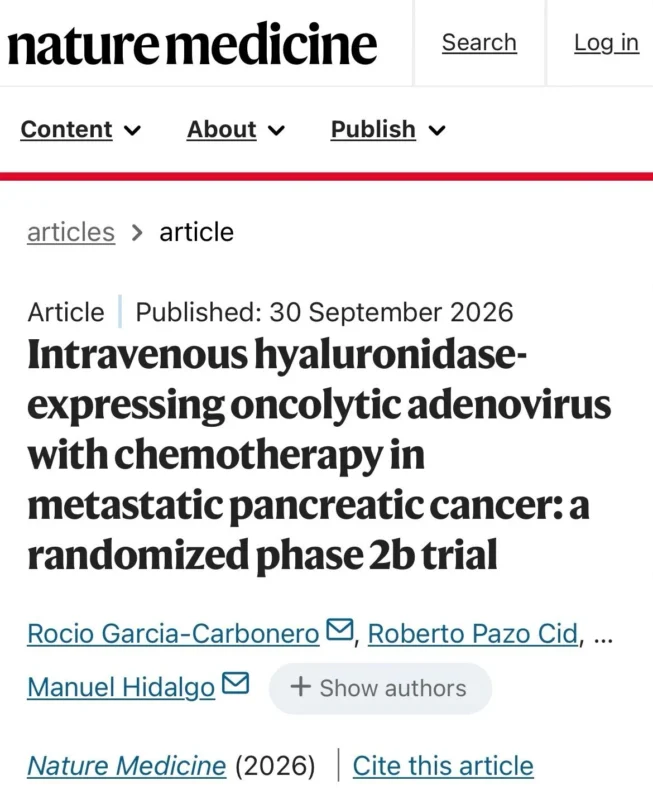
“Today we are extremely proud to publish in Nature Medicine the results of our Phase 2b VIRAGE trial in 1L pancreatic cancer. The trial has demonstrated improved survival of patients receiving systemic VCN-01. It’s iso consistent with VCN-01 inducing immunomediated responses., which opens a clear avenue for new combinations. A new hope for patients with this devastating disease!”
Peter Grimminger — Professor of Robotic Surgery and Senior Consultant, Head of Upper GI Surgery | Germany
“Very Happy to see our ROBOT-2 trial published.
Many thanks to all collaborators and team!
This is another step forward!”
Gian Luca Grazi — Professor of Surgery, University of Florence | Italy
“Our latest research published in Updates In Surgery, addressing the evolving landscape of surgical strategies for Hepatocellular Carcinoma in Italy through 2035.
We provide a strategic framework analyzing how shifting etiologies (declining HCV, rising MASLD/MASH), an expanding donor pool (DCD, machine perfusion), and neoadjuvant immunotherapy may reshape the balance between hepatic resection (HR) and liver transplantation (LT).
Key takeaways from our scenario-based projections:
Resection is here to stay: Hepatic resection will remain a cornerstone of HCC treatment and will not disappear in the short term.
Contained LT expansion: While the donor pool is expanding, rising competing non-HCC demand means the actual increase in transplants for HCC will be contained and modest.
A new balance: We are moving toward a selective redistribution of treatment pathways, not a complete replacement of one modality by another.
Realizing this complex shift requires integrated national planning and centralization of complex care. We need new, prospective evidence to validate emerging strategies, such as immunotherapy-facilitated downstaging, to ensure every HCC patient receives the best, most tailored surgical indication for their disease.”
Leon Pappas — Medical Oncologist, Massachusetts General Hospital | United States
“Very proud of our work on combination Radiation Therapy and dual Immune Checkpoint Blockade in metastatic MSS colorectal cancer that is just out in CCR: https://lnkd.in/gJjXVCVb
Wonderful cross-disiplinary work from an all star team Aparna Parikh Ted Hong Julie Koenig, MD Arnav Mehta Ryan Corcoran David Ting Hannah Roberts Beow Yeap Jennifer Wo Benjamin Schlechter Kimberly Perez Bruce Giantonio Lawrence Blaszkowsky Jill Allen David Ryan Samuel Klempner”
Erman Akkus — MD; Medical Oncology and Internal Medicine; GI Oncology | Turkey
“Tumor-Free Circulating Tumor DNA in Node-Negative Rectal Cancers Undergoing Neoadjuvant Chemotherapy, Excision, and Observation in the Phase II NEO Trial (CO.28)”
Pashtoon Kasi, MD, MS — Colorectal Cancer | Liquid Biopsy Research | Clinical Trials | GI Oncology | Drug development | Medical Director of GI Medical Oncology, City of Hope Orange County | ctDNA | CTCs | Patient Advocacy | United States
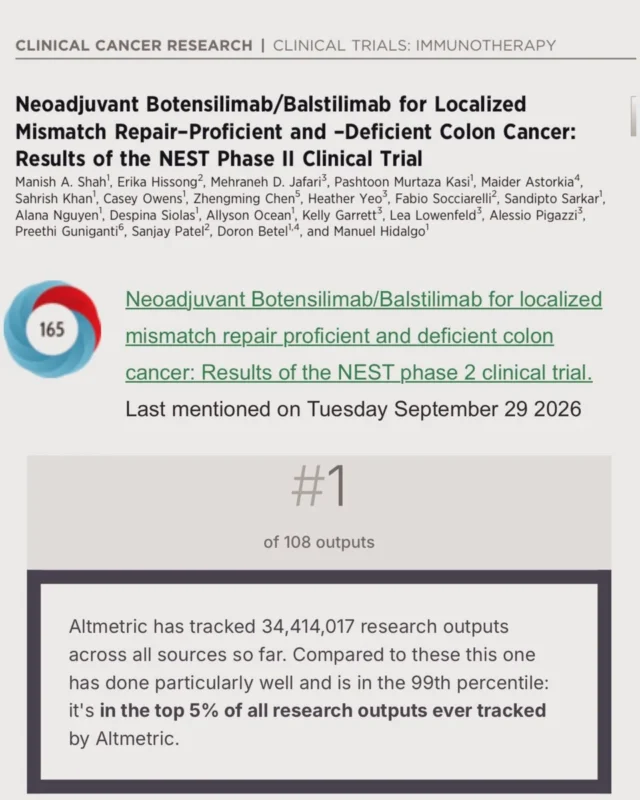
“Full paper of my investigator initiated NEST trial now available in print in CCR_AACR.
Trending number 1 based on all the discussion and enthusiasm around neoadjuvant immunotherapy for patients with MSS colorectal cancer. New paradigm.”
Hong Jae Chon — Director of the Cancer Center – Prof. of Medical Oncology at CHA Bundang Medical Center, Liver Cancer, Cholangiocarcinoma, and Immunotherapy | South Korea
“Long-term data from Phase III ASCOT trial confirms sustained survival benefit of adjuvant S-1 in resected BTC!
5-Year Final Follow-up (N=440, median f/u 61.5 mo):
5-yr OS: 64% (S-1) vs. 52% (Obs) – HR 0.72 (95% CI 0.55–0.95, p=0.01)
Median OS: 8.2 yrs vs. 5.9 yrs
Median RFS: 6.1 yrs vs. 3.5 yrs (stratified HR 0.76)
A solid benchmark. Next up: IO combos?”
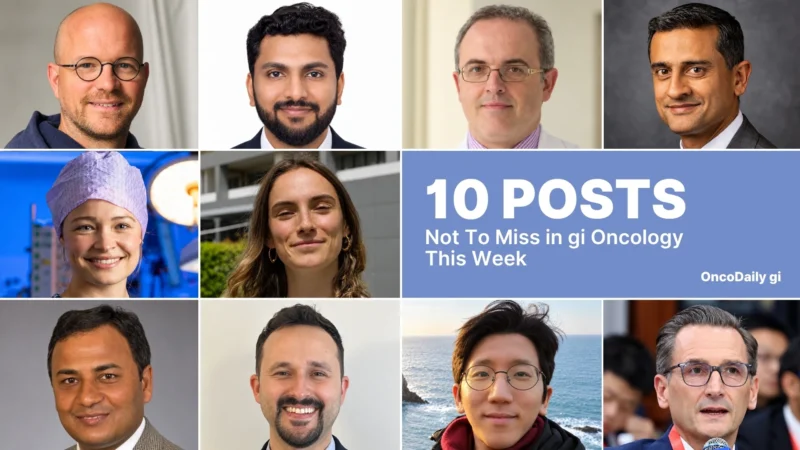
Find out 10 Must-Read Posts in GI Oncology from the last week of September on OncoDaily.