
The third week of November 2026 brought new research findings and expert perspectives across GI oncology, with updates spanning colorectal, pancreatic, gastric, gastroesophageal, hepatocellular, and biliary tract cancers. Recent publications and regulatory developments covered treatment strategies, molecular biomarkers, immunotherapy, and cancer surveillance.
This week’s selection includes findings from the REalCHALLENGE study on anti-EGFR rechallenge in colorectal cancer, the reported European Commission approval of daraxonrasib for metastatic pancreatic cancer, and results from the PRIME-HCC trial evaluating neoadjuvant nivolumab plus ipilimumab in hepatocellular carcinoma. Other discussions address treatment-related toxicities in advanced biliary tract cancer and primary results from the phase IIIb TOURMALINE study evaluating durvalumab with gemcitabine-based chemotherapy.
Further updates cover the FDA Priority Review of an investigational CLDN18.2-targeted treatment for advanced gastric cancer, research examining sex-specific ferroptosis signatures in KRAS-mutant colorectal cancer, and pancreatic cancer surveillance findings from the PRECEDE Consortium. The selection also includes the announcement that the phase III TroFuse-015 trial met its overall survival endpoint with sacituzumab tirumotecan in previously treated gastroesophageal adenocarcinoma, although detailed results are awaited.
Finally, the AGMT GASTRIC-5 registry provides insights into the overlap of predictive biomarkers in metastatic gastroesophageal adenocarcinoma. Together, these 10 posts highlight developments in GI oncology, from treatment approaches and biomarker-driven strategies to surveillance and clinical management.
Davide Ciardiello — MD, PhD, medical oncologist at the Division of Gastrointestinal Medical Oncology and Neuroendocrine Tumours, European Institute of Oncology, IEO, IRCCS | Italy
“Emerging evidence from clinical studies supports the role of rechallenge with anti-EGFR drugs in pre-treated colorectal cancer patients.
To date, data from clinical practice are scarce. In this scenario, Gianluca Mauri and Andrea Sartore Bianchi coordinated the REalCHALLENGE study, which evaluated retreatment with anti-EGFR drugs.
The study confirms the potential role of the therapeutic strategy in patients with tumors who do not show resistance alterations to analysis by liquid biopsy.”
Teresa Macarulla — Head of Medical Oncology Department at Hospital Clinic Barcelona. Principal Investigator Translational Oncology in Upper Gastrointestinal Cancer at Idibaps. Professor, University of Barcelona (UB) | Spain
“The European Commission has approved daraxonrasib (RASONQUE®), the first broad RAS-targeted therapy for metastatic pancreatic cancer.
This approval represents an important step forward in the treatment of metastatic pancreatic adenocarcinoma.
Key highlights:
Once-daily oral therapy.
Approved as monotherapy following at least one prior systemic treatment.
Approval includes patients with or without an identified RAS tumor mutation.
Targeting RAS represents a new therapeutic opportunity in one of the most challenging cancers.An exciting development for the pancreatic cancer community and, most importantly, for our patients.”

Antonio D’Alessio — Consultant Medical Oncologist; Honorary Senior Lecturer; HCC and HPB Cancer | United Kingdom
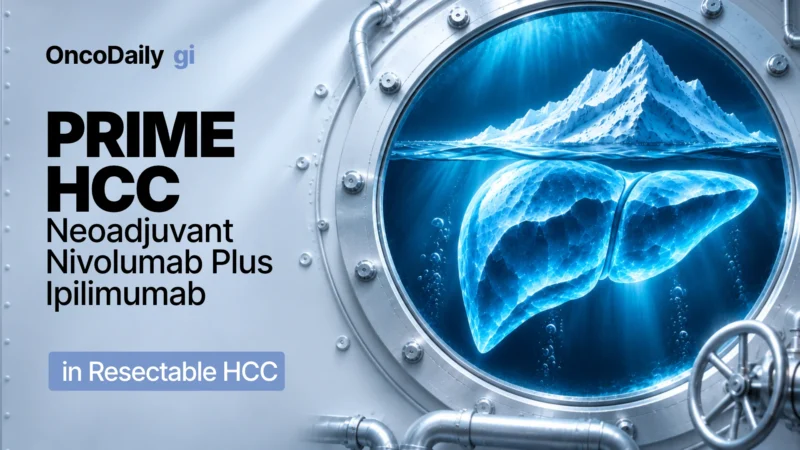
“Fresh off the press – the PRIME-HCC trial on the Lancet Oncology
We conducted the first European neoadjuvant trial, demonstrating that:
2 cycles of nivo-ipi prior to resection did not increase the risk of treatment-related surgical delays, with 9% G3 trAE and no G4-5.
A short course of neoadjuvant ICI achieved an ORR 25% (41% with mRECIST) and an MPR90 of 30%.
The risk of primary progression during neoadjuvant ICI was negligible, with a DCR of 97%.
ctDNA (assessed with a 20-gene panel) predicted response to neoadjuvant ICI and detected post-resection MRD with higher risk of recurrence.
Response to ICI and long-term survival was associated with specific T cell subpopulations in the TME and in the periphery (in particular Tpex) and TCRbeta clonality.
Our results are brilliantly contextualised in the Comment by Eric Assenat.A massive thanks to David James Pinato for his vision, believing in the role of neoadjuvant ICI already 10 years ago to the Freiburg lab and to all the other collaborators at Imperial and beyond: now time to move to the next trial!”
Enes Erul — Oncology Fellow, Ankara University | Turkey
“Pleased to share our new review on the practical challenges of managing treatment-related toxicities in advanced biliary tract cancer!
While pembrolizumab and durvalumab combined with gemcitabine–cisplatin have improved outcomes, delivering these treatments safely in everyday clinical practice remains challenging.
In this review, we discuss:
Drug-specific and overlapping toxicities
Biliary stents, cholangitis, and organ dysfunction
Treatment interruptions and dose modifications
Challenges in frail and underrepresented patient populations
Our key message: Safe treatment delivery requires more than managing adverse events. It requires accurate toxicity attribution, proactive biliary management, and multidisciplinary decision-making.We also highlight important evidence gaps and the need for more real-world safety data.”
Arndt Vogel — Head of the Visceral Oncology Center, Head of the Center for Personalized Medicine, MHH, and Senior Consultant of the Department of Gastroenterology, Hepatology and Endocrinology at Hannover Medical School
“Durvalumab with gemcitabine-based chemotherapy regimens in advanced biliary tract cancer: Primary results from the phase IIIb TOURMALINE study
Shorter durvalumab infusion feasible.
Efficacy data indicate activity across cohorts.”
Mohit Manrao — Senior Vice President, Head of US Oncology, AstraZeneca; President, AstraZeneca Foundation | United States
“This content is intended for US audiences only.
Today, AstraZeneca is proud to announce that the FDA has granted Priority Review for our investigational medicine as a 2nd-line and later treatment in advanced gastric cancers expressing Claudin 18.2 (CLDN18.2). This decision is based on data from the Phase III CLARITY-Gastric01 trial presented just a few short weeks ago during a Presidential Symposia at ESMO – European Society for Medical Oncology (ESMO).
CLDN18.2 is a biomarker found in an estimated 60% of gastric/GEJ cancers and has emerged as an important therapeutic target. Most patients are diagnosed at an advanced stage, when prognosis is poor and treatment options are limited. In particular, these patients have no targeted treatment options after progressing on first-line therapy. AstraZeneca’s push into biomarker-driven approaches is rapidly transforming the landscape for challenging tumor types and advanced disease.
We will keep following the science and pursuing biomarker-driven approaches that bring precision medicine to some of the most challenging cancers. Our ambition is to improve outcomes across every stage and today marks another encouraging step forward.
We look forward to working with the FDA through the Priority Review process.”
Caroline Johnson — Professor and Interim Chair, Department of Environmental Health Sciences, Yale School of Public Health, Yale University | United States
“I’m pleased to share our new article which demonstrates that colorectal cancers (CRCs) harboring KRAS mutations carry molecular signatures consistent with suppressed ferroptosis (iron-dependent cell death) and that this pattern is specific to tumors from male patients.
We also found a prognostic signal: among men with KRAS-mutant tumors, those with a lower ratio of reduced to oxidized glutathione had worse overall survival. And in male-derived KRAS-mutant CRC cell lines, higher expression of ferroptosis-inhibitory genes was associated with drug resistance. This adds to our growing evidence for studying sex as a biological variable in CRC and may help guide future research into more tailored approaches to cancer care.
Congratulations to co-first authors Hong Yan and Xinyi S. and many thanks to John Quackenbush, Sajid Khan, Shuangge Ma, Chen Chen and Yisha Yao for the wonderful collaboration.”
Jeffrey Venstrom, MD — Physician-Scientist, Drug and Diagnostic Development
“Check it out – important new data for previvors living with an elevated risk of cancer, from the PRECEDE Consortium Study: 2,085 individuals with BRCA1, BRCA2, ATM, or PALB2 variants undergoing pancreatic cancer surveillance. Key insights:
Imaging findings are common
More than half had at least one pancreatic finding, more common among older individuals
35% had cysts, more likely with older age, new-onset diabetes (and important PDAC risk factor), and family history
No difference by genotype
Some findings are worrisome~9% had at least one worrisome finding: worrisome cysts, MPD dilation ≥5 mm, and/or a solid mass
11 of 12 incident PDACs found during surveillance were stage I or II – surveillance works!
Stable over time is key87% of those with cysts had no worrisome cyst growth
71% with no cyst or solid mass at baseline stayed finding-free after at least two follow-ups
Stability across serial imaging is what separates reassuring findings from the ones that need action.These are important findings, and can inform how we counsel individuals undergoing cancer surveillance – expect findings, and discuss follow-up and escalation criteria before the first scan. Most findings are low-risk, but the ~9% with worrisome features are why consistent follow-up matters. And maybe where novel blood-based early detection technologies can help?
Surveillance often turns something up. That’s common, and usually reassuring. Staying in the program is how the findings that matter get caught early.
Where AI could help?: Reading serial scans is hard. Inter-reader variability is a recognized limitation, and subtle change over time is easy to miss. AI tools that standardize measurements and flag true progression could help reduce unnecessary workups for stable findings while surfacing the ones that deserve attention. This is a promising area, where we need more research.”
Yakup Ergün — Medical Oncologist at Bower Hospital | Turkey
“According to Merck announcement, Phase III TroFuse-015 met its OS endpoint with sacituzumab tirumotecan in 3L+ gastroesophageal adenocarcinoma, despite missing the PFS endpoint.
Detailed OS data are awaited.”
Florian Huemer — Senior Physician, Salzburg Regional Hospitals (SALK); Adjunct Professor, Paracelsus Medical University (PMU), Salzburg | Austria
“Predictive biomarker landscape in metastatic gastroesophageal adenocarcinoma
I am very pleased to share our latest publication in the European Journal of Cancer:
Mapping the overlap of predictive biomarkers in an advanced Austrian multicenter gastroesophageal adenocarcinoma real-world cohort – results from the AGMT GASTRIC-5 registry.
Rather than focusing on the predictive biomarker prevalence alone, our study provides a detailed characterization of the biomarker landscape in a Central European cohort of 100 patients with metastatic gastroesophageal adenocarcinoma (GEA), assessed in the palliative, treatment-naive setting.
What makes this analysis particularly relevant?
Overlapping biomarker profiles: We investigated the coexistence of established and emerging predictive biomarkers, including HER2, PD-L1, CLDN18.2, FGFR2b and mismatch repair status.
Different PD-L1 definitions: Biomarker overlap was explored using different PD-L1 CPS thresholds, illustrating how biomarker-defined patient populations may change depending on the applied cut-off.
Beyond dichotomous cut-offs: We provide individual patient-level expression profiles, retaining the continuous nature of biomarker expression rather than reducing all results to positive/negative classifications.
Standardized pathological assessment: All biomarker analyses were centrally performed by a single experienced observer, minimizing potential interobserver variability.
Many thanks to all co-authors, participating centers and collaborators of the AGMT GASTRIC-5 registry for making this work possible!”
Find out 10 Must-Read Posts in GI Oncology from the second week of November on OncoDaily.