The second week of November 2026 brought new research and expert perspectives across GI Oncology, with updates spanning colorectal cancer, pancreatic cancer, gastroesophageal cancer, and appendiceal malignancies. Recent publications and studies explored treatment strategies, tumor biology, surgical approaches, and patient-centered care.
This week’s selection includes discussions on the role of surgery in oligometastatic gastroesophageal cancer, preclinical research investigating the methionine cycle and SAHH in pancreatic cancer progression, and emerging biomarkers for immunotherapy response in pancreatic ductal adenocarcinoma. Other posts highlight the importance of multidisciplinary care in appendiceal cancer and findings on IFNAR1 stabilization as a potential strategy to improve T-cell-based therapies in colorectal cancer liver metastases.
Further discussions cover national registry-based validation of the ESOPEC trial, patient experiences and unmet needs in metastatic colorectal cancer, and differences in treatment and outcomes between younger and older patients with colorectal cancer liver metastases. The selection also includes findings on the MetroPancreas classification following neoadjuvant treatment in resectable pancreatic cancer and a review exploring the tumor-immune microenvironment in early-onset colorectal cancer.
Together, these 10 posts highlight developments in GI oncology, from tumor biology and emerging therapeutic approaches to surgical decision-making, prognostic assessment, and patient-centered care.
Hongcheng Zhu — Clinical Oncologist and Cancer Researcher | China
“Delighted to see our recent Review in Nature Portfolio spark thoughtful academic discussion!
We sincerely thank Dr. Sang-ji Choi from Kangwon National University for his insightful commentary and the opportunity to further discuss the evolving role of surgery in oligometastatic gastro-oesophageal cancer. Our response has now been published alongside the Correspondence.
Scientific progress thrives on open dialogue and international exchange. We hope this discussion will encourage further global collaboration and high-quality clinical trials to refine treatment strategies and ultimately improve outcomes for patients worldwide.”
Nelson Dusetti — INSERM Research Director, Centre de Recherche en Cancérologie de Marseille (CRCM) and Institut Paoli-Calmettes; Pancreatic Cancer Research, Translational and Precision Oncology | France
“November is Pancreatic Cancer Awareness Month, and I am very happy to share new research from Marseille!
Our colleagues at the CRCM – Centre de Recherche en Cancérologie de Marseille have just released an important study on bioRxiv:
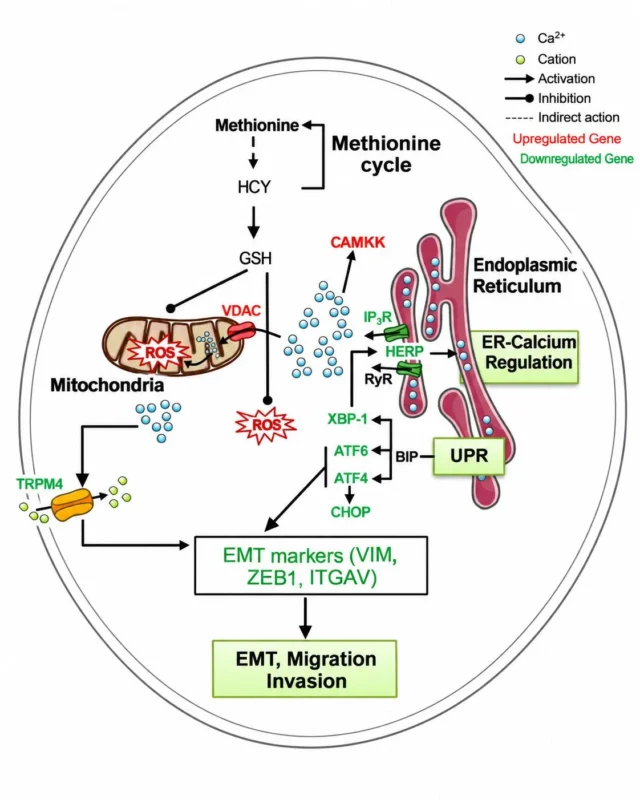
“The methionine cycle sustains the mesenchymal phenotype of tumor cells and drives pancreatic cancer progression.”
This work provides new insights into how pancreatic cancer cells adapt their metabolism to acquire and maintain an aggressive, mesenchymal phenotype associated with tumor progression and metastasis.
The authors demonstrate that the methionine cycle, particularly the enzyme SAHH, plays a key role in sustaining this aggressive cellular state. Targeting SAHH disrupts antioxidant defenses and calcium homeostasis, reduces the invasive properties of tumor cells, and limits tumor growth and liver metastasis formation in preclinical models.
These findings identify a metabolic vulnerability that could open new therapeutic perspectives for targeting some of the most aggressive forms of pancreatic cancer.
Warm congratulations to Sophie Vasseur, Fabienne Guillaumond, Emilie Jaune Pons, Georgios Efthymiou, and all the co-authors for this excellent collaborative work!
I am particularly happy and proud that our team had the opportunity to contribute to this study.
On a more personal note, I have dedicated 35 years, essentially my entire scientific career, to pancreatic cancer research. One of my greatest satisfactions today is seeing a new generation of scientists and emerging research teams at our center in Marseille dedicating their energy, creativity, and enthusiasm to understanding this devastating disease.
Scientific progress takes time. It builds on years of research, collaboration, shared knowledge, and the commitment of successive generations of scientists.
Seeing this scientific community continue to grow and renew itself here in Marseille makes me particularly happy.
The next generation is already here, and the future of pancreatic cancer research is in very good hands!
Congratulations again to everyone involved, and thank you for contributing to this collective scientific effort.”
Athanasios Gatsis, MD — Medical Oncology | Greece
“dMMR/MSI-H remains the most established biomarker for immunotherapy selection in pancreatic ductal adenocarcinoma (PDAC), while TMB-H represents an additional tumor-agnostic biomarker, although its predictive value in PDAC remains less well established.
I am pleased to share our recently published paper, in which we synthesize the current understanding of the tumor-immune microenvironment in PDAC and highlight potential additional biomarkers that may help predict response to immunotherapy in this aggressive malignancy.
Grateful to my co-first author Ioannis Stouras, MD and all our collaborators who contributed to this work!”
Ardaman Shergill, MD, MSPH — Assistant Professor, University of Chicago | United States
“Hot off the press: national survey of GI oncologists taking care of patients with appendiceal cancers highlighted the need for more education and expert support. Sharing our successful experience in creating a regional multidisciplinary conference for GI peritoneal malignancies that led to improved confidence in care. Extremely grateful for Dr Oliver Eng my co-lead at the time, the phenomenal team with expertise in all domains – radiology, pathology, surgery, nutrition, navigation and operations at UChicago Medicine, and always for Dr Kiran Turaga’s mentorship. Now we must continue to grow to improve access for ALL patients.”
Giovanni Sitia — Liver Cancer & Metastasis Research | Tumor Immunology, Inflammation & Viral Immunity | Anticancer Therapy/Therapeutics | Group Leader, IRCCS San Raffaele Scientific Institute | Italy
“Our latest work is out in Science Advances!
“IFNAR1 stabilization sustains CD8⁺ T cell persistence in IFN-high colorectal cancer liver metastases”
In this study, we investigate a paradox: how persistent type I interferon signaling can undermine antitumor immunity in colorectal cancer liver metastases.
We show that sustained signaling can lead to the downregulation of IFNAR1 on CD8⁺ T cells, compromising their persistence and antitumor activity.
By stabilizing IFNAR1, we preserve T-cell function and improve the efficacy of adoptive T-cell therapies, including CAR-T cells, in preclinical models.
Our findings identify IFNAR1 stabilization as a potential strategy to overcome immune resistance and improve immunotherapy in colorectal cancer liver metastases.
This study represents years of work and a tremendous collaborative effort. A special thank you to our first authors, Andrea Castiglioni and Andrea Monestiroli, and to the entire team who made this possible!
We are deeply grateful to AIRC – Foundation for Cancer Research NGO for supporting our research, and to Fondazione Umberto Veronesi ETS for supporting Valentina Buttiglione through a postdoctoral fellowship.”
Thaer Abdalla, MD — Associate Professor; Thoracic and Gastrointestinal Surgeon | Germany
“I would like to share our publication in the International Journal of Surgery, in which we externally validated the ESOPEC Trial on a national Level.
Our Results are inline with ESOPEC Trial regarding OS and patterns of recurrence.
I am really thankful for this opportunity to contribute using the national registry data from all over the Country with help of the Arbeitsgemeinschaft Deutscher Tumorzentren e.V. (ADT-Netzwerk) Tumorzentren and all my colleagues who actively contributed to this especially Jannis Duhn, MD Michael Thomaschewski and Richard Hummel.”
Michael Sapienza — Chief Executive Officer, Colorectal Cancer Alliance; Patient Advocate | United States
“The Colorectal Cancer Alliance and Takeda recently collaborated on a survey examining the experiences and unmet needs of patients diagnosed with metastatic colorectal cancer in the United States. We’re proud to share that the findings have been published in Future Oncology.
The research reflects an important principle: understanding cancer requires more than clinical outcomes alone. We also need to understand what patients experience throughout diagnosis and treatment, where they encounter gaps in care, and what needs remain unmet.
These perspectives can help researchers, healthcare professionals, and patient advocacy organizations ask better questions about how care is delivered and where it needs to improve.
At the Colorectal Cancer Alliance, elevating the patient voice is central to our work. Patient-centered research means listening systematically, examining what patients tell us, and using those insights to inform the questions we pursue and the support we provide.
Publishing this research is another important step. The findings are available for researchers, clinicians, advocates, and others to read and build on, extending the potential reach of the work beyond the original study.
I’m grateful to our partners at Takeda and everyone who contributed to this research. We must continue creating opportunities for patients’ experiences to inform not only how we communicate about cancer, but also how we work to improve care.”
Erman Akkus — MD; Medical Oncology and Internal Medicine; GI Oncology; Yedikule EAH | Turkey
“Differences in treatment and outcomes between young and older patients with colorectal cancer liver metastases: an AmCORE-based study”
Stefano Crippa — Associate Professor of Surgery, Division of Pancreatic and Transplant Surgery, IRCCS Ospedale San Raffaele, Milan | Italy
“MetroPancreas Stratifies Survival After Neoadjuvant Chemotherapy and Surgery for Resectable Pancreatic Cancer
In a previous paper (Crippa et al, JAMA Surgery 2024 PMID: 39046713) we showed that MetroPancreas was useful to predict futile surgery in Pts undergoing upfront resection for pancreatic cancer
In this new study published in Annals of Surgery from Pancreas Center HSR Ospedale San Raffaele, Università degli Studi di Verona, Alma Mater Studiorum – Università di Bologna in Forlì, IRCCS Istituto Romagnolo per lo Studio dei Tumori “Dino Amadori” – IRST Srl, Fondazione IRCCS Istituto Nazionale dei Tumori di Milano and International School of Medicine, Zhejiang University we analyzed the role of MetroPancreas in 623 patients with nonmetastatic, anatomically resectable PDAC who underwent neoadjuvant treatment (NAT) followed by resection.
Metro-Pancreas classification (IN/OUT) was determined by tumor size and CA19-9 levels.
At diagnosis, 263 patients (42.2%) were Metro-Pancreas OUT and had shorter postoperative DFS (13.3 vs. 16.7 mo; P=0.003) and OS (29.5 vs. 34.8 mo; P=0.006) than Metro-Pancreas IN pts.
After NAT, 71.9% of OUT patients were reclassified as IN.
Prognostic separation was greater at Metro-Pancreas restaging after NAT (DFS: 7.7 vs. 17.3 mo; OS: 15.8 vs. 36.7 mo; both P=0.001).
Patients reclassified from OUT to IN had postoperative DFS and OS comparable to those initially IN.
In pts undergoing pancreatecromy after NAT for PDAC, MetroPancreas stratified prognosis at diagnosis and more effectively at restaging. Reclassification from OUT to IN was associated with favorable postoperative survival.”
José Perea García — General Surgeon and Gastroenterology specialist in Coloproctology, Spain
“Is early-onset colorectal cancer immunologically different from colorectal cancer diagnosed later in life?
Happy to share our new review published in Cancer Immunology Research AACR Journals:
“Tumor-Immune Microenvironment of Early-Onset Colorectal Cancer: Implications for Immune-Based Prevention and Therapy.”
We explore how the tumor-immune microenvironment (TiME) may contribute to the development, progression, prevention, and treatment of EOCRC.
Key messages:
1. EOCRC is not simply colorectal cancer occurring earlier in life. Its biology reflects complex interactions among host susceptibility, immune regulation, molecular alterations, and environmental exposures.
2. The immune microenvironment is not necessarily more or less inflamed in younger patients — it may be differently organized. Functional immune states, spatial distribution, antigen presentation, and tumor–immune communication may be more informative than immune-cell abundance alone.
3. The microbiome–immune axis may be particularly relevant in EOCRC. Early-life exposures, microbial dysbiosis, and genotoxic bacteria, including colibactin-producing E. coli, may influence carcinogenesis and immune evolution.
4. Immunogenomic and epigenomic alterations shape immune recognition and escape. Mismatch repair status, mutational signatures, chromosomal instability, and DNA methylation contribute to heterogeneous immune phenotypes.
5. Microsatellite-stable (MSS) EOCRC represents a major therapeutic challenge. Understanding its immune heterogeneity could help identify new biomarkers and rational immunotherapy combinations.
6. Prevention and treatment should be connected through host–tumor biology. Integrating host susceptibility, environmental exposures, microbiome, and immune profiling may open opportunities for risk-adapted screening, immune-based prevention, and personalized treatment.
Our central message: Age at colorectal cancer diagnosis should not be considered merely a demographic variable, but a potentially meaningful biological dimension in tumor–host interactions. The next challenge is to translate these insights into prospective, integrated multiomic studies and clinically actionable strategies.
Grateful to the coauthors for this collaboration!”
Find out 10 Must-Read Posts in GI Oncology from the first week of November on OncoDaily.