





Key takeaways
- Fianlimab is an investigational fully human IgG4 monoclonal antibody targeting LAG-3, an immune-checkpoint receptor involved in T-cell exhaustion.
- It is being developed mainly in combination with the PD-1 inhibitor cemiplimab, with the goal of blocking two complementary immune-suppressive pathways.
- The principal investigational regimen is fianlimab 1,600 mg plus cemiplimab 350 mg intravenously every 3 weeks.
- Early melanoma studies reported objective response rates of approximately 57% to 63%, although these results came from nonrandomized cohorts.
- In the Phase 3 HARMONY trial, the combination improved median progression-free survival numerically compared with pembrolizumab, but the difference was not statistically significant, and the trial did not meet its primary endpoint.
- The safety profile is consistent with dual immune-checkpoint inhibition and includes fatigue, rash, diarrhea, endocrine disorders, liver-enzyme elevations, and potentially serious immune-mediated toxicities.
- Routine dose reductions are not typically used; toxicities are managed with treatment interruption, corticosteroids, immunosuppression, or permanent discontinuation.
- Fianlimab remains investigational and is not approved by the FDA or EMA.
Fianlimab is an investigational monoclonal antibody targeting lymphocyte activation gene 3, or LAG-3. It is being developed mainly in combination with the PD-1 inhibitor cemiplimab for melanoma and other solid tumors.
Fianlimab is not approved by the US Food and Drug Administration or European Medicines Agency. Its dose, preparation, and administration are defined by clinical-trial protocols rather than an approved prescribing label.
What Is Fianlimab?
Fianlimab is a fully human IgG4 monoclonal antibody that blocks the LAG-3 immune-checkpoint pathway.
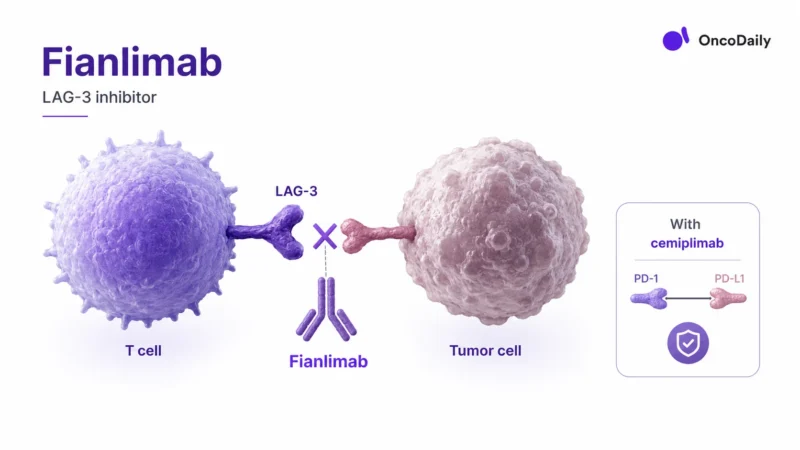
Fianlimab is a fully human IgG4 monoclonal antibody that blocks LAG-3, an immune checkpoint involved in T-cell exhaustion. It is being developed mainly with the PD-1 inhibitor cemiplimab to enhance antitumor immune activity.
Fianlimab was previously known as REGN3767.
What Is The Dose Of Fianlimab?
The main dose selected for later-stage clinical trials is:
Fianlimab 1,600 mg intravenously every 3 weeks, combined with cemiplimab 350 mg intravenously every 3 weeks.
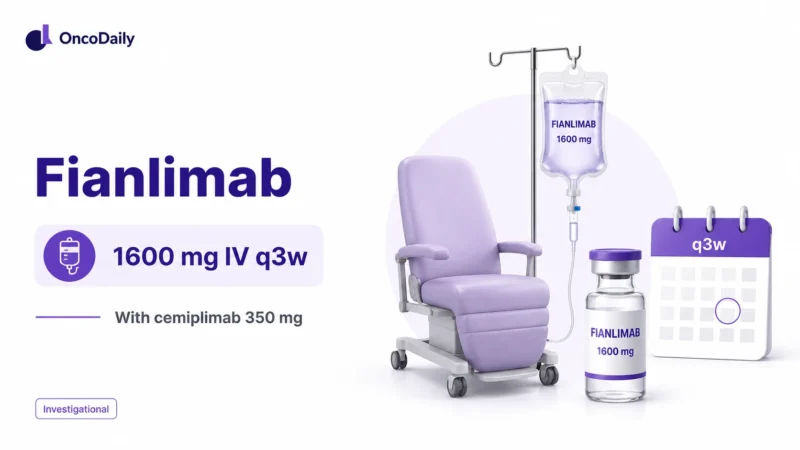
Early dose-escalation studies evaluated fianlimab doses from 1 to 40 mg/kg. Pharmacokinetic, safety, and receptor-occupancy findings supported selection of the 1,600 mg fixed dose.
A lower fianlimab dose of 400 mg every 3 weeks was also evaluated in a Phase 3 melanoma trial.
These are investigational trial doses, not approved prescribing recommendations.
How Is Fianlimab Administered?
Fianlimab is administered by intravenous infusion in a clinical-trial setting.
Fianlimab and cemiplimab are generally given during the same treatment visit as separate monoclonal antibodies.
Publicly available sources do not consistently report:
- Dilution volume
- Compatible infusion solution
- Final concentration
- Infusion duration
- Administration order
- Flushing instructions
- Storage conditions after preparation
These details are provided in the study protocol and investigational pharmacy manual.
Does Fianlimab Require An In-Line Filter?
A universal in-line filtration requirement has not been publicly reported for fianlimab.
Available publications and trial registrations do not clearly specify a required filter type or pore size. Clinical-trial sites must follow the applicable pharmacy manual rather than applying filtration instructions from cemiplimab or another monoclonal antibody.
Is Premedication Required?
Routine premedication has not been established as a standard requirement.
Antihistamines, acetaminophen, corticosteroids, or other supportive medications may be used after an infusion-related reaction or according to the individual trial protocol.
Are Dose Reductions Used?
Published fianlimab studies do not describe routine stepwise dose reductions.
Immune-related toxicity is generally managed through:
- Temporary treatment interruption
- Corticosteroids or other immunosuppressive treatment
- Permanent discontinuation for severe or recurrent toxicity
Exact management criteria vary by clinical-trial protocol.
What Is Known About Fianlimab Pharmacokinetics?
Fianlimab exposure increased approximately with increasing dose in early studies.
Administration with cemiplimab did not appear to produce a clinically important pharmacokinetic interaction. The selected 1,600 mg every-3-week dose was supported by pharmacokinetic, pharmacodynamic, and receptor-occupancy findings.
A definitive terminal half-life, clearance value, volume of distribution, and accumulation ratio have not been consistently published.
As a monoclonal antibody, fianlimab is expected to undergo proteolytic breakdown into peptides and amino acids rather than metabolism through cytochrome P450 enzymes.
Are Renal Or Hepatic Dose Adjustments Required?
No validated renal- or hepatic-impairment dose adjustment has been established.
Formal studies in patients with significant kidney or liver impairment have not been publicly reported. Clinical trials generally require adequate organ function before enrollment.
What Did Clinical Trials Show?
The early NCT03005782 study evaluated fianlimab alone and with cemiplimab in patients with advanced cancers.
In melanoma expansion cohorts, fianlimab 1,600 mg plus cemiplimab 350 mg every 3 weeks produced objective response rates of approximately 57% to 63%. These were nonrandomized results and could not establish superiority over standard PD-1 treatment.
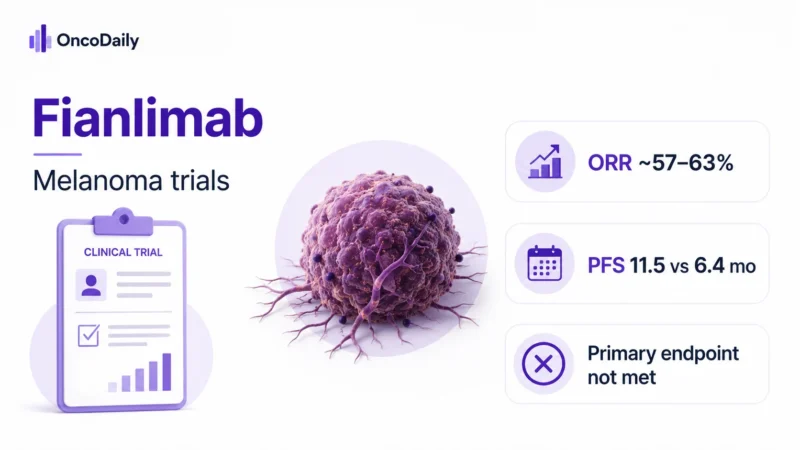
The Phase 3 HARMONY trial, NCT05352672, compared fianlimab plus cemiplimab with pembrolizumab in untreated advanced melanoma.
The high-dose combination produced a median progression-free survival of 11.5 months compared with 6.4 months for pembrolizumab. However, the difference did not reach statistical significance. The trial therefore did not meet its primary endpoint.
Other studies continue to evaluate fianlimab in resectable melanoma, high-risk melanoma after surgery, non-small cell lung cancer, and melanoma progressing after PD-1 therapy.
Watch more: Explore emerging treatment strategies and the future of melanoma care in What’s Next in Melanoma Therapy with Dr. Marco Donia.
What Are The Side Effects Of Fianlimab?
Reported adverse events with fianlimab plus cemiplimab include:
- Fatigue
- Rash
- Pruritus
- Diarrhea
- Nausea
- Joint pain
- Thyroid dysfunction
- Adrenal insufficiency
- Elevated liver enzymes
- Infusion-related reactions
Potential immune-mediated toxicities include pneumonitis, colitis, hepatitis, nephritis, endocrinopathies, severe skin reactions, myocarditis, and neurologic inflammation.
Because fianlimab is usually combined with cemiplimab, the contribution of each individual drug to toxicity is difficult to determine.
Read more about the implications of this result in A Decade Into Alternate Immune Checkpoints and LAG-3 by OncoDaily.
Mirna Antabian, MD
FAQ
What is fianlimab?
Fianlimab is an investigational fully human IgG4 monoclonal antibody that targets LAG-3, an immune-checkpoint receptor involved in T-cell suppression and exhaustion.
How does fianlimab work?
Fianlimab blocks LAG-3 signaling to help restore T-cell activity against cancer. It is usually studied with cemiplimab, which blocks PD-1, allowing simultaneous inhibition of two immune-checkpoint pathways.
What is the dose of fianlimab?
The principal investigational dose is fianlimab 1,600 mg intravenously every 3 weeks, combined with cemiplimab 350 mg intravenously every 3 weeks. A lower dose of 400 mg every 3 weeks has also been evaluated.
How is fianlimab administered?
Fianlimab is administered by intravenous infusion in a clinical-trial setting. Fianlimab and cemiplimab are generally given during the same treatment visit as separate monoclonal antibodies.
Is fianlimab approved?
No. Fianlimab is not approved by the FDA or EMA and remains an investigational drug.
What cancers are being studied with fianlimab?
Fianlimab is being studied mainly in melanoma. Additional studies have evaluated or are evaluating it in non-small cell lung cancer and other solid tumors.
What did the HARMONY trial show?
In the Phase 3 HARMONY trial, fianlimab plus cemiplimab produced a median progression-free survival of 11.5 months compared with 6.4 months for pembrolizumab. However, the difference was not statistically significant, so the trial did not meet its primary endpoint.
What are the side effects of fianlimab?
Reported side effects include fatigue, rash, itching, diarrhea, nausea, joint pain, thyroid dysfunction, adrenal insufficiency, elevated liver enzymes, and infusion-related reactions. Serious immune-mediated toxic