





Temozolomide: A Key Chemotherapy for Glioblastoma and Astrocytoma
Key takeaways
- Temozolomide (TMZ) is an alkylating chemotherapy and a major systemic treatment for malignant gliomas.
- It is a key component of treatment for newly diagnosed glioblastoma, particularly in combination with radiotherapy followed by maintenance therapy.
- Temozolomide damages tumor-cell DNA after conversion to the active compound MTIC.
- MGMT-mediated DNA repair is an important determinant of biological sensitivity to temozolomide.
- Myelosuppression and gastrointestinal adverse effects are among its major treatment-related toxicities.
- Temozolomide remains an important backbone for contemporary glioblastoma clinical research.
Temozolomide, also known as TMZ and marketed as Temodar, is an alkylating chemotherapy used primarily for malignant gliomas. It can be administered orally and is also available as an intravenous formulation. Temozolomide is particularly important in newly diagnosed glioblastoma, where it is used together with radiotherapy and subsequently as maintenance treatment.
This article aims to review temozolomide, including its mechanism of action, treatment schedule, administration, dose modifications, pharmacokinetics, clinical-trial findings, safety profile, approved indications, and current role in neuro-oncology.
Temozolomide Key Facts
- Drug class: Alkylating antineoplastic agent
- Abbreviation: TMZ
- Brand name: Temodar
- Administration: Oral capsules or intravenous infusion
- Major indication: Newly diagnosed glioblastoma with radiotherapy followed by maintenance treatment
- Additional indication: Certain forms of anaplastic astrocytoma
- FDA status: Approved
- Major toxicity: Myelosuppression
- Important biomarker: MGMT promoter methylation is clinically relevant to temozolomide sensitivity in glioma
The current U.S. labeling includes treatment of adults with newly diagnosed glioblastoma and anaplastic astrocytoma in defined settings.
What Is Temozolomide?
Temozolomide is an alkylating chemotherapy that produces DNA damage in tumor cells.
Temozolomide is converted under physiologic conditions to the active compound MTIC. MTIC methylates DNA, particularly at guanine residues. These DNA alterations interfere with normal replication and can ultimately trigger tumor-cell death.
Temozolomide’s pharmacological properties allow clinically useful exposure within the central nervous system, helping establish its central role in malignant glioma treatment.
Mechanism of Action
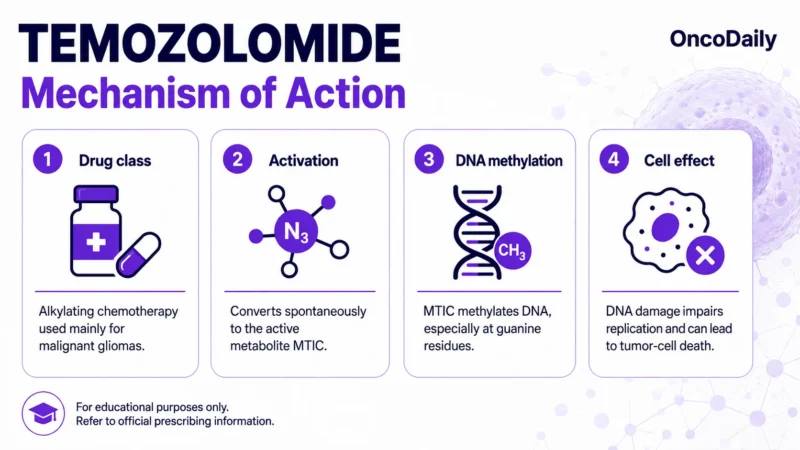
The mechanism can be summarized in four steps:
- Temozolomide administration
- Conversion to MTIC
- DNA methylation and damage
- Impaired DNA replication and tumor-cell death
The DNA-repair protein MGMT can reverse clinically important temozolomide-induced DNA lesions, helping explain why MGMT biology has become important in glioblastoma treatment selection and prognosis.
What Is the Dose of Temozolomide?
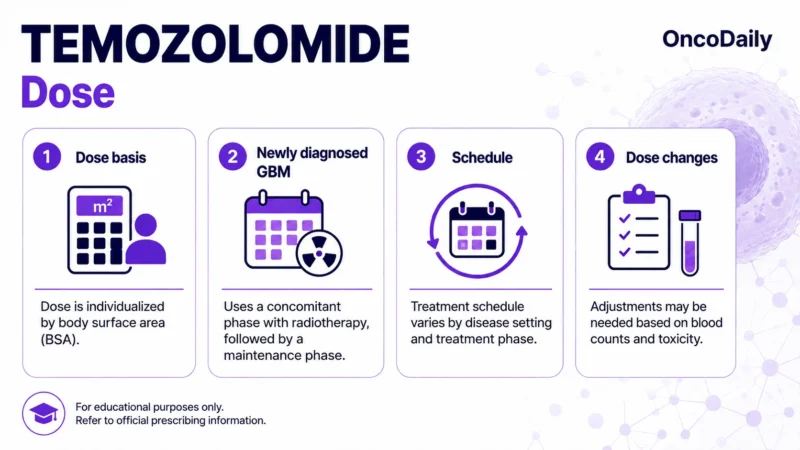
Temozolomide uses body-surface-area-based dosing, and the treatment schedule varies according to disease setting.
For newly diagnosed glioblastoma, treatment consists of two broad phases:
- A concomitant phase given during radiotherapy
- A subsequent maintenance phase administered in treatment cycles
Different schedules are used for anaplastic astrocytoma and investigational combination regimens. Treatment intensity may also require modification according to blood counts and treatment-related toxicity.
Exact treatment amounts and modifications should follow the applicable prescribing information and oncology protocol.
How Is Temozolomide Administered?
Temozolomide can be administered orally as capsules or intravenously.
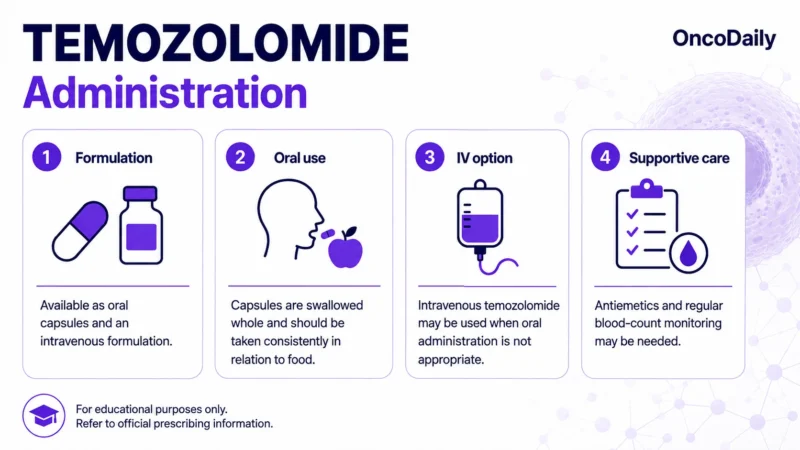
Oral temozolomide capsules should be swallowed intact rather than opened or chewed. Current labeling notes that food can affect absorption and recommends consistent administration in relation to meals; administration on an empty stomach can also help reduce nausea and vomiting.
The intravenous formulation provides an alternative when oral administration is not appropriate.
Because temozolomide is a hazardous cytotoxic medication, capsule manipulation should be performed only under appropriate professional handling procedures.
Does Temozolomide Require an In-Line Filter?
For oral temozolomide, an in-line filter is not applicable.
The intravenous formulation has separate preparation and administration requirements that should follow the official product labeling and institutional oncology-pharmacy procedures.
Is Premedication Required?
There is no universal mandatory premedication regimen specifically required for temozolomide.
However, nausea and vomiting are common treatment-related adverse effects, and antiemetic therapy may be administered before or after treatment when clinically appropriate.
During concomitant temozolomide and radiotherapy for newly diagnosed glioblastoma, additional supportive measures may also be required according to the prescribing information and the patient’s clinical status.
Are Dose Reductions Used?
Yes.
Treatment interruption, withholding, and subsequent modification may be required according to:
- Neutrophil count
- Platelet count
- Severity of nonhematologic toxicity
- Previous treatment tolerance
- Treatment phase
Complete blood counts therefore require regular monitoring during treatment.
Myelosuppression—including thrombocytopenia, neutropenia, leukopenia, and anemia—is among the clinically important toxicities of temozolomide.
What Is Known About Temozolomide Pharmacokinetics?
Temozolomide is rapidly absorbed after oral administration and undergoes spontaneous conversion to its active metabolite MTIC under physiologic conditions.
Food can reduce and delay temozolomide exposure, which is why consistency in relation to food is recommended.
Unlike several traditional cytotoxic drugs, activation does not depend primarily on hepatic enzyme metabolism.
Are Renal or Hepatic Dose Adjustments Required?
Formal treatment recommendations in substantial renal or hepatic impairment are limited compared with patients with normal organ function.
The prescribing information recommends caution in patients with severe organ dysfunction because clinical experience in these populations is more limited.
Blood counts and relevant organ-function parameters should therefore be assessed throughout therapy according to the treatment protocol.
What Did Temozolomide Clinical Trials Show?
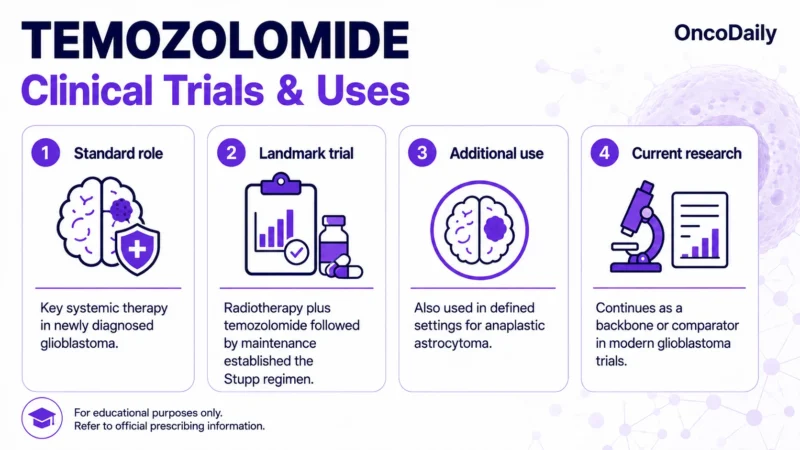
Radiotherapy Plus Temozolomide in Newly Diagnosed Glioblastoma
The landmark randomized Phase 3 study NCT00006353 compared radiotherapy alone with radiotherapy plus temozolomide followed by maintenance temozolomide in patients with newly diagnosed glioblastoma.
The study established radiotherapy plus temozolomide followed by maintenance therapy as a major treatment approach for newly diagnosed glioblastoma and became the basis of what is commonly called the Stupp regimen.
CATNON
Temozolomide has also been evaluated in anaplastic astrocytoma. Current U.S. labeling references findings from the CATNON trial, NCT00626990, which investigated temozolomide in patients with newly diagnosed anaplastic glioma.
Watch more: Explore expert perspectives on temozolomide and its role in glioma treatment in this educational discussion from the European Association of Neuro-Oncology (EANO).
Tumor Treating Fields Plus Temozolomide
Temozolomide has additionally served as the backbone therapy in studies evaluating Tumor Treating Fields in newly diagnosed glioblastoma, including research associated with NCT00916409.
Its continued incorporation into contemporary glioblastoma trials reflects its longstanding role as a systemic treatment backbone.
What Are the Side Effects of Temozolomide?
Frequently reported adverse effects include:
- Nausea
- Vomiting
- Fatigue
- Headache
- Constipation
- Reduced appetite
- Alopecia
- Thrombocytopenia
- Neutropenia
- Leukopenia
- Anemia
Myelosuppression is one of the most clinically important toxicities and requires blood-count monitoring. Rare but serious complications described in the prescribing information include severe bone-marrow toxicity and secondary hematologic malignancies.
The label also contains warnings relating to hepatotoxicity and opportunistic infection in relevant treatment settings.
What Is the Current Status of Temozolomide?
Temozolomide remains an FDA-approved and established treatment for malignant gliomas.
It is particularly important in newly diagnosed glioblastoma, where it is given with radiotherapy and subsequently as maintenance therapy. It is also approved in specific settings involving anaplastic astrocytoma.
Temozolomide also continues to function as a treatment backbone and comparator in clinical studies evaluating novel therapies for glioblastoma.
Read more: glioblastoma treatment, diagnosis, and emerging therapies on OncoDaily.
Written by Mirna Antabian, MD