


Sotorasib (Lumakras; AMG 510): Understanding Its Mechanism, Dosing, Clinical Uses, and Role in KRAS G12C-Mutated Lung and Colorectal Cancer
Key takeaways
- Sotorasib is an oral, irreversible KRAS G12C inhibitor.
- It was the first KRAS-targeted therapy approved by the FDA.
- It covalently binds mutant KRAS G12C and stabilizes the inactive GDP-bound state.
- It is FDA approved for previously treated KRAS G12C-mutated advanced NSCLC.
- It is also approved with panitumumab for previously treated KRAS G12C-mutated metastatic colorectal cancer.
- The recommended dose is 960 mg once daily.
- Dose reductions follow 960 mg → 480 mg → 240 mg once daily.
- CodeBreaK 100 demonstrated an ORR of 37.1%, median DoR of 11.1 months, median PFS of 6.8 months, and median OS of 12.5 months.
- CodeBreaK 200 reported improved PFS compared with docetaxel, although no OS advantage was demonstrated and PFS assessment concerns were raised.
- CodeBreaK 300 demonstrated superior PFS with sotorasib plus panitumumab compared with standard care.
- Important toxicities include gastrointestinal adverse events, hepatotoxicity, and ILD/pneumonitis.
- Gastric acid-reducing agents may substantially decrease sotorasib exposure.
- Molecular confirmation of KRAS G12C is essential for patient selection.
Sotorasib (Lumakras; AMG 510) is an oral, selective, irreversible KRAS G12C inhibitor that targets cancers harboring the KRAS p.G12C mutation. It covalently binds mutant KRAS, stabilizing the protein in its inactive GDP-bound state and suppressing downstream signaling pathways involved in malignant-cell proliferation, survival, and tumor progression.
Sotorasib received FDA accelerated approval on May 28, 2021, for adults with KRAS G12C-mutated locally advanced or metastatic non-small cell lung cancer (NSCLC) who have received at least one prior systemic therapy. It was the first FDA-approved drug specifically targeting mutant KRAS, representing a major milestone in precision oncology.
On January 16, 2025, the FDA additionally approved sotorasib in combination with panitumumab for adults with KRAS G12C-mutated metastatic colorectal cancer (mCRC) previously treated with fluoropyrimidine-, oxaliplatin-, and irinotecan-based chemotherapy. This combination addresses EGFR-mediated adaptive resistance, an important limitation of KRAS G12C inhibitor monotherapy in colorectal cancer.
The recommended dose remains 960 mg orally once daily, administered either as monotherapy for NSCLC or in combination with panitumumab for the approved colorectal cancer indication.
Key Facts
- Generic name: Sotorasib
- Brand name: Lumakras
- Development name: AMG 510
- Drug class: KRAS G12C inhibitor
- Molecular target: KRAS p.G12C
- Binding: Irreversible, covalent
- Route: Oral
- Initial U.S. approval: May 28, 2021
- NSCLC indication: Previously treated KRAS G12C-mutated locally advanced or metastatic NSCLC
- Colorectal cancer indication: KRAS G12C-mutated mCRC in combination with panitumumab after specified prior chemotherapy
- Standard dose: 960 mg once daily
- Tablet strengths: 120 mg, 240 mg, 320 mg
- Schedule: Continuous daily administration
- Food: With or without food
- Dose reductions: 960 mg → 480 mg → 240 mg once daily
- Common adverse reactions: Diarrhea, nausea, fatigue, musculoskeletal pain
- Major serious toxicities: Hepatotoxicity and interstitial lung disease/pneumonitis
- Metabolism: Nonenzymatic conjugation and CYP3A-mediated oxidation
- Important interactions: Gastric acid-reducing agents, CYP3A inducers, CYP3A substrates, P-gp substrates, BCRP substrates
- Major trials: CodeBreaK 100, CodeBreaK 200, CodeBreaK 300
- Regulatory status: FDA approved for NSCLC monotherapy and mCRC in combination with panitumumab
What Is Sotorasib?
Sotorasib is a small-molecule targeted therapy designed to selectively inhibit the oncogenic activity of the:
KRAS G12C mutant protein.
KRAS belongs to the RAS family of small GTPases and regulates intracellular pathways responsible for:
- Cell proliferation
- Cell survival
- Differentiation
- Cell-cycle progression
- Metabolic regulation
- Tumor growth
Under normal physiological conditions, KRAS cycles between two states:
- GTP-bound: Active state
- GDP-bound: Inactive state
The KRAS G12C mutation occurs when glycine is replaced by cysteine at amino acid position 12.
This alteration disrupts normal KRAS signaling regulation, promoting oncogenic pathway activation and tumor-cell growth.
Sotorasib selectively binds the mutant cysteine residue and stabilizes KRAS G12C in its inactive GDP-bound conformation.
This reduces downstream signaling through pathways responsible for malignant-cell proliferation and survival.
Unlike conventional cytotoxic chemotherapy, sotorasib targets a specific molecular alteration driving tumor growth.
Importantly, KRAS G12C is distinct from KRAS G12D, G12V, G12R and other KRAS variants, which are not the molecular targets of sotorasib.
What Is the Mechanism of Action of Sotorasib?
1. KRAS G12C Mutation Drives Oncogenic Signaling
The KRAS G12C mutation substitutes cysteine for glycine at codon 12.
This produces a KRAS protein with dysregulated signaling activity.
Unlike wild-type KRAS, mutant KRAS G12C promotes persistent growth signaling, supporting malignant-cell proliferation and survival.
2. Activated KRAS Stimulates Downstream Pathways
KRAS signaling activates several intracellular pathways, including:
- RAS–RAF–MEK–ERK
- PI3K–AKT–mTOR
- Other RAS-associated effector pathways
These pathways promote:
- Cell proliferation
- Survival
- Resistance to apoptosis
- Tumor progression
3. Sotorasib Covalently Binds KRAS G12C
Sotorasib selectively binds the cysteine residue at position 12 within the switch-II pocket of mutant KRAS.
It forms an:
Irreversible covalent bond
and stabilizes KRAS G12C in its:
GDP-bound inactive state.
This prevents activation of KRAS-mediated downstream signaling.
4. Downstream KRAS Signaling Is Suppressed
Inhibition of KRAS G12C decreases signaling through:
- RAF–MEK–ERK
- Other KRAS-dependent downstream pathways
This reduces proliferative signaling and limits malignant-cell survival.
5. Tumor Growth Is Suppressed
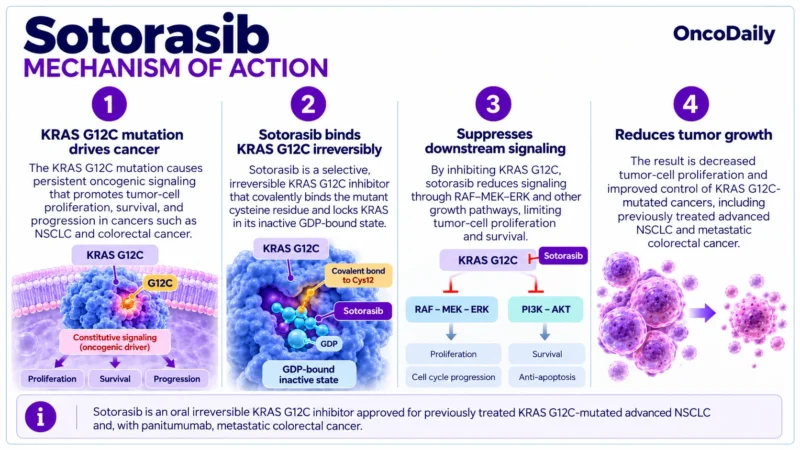
Overall:
Sotorasib → irreversible KRAS G12C binding → inactive GDP-bound KRAS → ↓ RAF–MEK–ERK signaling → ↓ tumor-cell proliferation and survival
This mechanism explains sotorasib’s activity in KRAS G12C-mutated NSCLC and provides the biological rationale for combining it with EGFR inhibition in colorectal cancer.
Watch more: Sotorasib – Mechanism of Action and Synthesis.
What Is the Recommended Dose of Sotorasib?
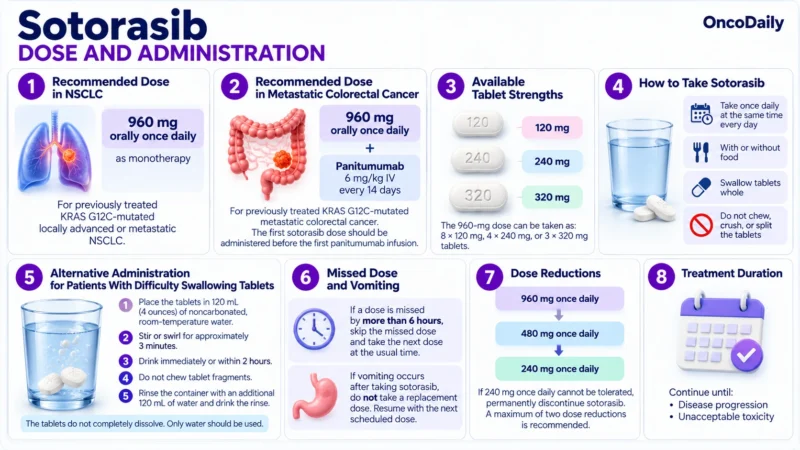
Non-Small Cell Lung Cancer
For adults with previously treated KRAS G12C-mutated locally advanced or metastatic NSCLC:
960 mg orally once daily as monotherapy.
Continue until:
- Disease progression
- Unacceptable toxicity
Metastatic Colorectal Cancer
For adults with previously treated KRAS G12C-mutated metastatic colorectal cancer:
Sotorasib 960 mg orally once daily
in combination with:
Panitumumab 6 mg/kg intravenously every 14 days.
The first sotorasib dose should be administered before the first panitumumab infusion.
Treatment continues until disease progression or unacceptable toxicity.
When sotorasib is withheld or discontinued, panitumumab should also be withheld or discontinued as specified in the combination prescribing information.
Available Tablet Strengths
The recommended 960-mg dose may be administered as:
- Three 320-mg tablets
- Four 240-mg tablets
- Eight 120-mg tablets
Treatment Schedule
Sotorasib is administered:
Once daily continuously.
There is no scheduled treatment-free interval.
How Should Sotorasib Be Taken?
Standard Administration
Sotorasib should be taken:
- Once daily
- At approximately the same time every day
- With or without food
Tablets should normally be swallowed whole.
Do not:
- Chew
- Crush
- Split
the tablets.
Administration for Patients With Difficulty Swallowing Tablets
Sotorasib has an approved alternative administration method for patients unable to swallow tablets whole.
The tablets may be dispersed in:
120 mL (4 ounces) of noncarbonated, room-temperature water.
Administration instructions:
- Place the prescribed tablets in water without crushing them.
- Stir or swirl for approximately 3 minutes.
- Drink the dispersion immediately or within 2 hours.
- Do not chew any remaining tablet fragments.
- Rinse the container with an additional 120 mL of water and drink the rinse.
The tablets do not completely dissolve.
Only water should be used for this preparation.
This method provides an important administration option for patients with swallowing difficulties.
What Should You Do If You Miss a Dose of Sotorasib?
Missed Dose
If a dose is missed by:
More than 6 hours
skip the missed dose and take the next dose at the usual scheduled time the following day.
If the delay is 6 hours or less, the missed dose may be taken when remembered.
Vomiting After Administration
If vomiting occurs after taking sotorasib:
- Do not take a replacement dose.
- Resume with the next scheduled dose the following day.
Do not take extra tablets to compensate for a missed or vomited dose.
How Are Sotorasib Dose Reductions Managed?
The standard dose-reduction sequence is:
960 mg → 480 mg → 240 mg once daily.
First Dose Reduction
Reduce from:
960 mg to 480 mg once daily.
Second Dose Reduction
Reduce from:
480 mg to 240 mg once daily.
If the patient cannot tolerate:
240 mg once daily
permanently discontinue sotorasib.
A maximum of two dose reductions is recommended.
Hepatotoxicity
For clinically significant symptomatic transaminase elevations or severe AST/ALT abnormalities:
- Withhold sotorasib according to severity.
- Monitor liver enzymes until recovery.
- Resume at the next lower dose when appropriate.
- Consider systemic corticosteroids for suspected drug-related hepatotoxicity when clinically indicated.
If AST or ALT exceeds:
3 × ULN
with total bilirubin exceeding:
2 × ULN
without an alternative explanation:
Permanently discontinue sotorasib.
Interstitial Lung Disease/Pneumonitis
If ILD/pneumonitis is suspected:
Immediately withhold sotorasib.
Investigate potential alternative causes.
If no alternative cause is identified:
Permanently discontinue treatment.
Other Severe Toxicities
For clinically significant Grade 3–4 adverse reactions:
- Withhold treatment until recovery to Grade 1 or baseline.
- Resume at the next lower dose when appropriate.
- Permanently discontinue if toxicity meets label-directed discontinuation criteria.
Combination With Panitumumab
When sotorasib is withheld or permanently discontinued:
- Withhold or discontinue panitumumab accordingly.
Panitumumab-specific adverse reactions should be managed according to its prescribing information.
What Drug Interactions Are Important With Sotorasib?
Sotorasib undergoes both nonenzymatic conjugation and CYP3A-mediated metabolism.
Its absorption is also influenced by gastric pH, making interactions with acid-reducing medications particularly important.
Proton-Pump Inhibitors and H2-Receptor Antagonists
Avoid concomitant administration of acid-reducing medications when possible.
Examples include:
- Omeprazole
- Pantoprazole
- Esomeprazole
- Famotidine
- Other proton-pump inhibitors and H2-receptor antagonists
Increasing gastric pH can substantially decrease sotorasib exposure.
When administered with omeprazole under fed conditions, sotorasib exposure decreased by approximately:
- AUC: 57%
- Cmax: 65%
With famotidine, exposure decreased by approximately:
- AUC: 38%
- Cmax: 35%
These changes may compromise antitumor activity.
For locally acting antacids, administer sotorasib:
4 hours before or 10 hours after the antacid.
This spacing recommendation should not be assumed to overcome the interaction with proton-pump inhibitors or H2-receptor antagonists.
Strong CYP3A Inducers
Avoid strong CYP3A inducers because they may reduce systemic exposure to sotorasib.
Examples include:
- Rifampin
- Carbamazepine
- Phenytoin
- St. John’s wort
Rifampin decreased sotorasib:
- AUC by approximately 51%
- Cmax by approximately 35%
CYP3A Substrates
Sotorasib induces CYP3A4 and may decrease exposure to sensitive CYP3A substrates.
In a clinical interaction study, midazolam exposure decreased by:
- AUC: 53%
- Cmax: 48%
Avoid concomitant use with sensitive CYP3A substrates when decreased concentrations could cause therapeutic failure.
P-glycoprotein Substrates
Sotorasib inhibits P-gp and may increase exposure to medications transported through this pathway.
For example, digoxin exposure increased by:
- AUC: 21%
- Cmax: 91%
Monitor for adverse reactions and adjust interacting medications when necessary.
BCRP Substrates
Sotorasib can increase exposure to breast cancer resistance protein substrates.
Rosuvastatin exposure increased by:
- AUC: 34%
- Cmax: 70%
Monitor for adverse reactions, including statin-associated muscular toxicity, and consider dose modification when necessary.
Does Sotorasib Require Dose Adjustment in Renal or Hepatic Impairment?
Renal Impairment
No routine dose adjustment is recommended for patients with:
- Mild renal impairment
- Moderate renal impairment
No clinically meaningful pharmacokinetic differences were observed in patients with:
eGFR ≥30 mL/min/1.73 m².
The effects of severe renal impairment have not been adequately characterized.
For:
eGFR <30 mL/min/1.73 m²
an evidence-based dose-adjustment recommendation has not been established.
Hepatic Impairment
No routine dose adjustment is recommended for:
- Child-Pugh A hepatic impairment
- Child-Pugh B hepatic impairment
For Child-Pugh C hepatic impairment, clinical safety remains less well characterized.
Patients with preexisting hepatic dysfunction require careful monitoring because sotorasib can independently cause clinically significant hepatotoxicity.
Previous Immunotherapy Considerations
Hepatotoxicity risk may be increased in patients who recently received immune checkpoint inhibitors.
This is especially relevant in NSCLC patients previously treated with:
- Pembrolizumab
- Nivolumab
- Atezolizumab
- Durvalumab
- Other anti-PD-1/PD-L1 agents
Before starting sotorasib, assess:
- Time since prior immunotherapy
- Baseline liver enzymes
- Bilirubin
- Liver metastases
- Underlying hepatic disease
- Concurrent hepatotoxic medications
Close liver function monitoring is particularly important in this population.
What Is the Pharmacokinetic Profile of Sotorasib?
Time to Peak Concentration
The median time to maximum plasma concentration is approximately:
1 hour.
Half-Life
The mean terminal elimination half-life is approximately:
5 hours.
Protein Binding
Sotorasib is approximately:
89% protein bound.
Steady State
Steady-state concentrations are reached within approximately:
22 days.
Sotorasib demonstrates nonlinear and time-dependent pharmacokinetics, with no clinically significant accumulation observed after repeated administration.
Metabolism
The primary metabolic pathways include:
- Nonenzymatic conjugation
- CYP3A-mediated oxidative metabolism
Excretion
Following radiolabeled sotorasib administration:
- Approximately 74% of administered radioactivity was recovered in feces.
- Approximately 6% was recovered in urine.
Approximately:
53%
of the administered dose was recovered unchanged in feces.
Effect of Food
A high-fat, high-calorie meal increased sotorasib AUC by approximately:
25%.
This difference does not require fasting administration.
Therefore, sotorasib may be taken:
With or without food.
Cardiac Electrophysiology
At the recommended dose, sotorasib has not demonstrated a large mean QTc prolongation exceeding 20 milliseconds.
Routine intensive QT monitoring is not a defining requirement of sotorasib treatment, unlike adagrasib.
What Are the Clinical Uses of Sotorasib?
KRAS G12C-Mutated Non-Small Cell Lung Cancer
Sotorasib is FDA approved for adults with:
KRAS G12C-mutated locally advanced or metastatic NSCLC
who have received:
At least one prior systemic therapy.
The mutation must be confirmed using an FDA-approved test.
Recommended treatment:
Sotorasib 960 mg orally once daily as monotherapy.
This indication remains under FDA accelerated approval.
KRAS G12C-Mutated Metastatic Colorectal Cancer
Sotorasib is also FDA approved in combination with panitumumab for adults with:
KRAS G12C-mutated metastatic colorectal cancer
previously treated with:
- Fluoropyrimidine-based chemotherapy
- Oxaliplatin-based chemotherapy
- Irinotecan-based chemotherapy
The approved regimen consists of:
Sotorasib 960 mg orally once daily
plus:
Panitumumab 6 mg/kg intravenously every 14 days.
Unlike NSCLC, the approved colorectal cancer regimen requires concurrent EGFR inhibition.
Other Investigational Uses
Sotorasib has been investigated in other KRAS G12C-mutated malignancies, including:
- Pancreatic ductal adenocarcinoma
- Other gastrointestinal cancers
- Additional advanced solid tumors
These applications remain investigational and should not be confused with its FDA-approved indications.
What Molecular Testing Is Required Before Sotorasib?
Confirming KRAS G12C
Patient selection requires identification of:
KRAS p.G12C.
This mutation substitutes cysteine for glycine at codon 12.
Other KRAS mutations, such as:
- KRAS G12D
- KRAS G12V
- KRAS G12R
- KRAS G13D
do not meet the molecular eligibility criteria for sotorasib.
Molecular Testing in NSCLC
KRAS G12C can be identified through:
- Tumor tissue
- Plasma circulating tumor DNA
If the mutation is not detected in plasma, tumor tissue should be evaluated when available.
A negative plasma result does not definitively exclude KRAS G12C.
Molecular Testing in Colorectal Cancer
For the approved colorectal cancer indication, patient selection is based on detection of KRAS G12C using an FDA-approved test.
The therascreen KRAS RGQ PCR Kit is an FDA-approved companion diagnostic for this indication.
Comprehensive molecular profiling may also identify additional alterations relevant to treatment selection and resistance.
What Did the Pivotal Clinical Trials Show?
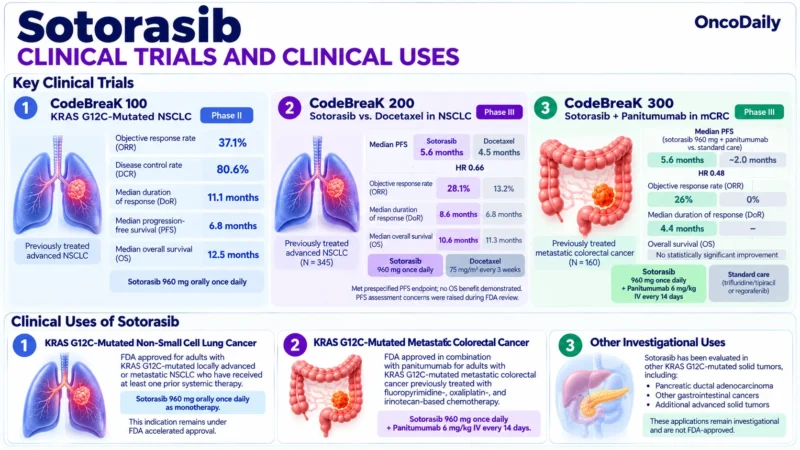
CodeBreaK 100 — KRAS G12C-Mutated NSCLC
The phase II CodeBreaK 100 trial evaluated sotorasib in patients with previously treated KRAS G12C-mutated advanced NSCLC.
A total of:
126 patients
received:
Sotorasib 960 mg orally once daily.
Objective Response Rate
37.1%
among 124 evaluable patients.
Responses included:
4 complete responses
42 partial responses
Disease Control Rate
80.6%
Median Duration of Response
11.1 months
Median Progression-Free Survival
6.8 months
Median Overall Survival
12.5 months
These findings demonstrated clinically meaningful antitumor activity and supported the first FDA approval of a KRAS-targeted inhibitor.
CodeBreaK 200 — Phase III Sotorasib Versus Docetaxel
CodeBreaK 200 was a randomized phase III study comparing sotorasib with docetaxel in previously treated KRAS G12C-mutated advanced NSCLC.
The study randomized:
345 patients.
Patients received either:
- Sotorasib 960 mg orally once daily
- Docetaxel 75 mg/m² intravenously every 3 weeks
Median Progression-Free Survival
- Sotorasib: 5.6 months
- Docetaxel: 4.5 months
Hazard ratio:
0.66
The study met its prespecified progression-free survival endpoint.
Objective Response Rate
- Sotorasib: 28.1%
- Docetaxel: 13.2%
Median Duration of Response
- Sotorasib: 8.6 months
- Docetaxel: 6.8 months
Median Overall Survival
- Sotorasib: 10.6 months
- Docetaxel: 11.3 months
No overall survival advantage was demonstrated.
Importantly, concerns regarding PFS assessment and trial conduct were subsequently raised during FDA review.
Therefore, the positive PFS findings should be interpreted alongside these methodological concerns rather than considered unequivocal confirmation of clinical benefit.
CodeBreaK 300 — Sotorasib Plus Panitumumab in Colorectal Cancer
The phase III CodeBreaK 300 study evaluated combined KRAS G12C and EGFR inhibition in previously treated metastatic colorectal cancer.
A total of:
160 patients
were randomized to:
- Sotorasib 960 mg daily plus panitumumab
- Sotorasib 240 mg daily plus panitumumab
- Standard care with trifluridine/tipiracil or regorafenib
Panitumumab was administered at:
6 mg/kg intravenously every 2 weeks.
Median Progression-Free Survival
For the 960-mg combination:
- Sotorasib plus panitumumab: 5.6 months
- Standard care: approximately 2.0 months
Hazard ratio:
0.48
Objective Response Rate
- Sotorasib plus panitumumab: 26%
- Standard care: 0%
Median Duration of Response
4.4 months
Overall Survival
The final overall survival analysis did not demonstrate a statistically significant improvement.
The lower-dose 240-mg combination did not demonstrate a statistically significant PFS benefit over standard care in the final analysis.
These findings supported the January 2025 FDA approval of:
Sotorasib 960 mg plus panitumumab.
Why Is Sotorasib Combined With Panitumumab in Colorectal Cancer?
EGFR-Mediated Adaptive Resistance
KRAS G12C inhibition produces different biological responses across tumor types.
In NSCLC, sotorasib monotherapy can produce clinically meaningful responses.
In colorectal cancer, however, KRAS G12C inhibition frequently triggers compensatory activation of:
Epidermal growth factor receptor signaling.
This feedback activation can restore downstream MAPK signaling despite inhibition of mutant KRAS.
Role of Panitumumab
Panitumumab is an anti-EGFR monoclonal antibody.
It inhibits EGFR-mediated signaling and helps prevent compensatory activation of downstream oncogenic pathways.
Rationale for Dual Inhibition
Combining sotorasib with panitumumab targets:
- KRAS G12C-driven oncogenic signaling
- EGFR-mediated feedback activation
Overall:
Sotorasib + panitumumab → KRAS G12C inhibition + EGFR blockade → ↓ MAPK pathway reactivation → improved tumor control
This strategy demonstrates the importance of tumor-specific signaling biology and adaptive resistance mechanisms in precision oncology.
Does Sotorasib Have CNS Activity?
Evidence of Intracranial Activity
Sotorasib has demonstrated intracranial activity in some patients with KRAS G12C-mutated NSCLC.
However, the evidence is less definitive than the prospective untreated-brain-metastasis data generated for adagrasib.
Early sotorasib trials largely included patients with previously treated or stable brain metastases.
Subsequent analyses reported:
- Intracranial responses
- Intracranial disease stabilization
- Delayed CNS progression in selected patients
CNS Findings From CodeBreaK 200
An exploratory analysis among patients with previous CNS disease suggested delayed CNS recurrence with sotorasib compared with docetaxel.
Median time to CNS recurrence was approximately:
- Sotorasib: 15.8 months
- Docetaxel: 10.5 months
These findings were exploratory and do not definitively establish superior intracranial efficacy.
Clinical Implications
Sotorasib does not have a separate FDA-approved CNS indication.
Management of patients with brain metastases should account for:
- Neurological symptoms
- Lesion number and size
- Previous CNS-directed treatment
- Extracranial disease status
- Multidisciplinary recommendations
Is Sotorasib FDA Approved?
Yes.
Non-Small Cell Lung Cancer
On:
May 28, 2021
the FDA granted accelerated approval for adults with:
Previously treated KRAS G12C-mutated locally advanced or metastatic NSCLC.
This was the first FDA approval of a KRAS-targeted inhibitor.
Metastatic Colorectal Cancer
On:
January 16, 2025
the FDA approved sotorasib in combination with panitumumab for adults with:
KRAS G12C-mutated metastatic colorectal cancer
previously treated with fluoropyrimidine-, oxaliplatin-, and irinotecan-based chemotherapy.
Current Regulatory Status in 2026
Sotorasib has two FDA-approved uses:
- Monotherapy: Previously treated KRAS G12C-mutated locally advanced or metastatic NSCLC.
- Combination with panitumumab: Previously treated KRAS G12C-mutated metastatic colorectal cancer.
The NSCLC indication remains under accelerated approval.
What Is the Current Clinical Role of Sotorasib in 2026?
KRAS G12C-Mutated NSCLC
Sotorasib remains an important targeted therapy for appropriately selected patients with previously treated KRAS G12C-mutated advanced NSCLC.
Its clinical activity is supported by:
- Objective responses in CodeBreaK 100
- Randomized progression-free survival findings from CodeBreaK 200
- An established oral dosing regimen
- A characterized safety profile
However, CodeBreaK 200 did not demonstrate an overall survival advantage, and concerns regarding the reliability of its PFS endpoint remain relevant.
KRAS G12C-Mutated Colorectal Cancer
Sotorasib plus panitumumab represents a dual-targeted treatment strategy designed to overcome EGFR-mediated adaptive resistance.
CodeBreaK 300 demonstrated improved progression-free survival compared with standard late-line therapies.
The combination highlights the importance of targeting compensatory signaling pathways in KRAS G12C-mutated colorectal cancer.
Acquired Resistance and Emerging Strategies
Resistance to sotorasib may emerge through:
- Secondary KRAS mutations
- KRAS amplification
- Mutations affecting the drug-binding pocket
- Activation of alternative RAS proteins
- EGFR or other receptor tyrosine kinase signaling
- MAPK pathway reactivation
- Alternative downstream signaling pathways
These resistance mechanisms have encouraged development of:
- Next-generation KRAS inhibitors
- Combination strategies targeting EGFR
- Agents targeting active KRAS signaling states
- Broader RAS-pathway inhibition strategies
Read more: Krascendo Program and Emerging KRAS G12C Inhibitors by OncoDaily.
What Are the Major Side Effects of Sotorasib?
Gastrointestinal Toxicity
Gastrointestinal adverse reactions are among the most frequently reported toxicities.
In the CodeBreaK 100 NSCLC safety population:
- Diarrhea: 42%
- Nausea: 26%
- Vomiting: 17%
- Constipation: 16%
- Abdominal pain: 15%
Severe or persistent gastrointestinal toxicity may cause dehydration, electrolyte abnormalities, and treatment interruption.
Management includes:
- Antidiarrheal medications
- Antiemetics
- Hydration
- Electrolyte replacement when necessary
- Dose modification for persistent or severe reactions
Hepatotoxicity
Hepatotoxicity is one of the most clinically important adverse reactions associated with sotorasib.
In the pooled NSCLC monotherapy safety population:
27%
experienced hepatotoxicity.
Grade 3 or higher events occurred in approximately:
16%.
Potential manifestations include:
- Increased ALT
- Increased AST
- Hepatitis
- Drug-induced liver injury
- Hyperbilirubinemia
Patients recently treated with immune checkpoint inhibitors may have a higher risk of hepatotoxicity.
Management may require:
- Treatment interruption
- Dose reduction
- Systemic corticosteroids
- Permanent discontinuation for severe liver injury
Interstitial Lung Disease/Pneumonitis
Sotorasib can cause ILD/pneumonitis, including potentially fatal cases.
In the pooled NSCLC safety population:
2.2%
developed ILD/pneumonitis.
Grade 3 or higher events occurred in approximately:
1.1%.
Median onset was approximately:
8.6 weeks.
Symptoms may include:
- New or worsening dyspnea
- Persistent cough
- Fever
- Hypoxia
Prompt assessment is required.
Musculoskeletal Pain
Musculoskeletal pain occurred in approximately:
35%
of patients in CodeBreaK 100.
Manifestations may include:
- Myalgia
- Arthralgia
- Back pain
- Extremity pain
- Bone pain
Fatigue
Fatigue occurred in approximately:
26%
of patients.
Persistent fatigue may negatively affect daily activities and quality of life.
Other Common Adverse Reactions
Additional adverse reactions include:
- Cough
- Dyspnea
- Edema
- Decreased appetite
- Rash
- Pneumonia
Laboratory Abnormalities
Important abnormalities include:
- Increased AST
- Increased ALT
- Increased alkaline phosphatase
- Decreased hemoglobin
- Decreased lymphocyte count
- Decreased calcium
- Decreased sodium
- Decreased albumin
- Increased urine protein
Additional Toxicities With Panitumumab
The combination with panitumumab introduces EGFR-related adverse reactions.
These include:
- Acneiform rash
- Dry skin
- Diarrhea
- Stomatitis
- Fatigue
- Musculoskeletal pain
- Hypomagnesemia
- Hypocalcemia
- Hypokalemia
- Nail toxicity
- Infusion-related reactions
These adverse reactions require combination-specific monitoring and management.
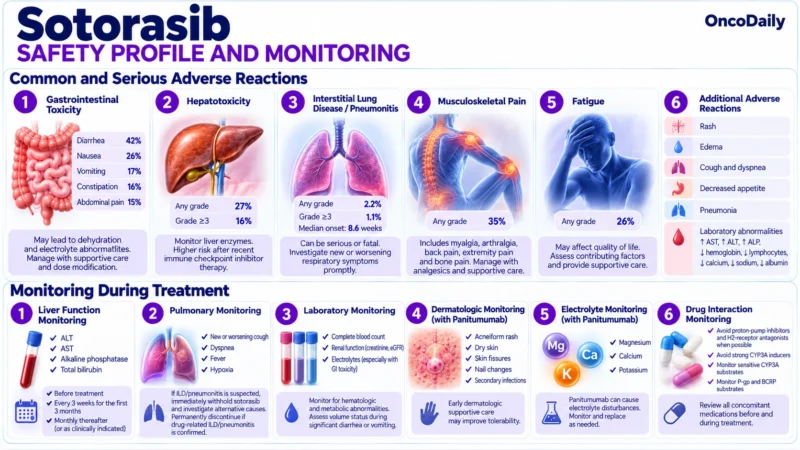
What Monitoring Is Required During Sotorasib Treatment?
Liver Function
Monitor:
- ALT
- AST
- Alkaline phosphatase
- Total bilirubin
Testing should be performed:
- Before treatment
- Every 3 weeks for the first 3 months
- Monthly thereafter, or as clinically indicated
More frequent monitoring is required when abnormalities develop.
Particular vigilance is needed in patients who recently received immune checkpoint inhibitors.
Pulmonary Monitoring
Assess for:
- New cough
- Worsening dyspnea
- Fever
- Hypoxia
If ILD/pneumonitis is suspected:
- Immediately withhold sotorasib.
- Investigate alternative causes.
- Permanently discontinue if drug-related ILD/pneumonitis is
- confirmed and no alternative cause is identified.
Gastrointestinal Monitoring
Assess:
- Diarrhea
- Nausea
- Vomiting
- Abdominal pain
- Oral intake
- Dehydration
Monitor electrolytes and renal function when clinically significant fluid losses occur.
Renal Function
Monitor:
- Serum creatinine
- Estimated glomerular filtration rate
- Electrolytes
- Hydration status
Renal monitoring is particularly relevant in patients experiencing significant gastrointestinal toxicity.
Hematologic Monitoring
Assess:
- Hemoglobin
- White blood cell count
- Neutrophils
- Lymphocytes
- Platelets
Dermatologic Monitoring With Panitumumab
During combination treatment, assess:
- Acneiform rash
- Dry skin
- Skin fissures
- Nail changes
- Secondary skin infections
Early dermatologic supportive care may improve treatment tolerability.
Electrolyte Monitoring With Panitumumab
Monitor:
- Magnesium
- Calcium
- Potassium
Panitumumab-associated electrolyte disturbances may require replacement and ongoing surveillance.
Drug Interaction Monitoring
Review concurrent medications, particularly:
- Proton-pump inhibitors
- H2-receptor antagonists
- Strong CYP3A inducers
- Sensitive CYP3A substrates
- P-gp substrates
- BCRP substrates
Reproductive Considerations
Human data are insufficient to fully characterize the embryo-fetal risk of sotorasib.
Pregnancy status and reproductive counseling should be addressed when clinically appropriate.
Breastfeeding should be avoided:
During sotorasib treatment and for 1 week after the final dose.
Patients receiving panitumumab should also follow its separate reproductive and lactation recommendations.
FAQ
What Is Sotorasib Used For?
What Is the Standard Dose of Sotorasib?
Can Sotorasib Be Taken With Food?
Sotorasib can be taken:
With or without food.
What Is the Mechanism of Action of Sotorasib?
Does Sotorasib Work Against All KRAS Mutations?
Sotorasib specifically targets:
KRAS G12C.
It should not be assumed effective against other KRAS variants.
Why Is Sotorasib Combined With Panitumumab in Colorectal Cancer?
Panitumumab blocks EGFR signaling and helps overcome this adaptive resistance mechanism.
What Is the Most Important Serious Toxicity?
ILD/pneumonitis is another important potentially severe toxicity.
What Are the Sotorasib Dose Reductions?
Can Sotorasib Be Taken With Omeprazole?
What Are the Main Clinical Trials of Sotorasib?
CodeBreaK 200: Phase III comparison with docetaxel
CodeBreaK 300: Sotorasib plus panitumumab in KRAS G12C-mutated metastatic colorectal cancer