





Procarbazine: Understanding Its Mechanism, Dosing, and Clinical Role
Key takeaways
- Procarbazine is an oral methylhydrazine-derived antineoplastic agent.
- Its cytotoxic activity involves metabolic activation, DNA damage, and inhibition of protein, RNA, and DNA synthesis.
- It is FDA-approved in combination therapy for Stage III and IV Hodgkin disease.
- Procarbazine is a key component of the historical MOPP regimen.
- It remains an important component of PCV chemotherapy for selected gliomas.
- RTOG 9802 demonstrated a substantial long-term overall-survival benefit from adding PCV to radiotherapy in high-risk low-grade glioma.
- Myelosuppression, nausea/vomiting, hepatic toxicity, and neurologic toxicity are important treatment-related adverse effects.
- Procarbazine can cause secondary malignancies and fertility impairment, particularly as part of intensive combination chemotherapy.
- The drug crosses the blood-brain barrier, supporting its use in CNS malignancies.
- Alcohol, high-tyramine foods, and several interacting medications should be avoided or carefully managed during treatment.
Procarbazine hydrochloride is an oral methylhydrazine-derived antineoplastic agent with alkylating-like activity. It is primarily used as part of combination chemotherapy rather than as a modern single-agent treatment. In the United States, procarbazine is FDA-approved in combination with other anticancer drugs for Stage III and IV Hodgkin disease, where it forms part of the classic MOPP regimen. It is also an established component of PCV chemotherapy for selected gliomas.
This article aims to review procarbazine’s mechanism of action, dose, administration, clinical-trial findings, safety profile, and current development or approval status, with particular attention to its established role in Hodgkin lymphoma and its continued use in PCV-based treatment of selected gliomas.
Key Facts
- Generic name: Procarbazine hydrochloride
- Brand name: Matulane
- Drug class: Methylhydrazine derivative; alkylating-like chemotherapy
- Route: Oral
- Formulation: 50-mg capsules
- FDA-approved indication: Stage III and IV Hodgkin disease in combination with other anticancer drugs
- Major regimen: MOPP — mechlorethamine, vincristine, procarbazine, and prednisone
- CNS regimen: PCV — procarbazine, lomustine, and vincristine
- Key mechanism: Metabolic activation with DNA damage and inhibition of protein, RNA, and DNA synthesis
- Major toxicities: Myelosuppression, nausea/vomiting, hepatotoxicity, neurologic toxicity, and secondary malignancies
- Important interaction: Alcohol and high-tyramine foods should be avoided during treatment because of procarbazine’s monoamine oxidase-inhibitory activity and potential disulfiram-like reaction.
What Is Procarbazine?
Procarbazine hydrochloride is a hydrazine derivative antineoplastic agent supplied as an oral capsule containing the equivalent of 50 mg of procarbazine. The current U.S. formulation is marketed as Matulane.
Unlike many modern anticancer agents, procarbazine does not act through a single well-defined molecular target. Following metabolic activation, it generates reactive intermediates capable of damaging DNA and interfering with cellular biosynthetic pathways. NCI describes procarbazine as a methylhydrazine derivative whose activity involves inhibition of methionine transmethylation into tRNA, impairment of protein synthesis, and subsequent inhibition of DNA and RNA synthesis.
Its most established clinical role is in combination chemotherapy for Hodgkin lymphoma, particularly in MOPP-based treatment. Procarbazine also remains clinically relevant in the PCV regimen for selected brain tumors.
What Is the Mechanism of Action of Procarbazine?
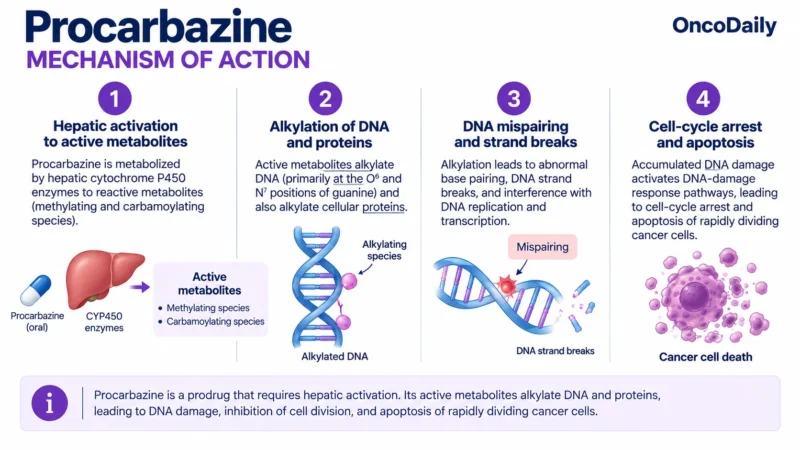
The precise cytotoxic mechanism of procarbazine has not been completely established. The drug undergoes metabolic activation, primarily involving hepatic and renal metabolism, producing reactive intermediates and free radicals. These metabolites can directly damage cellular macromolecules, particularly DNA.
One proposed mechanism involves inhibition of the transmethylation of methionine into transfer RNA (tRNA). Loss of functional tRNA can impair protein synthesis, with downstream inhibition of DNA and RNA synthesis.
Procarbazine can also undergo auto-oxidation with formation of hydrogen peroxide and other reactive species. These can contribute to DNA injury and cellular damage. The resulting disruption of replication, transcription, and protein synthesis ultimately contributes to cancer-cell death.
Importantly, procarbazine crosses the blood-brain barrier and rapidly equilibrates between plasma and cerebrospinal fluid following oral administration, helping explain its incorporation into chemotherapy regimens for CNS tumors.
What Is the Dose of Procarbazine?
Procarbazine dosing depends substantially on whether it is being administered as a single agent or as part of combination chemotherapy.
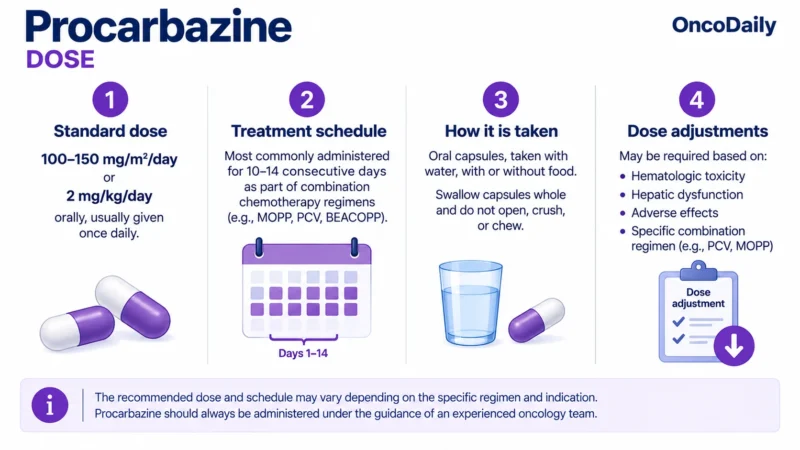
For adults receiving procarbazine as a single agent, the prescribing information recommends 2–4 mg/kg/day during the first week, given in a single or divided dose. The dose may then be increased to 4–6 mg/kg/day until maximal response is achieved or hematologic toxicity develops. Once maximal response is obtained, a maintenance dose of 1–2 mg/kg/day may be used.
The prescribing information specifically notes that when procarbazine is combined with other anticancer drugs, the dose should be reduced according to the regimen. In the classic MOPP regimen, the recommended procarbazine dose is 100 mg/m² once daily for 14 days.
For pediatric patients, dosing is individualized because severe toxicity has been reported. The label provides 50 mg/m²/day during the first week, followed by 100 mg/m²/day until maximal response or hematologic toxicity, with a possible maintenance dose of 50 mg/m²/day after maximal response.
If hematologic or other significant toxicity develops, treatment should be interrupted until recovery. Subsequent dosing should be individualized according to clinical and laboratory findings.
How Is Procarbazine Administered?
Procarbazine is administered orally as capsules. The current Matulane formulation contains 50 mg of procarbazine hydrochloride per capsule.
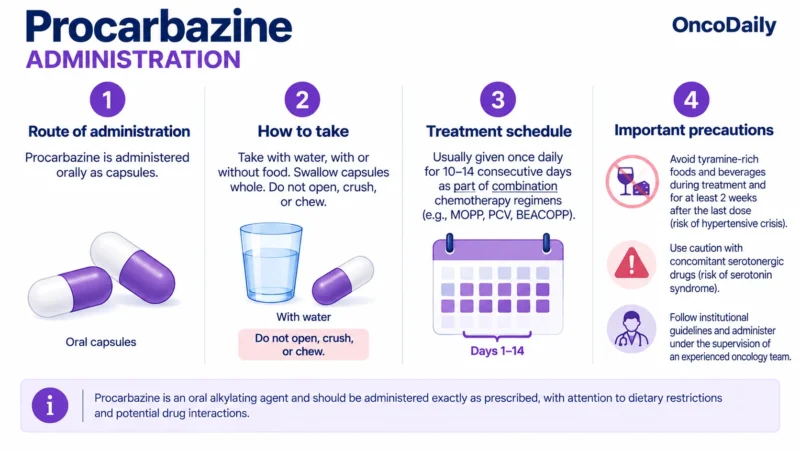
Treatment should be given under the supervision of a physician experienced in the use of potent antineoplastic agents, with appropriate laboratory monitoring available. The prescribing information specifically recommends close monitoring because of the potential for delayed hematologic toxicity.
Because nausea and vomiting are common, dosing strategies may be individualized to improve tolerability. When procarbazine is administered as part of a multi-agent regimen, the administration schedule follows the specific chemotherapy protocol.
Important Dietary and Drug Interactions
Procarbazine has monoamine oxidase-inhibitory activity, making drug and dietary interactions particularly important.
Patients should avoid:
- Alcohol, because a disulfiram-like reaction may occur
- Foods with high tyramine content, including certain aged cheeses and other fermented foods
- Sympathomimetic medications
- Tricyclic antidepressants
- Certain antihistamines and other CNS-depressant medications
The prescribing information recommends caution with medications that can potentiate CNS depression.
What Is the Pharmacokinetic Profile of Procarbazine?
Procarbazine is rapidly and completely absorbed after oral administration. Following administration of radiolabeled procarbazine, peak plasma radioactivity was reached within approximately 60 minutes.
The drug is metabolized primarily in the liver and kidneys through a series of oxidation and hydrolysis reactions that generate active and inactive metabolites. Approximately 70% of radiolabeled material was reported to be excreted in the urine as N-isopropylterephthalamic acid within 24 hours in pharmacokinetic studies.
Procarbazine has a short plasma half-life following intravenous administration, approximately 10 minutes, although its biologic activity reflects its metabolism into reactive intermediates rather than the persistence of the parent compound itself.
A clinically important characteristic is its ability to cross the blood-brain barrier, supporting its use in CNS malignancies as part of PCV chemotherapy.
What Are the Clinical Uses of Procarbazine?
Hodgkin Lymphoma
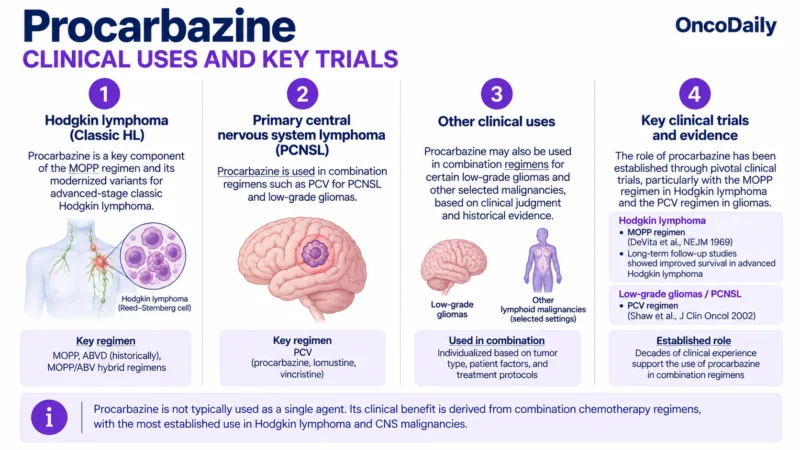
The principal FDA-approved indication for procarbazine is Stage III and IV Hodgkin disease in combination with other anticancer drugs. It is specifically incorporated into the MOPP regimen:
Mechlorethamine + Vincristine + Procarbazine + Prednisone
MOPP was historically one of the foundational curative regimens for advanced Hodgkin lymphoma. Although contemporary Hodgkin lymphoma treatment has shifted toward regimens such as ABVD, A+AVD, and other risk-adapted strategies, procarbazine remains relevant in selected treatment settings and in historical regimen development.
Gliomas
Procarbazine is also a component of PCV chemotherapy, consisting of:
Procarbazine + Lomustine (CCNU) + Vincristine
Read more: Oligodendroglioma: Types, Causes, Symptoms, Treatment Strategies, and 2025 Breakthroughs — particularly relevant to the role of PCV chemotherapy in IDH-mutant, 1p/19q-codeleted oligodendroglioma on OncoDaily.
NCI identifies PCV as a chemotherapy regimen used for certain brain tumors, frequently in combination with radiation therapy.
The regimen has particular importance in selected WHO grade 2 and grade 3 gliomas, although contemporary treatment decisions increasingly incorporate molecular classification, including IDH mutation and 1p/19q codeletion status.
Pediatric Hodgkin Lymphoma
Procarbazine also appears in pediatric combination regimens such as OPPA, consisting of vincristine, procarbazine, prednisone, and doxorubicin. NCI identifies OPPA as a regimen used for certain children with Hodgkin lymphoma.
What Did Clinical Trials Show?
MOPP and the Development of Hodgkin Lymphoma Therapy
Procarbazine played a central role in the development of curative chemotherapy for advanced Hodgkin lymphoma.
In a landmark randomized trial comparing MOPP, alternating MOPP/ABVD, and ABVD in advanced Hodgkin disease, 361 eligible patients were randomized among the three strategies. The trial demonstrated the importance of multi-agent chemotherapy and contributed to the evolution away from MOPP as the dominant regimen.
Earlier randomized work in Stage IV Hodgkin disease also demonstrated substantially higher complete remission and disease-control rates with alternating MOPP and ABVD compared with MOPP alone. In one study of 75 patients, complete remission was achieved in 92% with alternating MOPP/ABVD compared with 71% with MOPP alone, while 5-year freedom from progression was 70% versus 37%, respectively.
A later large intergroup study randomized 856 patients with advanced Hodgkin disease to ABVD or MOPP/ABV. Complete remission, 5-year failure-free survival, and 5-year overall survival were broadly similar between the two strategies, while toxicity considerations helped shape the subsequent preference for less toxic approaches.
RTOG 9802: PCV in Low-Grade Glioma
One of the most clinically important modern datasets involving procarbazine is RTOG 9802, a randomized phase III study evaluating radiotherapy alone versus radiotherapy followed by six cycles of PCV in adults with high-risk low-grade glioma.
The initial analysis included 251 patients. Five-year progression-free survival was 63% with RT + PCV versus 46% with RT alone, with a hazard ratio for progression of 0.60. Overall survival also favored the addition of PCV, although the initial analysis had not yet reached statistical significance.
Long-term follow-up subsequently demonstrated a substantial overall-survival advantage. Median overall survival increased from approximately 7.8 years with radiotherapy alone to 13.3 years with radiotherapy plus PCV, corresponding to a hazard ratio for death of approximately 0.59.
These findings established RT followed by PCV as an important standard treatment approach for selected patients with high-risk low-grade glioma requiring postoperative adjuvant therapy.
NOA-04 and Anaplastic Glioma
The NOA-04 phase III trial evaluated sequential radiotherapy and chemotherapy strategies in patients with newly diagnosed anaplastic glioma. Patients were randomized to radiotherapy or chemotherapy with either PCV or temozolomide, with crossover treatment at progression or unacceptable toxicity.
The study contributed to the evidence base comparing PCV-based chemotherapy with temozolomide and highlighted the importance of molecular tumor classification in interpreting treatment outcomes.
What Are the Major Side Effects of Procarbazine?
The principal dose-limiting toxicity of procarbazine is bone-marrow suppression.
Common hematologic toxicities include:
- Leukopenia
- Anemia
- Thrombocytopenia
- Pancytopenia
- Increased risk of infection
- Bleeding complications
The prescribing information notes that bone-marrow depression can occur 2–8 weeks after treatment begins, emphasizing that hematologic toxicity may be delayed rather than immediately apparent.
Gastrointestinal Toxicity
Nausea and vomiting are among the most commonly reported adverse effects. Other gastrointestinal toxicities include:
- Anorexia
- Abdominal pain
- Diarrhea
- Constipation
- Stomatitis
- Hepatic dysfunction
- Jaundice
Neurologic Toxicity
Neurologic adverse effects can include:
- Paresthesias
- Peripheral neuropathy
- Ataxia
- Dizziness
- Confusion
- Tremor
- Headache
- Rarely, seizures or coma
The prescribing information recommends prompt cessation of therapy if significant CNS signs or symptoms develop.
Secondary Malignancies
Long-term exposure to procarbazine-containing chemotherapy has been associated with secondary malignancies, including acute myeloid leukemia and other nonlymphoid cancers.
The risk is particularly relevant in patients treated for Hodgkin lymphoma with intensive combination chemotherapy and/or radiotherapy. The label also notes that tobacco exposure can further increase the risk of secondary lung cancer.
Fertility and Reproductive Toxicity
Procarbazine-containing chemotherapy can impair fertility. Azoospermia and antifertility effects have been documented, particularly in patients receiving combination chemotherapy for Hodgkin disease.
Procarbazine can also cause fetal harm and should generally be avoided during pregnancy unless the potential benefit clearly justifies the potential risk.
What Monitoring Is Required?
Because procarbazine can cause delayed and cumulative toxicity, monitoring should include:
- CBC with differential and platelet count
- Hemoglobin and hematocrit
- Renal function
- Liver function
- Assessment for neurologic toxicity
- Assessment for gastrointestinal toxicity
- Assessment for infection and bleeding
- Review of concomitant medications
- Review of alcohol and dietary interactions
The prescribing information recommends baseline hematologic testing and close monitoring of blood counts, with hematologic parameters checked at least every 3–4 days during treatment. Hepatic and renal evaluation should also be performed, with selected laboratory tests repeated at least weekly.
Treatment should be stopped when clinically significant toxicity occurs. The label specifically identifies leukopenia, thrombocytopenia, CNS toxicity, hypersensitivity, stomatitis, diarrhea, and bleeding as reasons for prompt cessation.
Does Procarbazine Require Renal or Hepatic Dose Adjustment?
There is no standardized modern renal- or hepatic-dose adjustment table in the U.S. Matulane prescribing information.
However, the label specifically warns that undue toxicity may occur in patients with renal and/or hepatic impairment. Renal and hepatic function should therefore be evaluated before treatment and monitored during therapy, with dosing individualized according to the clinical situation and treatment regimen.
Is Procarbazine FDA Approved?
Yes.
Procarbazine hydrochloride is FDA-approved for use in combination with other anticancer drugs for the treatment of Stage III and IV Hodgkin disease. The FDA-approved Matulane label specifically identifies its use as part of the MOPP regimen.
Procarbazine’s use within PCV chemotherapy for selected gliomas is an important established clinical application, but this should not be confused with a separate FDA indication for procarbazine monotherapy in glioma. NCI identifies PCV as a regimen used for certain brain tumors.
What Is the Current Clinical Role of Procarbazine?
Procarbazine has transitioned from being a central component of broad cytotoxic chemotherapy to a more selective regimen-based role.
In Hodgkin lymphoma, its historical contribution is substantial, particularly through MOPP and related regimens. Modern Hodgkin treatment has largely moved toward newer chemotherapy combinations and targeted or immune-based approaches, but procarbazine remains relevant in selected regimens and treatment contexts.
In neuro-oncology, procarbazine remains more clinically important through PCV chemotherapy, particularly for selected patients with diffuse gliomas for whom postoperative chemoradiotherapy is indicated. The long-term RTOG 9802 data provide strong evidence for the survival benefit of adding PCV to radiotherapy in appropriately selected high-risk low-grade glioma.
Its ability to cross the blood-brain barrier, long history of clinical use, and demonstrated activity in combination regimens help explain why procarbazine remains part of the oncology treatment landscape despite the availability of newer agents.
Written by Mirna Antabian, MD