


Cetuximab (Erbitux): Mechanism of Action, Dosing, Clinical Uses, Trials, and Side Effects
Key takeaways
- Cetuximab is a chimeric anti-EGFR IgG1 monoclonal antibody.
- It inhibits EGFR-mediated signaling and can promote ADCC.
- It received initial FDA approval in 2004.
- Standard dosing is 400 mg/m² loading followed by 250 mg/m² weekly, or 500 mg/m² every two weeks in approved settings.
- Conventional mCRC treatment requires appropriate RAS wild-type selection.
- CRYSTAL established the benefit of cetuximab with FOLFIRI in molecularly selected mCRC.
- The Bonner and EXTREME trials demonstrated efficacy in head and neck cancer.
- BEACON established encorafenib plus cetuximab in previously treated BRAF V600E-mutated mCRC.
- BREAKWATER supported expansion of BRAF/EGFR-targeted therapy into first-line mCRC.
- Major risks include infusion reactions, cardiopulmonary arrest, rash, and hypomagnesemia.
- Skin care and electrolyte monitoring are essential.
Cetuximab (Erbitux) is a chimeric IgG1 monoclonal antibody targeting the epidermal growth factor receptor (EGFR/HER1/ERBB1). By binding the extracellular domain of EGFR, cetuximab prevents ligand-mediated receptor activation and suppresses downstream signaling pathways involved in tumor-cell proliferation, survival, and progression.
First approved by the FDA in February 2004, cetuximab became an important targeted therapy for metastatic colorectal cancer (mCRC) and squamous cell carcinoma of the head and neck (SCCHN). Its efficacy in colorectal cancer is strongly influenced by molecular characteristics, particularly KRAS and NRAS mutation status.
Cetuximab also plays an important role in BRAF V600E-mutated metastatic colorectal cancer when combined with encorafenib. On February 24, 2026, the FDA granted traditional approval to encorafenib with cetuximab and fluorouracil-based chemotherapy for this molecularly defined population, following positive results from the phase III BREAKWATER trial.
Cetuximab is administered intravenously, using either a 400 mg/m² loading dose followed by 250 mg/m² weekly or 500 mg/m² every two weeks, depending on the indication and treatment regimen.
Key Facts
- Generic name: Cetuximab
- Brand name: Erbitux
- Drug class: EGFR-directed monoclonal antibody
- Antibody type: Chimeric human–murine IgG1
- Molecular target: EGFR (HER1/ERBB1)
- Mechanism: EGFR signaling inhibition and antibody-dependent cellular cytotoxicity
- Initial FDA approval: February 2004
- Administration: Intravenous infusion
- Weekly dose: 400 mg/m² loading, then 250 mg/m² weekly
- Biweekly dose: 500 mg/m² every 14 days
- Major indications: Metastatic colorectal cancer and squamous cell carcinoma of the head and neck
- Required biomarkers: RAS wild-type status for conventional mCRC treatment; BRAF V600E for encorafenib combinations
- Important combinations: FOLFIRI, irinotecan, radiotherapy, platinum/5-FU, and encorafenib-based regimens
- Pivotal trials: CRYSTAL, Bonner, EXTREME, BEACON CRC, BREAKWATER
- Common adverse reactions: Acneiform rash, dry skin, diarrhea, paronychia, and fatigue
- Boxed warnings: Serious infusion reactions and cardiopulmonary arrest
- Other serious risks: Hypomagnesemia, severe dermatologic toxicity, ILD, and ocular toxicity
- Important monitoring: Infusion reactions, magnesium, calcium, potassium, skin toxicity, and respiratory symptoms
- Elimination half-life: Approximately 4–5 days
- Metabolism: Proteolytic catabolism
What Is Cetuximab?
Cetuximab is a recombinant chimeric monoclonal antibody that selectively binds EGFR.
EGFR belongs to the ERBB receptor family and regulates signaling pathways including:
- RAS–RAF–MEK–ERK
- PI3K–AKT–mTOR
These pathways promote cellular growth, proliferation, and survival.
Cetuximab prevents EGFR ligands, including EGF and transforming growth factor-alpha, from activating the receptor.
Unlike panitumumab, which is a fully human IgG2 antibody, cetuximab is a chimeric IgG1 antibody capable of recruiting immune effector cells through Fc-mediated mechanisms.
In metastatic colorectal cancer, RAS mutations can cause constitutive downstream signaling despite EGFR blockade. Consequently, conventional cetuximab treatment requires appropriate molecular selection.
What Is the Mechanism of Action of Cetuximab?
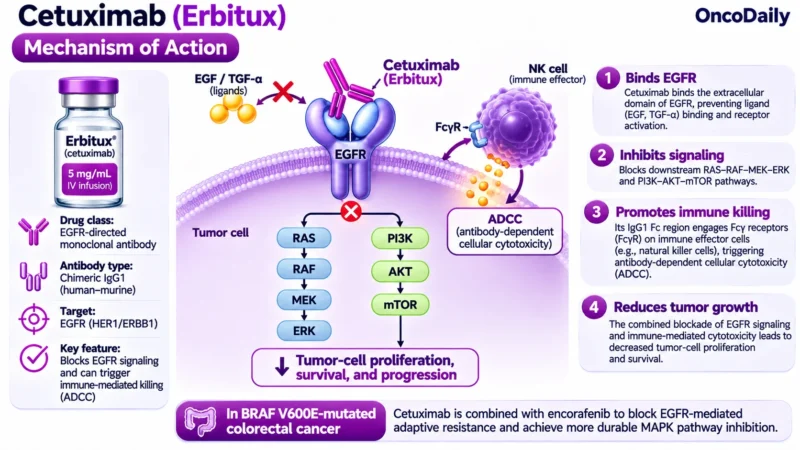
1. EGFR Activation Promotes Tumor Growth
EGFR ligands bind the extracellular receptor domain, initiating receptor dimerization and intracellular signaling.
This activates pathways responsible for:
- Proliferation
- Survival
- Angiogenesis
- Tumor progression
2. Cetuximab Binds EGFR
Cetuximab binds the extracellular ligand-binding domain of EGFR.
This prevents ligand activation and promotes receptor internalization.
3. Downstream Signaling Is Suppressed
EGFR blockade inhibits activation of:
- RAS–RAF–MEK–ERK
- PI3K–AKT
In susceptible tumors, this reduces proliferation and survival signaling.
4. Antibody-Dependent Cellular Cytotoxicity Occurs
Cetuximab’s IgG1 Fc region can interact with Fcγ receptors on immune effector cells, particularly natural killer cells.
This promotes:
Antibody-dependent cellular cytotoxicity (ADCC).
The clinical contribution of ADCC varies by tumor type and biological context.
5. BRAF V600E Combination Therapy Blocks Adaptive Resistance
In BRAF V600E-mutated colorectal cancer, BRAF inhibition alone often triggers compensatory EGFR activation.
Combining cetuximab with encorafenib blocks this adaptive signaling and produces more sustained MAPK pathway inhibition.
Overall mechanism:
Cetuximab → EGFR binding → inhibition of receptor activation + Fc-mediated immune activity → reduced oncogenic signaling and tumor growth.
What Is the Recommended Dose of Cetuximab?
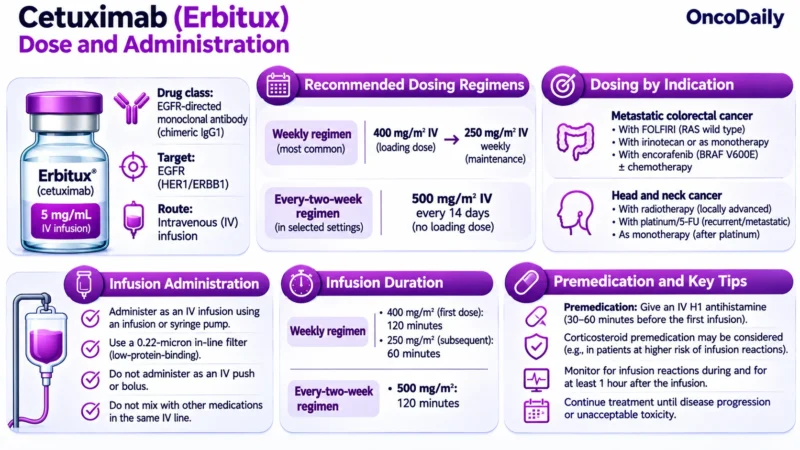
Standard Weekly Schedule
Loading Dose
400 mg/m² intravenously.
Maintenance
250 mg/m² intravenously every week.
This schedule is used in colorectal cancer and head and neck cancer regimens.
Every-Two-Week Schedule
For applicable FDA-approved settings:
500 mg/m² intravenously every 14 days.
No separate loading dose is required.
First-Line RAS Wild-Type Metastatic Colorectal Cancer
Cetuximab is FDA approved with:
FOLFIRI chemotherapy.
Use the appropriate weekly or biweekly cetuximab schedule.
Previously Treated Metastatic Colorectal Cancer
Cetuximab may be given:
- With irinotecan after irinotecan-refractory disease
- As monotherapy after appropriate prior chemotherapy
Treatment generally continues until progression or unacceptable toxicity.
BRAF V600E-Mutated Metastatic Colorectal Cancer
Previously Treated Disease
Cetuximab is given with:
Encorafenib 300 mg orally once daily.
A commonly used schedule is:
Cetuximab 500 mg/m² IV every two weeks.
First-Line Disease
Following the February 2026 approval, encorafenib may be combined with cetuximab and fluorouracil-based chemotherapy for eligible patients with BRAF V600E-mutated mCRC.
The BREAKWATER regimen uses:
- Encorafenib 300 mg orally daily
- Cetuximab 500 mg/m² IV every two weeks
- An appropriate fluorouracil-based chemotherapy regimen
The exact chemotherapy doses and administration schedule follow the selected protocol.
Squamous Cell Carcinoma of the Head and Neck
Locally or Regionally Advanced Disease
Cetuximab may be administered with radiotherapy.
The initial 400 mg/m² dose is administered approximately one week before radiotherapy, followed by 250 mg/m² weekly during treatment.
Recurrent or Metastatic Disease
Cetuximab may be given:
- With platinum-based chemotherapy and fluorouracil
- As monotherapy following failure of platinum-based treatment
Dosing follows the approved weekly or biweekly schedule, as applicable.
How Should Cetuximab Be Administered?
Intravenous Administration
Cetuximab must be administered using an infusion pump or syringe pump.
It must not be administered as an intravenous push or bolus.
Infusion Duration
Weekly Schedule
- Initial dose: 400 mg/m² over 120 minutes
- Subsequent doses: 250 mg/m² over 60 minutes
Biweekly Schedule
500 mg/m² over 120 minutes.
The maximum infusion rate should not exceed:
10 mg/minute.
Premedication
Administer an intravenous H1 antihistamine 30–60 minutes before the first infusion.
Premedication before subsequent infusions depends on clinical judgment and prior infusion reactions.
Corticosteroid premedication is also commonly used, particularly when the risk of infusion reactions is elevated.
Preparation
Cetuximab is supplied as a ready-to-use solution.
- Do not shake or dilute the product.
- Use a low-protein-binding 0.22-micron in-line filter.
- Do not mix with other medications in the same infusion line.
- Observe patients during and after administration.
What Should You Do If a Cetuximab Dose Is Missed?
If an infusion is missed:
- Contact the oncology team.
- Administer the missed dose when clinically appropriate.
- Adjust subsequent infusion dates.
- Review any toxicity contributing to the delay.
There is no recommendation to double the next infusion.
How Are Cetuximab Dose Modifications Managed?
Grade 3–4 Dermatologic Toxicity
For the standard weekly regimen:
First Occurrence
Delay cetuximab for 1–2 weeks.
If toxicity improves:
Resume at 250 mg/m² weekly.
Second Occurrence
After recovery:
Resume at 200 mg/m² weekly.
Third Occurrence
After recovery:
Resume at 150 mg/m² weekly.
Fourth Occurrence
Permanently discontinue cetuximab.
If severe toxicity does not improve after the recommended treatment delay, discontinue.
These dose levels come from the weekly-dose label; patients receiving 500 mg/m² every two weeks require the corresponding regimen-specific modification approach.
Infusion-Related Reactions
For Grade 1–2 reactions:
Reduce infusion rate by 50%.
For Grade 3–4 reactions:
Immediately and permanently discontinue cetuximab.
Pulmonary Toxicity
Withhold cetuximab for new or worsening pulmonary symptoms requiring evaluation.
If interstitial lung disease is confirmed:
Permanently discontinue cetuximab.
What Drug Interactions Are Important With Cetuximab?
Platinum-Based Chemotherapy
Cetuximab can be combined with platinum-based chemotherapy in selected head and neck cancer regimens.
However, additive mucosal, hematologic, and other treatment-related toxicities require monitoring.
Irinotecan and FOLFIRI
Cetuximab is commonly administered with irinotecan-containing chemotherapy in eligible mCRC.
Monitor for diarrhea, neutropenia, and dehydration.
Encorafenib
Cetuximab is intentionally combined with encorafenib to suppress compensatory EGFR signaling in BRAF V600E-mutated colorectal cancer.
The regimen requires monitoring for toxicities associated with both agents.
Radiotherapy
Cetuximab may increase dermatologic and mucosal toxicity when administered with radiotherapy.
CYP450 Interactions
Cetuximab is not primarily metabolized by CYP450 enzymes.
Conventional CYP-mediated interactions are not expected to be major determinants of its pharmacokinetics.
Does Cetuximab Require Dose Adjustment in Renal or Hepatic Impairment?
Renal Impairment
Cetuximab is not primarily eliminated through the kidneys.
Routine dose reductions are not generally required in mild or moderate renal impairment.
Evidence in severe renal impairment remains limited.
Hepatic Impairment
Cetuximab is cleared primarily by antibody catabolism.
No standard hepatic dose-adjustment algorithm has been established.
Data in moderate and severe hepatic impairment remain limited.
What Is the Pharmacokinetic Profile of Cetuximab?
Half-Life
The mean elimination half-life is approximately:
112 hours, or 4.7 days.
Distribution
Distribution occurs mainly within vascular and extracellular compartments.
Metabolism
Cetuximab undergoes:
Proteolytic catabolism
into peptides and amino acids.
Clearance
Elimination includes target-mediated and nonspecific antibody clearance pathways.
Exposure increases with dose until receptor-mediated clearance becomes relatively saturated.
What Are the Clinical Uses of Cetuximab?
RAS Wild-Type Metastatic Colorectal Cancer
Cetuximab is an established EGFR-directed treatment for molecularly selected mCRC.
FDA-approved uses include:
- First-line treatment with FOLFIRI
- Combination with irinotecan in irinotecan-refractory disease
- Monotherapy after appropriate prior chemotherapy
In clinical practice, primary tumor sidedness is important. Left-sided RAS wild-type tumors generally derive the greatest benefit from first-line anti-EGFR therapy.
BRAF V600E-Mutated Metastatic Colorectal Cancer
Cetuximab is used with encorafenib to overcome EGFR-mediated resistance to BRAF inhibition.
The BEACON CRC study established the combination in previously treated disease.
BREAKWATER subsequently demonstrated the benefit of adding encorafenib and cetuximab to first-line chemotherapy.
Locally Advanced Head and Neck Cancer
Cetuximab with radiotherapy is an approved treatment for locally or regionally advanced SCCHN.
However, cetuximab–radiotherapy is not equivalent to cisplatin–radiotherapy in all settings.
Randomized trials in HPV-positive oropharyngeal cancer demonstrated inferior outcomes when cetuximab replaced cisplatin. Therefore, cisplatin-based chemoradiotherapy remains preferred for eligible patients in many definitive treatment settings.
Recurrent or Metastatic Head and Neck Cancer
Cetuximab has approved roles with platinum/fluorouracil chemotherapy and as monotherapy following platinum treatment failure.
Immune checkpoint inhibitors have substantially changed first-line treatment, so cetuximab-containing regimens are now selected according to patient characteristics, previous treatments, and available alternatives.
What Molecular Testing Is Required Before Cetuximab?
Extended RAS Testing
For conventional metastatic colorectal cancer treatment, assess:
- KRAS exons 2, 3, and 4
- NRAS exons 2, 3, and 4
Cetuximab should not be given as conventional anti-EGFR treatment when activating RAS mutations are present or RAS status is unknown.
BRAF V600E Testing
For encorafenib-containing treatment, confirm:
BRAF V600E mutation
using an appropriate authorized molecular assay.
Additional Colorectal Cancer Biomarkers
Comprehensive tumor profiling should also evaluate:
- Microsatellite instability/mismatch repair
- HER2 amplification when clinically relevant
- Other actionable molecular alterations
Head and Neck Cancer
EGFR mutation or RAS testing is not routinely required to select patients for cetuximab in SCCHN.
What Did the Pivotal Clinical Trials Show?
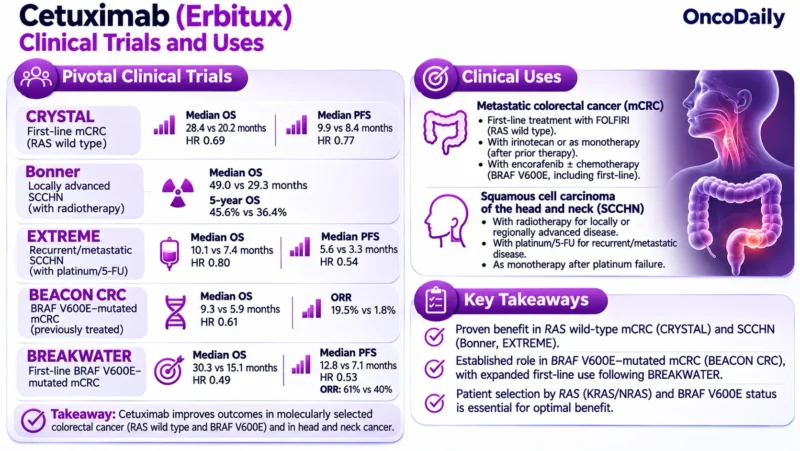
CRYSTAL — Cetuximab Plus FOLFIRI
The randomized phase III CRYSTAL trial compared:
- Cetuximab + FOLFIRI
- FOLFIRI alone
in previously untreated metastatic colorectal cancer.
Median Overall Survival — Extended RAS Wild-Type Population
- Cetuximab + FOLFIRI: 28.4 months
- FOLFIRI: 20.2 months
HR: 0.69
The trial supported the importance of molecularly selecting patients for first-line EGFR-directed therapy.
Bonner Trial — Cetuximab Plus Radiotherapy
This randomized phase III study compared radiotherapy with or without cetuximab in locally advanced SCCHN.
The trial enrolled 424 patients.
Median Locoregional Control
- Cetuximab + radiotherapy: 24.4 months
- Radiotherapy alone: 14.9 months
Median Overall Survival
- Cetuximab + radiotherapy: 49.0 months
- Radiotherapy alone: 29.3 months
Five-Year Overall Survival
- Cetuximab + radiotherapy: 45.6%
- Radiotherapy alone: 36.4%
The results established the benefit of adding cetuximab to radiotherapy compared with radiotherapy alone. They did not establish equivalence to cisplatin-based chemoradiotherapy.
EXTREME — Recurrent or Metastatic Head and Neck Cancer
The phase III EXTREME trial evaluated cetuximab added to platinum/5-FU chemotherapy.
Median Overall Survival
- Cetuximab combination: 10.1 months
- Chemotherapy alone: 7.4 months
HR: 0.80
Median Progression-Free Survival
- Cetuximab combination: 5.6 months
- Chemotherapy alone: 3.3 months
The trial established cetuximab-containing chemotherapy as an important historical standard for recurrent or metastatic SCCHN.
BEACON CRC — BRAF V600E-Mutated Colorectal Cancer
BEACON CRC evaluated targeted therapy combinations against standard treatment in previously treated BRAF V600E-mutated metastatic colorectal cancer.
The study enrolled 665 patients.
Median Overall Survival — Doublet Versus Control
- Encorafenib + cetuximab: 9.3 months
- Control: 5.9 months
HR: 0.61
Confirmed Objective Response Rate
- Encorafenib + cetuximab: 19.5%
- Control: 1.8%
These findings established the clinical value of combined BRAF and EGFR inhibition.
Watch More: BRAF-Mutated Colorectal Cancer: Testing to Treatment.
BREAKWATER — First-Line BRAF V600E-Mutated Colorectal Cancer
The phase III BREAKWATER trial evaluated encorafenib plus cetuximab and chemotherapy against standard chemotherapy, with or without bevacizumab.
Median Progression-Free Survival
- Encorafenib + cetuximab + mFOLFOX6: 12.8 months
- Control: 7.1 months
HR: 0.53
Median Overall Survival
- Experimental combination: 30.3 months
- Control: 15.1 months
HR: 0.49
Objective Response Rate
- Experimental combination: 61%
- Control: 40%
These results supported the February 2026 traditional FDA approval of encorafenib with cetuximab and fluorouracil-based chemotherapy for BRAF V600E-mutated metastatic colorectal cancer.
Read More: BREAKWATER at ESMO GI 2026: Molecular Correlates of Encorafenib Plus Cetuximab and Chemotherapy in BRAF V600E mCRC by OncoDaily.
Does Cetuximab Have CNS Activity?
Cetuximab is a large monoclonal antibody with limited penetration across an intact blood–brain barrier.
It does not have established standalone intracranial efficacy.
In colorectal cancer with brain metastases, management generally relies on appropriate CNS-directed therapies, including surgery or stereotactic radiotherapy when indicated.
Cetuximab should not be considered a specifically CNS-directed treatment.
Is Cetuximab FDA Approved?
Yes.
Cetuximab received its initial FDA approval in February 2004.
Its FDA-approved clinical uses include selected settings in:
- KRAS wild-type, EGFR-expressing metastatic colorectal cancer
BRAF V600E-mutated metastatic colorectal cancer, in combination with encorafenib - Locally or regionally advanced SCCHN with radiotherapy
- Recurrent or metastatic SCCHN with platinum-based chemotherapy and fluorouracil
- Recurrent or metastatic SCCHN following platinum treatment failure
In February 2026, encorafenib received traditional approval with cetuximab and fluorouracil-based chemotherapy for BRAF V600E-mutated mCRC. This approval expanded the first-line role of cetuximab-containing targeted therapy.
What Is the Current Clinical Role of Cetuximab in 2026?
RAS Wild-Type Metastatic Colorectal Cancer
Cetuximab remains a major EGFR-targeted option, particularly for left-sided RAS wild-type metastatic colorectal cancer.
It may be used with chemotherapy or in selected later-line settings.
BRAF V600E-Mutated Colorectal Cancer
Cetuximab combined with encorafenib has an established role following prior therapy.
The BREAKWATER results have further expanded this strategy into the first-line setting with fluorouracil-based chemotherapy.
Head and Neck Cancer
Cetuximab remains relevant in selected radiotherapy and recurrent/metastatic treatment settings.
However, cisplatin-based chemoradiotherapy and immune checkpoint inhibitor-containing regimens are preferred in many modern treatment scenarios.
Its role requires careful assessment of patient fitness, treatment goals, and alternatives.
What Are the Major Side Effects of Cetuximab?
Infusion-Related Reactions
Cetuximab has an FDA boxed warning for serious infusion reactions.
Symptoms can include:
- Fever and chills
- Hypotension
- Bronchospasm
- Dyspnea
- Angioedema
- Anaphylaxis
Severe and fatal reactions may occur, particularly during the first infusion.
Geographic variation in reactions has been linked partly to preexisting IgE antibodies against galactose-alpha-1,3-galactose (alpha-gal).
Dermatologic Toxicity
Acneiform or papulopustular rash is among the most frequent adverse reactions.
Other manifestations include:
- Dry skin
- Pruritus
- Paronychia
- Skin fissures
- Secondary infections
Severe reactions may require interruption or dose modification.
Hypomagnesemia
Cetuximab may cause progressive magnesium depletion through inhibition of EGFR signaling in renal tubular cells.
Potential complications include:
- Muscle cramps
- Weakness
- Arrhythmias
- Secondary hypocalcemia
- Hypokalemia
Cardiopulmonary Arrest
Cetuximab carries a boxed warning for cardiopulmonary arrest, particularly relevant in patients receiving concurrent radiotherapy or platinum/fluorouracil chemotherapy for head and neck cancer.
Gastrointestinal Toxicity
Common reactions include diarrhea, nausea, and mucosal inflammation.
Severe diarrhea may cause dehydration and renal complications.
Interstitial Lung Disease
Interstitial lung disease is uncommon but may be fatal.
Confirmed ILD requires permanent discontinuation.
Ocular Toxicity
Reported complications include:
- Keratitis
- Blepharitis
- Conjunctivitis
- Corneal inflammation
Other Adverse Reactions
Additional toxicities include fatigue, headache, infections, and radiation-associated dermatitis in patients receiving concurrent radiotherapy.
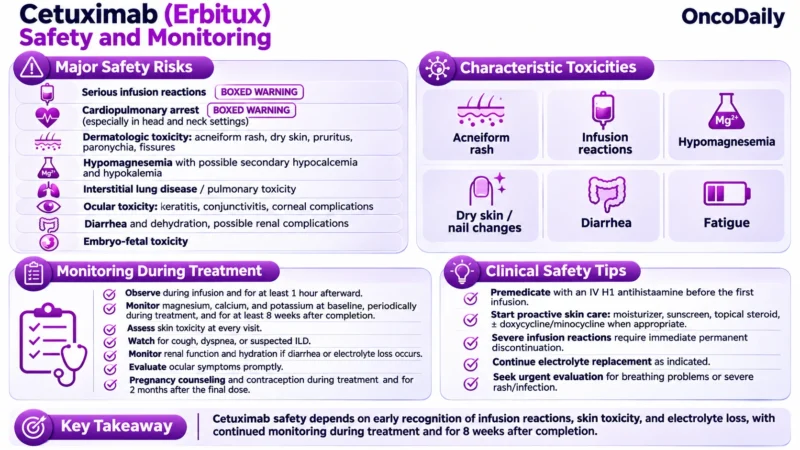
What Monitoring Is Required During Cetuximab Treatment?
Infusion Monitoring
Closely monitor patients during infusion and for at least one hour afterward.
Assess for:
- Hypotension
- Bronchospasm
- Dyspnea
- Hypersensitivity
- Cardiovascular instability
Dermatologic Monitoring
Evaluate skin toxicity at every visit.
Consider preemptive supportive treatment with:
- Moisturizers
- Sunscreen
- Low-potency topical corticosteroids
- Doxycycline or minocycline when appropriate
Electrolyte Monitoring
Monitor:
- Magnesium
- Calcium
- Potassium
at baseline, periodically during treatment, and for at least eight weeks after completion.
Cardiovascular Monitoring
Evaluate patients with cardiovascular risk factors carefully, particularly those receiving cetuximab with radiotherapy or platinum-based treatment.
Pulmonary Monitoring
Investigate:
- New cough
- Dyspnea
- Hypoxia
- Suspected ILD
Renal Function
Monitor serum creatinine and hydration status, especially during significant diarrhea or electrolyte depletion.
Pregnancy Monitoring
Cetuximab can cause fetal harm.
The U.S. label recommends effective contraception for females of reproductive potential during treatment and for two months after the final dose. Breastfeeding is not recommended over the same period.