


Adagrasib (Krazati; MRTX849): Understanding Its Mechanism, Dosing, Clinical Uses, and Role in KRAS G12C-Mutated Cancers
Key takeaways
- Adagrasib is an oral, irreversible KRAS G12C inhibitor.
- It covalently binds mutant KRAS G12C and stabilizes the inactive GDP-bound state.
- It is FDA approved under accelerated approval for previously treated KRAS G12C-mutated advanced NSCLC.
- The colorectal cancer indication for adagrasib plus cetuximab was withdrawn in September 2026.
- The standard dose is 600 mg twice daily.
- Dose reductions are 600 mg twice daily → 400 mg twice daily → 600 mg once daily.
- KRYSTAL-1 demonstrated an ORR of 42.9%, median DoR of 8.5 months, median PFS of 6.5 months, and median OS of 12.6 months in NSCLC.
- KRYSTAL-12 demonstrated significantly improved PFS compared with docetaxel.
- Prospective CNS data demonstrated an intracranial ORR of 42% in evaluable patients with untreated CNS metastases.
- Important toxicities include gastrointestinal events, QTc prolongation, hepatotoxicity and ILD/pneumonitis.
- Molecular confirmation of KRAS G12C is required before treatment.
Adagrasib (Krazati; MRTX849) is an oral, selective, irreversible KRAS G12C inhibitor that targets cancers harboring the KRAS p.G12C mutation. It binds covalently to the mutant KRAS protein, stabilizing its inactive GDP-bound state and suppressing downstream signaling pathways involved in malignant-cell proliferation, survival, and tumor progression.
Adagrasib received FDA accelerated approval in December 2022 for adults with previously treated, locally advanced or metastatic KRAS G12C-mutated non-small cell lung cancer (NSCLC). In June 2024, it received an additional accelerated approval in combination with cetuximab for previously treated KRAS G12C-mutated colorectal cancer.
Important regulatory update: The colorectal cancer indication was withdrawn effective September 1, 2026. As of October 2026, the active U.S. FDA indication is adagrasib monotherapy for previously treated KRAS G12C-mutated advanced NSCLC. The colorectal cancer combination remains clinically important from a research perspective but is no longer FDA approved in the United States.
The current recommended adagrasib dose is 600 mg orally twice daily, continued until disease progression or unacceptable toxicity.
Key Facts
- Generic name: Adagrasib
- Brand name: Krazati
- Development name: MRTX849
- Drug class: KRAS G12C inhibitor
- Target: Mutant KRAS G12C protein
- Binding: Covalent and irreversible
- Route: Oral
- Initial U.S. approval: December 2022
- Current FDA indication: Previously treated KRAS G12C-mutated locally advanced or metastatic NSCLC
- Historical colorectal cancer approval: June 2024; withdrawn September 2026
- Recommended dose: 600 mg twice daily
- Tablet strength: 200 mg
- Administration: With or without food
- First dose reduction: 400 mg twice daily
- Second dose reduction: 600 mg once daily
- Major adverse reactions: Diarrhea, nausea, vomiting, fatigue, hepatotoxicity, renal impairment, edema and musculoskeletal pain
- Important serious toxicities: QTc prolongation, hepatotoxicity, gastrointestinal toxicity and interstitial lung disease/pneumonitis
- Major metabolic pathway: CYP3A4
- Important interactions: CYP3A modulators, CYP3A/CYP2C9/CYP2D6/P-gp substrates and QT-prolonging medications
- Pivotal study: KRYSTAL-1
- Phase III NSCLC study: KRYSTAL-12
- CNS activity: Prospective intracranial responses demonstrated in KRAS G12C-mutated NSCLC.
What Is Adagrasib?
Adagrasib is a small-molecule targeted therapy developed to inhibit the oncogenic activity of KRAS proteins carrying the:
KRAS p.G12C mutation.
KRAS is a small GTPase that regulates intracellular pathways involved in:
- Cell proliferation
- Cell survival
- Differentiation
- Metabolic adaptation
- Tumor progression
KRAS normally cycles between two states:
- GTP-bound: Active state
- GDP-bound: Inactive state
The KRAS G12C mutation substitutes cysteine for glycine at amino acid position 12.
This mutation disrupts normal KRAS signaling regulation and can promote persistent oncogenic activation.
Adagrasib selectively binds the cysteine residue present in KRAS G12C, locking the mutant protein in its inactive GDP-bound conformation.
This decreases downstream oncogenic signaling without directly inhibiting wild-type KRAS to the same extent.
The drug’s activity is mutation-specific: KRAS G12C is distinct from KRAS G12D, G12V, G12R and other KRAS variants.
What Is the Mechanism of Action of Adagrasib?
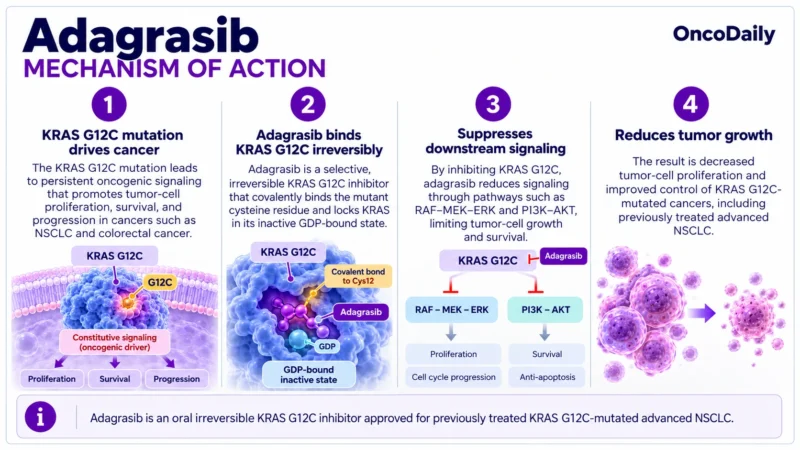
1. KRAS G12C Mutation Produces Oncogenic Signaling
In KRAS G12C-mutated malignancies, the substitution of glycine with cysteine at codon 12 promotes abnormal KRAS signaling.
Mutant KRAS continues cycling between its active and inactive states, but signaling regulation is disrupted.
2. Activated KRAS Stimulates Downstream Pathways
Oncogenic KRAS signaling activates pathways including:
- RAF–MEK–ERK
- PI3K–AKT–mTOR
- Other RAS-dependent signaling networks
These pathways support:
- Proliferation
- Cell survival
- Resistance to apoptosis
- Tumor progression
3. Adagrasib Covalently Binds KRAS G12C
Adagrasib selectively binds the mutant cysteine residue at position 12 within a regulatory pocket of KRAS G12C.
It forms an:
Irreversible covalent bond
and stabilizes KRAS G12C in the:
GDP-bound inactive state.
4. Downstream Signaling Is Suppressed
KRAS G12C inhibition reduces signaling through:
- RAF–MEK–ERK
- Other KRAS-dependent downstream effectors
This limits oncogenic pathway activation.
5. Tumor-Cell Proliferation Decreases
Overall:
Adagrasib → irreversible KRAS G12C binding → inactive GDP-bound KRAS → ↓ RAF–MEK–ERK signaling → ↓ tumor-cell proliferation and survival
This mechanism explains its antitumor activity in KRAS G12C-mutated NSCLC and provides the biological rationale for its investigation in other KRAS G12C-mutated malignancies.
What Is the Recommended Dose of Adagrasib?
The recommended dose is:
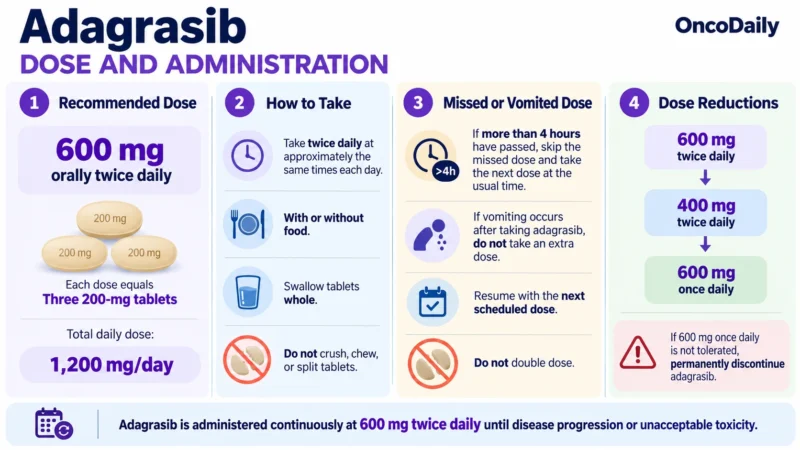
600 mg orally twice daily.
This corresponds to:
Three 200-mg tablets per dose, twice daily.
The total daily dose is:
1,200 mg.
There is no scheduled treatment-free interval.
Continue treatment until:
- Disease progression
- Unacceptable toxicity
The same adagrasib dose was used in clinical studies combining adagrasib with cetuximab for KRAS G12C-mutated colorectal cancer.
However, the colorectal cancer combination is no longer FDA approved in the United States.
How Should Adagrasib Be Taken?
Adagrasib should be taken:
- Twice daily
- At approximately the same times each day
- With or without food
Tablets must be swallowed whole.
Do not:
- Crush
- Chew
- Split
the tablets.
Patients should maintain adequate hydration, particularly if experiencing diarrhea or vomiting.
What Should You Do If You Miss a Dose of Adagrasib?
If a dose is missed and:
More than 4 hours have elapsed
from the scheduled administration time:
- Skip the missed dose
- Take the next dose at the usual scheduled time
If vomiting occurs after taking adagrasib:
- Do not take an additional dose
- Resume with the next scheduled dose
Do not double doses to compensate for a missed or vomited dose.
How Are Adagrasib Dose Reductions Managed?
The standard dose-reduction sequence is:
600 mg twice daily → 400 mg twice daily → 600 mg once daily
First Dose Reduction
Reduce from:
600 mg twice daily
to:
400 mg twice daily.
Second Dose Reduction
Reduce to:
600 mg once daily.
If the patient cannot tolerate 600 mg once daily:
Permanently discontinue adagrasib.
A maximum of two dose reductions is recommended.
KRAZATI- adagrasib tablet, coated
Gastrointestinal Toxicity
For severe or persistent diarrhea, nausea or vomiting:
- Initiate appropriate supportive treatment.
- Assess hydration and electrolytes.
- Withhold adagrasib according to the severity of the adverse reaction.
- Resume at a reduced dose when recovery criteria are met.
Supportive treatment may include antidiarrheals, antiemetics and intravenous fluids when appropriate.
QTc Interval Prolongation
If QTc exceeds:
500 milliseconds
or increases by:
More than 60 milliseconds from baseline
- Withhold adagrasib.
- Correct relevant electrolyte abnormalities.
- Resume at the next lower dose once QTc is below 481 milliseconds or has returned to baseline.
For torsades de pointes, polymorphic ventricular tachycardia or another serious life-threatening arrhythmia:
Permanently discontinue adagrasib.
Hepatotoxicity
For Grade 2 AST or ALT elevation:
– Reduce adagrasib to the next lower dose.
For Grade 3–4 AST or ALT elevation:
- Withhold until recovery to Grade 1 or baseline.
- Resume at the next lower dose.
For AST or ALT greater than three times the upper limit of normal together with bilirubin greater than twice the upper limit of normal, without an alternative explanation:
Permanently discontinue adagrasib.
Interstitial Lung Disease/Pneumonitis
If ILD or pneumonitis is suspected:
Withhold adagrasib.
If drug-related ILD/pneumonitis is confirmed:
Permanently discontinue treatment.
Other Severe Toxicities
For Grade 3–4 adverse reactions:
- Withhold until recovery to Grade 1 or baseline.
- Resume at the next lower dose.
All modifications should follow the current prescribing information.
What Drug Interactions Are Important With Adagrasib?
Adagrasib is primarily metabolized through CYP3A4 after a single dose. It also inhibits several drug-metabolizing enzymes and transporters, creating clinically important interactions.
Strong CYP3A Inducers
Avoid concomitant administration.
Examples include:
- Rifampin
- Carbamazepine
- Phenytoin
- St. John’s wort
Rifampin markedly reduces adagrasib exposure, potentially compromising its antitumor effect.
Strong CYP3A Inhibitors
Avoid strong CYP3A inhibitors before adagrasib reaches steady-state concentrations, approximately 8 days after treatment initiation.
Examples include:
- Itraconazole
- Ketoconazole
- Clarithromycin
Itraconazole increased adagrasib exposure approximately fourfold after a single dose in a pharmacokinetic interaction study.
At steady state, the interaction is less pronounced because adagrasib inhibits its own CYP3A-mediated metabolism.
Effects on Other Medications
Adagrasib can inhibit:
- CYP3A
- CYP2C9
- CYP2D6
- P-glycoprotein
This may increase exposure to medications metabolized or transported through these pathways.
Particular caution is required with drugs with narrow therapeutic indices, including certain anticoagulants, cardiovascular medications, and other targeted therapies.
QT-Prolonging Medications
Avoid combining adagrasib with other medications known to prolong the QT interval when possible.
Examples include certain:
- Antiarrhythmics
- Antibiotics
- Antipsychotics
- Antiemetics
If concurrent use cannot be avoided, ECG and electrolyte monitoring are required.
Gastric Acid-Reducing Agents
Unlike infigratinib, adagrasib does not have a clinically important interaction requiring routine avoidance of proton-pump inhibitors.
Pantoprazole was not associated with a clinically meaningful pharmacokinetic effect in the interaction studies included in the prescribing information.
Does Adagrasib Require Dose Adjustment in Renal or Hepatic Impairment?
Renal Impairment
No routine dose adjustment is recommended for:
- Mild renal impairment
- Moderate renal impairment
- Severe renal impairment with creatinine clearance of at least 15 mL/min
Population pharmacokinetic analyses did not identify clinically meaningful exposure differences across these renal function categories.
However, treatment-associated renal impairment and increased serum creatinine can occur, requiring clinical monitoring.
Hepatic Impairment
No routine starting-dose adjustment is established for patients with:
- Child-Pugh A hepatic impairment
- Child-Pugh B hepatic impairment
- Child-Pugh C hepatic impairment
Pharmacokinetic analyses did not predict clinically meaningful exposure differences across these categories.
Nevertheless, hepatotoxicity remains an important treatment-related risk, and patients require ongoing liver function monitoring.
The absence of a routine starting-dose adjustment does not mean that adagrasib-related hepatotoxicity can be ignored.
What Is the Pharmacokinetic Profile of Adagrasib?
Time to Peak Concentration
The median time to maximum plasma concentration is approximately:
6 hours.
Half-Life
The terminal elimination half-life is approximately:
23 hours.
Protein Binding
Adagrasib is approximately:
98% protein bound.
Steady State
Steady-state concentrations are generally reached within:
8 days.
Accumulation after repeated dosing is approximately:
Sixfold.
Metabolism
After a single dose, metabolism is predominantly mediated by:
CYP3A4.
At steady state, adagrasib inhibits its own CYP3A4 metabolism, allowing additional enzymes to contribute, including:
- CYP2C8
- CYP1A2
- CYP2B6
- CYP2C9
- CYP2D6
Excretion
Following administration of radiolabeled adagrasib:
- Approximately 75% of the dose was recovered in feces.
- Approximately 4.5% was recovered in urine.
Effect of Food
A high-fat, high-calorie meal did not produce clinically meaningful changes in adagrasib pharmacokinetics.
Therefore, adagrasib may be taken:
With or without food.
Cardiac Electrophysiology
Adagrasib produces concentration-dependent QTc prolongation.
At the recommended 600-mg twice-daily dose, the estimated mean QTcF increase at steady-state maximum concentration was approximately:
18 milliseconds.
What Are the Clinical Uses of Adagrasib?
KRAS G12C-Mutated Non-Small Cell Lung Cancer
Adagrasib is FDA approved under accelerated approval for adults with:
KRAS G12C-mutated locally advanced or metastatic NSCLC
who have received:
At least one prior systemic therapy.
Patients must have a confirmed KRAS G12C mutation using an FDA-approved test.
The drug is administered as:
600 mg twice daily as monotherapy.
KRAS G12C-Mutated Colorectal Cancer — Historical FDA Indication
In June 2024, adagrasib received accelerated approval in combination with cetuximab for adults with:
KRAS G12C-mutated locally advanced or metastatic colorectal cancer
previously treated with:
- Fluoropyrimidine-based chemotherapy
- Oxaliplatin-based chemotherapy
- Irinotecan-based chemotherapy
However, this indication was withdrawn effective:
September 1, 2026.
The withdrawal means that the combination is no longer an FDA-approved indication in the United States, although the clinical trial results remain relevant to discussions of KRAS G12C targeting in colorectal cancer.
Other Investigational Uses
Adagrasib has also been investigated in KRAS G12C-mutated:
- Pancreatic cancer
- Biliary tract cancer
- Other gastrointestinal malignancies
- Additional advanced solid tumors
These applications remain investigational and should not be presented as established FDA-approved indications.
What Molecular Testing Is Required Before Adagrasib?
Patient selection requires confirmation of the specific:
KRAS p.G12C mutation.
KRAS G12C is not interchangeable with:
- KRAS G12D
- KRAS G12V
- KRAS G12R
- KRAS G13D
- Other KRAS mutations
For NSCLC, molecular testing may be performed using:
- Tumor tissue
- Plasma circulating tumor DNA
If a plasma specimen does not identify KRAS G12C, tumor tissue should be tested when available.
This is important because a negative plasma result does not reliably exclude the mutation.
Testing should use an FDA-approved companion diagnostic when treatment is being considered under the U.S. label.
What Did the Pivotal Clinical Trials Show?
KRYSTAL-1 — KRAS G12C-Mutated NSCLC
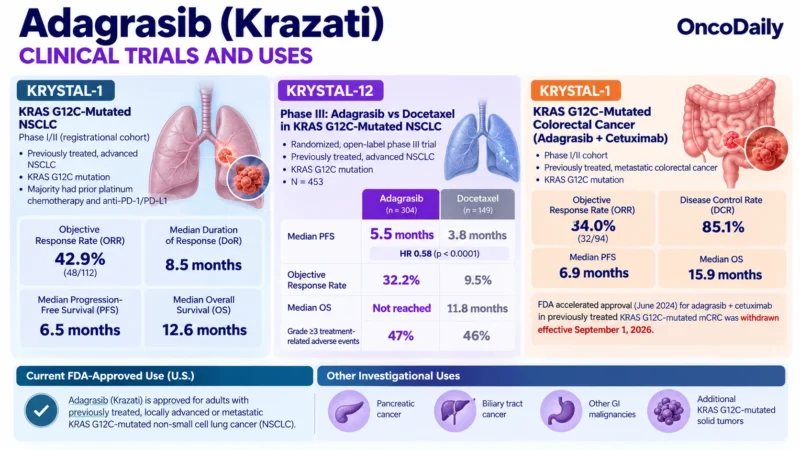
The phase I/II KRYSTAL-1 study evaluated adagrasib in patients with previously treated advanced NSCLC harboring a KRAS G12C mutation.
Patients received:
600 mg orally twice daily.
The registrational phase II cohort included 116 treated patients, with 112 evaluable for the primary efficacy analysis.
Nearly all patients had previously received:
- Platinum-based chemotherapy
- Anti-PD-1 or anti-PD-L1 therapy
Objective Response Rate
42.9%
48 of 112 evaluable patients
Median Duration of Response
8.5 months
Median Progression-Free Survival
6.5 months
Median Overall Survival
12.6 months
These findings established the clinically meaningful activity of adagrasib in previously treated KRAS G12C-mutated advanced NSCLC and supported its initial FDA accelerated approval.
KRYSTAL-12 — Phase III NSCLC Trial
KRYSTAL-12 was a randomized phase III study comparing:
Adagrasib versus docetaxel
in patients with previously treated KRAS G12C-mutated advanced NSCLC.
A total of:
453 patients
were randomized.
Median Progression-Free Survival
- Adagrasib: 5.5 months
- Docetaxel: 3.8 months
The hazard ratio for progression or death was:
0.58
with:
p < 0.0001.
These results demonstrated a statistically significant progression-free survival advantage for adagrasib compared with docetaxel.
Grade 3 or higher treatment-related adverse reactions occurred in:
- 47% with adagrasib
- 46% with docetaxel
The trial provided randomized evidence supporting the clinical benefit of KRAS G12C inhibition in previously treated NSCLC.
KRYSTAL-1 — Adagrasib Plus Cetuximab in Colorectal Cancer
A separate KRYSTAL-1 cohort evaluated adagrasib combined with cetuximab in patients with previously treated KRAS G12C-mutated advanced colorectal cancer.
The analysis included:
94 patients.
Patients received:
Adagrasib 600 mg twice daily with cetuximab.
Objective Response Rate
34.0%
Disease Control Rate
85.1%
Median Duration of Response
5.8 months
Median Progression-Free Survival
6.9 months
Median Overall Survival
15.9 months
These findings demonstrated clinically meaningful antitumor activity with combined KRAS G12C and EGFR inhibition.
However, they should be interpreted in the context of the withdrawn September 2026 U.S. colorectal cancer indication.
Why Was Adagrasib Combined With Cetuximab in Colorectal Cancer?
KRAS G12C inhibition in colorectal cancer can trigger compensatory EGFR signaling.
This feedback activation may restore downstream MAPK activity and reduce the effectiveness of KRAS G12C inhibitor monotherapy.
Cetuximab is an anti-EGFR monoclonal antibody that inhibits ligand-mediated EGFR activation.
Combining adagrasib with cetuximab was therefore intended to suppress both:
- Oncogenic KRAS G12C signaling
- EGFR-mediated feedback reactivation
This dual inhibition provides a biological explanation for the improved antitumor activity observed in colorectal cancer combination studies.
Importantly, the mechanistic rationale and clinical activity remain scientifically relevant despite withdrawal of the specific U.S. accelerated approval.
Does Adagrasib Have CNS Activity?
Yes. Adagrasib has demonstrated intracranial antitumor activity in patients with KRAS G12C-mutated NSCLC.
Unlike many early targeted therapy studies that excluded patients with untreated brain metastases, KRYSTAL-1 prospectively evaluated a cohort with untreated CNS disease.
The study enrolled:
25 patients
with untreated CNS metastases.
Of these, 19 were radiographically evaluable for intracranial response.
Intracranial Objective Response Rate
42%
Intracranial Disease Control Rate
90%
Median Progression-Free Survival
5.4 months
Median Overall Survival
11.4 months
These results support clinically meaningful CNS activity.
However, intracranial efficacy should not be interpreted as a separate FDA-approved indication or as evidence that local CNS-directed therapy is unnecessary in all patients. Treatment decisions require consideration of symptoms, lesion burden and multidisciplinary assessment.
Is Adagrasib FDA Approved?
Yes, for KRAS G12C-mutated NSCLC.
Its current U.S. regulatory status is important because it changed during 2026.
December 2022 — Initial FDA Accelerated Approval
Adagrasib was approved for adults with previously treated KRAS G12C-mutated locally advanced or metastatic NSCLC.
June 2024 — Colorectal Cancer Accelerated Approval
The FDA granted accelerated approval for adagrasib in combination with cetuximab for heavily pretreated KRAS G12C-mutated advanced colorectal cancer.
September 2026 — Colorectal Cancer Indication Withdrawn
The colorectal cancer indication was withdrawn effective September 1, 2026.
Current Status in October 2026
The active FDA-approved indication remains:
Adagrasib monotherapy for adults with previously treated KRAS G12C-mutated locally advanced or metastatic NSCLC.
The NSCLC indication remains under accelerated approval.
What Is the Current Clinical Role of Adagrasib in 2026?
Adagrasib is an established molecularly targeted option for previously treated advanced NSCLC harboring KRAS G12C.
Its clinical significance is supported by:
- Mutation-specific inhibition of KRAS G12C
- Objective responses in KRYSTAL-1
- Randomized progression-free survival benefit in KRYSTAL-12
- Prospective evidence of intracranial activity
The KRYSTAL-12 results strengthen the evidence for adagrasib after previous systemic therapy, although they do not independently expand the approved indication to untreated NSCLC.
Read More: Krascendo 1 Phase III: Divarasib Versus Sotorasib or Adagrasib in KRAS G12C-Mutated NSCLC by OncoDaily.
Watch more: KRYSTAL-1: activity of adagrasib in KRASG12m NSCLC with untreated CNS metastases.
The Importance of Molecular Profiling
KRAS G12C is only one of several clinically relevant oncogenic drivers in NSCLC.
Comprehensive molecular testing is important to distinguish KRAS G12C-mutated disease from tumors driven by other molecular alterations, including EGFR, ALK, ROS1, RET, MET and BRAF.
Acquired Resistance
Resistance to adagrasib may emerge through:
- Secondary KRAS mutations
- Alterations affecting the drug-binding pocket
- KRAS pathway reactivation
- Activation of upstream receptor signaling
- MAPK pathway bypass mechanisms
- Histologic or phenotypic changes
These mechanisms support continued development of combination therapies, next-generation KRAS inhibitors and strategies targeting resistance.
Clinical Role in Colorectal Cancer
Combined KRAS G12C and EGFR inhibition remains biologically relevant in colorectal cancer, but the adagrasib–cetuximab regimen must now be distinguished from its withdrawn U.S. regulatory indication.
What Are the Major Side Effects of Adagrasib?
Gastrointestinal Toxicity
Gastrointestinal adverse reactions are among the most frequent toxicities associated with adagrasib.
In the KRYSTAL-1 NSCLC safety population:
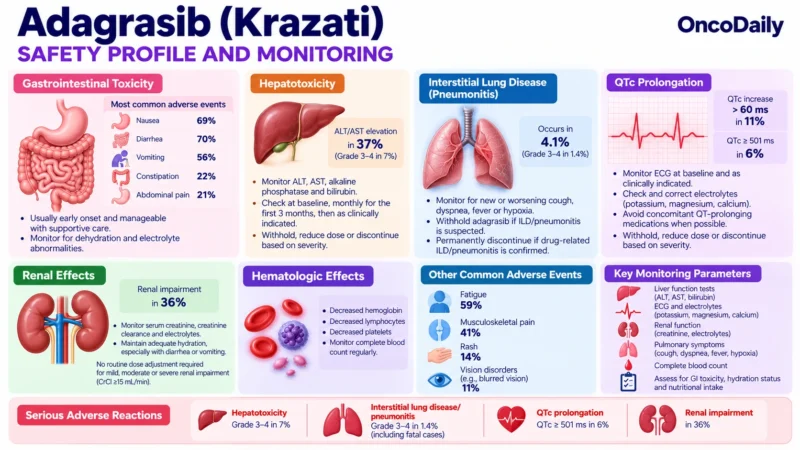
- Diarrhea: 70%
- Nausea: 69%
- Vomiting: 56%
- Constipation: 22%
- Abdominal pain: 21%
Severe gastrointestinal events may result in dehydration, electrolyte disturbances and treatment interruption.
In the pooled 366-patient monotherapy safety population, nausea, diarrhea or vomiting occurred in approximately:
89%
of patients.
Supportive management includes hydration, antiemetics and antidiarrheal treatment according to severity.
QTc Interval Prolongation
Adagrasib can cause concentration-dependent QTc prolongation.
In the pooled safety population:
6%
of patients with post-baseline ECG assessment had an average QTc of at least 501 milliseconds.
Approximately:
11%
experienced a QTc increase greater than 60 milliseconds from baseline.
QTc prolongation can increase the risk of:
- Ventricular arrhythmias
- Torsades de pointes
- Sudden cardiac death
Avoid concomitant QT-prolonging medications where possible.
Hepatotoxicity
Adagrasib can cause:
- ALT elevation
- AST elevation
- Hepatitis
- Drug-induced liver injury
In the pooled safety population:
37%
experienced hepatotoxicity.
Grade 3–4 hepatotoxicity occurred in approximately:
7%.
Median onset of ALT/AST elevation was approximately:
3 weeks.
Liver function monitoring is particularly important during the initial months of treatment.
Interstitial Lung Disease/Pneumonitis
ILD/pneumonitis is an uncommon but potentially fatal adverse reaction.
In the pooled safety population:
4.1%
developed ILD/pneumonitis.
Grade 3–4 events occurred in:
1.4%.
One fatal case was reported.
Median time to onset was approximately:
12 weeks.
Patients should be assessed for new or worsening:
- Dyspnea
- Cough
- Fever
- Hypoxia
Fatigue and Musculoskeletal Toxicity
In the KRYSTAL-1 NSCLC safety population:
- Fatigue: 59%
- Musculoskeletal pain: 41%
Fatigue can contribute to treatment interruption or dose reduction.
Renal Impairment
Renal adverse reactions, including increased serum creatinine and acute kidney injury, have been reported.
In the KRYSTAL-1 NSCLC population, renal impairment was reported in approximately:
36%.
Potential contributors include treatment-related creatinine changes, dehydration and other causes of kidney injury.
Laboratory Abnormalities
Common laboratory abnormalities include:
- Increased AST
- Increased ALT
- Increased serum creatinine
- Increased lipase
- Decreased sodium
- Decreased hemoglobin
- Decreased lymphocyte count
- Decreased platelets
- Decreased magnesium
- Decreased potassium
- Decreased albumin.
What Monitoring Is Required During Adagrasib Treatment?
Liver Function
Monitor:
- ALT
- AST
- Alkaline phosphatase
- Total bilirubin
Testing is recommended:
- Before treatment
- Monthly for the first 3 months
- Subsequently as clinically indicated
More frequent monitoring is required if transaminase elevations develop.
ECG and QTc Monitoring
Obtain ECG assessment at baseline and as clinically indicated, particularly in patients with cardiac risk factors or interacting medications.
Monitor:
- QTc interval
- Potassium
- Magnesium
- Other relevant electrolytes
Correct electrolyte abnormalities promptly.
Renal Function and Hydration
Monitor:
- Serum creatinine
- Estimated renal function
- Fluid status
- Electrolytes
Particular attention is required in patients with persistent diarrhea or vomiting.
Gastrointestinal Toxicity
Assess at each clinical visit:
- Diarrhea
- Nausea
- Vomiting
- Oral intake
- Weight changes
- Dehydration
Initiate supportive treatment early when needed.
Pulmonary Monitoring
Monitor for symptoms suggestive of ILD/pneumonitis:
- New cough
- Worsening dyspnea
- Fever
- Unexplained hypoxia
Treatment should be withheld if ILD/pneumonitis is suspected.
Hematologic Monitoring
Assess:
- Hemoglobin
- White blood cell count
- Neutrophils
- Lymphocytes
- Platelets
Reproductive Considerations
Adagrasib may impair fertility based on animal studies.
Patients should receive appropriate reproductive counseling before treatment.
Breastfeeding should be avoided:
During treatment and for 1 week after the final dose.
The current U.S. label does not specify a routine post-treatment contraception interval, so one should not be invented or extrapolated from another KRAS inhibitor.
FAQ
What is adagrasib used for?
What is the standard adagrasib dose?
Can adagrasib be taken with food?
Adagrasib can be taken with or without food.
What is the mechanism of action of adagrasib?
Does adagrasib work against all KRAS mutations?
Adagrasib specifically targets KRAS G12C and should not be assumed effective against other KRAS variants.
Does adagrasib have CNS activity?
Prospective KRYSTAL-1 data demonstrated intracranial responses in patients with untreated brain metastases.
What are the main side effects?
What are the main dose reductions?
Is adagrasib plus cetuximab FDA approved for colorectal cancer?
No, not as of October 2026.
The previous accelerated approval was withdrawn effective September 1, 2026.