
Key takeaways
- Late presentation is rarely just a patient problem; delays can build at every step from symptom recognition to diagnosis, referral, and treatment.
- In settings where breast tumors still present at 3–4 cm, strengthening clinical examination may have a greater immediate impact than relying only on population-wide mammographic screening.
- Structured tools such as BC-RADS can make clinical breast examination more consistent and help guide when patients need reassurance, follow-up, or fast-track referral.
- Cancer care begins in the community, long before the patient reaches a cancer center.
At the Community Oncology Global Congress (COGC 2026), organized by OncoDaily, the session on late presentation brought together Soumen Das, Head of the Breast Institute and the Department of Surgical Oncology at NCRI Hospital in Kolkata, India, and Deepak Poudel, Associate Professor in the Department of Otorhinolaryngology and Head and Neck Surgery at B. P. Koirala Institute of Health Sciences in Dharan, Nepal.
Their discussion centered on a persistent problem across many low- and middle-income countries, and even in lower-resource areas of high-income settings: patients are still reaching cancer care too late, even when earlier diagnosis and treatment could significantly change outcomes.
The discussion unfolded in two connected sections.
The first focused on early detection at the primary and community-care level, using breast cancer as the main example. The second moved further along the cancer pathway, looking at why referrals break down after cancer is suspected. Together, the two presentations followed the same patient journey from the first suspicious finding to treatment, showing that reducing late presentation depends on strengthening every step in between.
Speaker: Soumen Das
Why Breast Cancer Is Still Being Diagnosed Too Late
Breast cancer is becoming increasingly common worldwide, with approximately 2.3 million new cases diagnosed each year. Yet the stage at which women enter the healthcare system remains very different across countries.
In many LMICs, around 40% to 60% of patients still present with stage III or IV disease. That difference is reflected in survival as well. While five-year survival in countries such as the United Kingdom and the United States exceeds 95%, it falls to around 65% in India and can be lower still in rural areas.
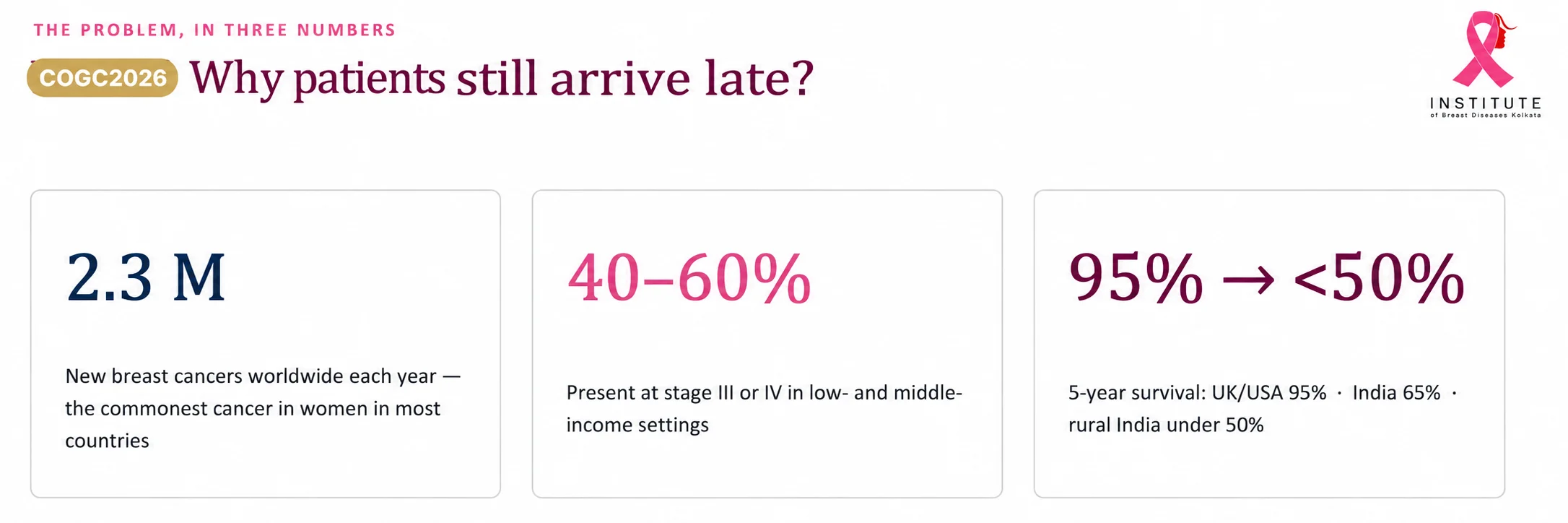
This gap cannot be explained by biology alone. One of the most important factors is simply the stage at which the cancer is found. If a large proportion of patients currently arrive with stage III or IV disease, then moving even part of that population toward stage I or II could change outcomes significantly. The first step is therefore understanding where the delay actually happens.
The delays can be divided into several different stages.
Primary delay is the time between a patient noticing a symptom and seeking medical care.
Secondary delay begins after the patient has reached the first healthcare provider and continues until an appropriate diagnosis or treatment pathway is established.
Tertiary delay happens after the diagnosis has already been made, when treatment initiation is held up by health-system factors.
There can also be a quaternary delay, when patients move repeatedly from one doctor or hospital to another, sometimes returning to alternative medicine or continuing to search for different opinions instead of entering a clear treatment pathway.
The assumption is often that the largest problem lies with the patient waiting too long before seeking care. The findings presented in the talk suggested something more complicated. There was also a substantial amount of secondary delay, meaning that patients had already entered the healthcare system but still did not reach a proper diagnosis quickly enough. In some cases, more than three months passed between the first consultation and the eventual diagnosis. In the same series, around 60% of women presented with stage III or IV disease, while the median tumor size was approximately 3.5 cm.
That tumor size is important because it changes the conversation around what “early detection” needs to look like in a resource-limited setting.
Before Mass Screening, Improve Clinical Detection
Breast cancer begins as a very small lesion and gradually grows before eventually involving lymph nodes and spreading further. In high-income settings, mammographic screening is designed to identify cancers when they are still very small, sometimes below 1 cm. In India and many other LMICs, however, the average tumor seen at diagnosis may already be around 3.5 to 4 cm. A tumor of that size does not necessarily require mammography to be recognized. A careful and well-performed clinical examination should be able to detect it.
That does not mean mammography is unimportant. Rather, it changes the immediate priority. If the current median tumor size is 3.5 or 4 cm, the first realistic goal may be to bring that number below 2 cm through better clinical detection. Once tumors are consistently being identified at smaller sizes, broader mammographic screening can become an increasingly important part of the next stage of early detection.
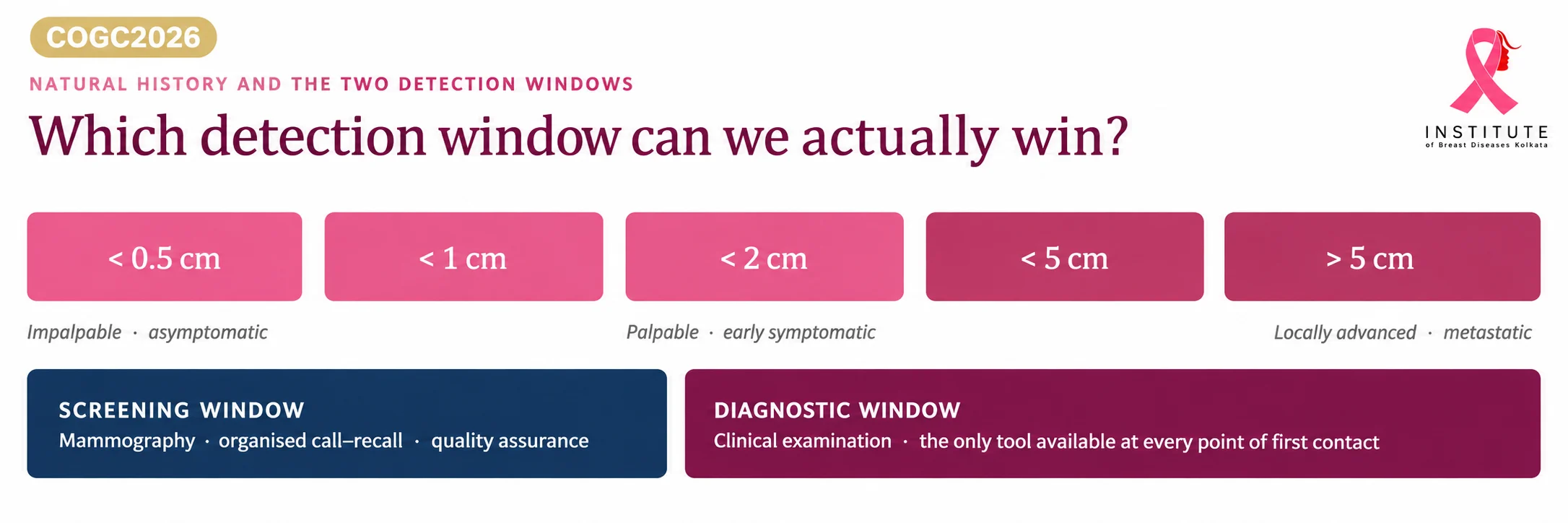
There are practical reasons for taking that approach. Community screening programs remain difficult to implement in many LMICs because of cost, limited government support, and the concentration of opportunistic screening facilities in major cities. At the same time, patients are already visiting primary-care physicians, nurses, and peripheral health workers.
Strengthening what happens during those encounters may therefore be one of the most accessible ways to improve early detection.
The difficulty is that clinical breast examination is not always standardized. Two healthcare workers may examine the same patient and interpret the findings differently, and that inconsistency can affect whether the patient is reassured, followed, investigated, or referred.
Turning Clinical Examination Into a Structured Pathway
Radiology faced a similar problem decades ago and addressed it through BI-RADS, the Breast Imaging Reporting and Data System, which gave radiologists a common language for describing breast imaging findings and linking those findings to specific recommendations. The same concept was adapted for clinical breast examination through BC-RADS, the Breast Clinical Reporting and Data System.
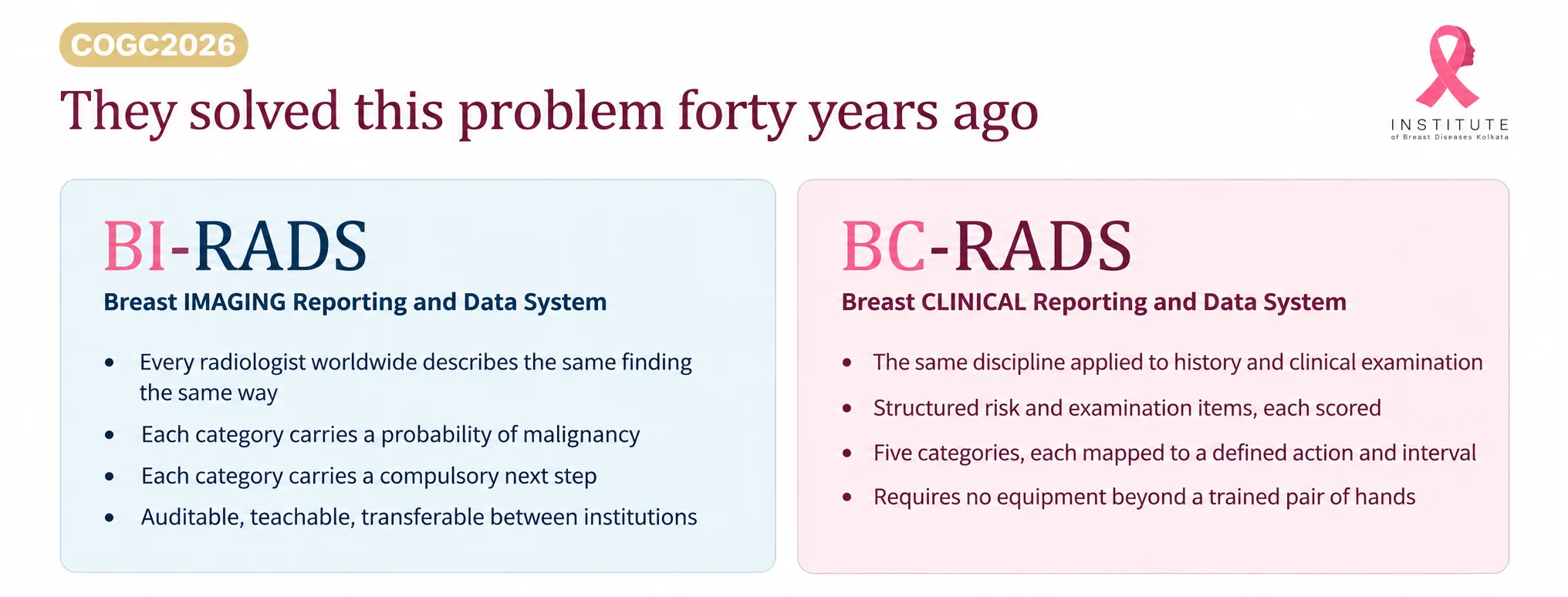
Rather than relying only on a subjective impression of a breast lump, BC-RADS combines the examination with relevant clinical history and known risk factors. These include age, family history of breast cancer, previous chest-wall irradiation, known BRCA carrier status, and other important examination findings. Together, those factors generate a score that places the patient into a category and links that category to a clear next step.
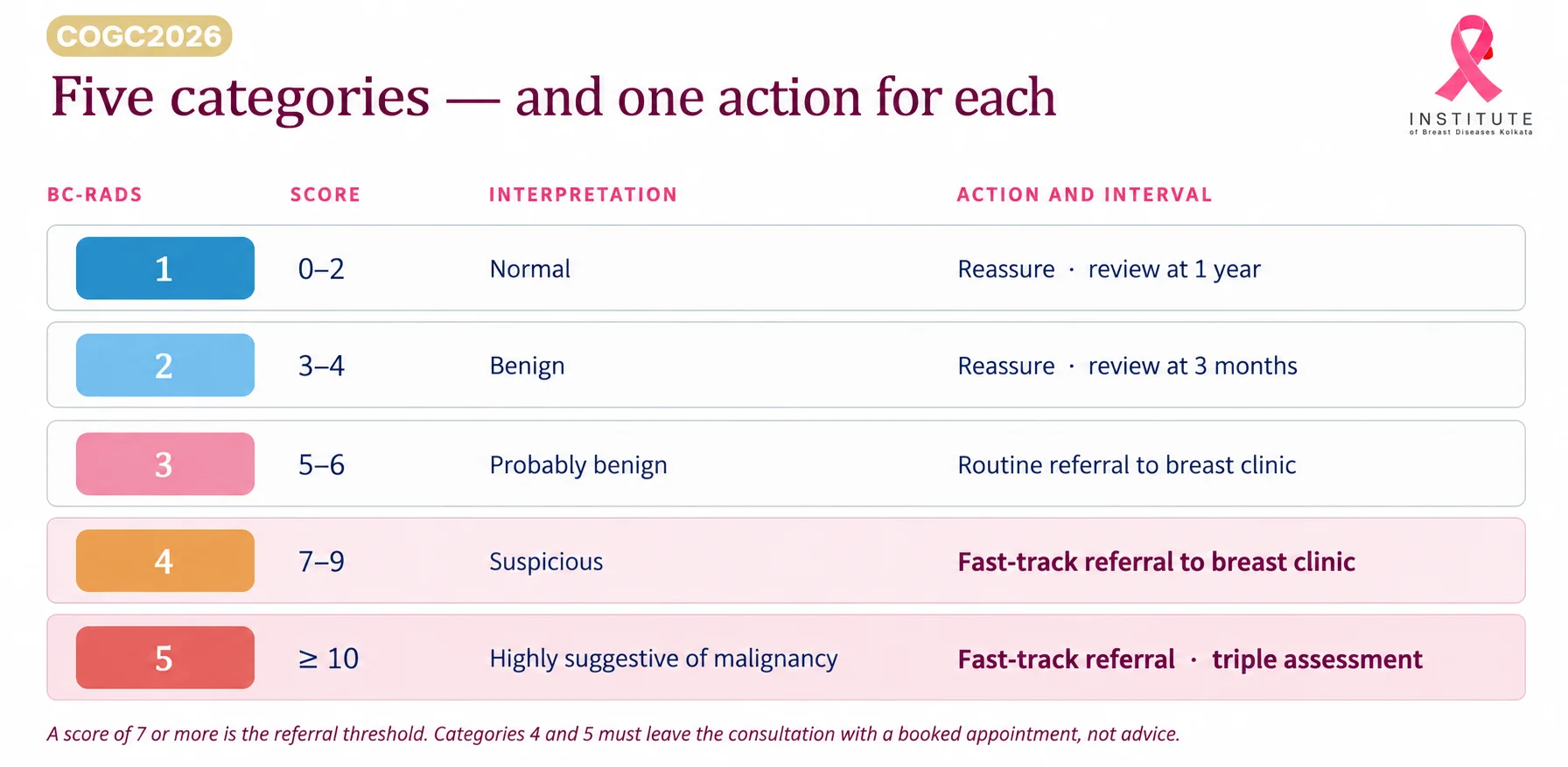
A BC-RADS 1 result can be followed with reassurance and review after one year.
BC-RADS 2 can prompt reassessment after three months.
BC-RADS 3 leads to routine referral to a breast clinic, while higher scores require increasingly urgent referral.
When the score becomes strongly suggestive of breast cancer, the aim is to make sure a fast-track referral happens rather than allowing the patient to remain within primary care or move between providers without a clear plan.
The next question was whether such a system would work outside the original development setting.
That led to the BCRADS-II implementation study in 2024.
More than 240 people were enrolled. The system achieved a reported sensitivity of 93.2% and specificity of 88.7%, along with a good negative predictive value. Importantly, its performance was also compared across doctors, rural health practitioners, and nursing practitioners. There was little difference between the groups.
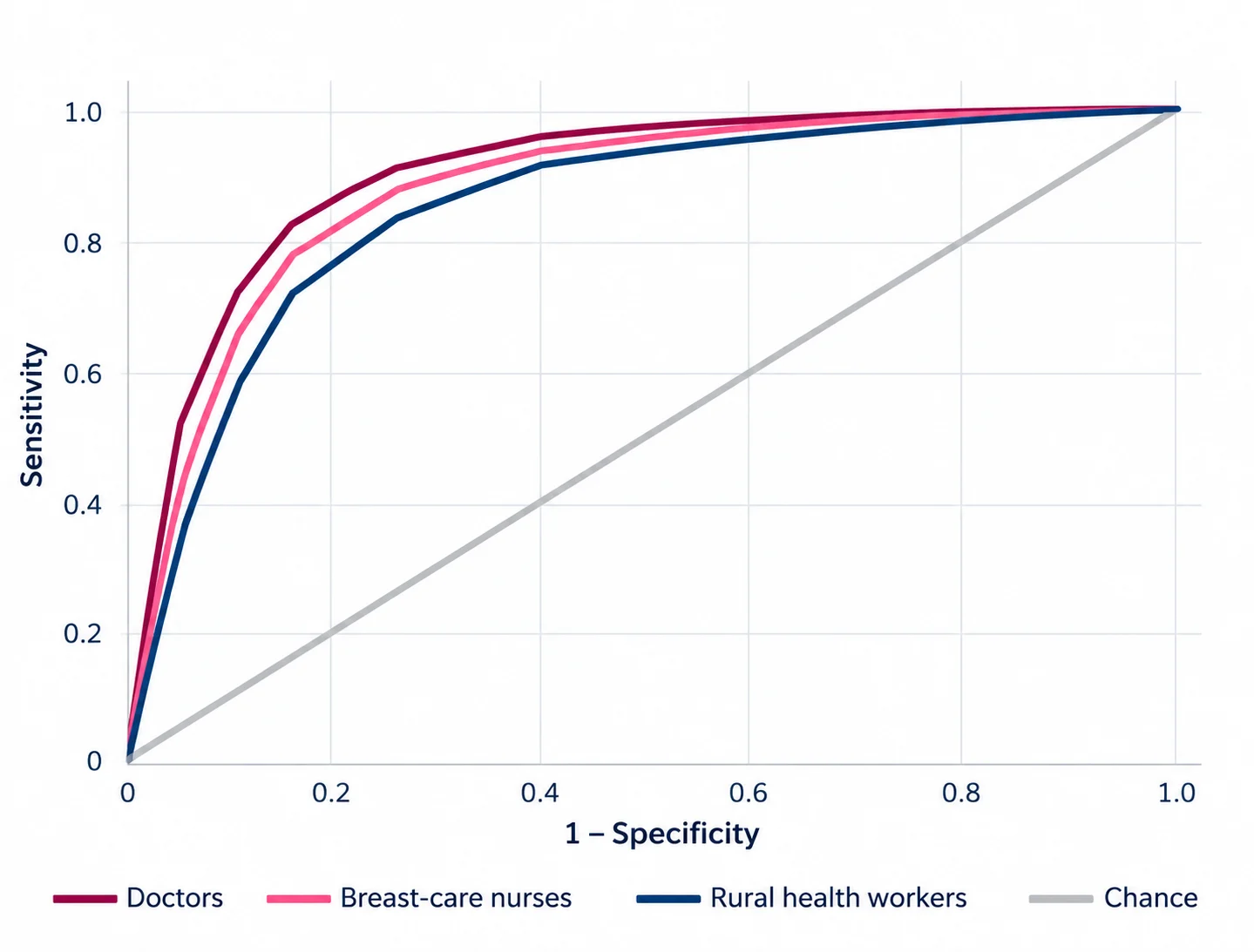
That matters in settings where there simply are not enough specialists to examine every patient. If a structured clinical pathway can be performed reliably by nurses and peripheral health workers as well as physicians, then early detection becomes much more scalable. Task-shifting no longer means asking less-specialized workers to make unstructured judgments; it means giving them a reproducible system they can follow.
Making Early Detection Affordable and Scalable
A scoring system alone is not enough if the workforce has not been trained to perform a proper examination. The team therefore also developed an affordable breast-examination training model. Commercial simulation models can cost between 25,000 and 50,000 INR, or approximately 300 to 600 USD. Their training module reduced that cost to around 60 USD while still allowing trainees to palpate different breast lumps and learn how benign and malignant findings may feel.
Training has extended beyond primary-care physicians to peripheral health workers, breast-care nurses, and alternative medicine practitioners. The idea is to strengthen the whole first-contact network rather than expecting every patient to reach a specialist before someone recognizes that the finding may be suspicious.
The broader BC-RADS pathway also fits with the WHO Global Breast Cancer Initiative, which has set several key performance targets: more than 60% of breast cancers should be diagnosed at stage I or II, the diagnostic interval should remain below 60 days, and more than 80% of patients who begin treatment should complete it. These targets matter because once diagnostic delay extends beyond roughly two months, stage progression becomes an increasing concern.
The next step is broader validation across other LMIC settings. There is also the possibility of incorporating digital and AI-assisted versions of BC-RADS into national programs in the future. The larger goal is not to replace mammography or specialist breast care. It is to make better use of the people already working in the community so that obvious cancers are recognized sooner, referrals happen earlier, and fewer women first reach specialist care with tumors that have already been growing for months.
Speaker: Deepak Poudel
Late Presentation Is a System Problem
In Nepal, the same problem becomes particularly visible in oral cancer. An audit presented during the session showed that more than 80% of patients were arriving with advanced disease, while only around 5% presented with stage I cancer.
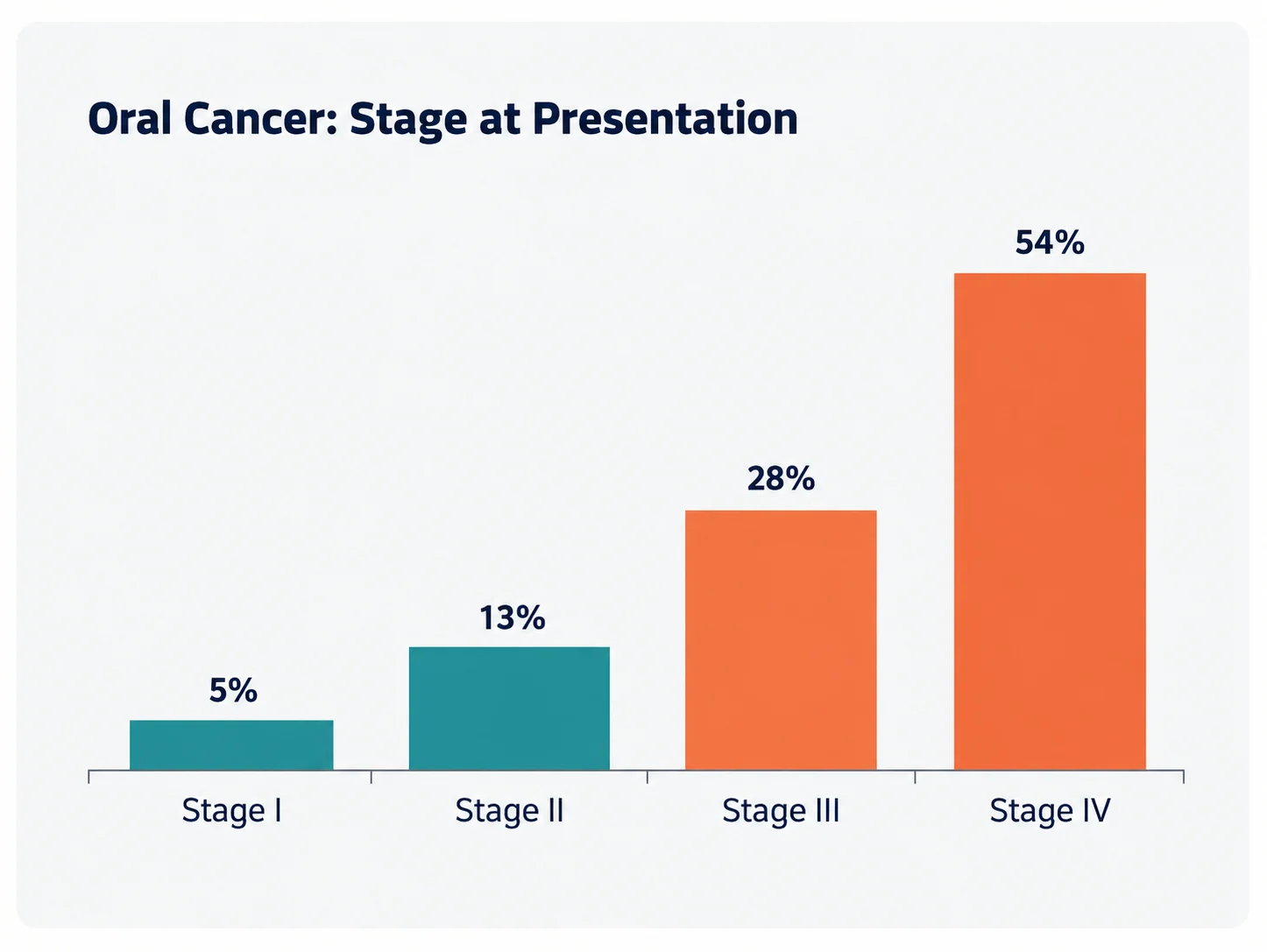
There is rarely a single reason for that pattern. Patients may not recognize the warning signs, primary-care referrals may be delayed, diagnostic facilities may be limited at the primary and secondary level, the healthcare system itself may be fragmented, and patients who eventually reach a cancer center can still face long waiting times. Taken together, these delays make late presentation much more than a patient-behavior problem. It becomes a problem of how the entire system is organized.
The DECAN study, which included more than 1,000 patients across six cancer types in Nepal, showed just how long the journey can become.
From recognition of the first symptom to initiation of treatment, the median interval ranged from approximately 110 to 171 days depending on the cancer. Around one in four patients waited more than six months, while more than 60% took longer than 120 days to begin treatment. Breast and cervical cancer patients tended to reach treatment earlier, which may reflect the fact that community awareness and screening activity are already stronger for those diseases.
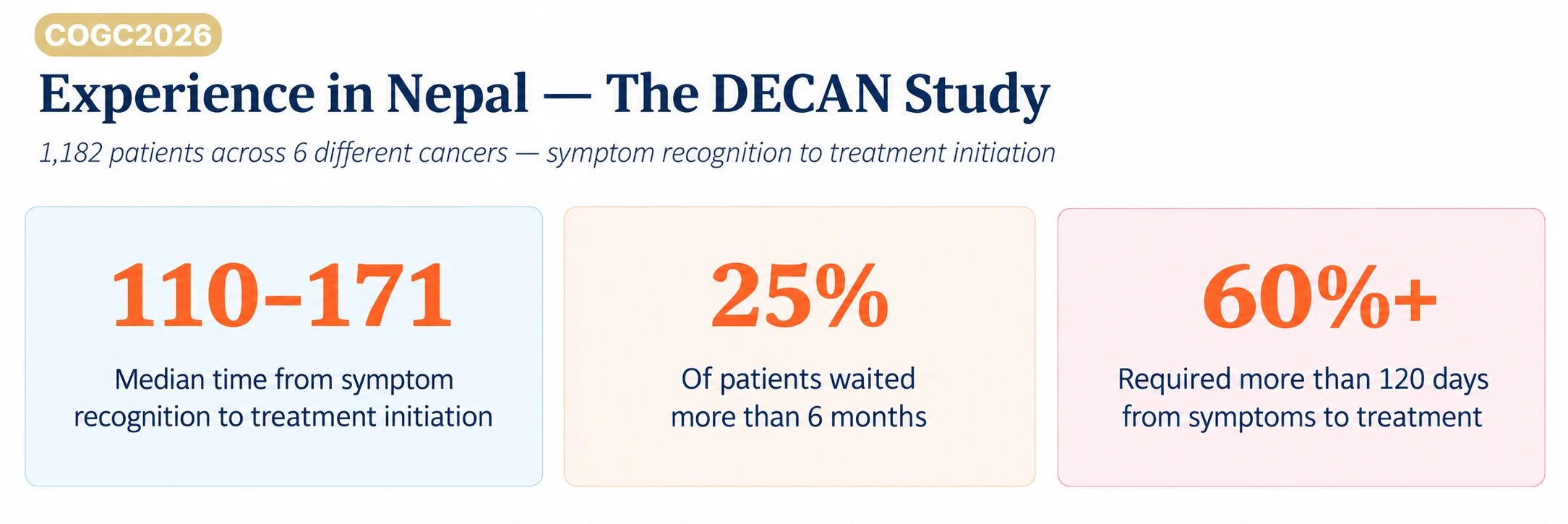
That comparison is important because it shows that awareness can make a difference, but it also makes clear that recognition alone does not solve the problem. The relevant endpoint is not simply the day a patient first notices a symptom or even the day cancer is first suspected. What matters is how long it takes that patient to actually reach treatment.
The Delay Can Happen at Every Step
The pathway can begin to break down in the community, where cancer stigma, poor health literacy, and limited knowledge of warning signs can delay the first consultation. At the primary-care level, suspicious findings may be missed or referral may simply happen too slowly. Once the patient reaches a secondary facility, inadequate access to imaging and pathology can add another delay. Even after a diagnosis has been established, reaching a cancer center and starting treatment can take additional weeks or months.
That is why reducing late presentation requires attention to every part of the journey rather than one isolated intervention. In cancer, time has consequences. Five-year survival for stage I oral cancer can exceed 80%, compared with around 40% for stage IV disease. A later diagnosis usually means more complex treatment, greater morbidity, higher costs, poorer quality of life, and ultimately worse outcomes. The cost of delay is therefore not simply the number of days between appointments. It is what can happen to the cancer, and to the patient, during those days.
The pathway can be understood in three broad stages.
The first is awareness and access, where people need to recognize warning signs and understand when and where to seek care.
The second is evaluation and diagnosis, where primary-care services need enough capacity to identify suspected cancer and connect patients to appropriate investigation, pathology, and staging.
The third is access to treatment, where a confirmed diagnosis needs to lead into a clear and timely treatment pathway.
No single intervention can repair all three. Improving awareness without improving diagnostics simply moves the bottleneck further along. Expanding diagnostic capacity without building referral pathways can leave patients with a confirmed cancer but no clear route to treatment. The system has to connect these steps.
Bringing Diagnosis Closer to the Community
Technology can help shorten some of that distance. In rural eastern Nepal, paramedics and medical officers have been trained to perform flexible endoscopy with real-time consultation from tertiary ENT surgeons. That allows suspicious laryngeal and hypopharyngeal lesions to be identified earlier without requiring every patient to begin their journey at a tertiary center.
Similar approaches can be used in other cancers. Tools such as MeMoSA can support earlier recognition of oral cancer and potentially malignant oral disorders, while HPV testing, VIA, and Pap smears create opportunities for earlier detection and prevention of cervical cancer. The common principle is to move useful diagnostic capability closer to patients rather than expecting the patient to travel long distances before meaningful assessment begins.
Still, detecting something suspicious is only the beginning. Without an effective referral system, early detection simply produces another patient waiting for the next step.
From Referral to a Connected Cancer Pathway
An effective referral pathway requires several basic elements. There need to be clear referral criteria, so healthcare workers know which patients require specialist assessment. There should also be a predefined referral destination, so patients are sent directly to the appropriate center instead of moving from facility to facility. Referrals then need to be tracked, allowing the health system to know whether the patient actually reached the next level of care. Finally, there needs to be feedback, so the referring facility knows what happened after the patient was sent onward.
Together, those elements turn referral from a simple transfer into a connected pathway. A patient should be able to move from the community to primary care, from primary care to specialist services when needed, and later back into community-based follow-up and continuity of care. That movement depends on communication, shared information, tracking, and feedback between every level.
The aim is that no patient disappears somewhere between one institution and the next.
One way of simplifying this further in LMICs is a one-door system. Instead of expecting patients and families to understand which hospital provides which service, the patient enters through one clear point. Once cancer is suspected, the system then guides that patient to the appropriate diagnostic and treatment services. The concept is essentially one patient, one pathway, and one coordinated system.
Who Guides the Patient?
Even a well-designed referral structure can be difficult to navigate, particularly for patients dealing with transport problems, financial pressure, uncertainty, and multiple appointments. That is where patient navigation becomes important.
Patient navigators are trained healthcare workers who help connect services, coordinate appointments, track the patient through the pathway, and address barriers that might otherwise cause another delay. Their role is not simply administrative. They provide continuity between referral, diagnosis, and treatment so that patients do not have to manage the complexity of the system on their own.
An example from Rwanda showed what that can look like in practice. A digitally enabled navigation program for breast and cervical cancer shortened the mean time to treatment compared with historical controls, and more than 80% of patients began treatment within 60 days. That experience suggests that navigation can turn a fragmented pathway into something much more coordinated.
Digital tools can strengthen this further. Mobile referral tracking and SMS can show whether a patient has reached the oncology center. Teleconsultation can allow clinicians to share photographs, reports, and clinical notes with specialists before referral, helping urgent cases move more quickly. Clinical decision-support tools can also help guide the right referral to the right service at the right time. The overall process can therefore be reduced to a simple principle: refer the patient, track the journey, keep the services connected, and make sure the loop is actually closed.
Cancer Care Begins Before the Cancer Center
None of these systems can improve if nobody is measuring where patients continue to get stuck. Health systems need to know where patients are waiting, how long they are waiting, and where referrals are being lost. Those data can reveal bottlenecks that may otherwise remain invisible and allow the pathway to be adjusted over time.
A referral system is therefore not a one-time project that can simply be introduced and considered finished. It has to become a continuous cycle of measurement, learning, and improvement. The larger lesson from the presentation is that cancer treatment does not really begin when a patient finally walks into a cancer center. By then, many of the most important opportunities may already have been gained or lost.
It begins much earlier, when a symptom is first recognized, when the first healthcare worker knows what to do with it, when the referral reaches the right destination, and when somebody makes sure the patient continues moving until treatment actually starts.
Written by Eliz Baloyan, MD, Features Writer and Editor at OncoDaily and CancerWorld